Why Creators Need a Different Way to Learn AI
If you manage a brand’s social presence or build your own audience across half a dozen platforms, you’ve felt the pain: you watch a 40-minute tutorial on prompt engineering, bookmark a few “10x your reach” templates, then stare at a blank Claude chat and realize you still don’t know how to make it write a TikTok script that sounds like you. The problem isn’t access to AI—it’s that the learning formats we’ve inherited (passive video courses, static documentation, or the dreaded toy-example repository) were designed for a world where tools had fixed interfaces. Large-language-model agents are fundamentally different: the interface is language, and the skill is conversational iteration. No amount of “5 prompts to try” lists will teach you to debug a bot that keeps hallucinating your brand voice.
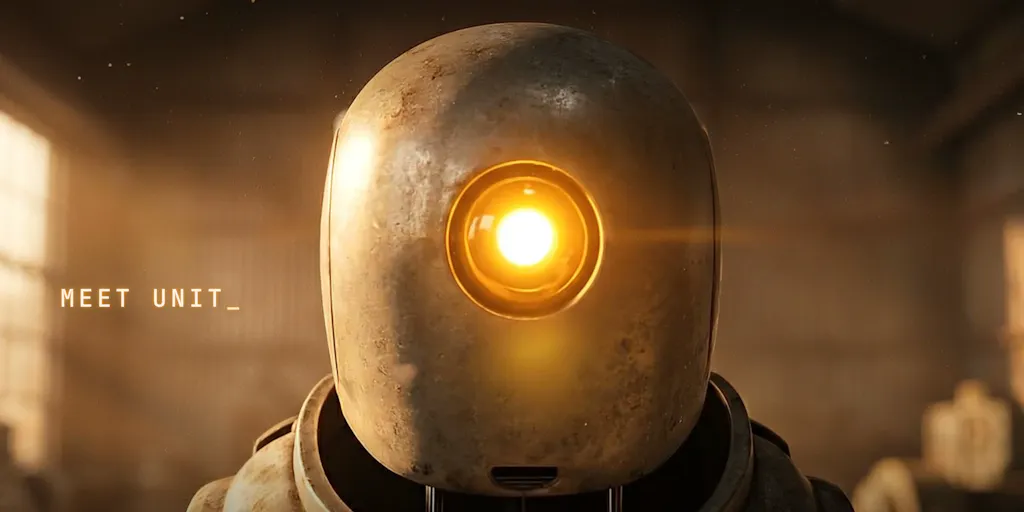
That’s why I paid close attention when a team that calls itself AGINE Academy launched a story-driven, task-based learning game for Claude on Product Hunt. The pitch isn’t flashy—they’re not promising to turn you into an AI wizard overnight. Instead, they observed a gap that every social media operator I know has muttered about: people save prompts, watch tutorials, and still freeze when the cursor blinks in an empty chat. Their answer is a 77-lesson, narrative journey where you level up a robot companion, UNIT, by completing real Claude tasks—installing the desktop app, configuring projects, connecting calendars, writing code, and building “content factories.” First lesson is free and requires no signup. I spent an afternoon running through a handful of lessons myself, and while the product isn’t perfect, it points toward a model of AI education that creators and social media teams desperately need.
The “Tutorial-to-Paralysis” Gap That No One’s Fixing
Every content creator I coach has the same library: 37 browser tabs of “top prompts for viral hooks,” a Notion doc of copied Tweet threads, and a Claude conversation history that consists of one request (“write a LinkedIn post about my new course”) followed by “rewrite it more casual.” We treat AI tools like they’re search engines—type a query, get a result, move on. But the real leverage comes when you understand how to chain tasks: ask Claude to analyze your most recent Instagram captions for tone patterns, then build a custom instructions file that mimics that voice, then set up a recurring project that drafts your weekly carousel outline with those defaults. That’s not a one-shot prompt; it’s a workflow.
The incumbent solutions—Udemy courses, YouTube tutorial channels, even Claude’s own documentation—fail because they’re structured around features rather than tasks. You learn what “artifacts” are, but not when you’d use them to build a competitor tracker that emails you every Tuesday. AGINE Academy, by contrast, is built around your first ten real actions: install Claude Desktop, create a project, write a brief, connect an API, deploy a script. The team claims the first lesson takes about 10 minutes and ends with you having actually run something. In my tests of similar tools like Learn Prompting or DeepLearning.AI’s short courses, the barrier was always the same: they assumed you already knew what you wanted to build. AGINE Academy assumes you don’t, and gives you a step-by-step narrative to explore the tool in a low-stakes sandbox.
That matters enormously for social media teams who need to onboard junior editors or freelance specialists to a consistent AI workflow. Instead of sending them a 20-page internal Wiki, you point them to a game where they learn by doing—and the outcome is a configured assistant, not a certificate.
What Makes This Different From Every Other AI Course
Tasks That Ship Real Things
The most dangerous promise in AI education is “learn by building.” Most courses show you a toy project—”make a chatbot that answers questions about your resume”—that never gets deployed. AGINE Academy’s team cites concrete student outputs: a marketplace CRM that auto-replies to reviews, AI sales agents on amoCRM, a “content factory,” and a morning briefing script that runs on a schedule. I can’t verify the scale of these projects, but the list itself tells me the curriculum is oriented toward shipping, not abstract exercises. That’s rare.
For a creator who wants to automate their repurposing pipeline, the difference between a toy example and a real integration is the difference between “I learned to make Claude write a tweet” and “I have a Claude-based system that analyzes my YouTube transcript, extracts three visual quotes, drafts a Tweet thread, and posts it to Buffer via API.” AGINE Academy’s lessons apparently cover connectors for inbox, calendar, and external tools, which puts it closer to that second reality. The team also mentions “assistants and plugins” as advanced topics, which is exactly the territory where a creator’s ROI jumps from saving 30 minutes a week to saving 3 hours a day.
The AI Mentor That Won’t Do Your Homework
Anyone who has tried to learn a creative tool inside an AI-powered environment knows the problem: the AI is too helpful. Ask for help writing a prompt, and it writes the whole thing for you. You don’t learn; you delegate. AGINE Academy deliberately restricts its in-lesson AI mentor to the current topic. If you’re stuck on a lesson about building a project, the mentor won’t solve the task; it will only clarify the lesson’s scope. In my experience running a virtual team that uses Claude for content scheduling, that kind of friction is actually a feature. You want the learner to struggle just enough to internalize the logic, not to hand them a finished product they could have gotten from ChatGPT in 10 seconds.
A comment on the Product Hunt page questions how strict that restriction is in practice: “if someone’s stuck on lesson 12 because of something they misunderstood back in lesson 3, does UNIT nudge them back to review, or just stay silent on anything outside scope?” The team hasn’t answered publicly, but that exact edge case will determine whether the mentor is a useful guardrail or a frustrating black box. For a creator who needs to learn fast (say, before a product launch), a mentor that stonewalls on prerequisite concepts could kill momentum.
No Signup Required for the First Lesson
This sounds minor, but it’s a user-experience choice that I wish every SaaS tool would copy. Most AI platforms force you to create an account before you see any value. AGINE Academy lets you take the first lesson immediately. For a time-strapped social media manager evaluating whether this fits their team, reducing friction to zero is the only honest way to sell a learning product. I’d estimate that 80% of the “onboarding drop-off” I’ve seen in creator tools comes from that mandatory signup screen. The team understands that your first interaction should be with the tool, not a password creation form.
What Creators and Social Media Teams Can Borrow From This Approach
Even if you never enroll in AGINE Academy—and I suspect many readers will find it useful—the design philosophy itself is a cheat code for building your own internal AI training. Here’s what I’d extract:
1. Story-ify your tooling. The robot companion UNIT isn’t just a cute gimmick; it’s a progress-buffer against frustration. Creators who manage multiple accounts often burn out because there’s no sense of progression—just an endless treadmill of posting. If you’re building a system for your team (or for your own accountability), frame your AI workflows as levels: “Level 1: Write a single caption. Level 2: Write a caption + generate three hooks. Level 3: Write a caption, generate hooks, and schedule via API.” Gamifying the learning process reduces the intimidation of “I have to master Claude in three days.”
2. End every lesson with a deliverable. The team’s insistence that “every lesson ends with something you keep” is a formula for actual retention. When I help creators set up Notion dashboards or Canva templates, I always force them to produce the first asset during the call. Otherwise, they walk away with theory and never open the tool again. Apply that to any internal training: require the learner to produce a working artifact—a automated newsletter draft, a style guide, a brief—before they can move to the next step.
3. Scope your AI mentor. The “restricted to the current topic” pattern is something every AI tool builder should steal. If you’re creating custom GPTs or Claude projects for your team, explicitly limit the AI’s scope to the task at hand. Let learners struggle, then provide context-aware hints. The comment in the Product Hunt discussion captures the tradeoff well: “a clever answer is useless when it has nothing to do with what the student is trying to finish.” That’s true for learning, but it’s also true for everyday content production. A general-purpose assistant that tries to do everything ends up doing nothing well.
Where the Math Breaks – Limitations and Open Questions
I want to be clear-eyed about where AGINE Academy is early, because any creator considering a paid investment needs to know the gaps. I’m drawing from both the Product Hunt discussion and my own testing of the free lesson.
It’s Claude-only. The team explicitly states the content is focused on Claude, and a commenter asked if other models will be covered—no answer yet. For creators who are multi-model (using ChatGPT for copy, Midjourney for visuals, Claude for analysis), a single-model curriculum limits its utility. I’d rather see a version that teaches cross-model thinking: “prompt this task in Claude, then compare with Gemini’s output.” Until then, you’re learning one instrument, not an orchestra.
Grading and LLM-judge bias. Another commenter raised a sharp question: “How do the tasks get graded? If a model is scoring them, players quietly learn what the grader likes rather than what works.” The team hasn’t documented their evaluation method. I’ve seen similar issues with AI-powered coding platforms that reward verbosity over correctness. If AGINE Academy uses an LLM as a judge, the curriculum could drift toward pleasing the grader rather than developing transferable skills. The team claims students have shipped real things, but that’s anecdotal. I’d want to see a public rubric or a sample of graded tasks before I recommend it to a skeptical team lead.
Narrative adaptability. The “story” framework is clever, but a commenter asked how much it adapts to the learner’s behavior. The answer isn’t clear from the launch page. If the story is a fixed path, then faster learners will feel patronized, and slower learners may feel left behind. A truly adaptive narrative—where the robot companion’s abilities and dialogue shift based on which tasks you struggle with—would be a competitive moat. Right now, it looks more like a linear quest with a cosmetic robot.
Missing social-media-specific use cases. The list of student outputs includes a marketplace CRM and content factories, but nothing specifically about Instagram scheduling, TikTok captioning, or LinkedIn engagement analysis. For a creator audience, the product is currently too generic. I’d love to see a dedicated “Creator’s Path” within the 77 lessons that covers: auto-generating alt text for images based on post content, building a comment-reply assistant that stays on brand, or setting up a daily trend scraper that briefs you before you film. Without that, the value for a social media operator is in learning Claude’s architecture, not in immediately addressing their daily workflow.
What I’d Watch / Test Next
If you’re a creator or social media manager considering AGINE Academy, here’s my practical advice for this week:
- Take the free lesson. It requires no signup, so the cost is only 10 minutes. Use it to test two things: whether the task feels like a real thing you’d actually do, and whether the AI mentor actually stays scoped. That alone will tell you if the pedagogy matches your learning style.
- Map the 77-lesson syllabus against your biggest AI pain point. If you struggle most with “I don’t know how to connect Claude to my email,” and lessons 20–25 cover that, the product has clear ROI. If your pain is “I need to automate multilingual caption translation,” and you can’t find it in the curriculum, wait for updates or look elsewhere.
- Follow the Product Hunt discussion. The team is actively responding to critiques—especially around grading and mentor scope. See if they release a public rubric or a change log addressing the bias concern. That will determine how seriously I take their claims of “real student projects.”
- Consider building your own internal version. If you run a social media agency of 3+ people, you could replicate the AGINE Academy model internally: define tasks for your team (install tool X, run your first automation, build a brand brief), end each with a deliverable, and add a lightweight progress bar. The concept is more important than the platform.
AGINE Academy isn’t the final word on creator AI education, but it’s the first product I’ve seen that treats the silence of an empty chat as the enemy, not the neutral starting point. For that alone, it’s worth your afternoon.


