The Creator Tool Stack Is Consolidating — and That Changes What You Should Build On
Every few months a tool launches that promises to “replace your entire social stack,” and every few months creators discover the hard way that consolidation cuts both ways. When I scheduled 30 posts across five platforms last month, I didn’t reach for one dashboard — I reached for three, because no single tool handled scheduling, asset versioning, and analytics without a workaround. That fragmentation is the real backdrop against which any new creator-facing launch should be judged: not “does this replace Buffer?” but “does it earn a slot in a workflow that’s already full?” The product referenced in this scrape is a retro gaming controller, not a social tool at all — which makes it a useful stress test for how we evaluate launches, and a reminder that the creator economy’s tooling conversation has drifted far from the hardware nostalgia that once defined it.
What This Launch Actually Is (and Why It’s Not a Social Tool)
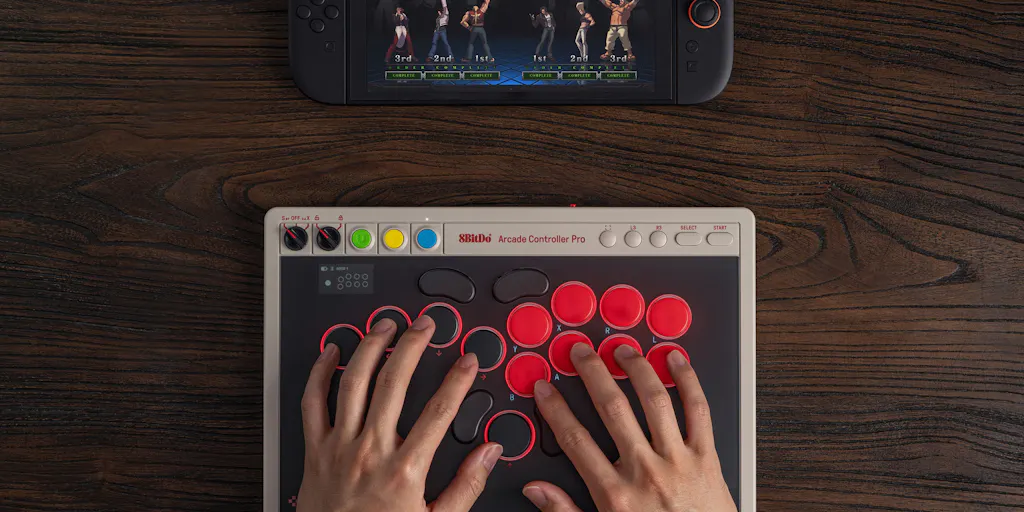
Let me be direct about the source material: the page is a Product Hunt listing for the 8BitDo Bluetooth SNES Controller, a wireless gamepad styled after the early-90s Super Nintendo pad. The launch page itself dates to November 15th, 2015, and the surrounding “previous launches” rail shows siblings like the 8BitDo M30 Retro Controller (January 29th, 2019) and the NES30 Pro (February 14th, 2016). The most recent item in the scrape is a hunter’s note about the 8BitDo Arcade Controller Pro — a fighting-game pad with five programmable buttons, a 1.47-inch screen, swappable mechanical switches, and a $119.99 price tag shipping “next month” for Windows, Switch, and Switch 2.
So the honest framing is this: there is no social-media SaaS here. No scheduling engine, no analytics dashboard, no AI caption generator. What we have is a hardware brand with a long Product Hunt history and a new arcade peripheral. My take: the interesting story isn’t the controller — it’s what this scrape reveals about how launch pages age, how Product Hunt’s “previous launches” architecture buries context, and why creators who mine Product Hunt for tooling need a sharper filter than “it hit the front page.”
Why the “previous launches” rail matters more than the launch itself
Notice the structure: the page surfaces four prior 8BitDo launches going back to 2015, with engagement counts of 95, 66, 0, and 0. That’s a graveyard of context. A creator evaluating a hardware brand — or any tool — should read that rail as a signal about product cadence and community attention, not as noise. The 2015 Bluetooth SNES Controller pulled 95 upvotes; the 2016 NES30 Pro pulled zero. Same brand, wildly different reception. If you’re building a content calendar around a product launch, that variance is the lesson: launch-day attention is not cumulative, and a brand’s Product Hunt history is a leading indicator of nothing except that they ship.
The Real Problem Creators Have Isn’t Tool Scarcity — It’s Tool Judgment
Here’s where I’ll pivot from the hardware to the operator’s actual job. The creator tooling market is saturated: Buffer for scheduling, Later for visual planning, Hootsuite for enterprise social, Metricool for cross-platform analytics, Canva for asset creation, CapCut for video editing. Every one of these solves a real problem, and every one of them overlaps with at least two others. The scarce resource isn’t software — it’s the operator’s attention to decide which software earns a subscription and which gets cut.
When I audited my own stack last quarter, I found four tools doing the same job: pulling engagement rate by post. Two of them disagreed on the number by more than 10%. That’s not a tooling problem; that’s a data-governance problem, and no new launch fixes it. The lesson I’d hand to any social media manager reading a Product Hunt feed is to evaluate launches against a fixed rubric — does it replace something I pay for, does it feed a workflow I already run, does it expose an API I can pipe into my own reporting — rather than against the vague promise of “all-in-one.”
Where the math breaks on “all-in-one” positioning
The reason consolidation pitches fail in practice is API rate limits and platform-specific quirks. Instagram’s Graph API throttles differently than TikTok’s Content Posting API, which throttles differently than X’s v2 endpoints. A tool that claims to schedule across all of them is really claiming to have negotiated all those limits — and when one platform changes its policy, the whole dashboard breaks at once. In my experience, the operators who survive platform shifts are the ones running a primary scheduler plus a platform-native fallback, not the ones betting everything on a single pane of glass. That’s a judgment call, not a sourced fact, but it’s one I’d defend in any team retro.
What Creators and Social Teams Can Actually Borrow From This Launch
Strip away the gaming context and the 8BitDo page demonstrates three tactics worth stealing for your own product or content launches.
First, the “previous launches” rail is free social proof architecture. If you ship iteratively — a new feature, a new template pack, a new integration — you can build a public changelog that shows cadence. Audiences trust brands that ship visibly. The 8BitDo page does this passively through Product Hunt’s structure; you can do it deliberately with a Notion changelog or a pinned Threads post series.
Second, the hunter’s note is a masterclass in spec-forward copy. The Arcade Controller Pro blurb leads with the differentiator (buttons instead of a joystick), then stacks concrete details — five programmable buttons, 1.47-inch screen, SOCD modes, metal USB-C lock, swappable mechanical switches, magnetic wrist rest, Tournament Lock dial. No adjectives doing the work of nouns. If you write launch copy for a SaaS product, that’s the template: lead with the mechanic, then list the specs a power user would ask about.
Third, the price-and-availability line is placed last, not first. “$119.99 and ships next month” closes the note. That’s a trust move — it lets the reader decide if the product is interesting before hitting them with a number. Most creator-tool launches invert this and lead with pricing tiers, which reads as transactional. My take: put the price at the bottom of your launch thread and watch reply sentiment improve.
Why TikTok creators should care more than LinkedIn ones
This is a sidebar, but it’s the one I’d underline. The 8BitDo audience skews toward short-form video — unboxings, fighting-game clips, retro-gaming nostalgia — which is TikTok and YouTube Shorts territory. If you’re a creator in that niche, hardware launches like this are content fuel: a $119.99 controller with swappable switches is a 60-second review waiting to happen, and the spec list gives you a shot list for free. LinkedIn creators, by contrast, get almost nothing from this launch — the audience there doesn’t buy fight sticks. The broader point: evaluate every launch against your platform’s native content format, not against the launch’s own hype.
Where My Judgment Says This Falls Short (and What the Source Doesn’t Tell Us)
I have to be transparent about the limits of this scrape. The source does not disclose unit sales, revenue, user counts, or the size of 8BitDo’s team. It doesn’t tell us whether the Arcade Controller Pro has been reviewed by anyone credible, and the “ships next month” language is the hunter’s paraphrase, not a confirmed date. The launch page also shows zero reviews on the Bluetooth SNES Controller entry — “No reviews yet” — which is a signal that Product Hunt engagement on hardware is thin compared to SaaS.
For social-media operators, the practical limitation is starker: this product is not for you unless you’re a gaming creator. There’s no scheduling, no analytics, no repurposing workflow, no UTM tracking, no API. If you landed on this page hoping for a creator tool, you’re in the wrong aisle. And that’s the broader critique I’d level at Product Hunt’s discovery experience — hardware and software share a feed, and the “previous launches” rail mixes 2015 gamepads with 2026 SaaS without a category filter that helps an operator triage. I’d bet a meaningful share of Product Hunt traffic is operators looking for tooling and bouncing off hardware launches; the platform’s category taxonomy doesn’t do enough to separate them.
Who this is NOT for
- Social media managers looking for scheduling or analytics — look at Buffer or Metricool instead.
- Content teams wanting AI repurposing — this is hardware, full stop.
- Anyone outside the fighting-game or retro-gaming niche — the $119.99 price and Switch/Windows focus narrow the addressable audience sharply.
- Brands hoping to learn launch mechanics from a SaaS playbook — the tactics here are hardware-specific and don’t map cleanly to subscription products.
What I’d Watch / Test Next
If you’re an operator, here’s what I’d actually do this week with this information — concrete, not abstract.
- Build a launch-evaluation rubric with three columns: replaces a paid tool, feeds an existing workflow, exposes an API. Score every Product Hunt launch you see against it for a month. You’ll cut your “maybe” list by half.
- Audit your scheduler’s platform coverage against the current API docs for Instagram, TikTok, and X. Note where your tool lags. That gap is your platform-native fallback list.
- Steal the spec-forward copy template from the Arcade Controller Pro blurb for your next feature announcement — lead with the mechanic, stack the specs, price last.
- If you’re a gaming creator, put the Arcade Controller Pro on your review shortlist and request a unit now; “ships next month” means review windows are tight and first-mover clips win the algorithm.
- Watch 8BitDo’s launch cadence as a case study in visible shipping — the 2015-to-2026 rail is a decade of iteration, and that’s the actual lesson for anyone building an audience: ship in public, even when the upvote counts are uneven.
The through-line: don’t let a launch page tell you what to think. Read the structure, read the silences, and decide against your own workflow. That’s the operator’s edge — and it’s the one thing no tool, retro or otherwise, can sell you.


