The Quiet Shift Nobody in the Creator Economy Is Talking About: Your “Content Pipeline” Has a Verification Problem
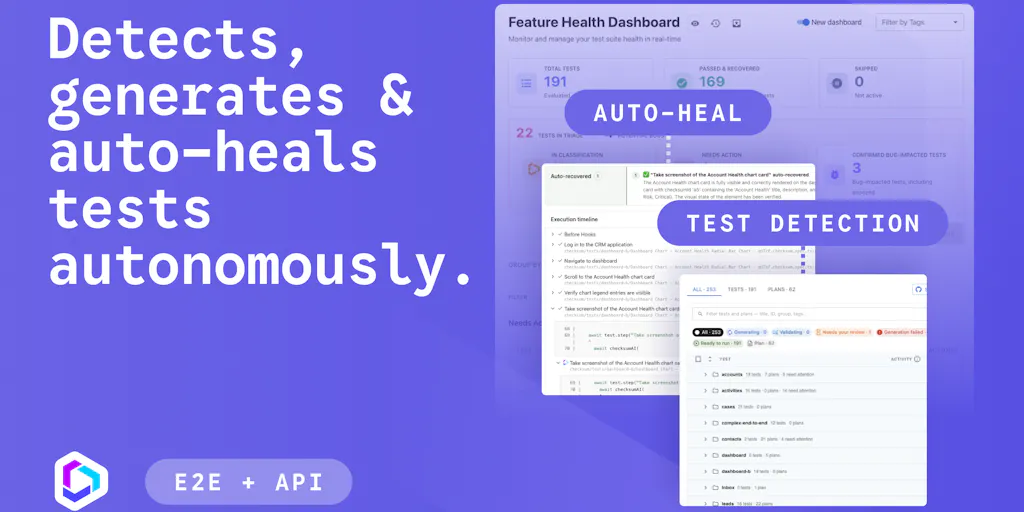
If you’ve spent any serious time running a multi-platform content operation, you know the real bottleneck isn’t creativity. It’s not even the algorithm, as much as we like to blame it. The bottleneck is the endless, soul-draining maintenance work that happens after you hit publish. You schedule 30 posts across five platforms, and then the real job begins: checking if the link in your TikTok bio actually routes correctly after a platform update, verifying your YouTube description’s timestamp links still jump to the right moments after an edit, or debugging why your LinkedIn carousel’s third slide renders like a corrupted JPEG for mobile users. This is the “test maintenance” of our world. It’s unglamorous, it eats hours, and it’s the first thing we abandon when things get busy. We all know the feeling of a content calendar that slowly dies because the “checking” step became too tedious. So when I see a tool like Checksum launching on Product Hunt, I don’t see a dev-tool story. I see a blueprint for a problem that plagues every serious creator and social media operator: how do you trust that your complex, multi-step workflows actually work, without spending your entire life manually verifying them? The tool is built for software QA, but the operating system behind it—autonomous generation, self-healing logic, and a relentless focus on triaging “real bugs vs. stale tests”—is exactly the mental model we need to adopt for our content operations.
The Real Problem Isn’t Creation; It’s the Maintenance Tax
We are drowning in tools that help us make stuff. Canva makes the graphic. CapCut edits the video. Buffer and Hootsuite schedule the posts. The market is saturated with generation and distribution. But what happens a week later, when a platform changes its API, a link expires, or a new format (like Instagram’s latest carousel grid change) breaks the carefully designed layout of a piece of content you spent three hours on? You either find out from a commenter, or you don’t find out at all. The creator economy has a massive blind spot here. We treat content as a one-and-done asset, but in reality, it’s a living piece of code that runs on platforms we don’t control. Every time Twitter/X changes its embed logic or Pinterest updates its pin format, a percentage of your historical content breaks silently.
This is where the thesis of Checksum hits home for me. The founder, Gal, describes a world where AI coding tools solved generation but didn’t solve verification. He’s talking about software PRs, but swap “PR” for “content publish” and “test suite” for “link checker and engagement monitor,” and he’s describing my last month. I recently ran a campaign where I had to manually verify that a UTM-tagged link in a YouTube description passed correctly through a link-in-bio tool to a landing page with a specific coupon code. It took me 20 minutes of incognito windows and device emulation to confirm it worked. That’s 20 minutes I didn’t spend on strategy. The promise of a system that can spin up an agent to “detect what changed” and “generate or update” the checks automatically isn’t just a convenience; it’s a survival mechanism for solo operators and small teams who are stretched thin.
The specific mechanic that caught my attention is the “Generate and maintain” loop. The idea is that on every change (in our case, a new post or a platform update), an agent spins up, detects the delta, and updates the test. For a creator, this translates to: “When I change my link-in-bio structure, the system automatically knows to re-check all my old posts that point to the old structure.” The alternative—a manual audit of 200 posts—is why most of us have broken links rotting in our archives. It’s not that we don’t care; it’s that the effort-to-reward ratio of fixing old content is terrible. Tools that automate the maintenance tax are the real unlock for scaling a content operation without scaling your headcount or your burnout.
Beyond the Scheduler: How This Differs From Your Current Stack
When I look at the incumbent tools in the social media management space—Buffer, Hootsuite, Metricool—they are masters of the push. They get your content out the door. They give you analytics on what happened after. But they are blind to the integrity of the asset itself. They’ll tell you a post got 1,000 impressions, but they won’t tell you that the link in that post is broken for 30% of users on a specific browser. They are reporting tools, not verification tools.
Checksum is fundamentally different. It’s not a scheduler; it’s a quality assurance layer. The key differentiator is the “Run, report, fix” loop. In the social media world, this is the difference between a tool that tells you “your video failed to upload” and a tool that tells you “your video failed to upload because the caption contained a character that the iOS app interprets as a code injection, and here’s the corrected version ready for review.” That second part—the *fix*—is the radical shift. We are used to tools that flag errors. We are not used to tools that propose the solution and wait for our approval.
The team at Checksum makes a point that they generate standard Playwright code that lives in your repo. They explicitly avoid a “proprietary format” to prevent lock-in. This is a massive trust signal, and it’s directly transferable to how we should think about our content. Any tool that holds my content hostage in a proprietary format is a liability. If I build a content workflow that relies on a specific scheduling tool’s internal logic, I’m trapped. The Checksum approach—where the “tests” (or in our case, the verification scripts) are standard code I can read, edit, and export—is the only sustainable way to build a serious operation. It means the intelligence isn’t hidden in a black box; it’s a transparent asset I own. For a creator, this translates to owning your audience data and your verification scripts, not renting them.
The “Healing” Workflow: The Cure for Alert Fatigue
If you’ve ever managed a community or a large account, you know the pain of alert fatigue. You get 50 notifications, 40 of which are spam or irrelevant. You start ignoring them. Then you miss the one that matters. This is exactly the problem Checksum solves with its triage agent. On a failure, it doesn’t just scream “ERROR.” It investigates. It asks: Is this a real bug, or is this a broken test because the product changed? For us, this is the difference between a notification that says “Your link is broken” and a notification that says “Your link is broken because the destination site changed its URL structure. I’ve updated the link in the bio to point to the new URL. Please confirm.”
This “self-healing” capability is the single most valuable feature for a social media operator. It acknowledges that platforms are dynamic. They change. What worked in January might break in February. A static content strategy is a dead one. The ability to have a system that not only detects the breakage but also applies a logical fix (and flags it for your review) is the difference between a chaotic firefight and a managed workflow. The Checksum team mentions that “70% of failures resolve that way without anyone touching them.” While I can’t verify that specific number, the direction is correct. In my experience, the majority of “broken” content links are not due to my error; they’re due to external changes (a platform update, a URL redirect change). Automating the resolution of those predictable externalities is pure time gain.
But here’s the nuance—the trust issue. The commenter Hamza Afzal Butt asks the exact right question: “How do teams build confidence in auto healed tests without manually reviewing every change?” The answer from the Checksum team is the only correct one: every healed change lands as a “diff you can review, not a silent overwrite.” This is crucial. As an operator, I don’t want a robot silently changing my content. But I do want a robot that presents me with a clean, logical suggestion that I can approve with one click. It respects my authority while removing the grunt work. This is the trust model that all AI tools in the creator space need to adopt. We don’t want automation that acts; we want automation that proposes.
Why TikTok Creators Should Care More Than LinkedIn Ones
The value of this “triage and heal” model scales with the volatility of the platform. On LinkedIn, text posts and document uploads are relatively stable. The failure modes are limited. But on TikTok, the algorithm and the editing interface are in constant flux. A sound sync that worked yesterday might be off today. A trending effect might be deprecated. Creators who rely heavily on TikTok and Instagram Reels are dealing with a moving target. The “stale test” problem is rampant—a video format that was optimized for the 2023 algorithm is now a liability in 2024. A system that can analyze your historical content, detect that a specific style of hook is no longer performing (a “bug” in your content strategy), and suggest a fix (a new hook format) is incredibly powerful. It’s not just about broken links; it’s about broken performance. For high-volume TikTok creators, the manual effort to track these shifts is immense. This is where the Checksum philosophy of “going after the hard cases” (auth boundaries, edge flows) translates to creators going after the hard cases of platform shifts—the nuances of the algorithm that are tedious to track manually.
Where My Judgment Says It Falls Short (And Who It’s Not For)
Let’s be clear: this is not a magic wand. The Checksum model is brilliant for logic, but social media is emotional. The tool is built to verify that a button works; it is not built to verify that a video is engaging. The “bug” in a social media campaign is often a subjective one—the copy is too salesy, the visual is off-brand. AI triage agents are terrible at this. They can tell you if a link works, but they can’t tell you if your brand voice is inconsistent across X and LinkedIn. That part of the job is still yours. So, if you are a creator who only posts static images and doesn’t rely on complex link structures or API integrations, this tool (as built) is overkill. It solves a problem you don’t have.
Furthermore, there’s a risk of over-reliance. The Checksum team talks about autonomous fixing. If you let the system get too aggressive, you might end up with a content strategy that is technically perfect but creatively sterile. The “healing” might optimize for consistency at the cost of experimentation. The algorithm rewards novelty, but a self-healing system might revert to the safe, stable baseline. I’d bet this is a real tension for any team using this heavily. You need to keep the human in the loop for the strategy, even if the machine handles the mechanics.
There’s also the question of cost and complexity. The tool is built for engineering teams. For a solo creator, spinning up a sandbox and running Playwright scripts is a bridge too far. The value proposition is clear for a “10x QA team” at a startup like Counterpart, where they claim to run a QA team “at less than half the cost of one offshore developer.” But for a YouTuber with 10k subscribers? The overhead is not worth it. This is a tool for the *operators*—the social media managers at agencies or startups who manage dozens of client accounts with complex funnels and integrations. It’s for the growth marketer who needs to ensure that the Webflow form, the HubSpot CRM, and the Mailchimp email sequence are all connected and firing correctly when a lead clicks on a post.
What I’d Watch / Test Next
The launch of Checksum is a signal, not just a product. It’s a signal that the “AI generation” hype is cooling, and the “AI verification” era is beginning. For us in the creator economy, this means we need to start thinking about our own “verification layers.”
Here are three concrete steps I’d take this week, inspired by this launch:
Audit Your “Stale Tests”: Go through your top 10 performing blog posts or YouTube videos. Check every single link. Are they still routing correctly? Are the UTM parameters still intact? This is your manual “triage.” You’ll probably find a few broken ones. Fix them. This is the baseline data you need to justify investing in automation later.
Document Your “Platform Dependencies”: List every external service your content touches—link-in-bio tools, e-commerce storefronts, email providers. When one of them changes its interface, what breaks in your content? Create a simple checklist. This is your “test suite.” The goal is to define what “working” looks like before you automate the check.
Test a “Propose, Don’t Act” AI Workflow: Take a task you currently do manually—like generating alt text for images or writing meta descriptions—and set up an AI workflow that proposes the change to you in a review queue (like a GitHub PR). Don’t let it publish directly. See how much time you save just in the review phase, and see if the quality is good enough to trust. This builds the muscle for when more sophisticated tools like Checksum become accessible to non-coders.
The bottom line is that the tools that will win the next phase of the creator economy are not the ones that help us create more, but the ones that help us trust more. Trust that our funnels work. Trust that our links are live. Trust that our time isn’t being wasted on maintenance. Checksum is a developer tool, but it’s a preview of the operational mindset we all need to survive. The creators who treat their content like a codebase—with tests, version control, and debugging—will be the ones who scale without breaking.


