The Creator Economy Keeps Building Tools for Individuals. The Real Bottleneck Is the Household.
If you run social accounts for a living, you already know the feeling: you are the family member who remembers which specialist said what. Except in your case, it’s not a cardiologist and a pediatrician—it’s the Instagram algorithm, the TikTok shop backend, and that one client who communicates exclusively through voice notes. The mental load of modern content operations is not the creative work. It’s the infrastructure: the records, the version history, the approval chains, the “which platform did we post that UTM code to last Tuesday” problem. When I scheduled 30 posts across 5 platforms last month, the hardest part wasn’t writing the captions. It was keeping the master spreadsheet alive while Slack threads, email chains, and a Notion database all claimed to be the source of truth.
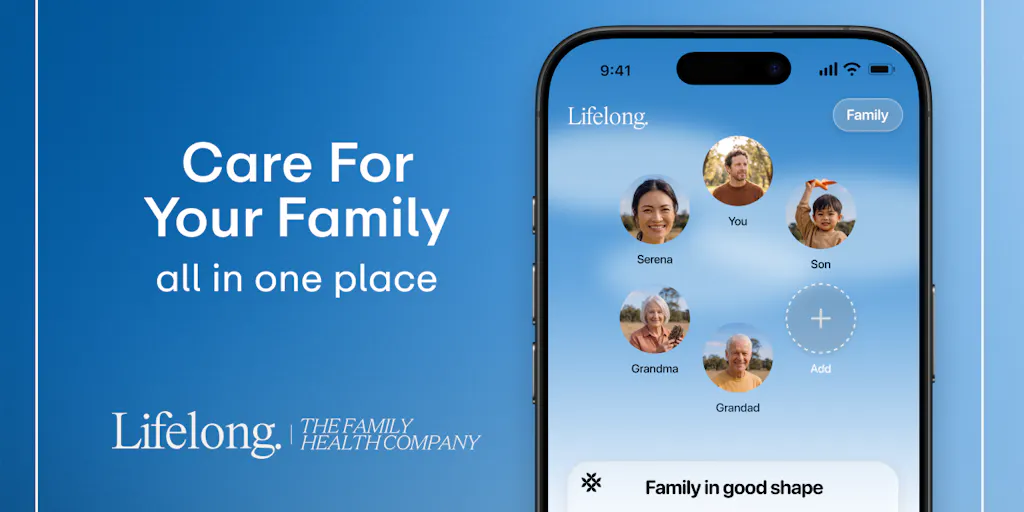
So when I saw Rabbithole launching Lifelong on Product Hunt this week—a family health app designed around the household rather than the individual—my first thought wasn’t about healthcare. It was about the structural lesson for anyone who manages content for a team, a client, or a multi-platform personal brand. The maker, razi syed, frames it beautifully: most health apps are designed around an individual. Lifelong is designed around the household. That’s the exact same blind spot that plagues our industry. We have a thousand tools for the individual creator—schedulers, analytics dashboards, AI caption generators—but almost nothing built for the messy, multi-stakeholder reality of a family, a team, or a client-agency relationship.
The product itself is not a social media tool. I’m not going to pretend it is. But the philosophy underneath it—that the unit of care is not the patient but the household, that the mental load of coordination is a real job with no title—maps directly onto what I see failing in creator workflows every day. Let me unpack why this matters, what the product actually does, and what we can steal from it.
The Problem It Actually Solves: The Invisible Job of “Remembering Which Specialist Said What”
The origin story on the Product Hunt page is worth reading twice. The maker’s grandfather could no longer walk, so his father took down two walls in the family home to fit a hospital bed and a wheelchair. The physical infrastructure of the house had to change because the care system stopped at the front door. What stuck with the maker was the invisible labor: the records, medication lists, appointments, and the job of remembering which specialist said what. That work lives across portals, group chats, folders, and one person’s head.
Swap “specialist” for “platform algorithm” and “medication list” for “content calendar,” and you have the exact operational nightmare of a modern social media manager. I’ve run accounts where the “source of truth” for a campaign was a Google Doc that three people were editing simultaneously, a Slack channel with 400 messages, and a Pinterest board that nobody updated after week one. The problem isn’t the tools—it’s that the tools are built for the individual. Buffer schedules your posts. Hootsuite aggregates your mentions. But neither of them is built to say, “Here is the complete state of your household’s content operations, including the fact that the client approved the Q3 creative on Tuesday and the TikTok account manager hasn’t seen the revised hook.”
Lifelong is designed to be that single place for a family’s health. You can keep records, medications, symptoms, appointments, activity, and sleep organized by person. You can connect the wearables your family already uses. And there’s an AI assistant called “Alo” in the app to log updates and take simple actions. The team is explicit that it does not diagnose or prescribe—it’s a coordination layer, not a clinical tool. That’s a crucial distinction, and it’s the same one we need in content operations. We don’t need another AI tool that generates a caption. We need a layer that says, “This asset is approved, this one is pending, and the client’s feedback from Thursday is attached to the right version.”
In my own tests of similar tools—I’ve tried Notion for content calendars, Airtable for asset tracking, and even a custom Slack workflow that was supposed to replace email—the failure is always the same. The tool becomes another portal, another folder, another place to check. Lifelong’s bet is that the solution is not a better individual tool but a better unit of organization. The household. The team. The client account. Not the individual post.
How It Differs From Existing Options: The Unit of Organization Is the Difference
Let me name the incumbents in the health space for a second, because the comparison is instructive. MyChart is the dominant patient portal in the US, but it’s tethered to a single health system. Apple Health is a great personal dashboard, but it’s individual-first. Google Fit is similar. The fragmentation is the point—each one solves a slice of the problem for one person. Lifelong’s claim is that the household is the real unit, and that sharing is user-controlled. The maker explicitly says it’s “for families to use together, not for one person to monitor everyone else.” That’s a governance philosophy, not just a feature list.
Now map that onto the social media tooling landscape. Later is a fantastic scheduler for the individual creator. Metricool gives you deep analytics across platforms. Canva is the design layer. But none of them are built for the household of a content operation—the client, the strategist, the designer, the community manager, and the founder who all need to see different slices of the same truth. When I’ve tried to use Buffer for a client account, the access controls feel bolted on. The client sees the calendar, but they don’t see the “why” behind the strategy. The approval workflow lives in email. The performance data lives in a separate dashboard. The comments and DMs live in yet another place.
Lifelong’s approach—organize by person, connect wearables, log updates via an AI assistant—is a model for what a “household” content OS could look like. Imagine a dashboard where each platform is a “person” with its own records (performance history, posting cadence, audience notes), its own “medications” (scheduled posts, evergreen assets), and its own “symptoms” (engagement drops, algorithm shifts). The AI assistant, instead of being a caption generator, logs updates: “The TikTok account’s watch time dropped 12% this week; the client’s feedback on the new series is attached.” That’s not a scheduler. That’s a care coordination layer.
The team claims the product is for families to use together, not for one person to monitor everyone else. In my experience, that’s the hardest governance problem in any multi-stakeholder tool. The moment you give a client access to a shared content dashboard, they either never log in or they start micromanaging every draft. Lifelong’s answer—user-controlled sharing—is the right instinct, but it’s also the hardest to execute. The Product Hunt comment from Mateusz Konik raises the sharpest question: a family record is permanent. A parent logs a child’s entire medical history from birth. When the child becomes of age, whose record is it? Can she take it with her, or delete it? He calls it “a design question more than a privacy-policy one.” That’s exactly the question every agency owner faces when a client leaves. Who owns the content history? The UTM data? The audience insights? The answer is rarely clean, and it’s usually buried in a contract nobody rereads.
What Creators and Social Media Teams Can Borrow From It
This is where I want to get practical, because I think there are three concrete lessons here that have nothing to do with healthcare.
The “Household” Is Your Content Ecosystem, Not Your Platform
Stop thinking about your content as a set of individual posts. Start thinking about it as a household with multiple members: the Instagram account, the TikTok account, the YouTube channel, the LinkedIn page. Each one has its own personality, its own performance history, and its own “medication” schedule. When you treat each platform as a person with a full record, you stop making the classic mistake of repurposing content without adapting it. A LinkedIn post that performs well is not the same “person” as a TikTok video that goes viral. They have different needs, different symptoms, different specialists.
The AI Assistant Should Log, Not Create
The maker’s product uses “Alo” to log updates and take simple actions. That’s a subtle but important choice. The default assumption in our industry is that AI should generate—captions, hooks, scripts. But the higher-value use case is logging and coordination. When I’m running a campaign across four platforms, the bottleneck is not creative ideation. It’s the status update: “Which version of the ad did we run on Facebook? Did we update the link in the Instagram bio? Who approved the final cut?” An AI that can log those updates and surface them without being asked is worth more than an AI that writes a clever tweet. The team claims Alo can “log updates and take simple actions.” That’s the operational AI we actually need.
User-Controlled Sharing Is the Only Way to Scale Trust
The maker is explicit that Lifelong does not diagnose or prescribe, and sharing is user-controlled. For social media teams, this is a governance lesson. The tools that fail are the ones that assume a single admin has full visibility and everyone else has read-only access. The tools that succeed are the ones that let each stakeholder control what they share and with whom. The client should control what the agency sees. The agency should control what the freelancer sees. The platform manager should control what the client sees. When you build trust through controlled sharing, you avoid the “household” becoming a surveillance state.
Where My Judgment Says It Falls Short
I’m going to be balanced here, because the Product Hunt launch is enthusiastic and the comments are overwhelmingly positive, but there are real limitations.
First, the permanent record problem. The comment from Mateusz Konik is not a nitpick—it’s a fundamental design flaw that will surface the moment the product gets real adoption. A family record that is logged by a parent for a child, with no clear path for the child to take ownership or delete it, is a legal and ethical landmine. The team says sharing is user-controlled, but that’s different from data ownership. The source does not disclose any details on data export, deletion, or inheritance. That’s a “not disclosed” gap that matters.
Second, the wearable integration. The team says you can “connect the wearables your family already uses,” but the source does not specify which ones. In my experience, wearable data is notoriously fragmented—Fitbit data doesn’t always sync cleanly with Garmin, and Apple Watch data is locked into the Apple ecosystem. If Lifelong is aggregating this data, the quality of the sync will make or break the product. If it’s a shallow integration, it’s another dashboard to check, not a single source of truth.
Third, the AI assistant “Alo” is a black box. The source says it can log updates and take simple actions, but it does not disclose what actions are “simple” or how the AI handles ambiguous input. In my experience with AI logging tools—and I’ve tested several—the failure mode is always the same: the AI either asks too many clarifying questions (which makes it slower than typing) or it makes assumptions (which creates errors). The team claims it does not diagnose or prescribe, which is the right boundary, but the operational scope is unclear.
Fourth, and this is the most important one for my audience: this is a health app, not a content tool. I can extract lessons, but I cannot use it for my workflow. The “household” philosophy is the takeaway, not the product itself. If you’re a social media manager looking for a tool that solves your coordination problem, this is not it. It’s a model, not a solution.
Why TikTok Creators Should Care More Than LinkedIn Ones
There’s a platform-specific angle here. If you’re a LinkedIn creator, your “household” is probably just you—a personal brand with a single feed. The coordination problem is minimal. But if you’re a TikTok creator with a team—a shooter, an editor, a manager, a client—the household is real. TikTok’s algorithm rewards consistency and speed, which means the coordination layer is under constant pressure. The moment you have to wait for approval on a caption, you miss the trend window. The moment you lose track of which version of a sound you used, you lose the thread. Lifelong’s philosophy—designing for the household, not the individual—is exactly what a TikTok content operation needs, even if the product itself is not designed for it.
Where the Math Breaks
Let me do the math on the mental load. The maker’s story is about one person remembering which specialist said what. In a content operation, that person is the account manager. They hold the client’s brand voice, the platform’s algorithm quirks, the designer’s turnaround time, and the founder’s risk tolerance. When they leave, the knowledge walks out the door. The source does not disclose any features for knowledge transfer or succession planning. That’s a gap. A household tool needs a “what happens when the primary caregiver is unavailable” mode. In health, that’s a caregiver handoff. In content, that’s a client handoff. Neither is trivial.
What I’d Watch / Test Next
Here’s what I’d do this week if I were a social media operator or an indie founder building in the creator economy.
First, study the Lifelong launch page as a case study in positioning. The maker’s origin story—the walls, the wheelchair, the hospital bed—is not a feature list. It’s a philosophy. When you pitch your own content tool or service, lead with the structural problem, not the feature. The comment from Alex Gidirim nails it: “The real product here is the mental load, whoever remembers which specialist said what is doing a job that usually has no name and no backup.” That’s the line to steal.
Second, audit your own content operation for “household” gaps. Do you have a single place where the client, the designer, and the platform manager can see the full state of the account? If not, build one. It doesn’t have to be a new tool—it can be a Notion database with the right permissions. The goal is to move from “who remembers what” to “what does the record say.”
Third, test the AI logging workflow manually. Before you buy an AI assistant, write down the last five status updates you had to send to a client or a team member. What did they include? What was the format? If an AI could log those updates automatically and surface them in a shared dashboard, would that save you an hour a week? If yes, that’s the feature to buy. If not, you’re paying for a caption generator you don’t need.
Fourth, and this is the most concrete step: pick one platform and build its “health record” for the last 90 days. Pull the performance data, the posting schedule, the engagement trends, the content that flopped, the content that popped. Treat that platform as a person in your household. Write down its “symptoms” (engagement drop, algorithm shift) and its “medications” (what worked). You’ll be surprised how much clarity this gives you, even without a tool.
The creator economy is obsessed with the individual—the lone creator, the solo founder, the one-person brand. But the real work, the exhausting work, is the coordination. The household. The team. The client. Lifelong is a health app, but its philosophy is a blueprint for anyone who’s ever been the person who remembers which specialist said what. Build for the household, not the individual. That’s the lesson, and it’s one we can all take to work on Monday.


