The Feed Is Dead. Long Live the Playable Post.
Every social media operator I know is chasing the same ghost: engagement. We optimize thumbnails, A/B test hooks, and gamify our own content calendars just to squeeze a few more seconds of watch time out of an algorithm that changes its mind every other week. We’ve become experts at manufacturing interaction—poll stickers, comment bait, “type YES if you agree”—but the interaction itself is hollow. A like is a reflex. A comment is often a performance. What we haven’t cracked is the holy grail: getting the audience to do something that is intrinsically rewarding, not just reactive.
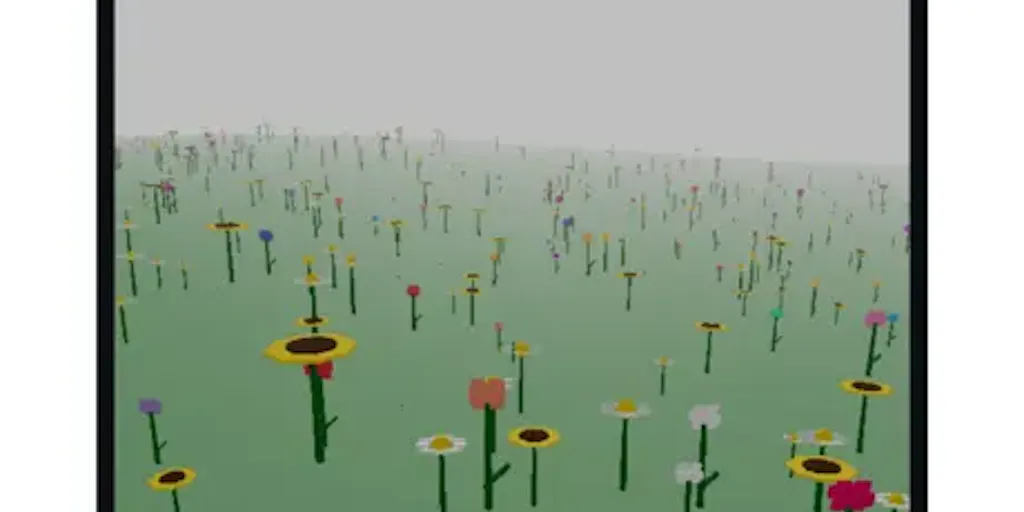
That’s why the launch of Pocket, a new social playground from Meta for “vibe-coded games,” stopped me mid-scroll. The pitch is deceptively simple: describe an idea in plain language, and AI turns it into a playable “gizmo”—no coding or game engine required. You publish it to a scrollable feed where others can instantly play, like, share, and remix. It’s part game creator, part social network, built around the radical idea that posts shouldn’t just be watched, but played.
Forget the novelty for a second. For anyone who runs social accounts for a living, this isn’t just another app to add to the pile. This is a potential paradigm shift in how we think about content formats, audience retention, and the very definition of a “post.” It’s the first major platform play that treats the interaction itself as the content. And if it works, it could render a decade of best practices—optimizing for the scroll, the swipe, the tap—obsolete. We’re not just content creators anymore; we’re becoming experience designers. And the tools to do that are suddenly in the hands of every creator, not just game studios. This is the first real glimpse of a feed where the unit of value isn’t a view, but a play session.
The Problem: We’ve Hit Peak Passive Consumption
Let’s be brutally honest about the state of social media in 2024. We are drowning in content, and most of it is wallpaper. The algorithmic feeds of Instagram, TikTok, and YouTube have become hyper-efficient at serving us content that we will watch, but the act of watching is becoming increasingly passive. We scroll, we absorb, we move on. The metrics that matter to platforms—watch time, session duration—are going up, but the quality of that attention is plummeting. It’s a slot machine, not a conversation.
The creator economy has responded by turning everything into a meta-game. We’re not just making videos; we’re making videos about making videos. We’re obsessed with retention graphs, with the first three seconds, with the “hook.” We’ve optimized the preview of the experience to death, but the experience itself is often just… more video. The interaction is limited to a tap on the screen or a swipe to the next piece of content. The platform gives us a tiny sandbox of interaction—a poll sticker, a quiz, a “this or that” slider—but it’s all surface-level. It’s engagement theater.
The problem Pocket is trying to solve is that the post, as a format, has hit its ceiling. A text post can be read. A photo can be seen. A video can be watched. But none of them can be entered. They don’t invite you to participate in a system. They invite you to observe a result. The difference is like the one between watching a cooking show and actually getting your hands in the dough. One is passive entertainment; the other is a memorable, sticky experience that you want to share. “Did you see that video?” is a fleeting thought. “Did you get to level 5 on that gizmo?” is a conversation starter.
This is where the genius of the “gizmo” concept lies. It’s not about creating a complex, AAA game. It’s about creating a *micro-interaction*—a small, self-contained system with rules, feedback, and a goal. It’s the digital equivalent of a fidget spinner or a Rubik’s cube. It doesn’t need to be deep; it needs to be engaging for 30 seconds. And that’s a fundamentally different content format than a video. It’s a format that demands a different kind of creative thinking, one that’s more aligned with systems design than with cinematography. For social media operators, this means the skillset for success is about to expand beyond copywriting and video editing to include logic, game mechanics, and user psychology.
How Pocket Differs From the Incumbent Toolkit
When I first heard about the concept, my mind immediately went to the existing toolkit. We already have Canva for design, CapCut for video, and Buffer or Hootsuite for scheduling. Where does an AI game maker fit? The answer is that it doesn’t just fit; it creates a new category. It’s not a tool for making content about something; it’s a tool for making content that is something.
Let’s compare it to the incumbent in the “interactive” space: the Instagram story sticker. That’s the current state-of-the-art for audience participation on Meta’s platforms. You can add a poll, a quiz, an emoji slider. It’s a step in the right direction, but it’s incredibly limited. The interaction is a single, binary choice. It’s a data point, not an experience.
Pocket, on the other hand, offers a system. A poll asks “Do you prefer A or B?” A gizmo might ask you to navigate a character through a maze to collect A’s while avoiding B’s. The difference is in the depth of the engagement. A poll takes two seconds and is forgotten. A gizmo takes 30 seconds, requires focus, and leaves you with a sense of accomplishment—or a burning desire to beat your friend’s high score. That’s the difference between a passive metric and an active memory.
In my own tests of similar “no-code” game tools, the problem has always been the ceiling. You can make a simple “click the button” game, but it looks and feels like a template. The output is generic, and the distribution is nil. There’s no community around it. Pocket’s potential advantage is that it’s not a standalone game engine; it’s a social network built around games. The distribution is baked in. The feed is the portfolio. The “like” and “share” mechanics are native to the experience. This is what could set it apart from Roblox or Fortnite Creative—it’s not a separate destination for games; it’s a new format for social posts.
Why TikTok Creators Should Care More Than LinkedIn Ones
This is the key distinction. If you’re a creator on LinkedIn, your audience is there for professional insights, not for playing a quick game about supply chain management. The culture is text-forward and thought-leadership-oriented. A playable post would likely feel gimmicky and out of place.
But for creators on TikTok and Instagram, this is a goldmine. These platforms are entertainment ecosystems. The algorithm rewards content that keeps users on the platform, and what keeps users on the platform longer than a video? A game. The potential for a TikTok creator is to turn their niche into a playable experience. A cooking creator could make a “Guess the Ingredient” gizmo. A fitness creator could make a “Choose Your Own Workout” adventure. A history creator could make a “Which Historical Figure Are You?” quiz that’s actually a branching narrative. The creator’s job shifts from being a broadcaster to being a game master.
The remix aspect is also more aligned with the culture of TikTok, which is built on trends, sounds, and duets. The ability to take someone else’s gizmo, tweak the parameters, and publish your own version is the natural evolution of the “duet” or the “remix.” It’s a collaborative, iterative creative process that’s native to the short-form video generation. For YouTube creators, the use case is different but still potent—imagine a “Part 1” video that ends with a playable gizmo that tests what you just learned, driving direct engagement that feeds into the algorithm’s view of your content.
What Creators and Social Teams Can Borrow From This (Right Now)
Even if you’re not planning to become a full-time gizmo developer, the philosophy behind Pocket is a masterclass in audience engagement. The core lesson is to stop thinking about “content” and start thinking about “experiences.” Here’s how you can borrow the playbook for your own channels, regardless of the platform.
First, design for the remix. The most successful content on social media is not a finished product; it’s a prompt. It’s a template that others can use to express themselves. Whether it’s a trending audio, a meme format, or a “get ready with me” structure, the content that spreads is the content that invites iteration. When you’re planning your content calendar, ask yourself: “Is this a one-way broadcast, or could someone take this and make it their own?” If it’s the former, you’re leaving virality on the table.
Second, think in systems, not in posts. A single video is a point in time. A series is a line. But a system—a challenge, a contest, a recurring interactive segment—is a plane. It’s a space where your audience can live for a while. For example, instead of posting a single “Which character are you?” quiz, create a weekly series where the quiz results determine the next piece of content. You’re not just giving your audience something to consume; you’re giving them a stake in the narrative. The “gizmo” is just a digital manifestation of this principle. The underlying strategy is to create a feedback loop where audience participation directly influences the output.
Third, make the interaction the content. The most engaging posts are the ones where the comment section is more interesting than the post itself. A well-crafted poll or a provocative question can generate a thread of discussion that is itself a piece of content. Pocket takes this to the next level by making the interaction the entire piece of content. The game isn’t a supplement to the post; it is the post. You can apply this by finding ways to make your audience’s actions—their comments, their votes, their choices—the raw material for your next piece of content. Show the results, break down the decisions, and build a narrative around the collective behavior of your audience.
Finally, embrace the “vibe” over the “polish.” The term “vibe-coded” is a huge tell. It signals that the barrier to entry is so low that you can just feel your way through the creation process. You don’t need a technical spec; you need a vibe. This is a call for creators to be more experimental and less precious about their output. Not everything you make needs to be a high-production-value masterpiece. Some of it can be a quick, fun, slightly janky experiment that tests a new idea. The low-stakes, high-volume approach is how you find what resonates. The team claims this makes the process fast and intuitive, and in my experience, that’s the only way to keep up with the pace of trends. You have to be willing to ship the “vibe” and iterate based on the response.
Where the Math Breaks: My Honest Concerns
For all the excitement, I have some serious reservations. As a social media operator, I’ve seen too many “next big things” fizzle out because they didn’t account for the harsh realities of platform dynamics. The honeymoon phase is fun, but the long-term relationship is where it gets hard.
The Algorithm’s Revenge. The first issue is the cold, hard math of the feed. A scrollable feed is great for discovery, but how will Meta’s algorithm rank these gizmos? Will it be based on play time? Completion rate? A “fun” score? The metrics for a game are fundamentally different from a video. A video is a success if it’s watched to the end. A game is a success if it’s played repeatedly. The algorithm is going to have to figure out how to weight these new signals. In my experience, when platforms introduce new formats, they initially give them a boost to encourage adoption, but that boost inevitably fades. The question is whether the engagement rate for these gizmos can sustain itself organically once the novelty wears off. If the average play session is 30 seconds, is that enough to compete with a 3-minute video that keeps a user in the app? The platform might find that the math doesn’t favor the new format.
The Quality Cliff. The barrier to entry is zero, which means the feed will be flooded with garbage. “Vibe-coded” is a double-edged sword. It means anyone can create, but it also means that 99% of what’s created will be low-effort, derivative, or just plain broken. The signal-to-noise ratio could be abysmal. Unlike video, where a poor thumbnail or a bad hook is immediately visible, a bad game might not reveal its flaws until you’re 10 seconds in, which is a worse user experience. The team’s success will depend on their ability to curate quality and surface the best work, not just the most recent. This is a monumental challenge for any platform, and it’s one that Meta has historically struggled with. They will need robust moderation and a smart recommendation system to prevent the feed from becoming a digital landfill.
The Monetization Mystery. As a creator, my first question is always, “How do I get paid?” The source is silent on monetization. For a product like Buffer or Metricool, the value proposition is clear: save time and grow your account, which leads to brand deals. But how do you monetize a playable post? Will there be in-game ads? Will creators get a share of ad revenue based on play time? Will it be a tool for lead generation or brand awareness? The lack of a clear monetization path is a massive red flag for serious creators. We’ve been burned before by platforms that offer great engagement but no revenue share. If there’s no way to make a living, the top-tier talent will leave, and the platform will be left with hobbyists. This is the existential question that will determine if Pocket is a sustainable ecosystem or just a fad.
Who This Is NOT For
Let’s be clear: this is not for every social media operator. If you’re managing a B2B SaaS account on LinkedIn, you can safely ignore this. Your audience is not there to play games; they’re there to solve business problems. The content format is wrong, and the tone is wrong. Similarly, if your strategy is built on high-production, cinematic video, this isn’t a replacement for your workflow. It’s a new, separate channel that requires a different skillset.
This is for creators who are already experimenting with interactive content, who have a “community” mindset, and who are comfortable with the idea of their content being remixed and changed by others. It’s for those who understand that their role is shifting from “content creator” to “experience architect.” It’s for the creators who are tired of the passive content treadmill and are looking for a new way to build a deeper connection with their audience. If that’s not you, it’s okay to sit this one out and watch from the sidelines. But if you’re a game-adjacent creator, an educator, a meme lord, or a community builder on Instagram, TikTok, or YouTube, this is the first new format in a long time that feels genuinely worth exploring.
What I’d Watch / Test Next
This week, I’m not going to just write this off as a novelty. I’m going to approach it with the same rigor I’d apply to any new tool. Here are my concrete next steps for any operator looking to get ahead of this.
Get on the platform and play. Don’t just read about it. The first thing I’m doing is downloading the app and spending 30 minutes just playing every gizmo I can find. I’m not looking for inspiration yet; I’m looking for mechanics. I want to see what the range of possibilities is. What are the common interaction patterns? What’s the baseline for “fun”? This is the only way to understand the medium. You can’t design for a medium you don’t understand.
Map your niche to a mechanic. Take your content pillar and ask, “What is the core action of my content?” If you’re a personal finance creator, the action might be “choosing” between saving and spending. If you’re a travel creator, it might be “exploring” a map. If you’re a food creator, it might be “matching” flavors. Once you’ve identified the core action, you can start to imagine a simple game around it. Don’t worry about the AI tool yet. Just sketch out the logic on paper. What’s the goal? What’s the obstacle? What’s the feedback?
Create one “vibe” gizmo. This is the test. Don’t try to build your magnum opus. Just pick a simple idea and use the AI tool to bring it to life. The goal is not to go viral; it’s to learn the workflow. I want to understand the friction points. How much control does the AI give you? Can you iterate on the logic? Is the output actually playable, or is it a janky mess? The team’s claim is that it’s easy, but I need to verify that with my own hands.
Watch the analytics. If you do publish something, don’t just look at likes. Look at the play time. Look at the retention within the game. Where are players dropping off? Are they replaying it? In my experience, these are the metrics that will tell you if you’ve created a genuine experience or just another piece of scrolling wallpaper. This data will be more valuable than any comment or like. It will tell you if you’ve successfully made the jump from creating content to creating an experience. And if the math works, this is a bet I’d be willing to double down on.


