The Real Story in This Base44 Scrape Isn’t the App Builder — It’s the Social Proof Machine
If you run social accounts for a living, the most interesting thing on this Product Hunt page isn’t a feature list. It’s a single sentence buried in a user review: someone claims Base44 took their LinkedIn account “from zero to over 1 million impressions” by reshaping their own ideas into posts the algorithm preferred. No ad spend mentioned. No agency. Just a builder tool and a distribution loop. That’s the pattern worth studying — not because it’s proven, but because it’s the exact claim every AI content tool is now making, and every social operator needs a framework for stress-testing it. So let’s treat this page as a case study in AI-assisted distribution, and separate what’s demonstrable from what’s just a good review.
What Base44 Actually Is — and Why It’s Not a Social Tool
Base44 is a prompt-to-app platform. You describe what you want, and it generates working apps, dashboards, landing pages, and prototypes with built-in auth, database, hosting, and API integrations. It holds a 4.4 rating across 41 reviews on Product Hunt, and the review summary is refreshingly honest about both sides: reviewers praise the no-code platform, fast prototyping, and prompt-based development, while the top complaints cluster around lack of documentation, poor customer support, no real integrations, and limited backend logic.
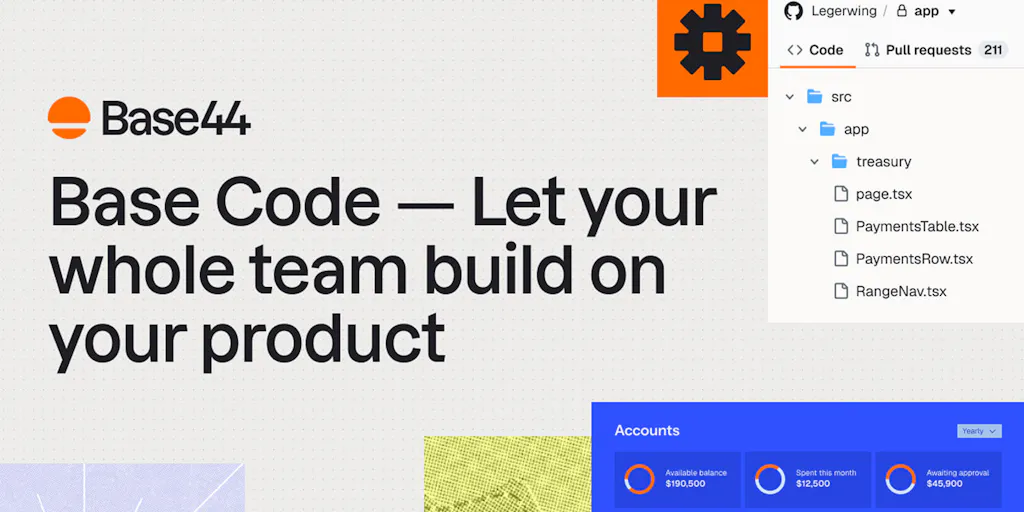
The company behind it, Base44, also ships a newer product called Base Code, which connects an existing GitHub repository into a browser-based workspace so product, design, marketing, and QA teammates can describe changes in plain language, work on isolated branches, preview live, and submit changes through pull requests while preserving branch protections and review processes. That’s the launch context. Note what’s absent: there is no scheduling layer, no analytics dashboard, no cross-platform publishing. This is not a Buffer or Later competitor. It’s infrastructure.
Why creators should care anyway
Because the same engine that generates a landing page can generate the content that points at it. The strategic value for a social operator isn’t the app builder itself — it’s the pipeline: build a small tool or lead magnet, generate the copy and creative around it, distribute across channels, and iterate on what converts. That’s the loop indie founders and solo creators have been assembling from five different subscriptions. The pitch here is consolidation.
The Problem It Solves Is “Idea to Shipped” — Not “Post to Published”
Most social tooling optimizes the middle of the workflow: drafting, scheduling, and analytics. The bottleneck for a solo operator or a two-person content team is usually earlier — turning a rough concept into something real enough to promote. That’s the gap Base44 targets, and it’s why the review from Diego Jesus is instructive rather than promotional. He describes building full websites in minutes, generating tailored resumes, and wrapping the tool into his own agency offering. He also names the failure modes directly: inconsistent output, imperfect memory retention across sessions, and PDFs that sometimes don’t download or surface in chat. That’s a fair portrait of the category.
Compare that to the incumbents reviewers themselves named: Softr, Replit, Lovable, bolt.new, Cursor, and even Claude by Anthropic and OpenAI used as general-purpose substitutes. One reviewer, Bob Vasic, claims to have tested more than 10 similar tools in six months and still ranked Base44 first on precision — while flagging documentation and support as the weak points. I’d treat “outperforms the rest” as reviewer enthusiasm, not a benchmark. But the consensus across reviews is consistent enough to be signal: speed and ease are real, polish and support are the tax.
Where the math breaks
Here’s the part the reviews don’t say out loud. If your output quality is inconsistent, and your documentation is thin, then the hidden cost isn’t the subscription — it’s the QA time. Every generated asset needs a human pass before it goes public. For a social team, that means your “AI saved me four hours” math has to subtract the review hour. In my experience testing tools in this class, the honest formula is: time saved on first draft, plus time added on verification, minus the cost of the one bad output that ships because you got complacent. Base44’s review profile suggests it wins the first term and loses some of the second.
The Distribution Claim Deserves More Skepticism Than the Product
Let’s go back to that LinkedIn claim, because it’s the single most relevant data point here for social media managers — and it’s also the least verifiable. A reviewer reports going from zero to over 1 million impressions using Base44 to shape content. He’s transparent that the ideas were his own and credits the tool with matching his words to “what the algorithm wanted.” I believe the outcome happened. I don’t believe the tool is the causal mechanism, and neither should you.
What’s actually happening in that scenario is well-understood by anyone who has run a LinkedIn account seriously: consistent posting cadence, formatting that survives the “see more” truncation, a hook in the first two lines, and a native-text format all raise dwell time and comment rate, which are the signals LinkedIn’s ranking system actually weights. Any tool that enforces those structural habits will correlate with better reach. The AI isn’t gaming the algorithm — it’s enforcing discipline the operator wasn’t applying manually. That’s a real benefit and a much less magical one.
Why TikTok creators should care more than LinkedIn ones
If you’re publishing short-form video, the equivalent discipline lives in watch time and retention curves, not text formatting. A tool that helps you script hooks, structure a 30-second arc, and repurpose one long-form asset into five vertical cuts is worth more to you than one that polishes prose. Base44’s strength — generating functional digital products — matters more to a creator selling a course, template, or community than to one monetizing pure reach. Be honest about which business you’re in before you buy the tool that matches someone else’s.
What Social Teams Can Borrow From This Launch
Forget the product for a second. The launch page itself is a masterclass in positioning that any creator can copy.
Ship a tool, not a post. The highest-leverage content in 2025 isn’t a carousel — it’s a small utility your audience can actually use. A calculator, a template, a checklist, a mini-app. It earns saves, shares, and backlinks in a way that a motivational graphic never will. Base44’s entire value proposition is collapsing the build time on that asset from weeks to an afternoon.
Let your reviews do your copywriting. The most persuasive lines on this page are user quotes, not maker claims. When you launch anything — a product, a service, a cohort — collect specifics from real users and put them front and center. “Fast prototyping” repeated 13 times in review tags is worth more than any adjective you could write yourself.
Build the distribution loop into the product. A tool that generates output nobody sees is a hobby. The operators winning right now connect build, publish, and measure into one cycle, with UTM tracking on every link so they know which channel actually drove signups instead of guessing from vanity metrics.
The repurposing workflow I’d actually run
If I were using a tool like this to support a multi-platform content operation, the sequence would be: build one small interactive asset, extract the core insight into a LinkedIn text post, cut a 45-second explainer for TikTok and Instagram Reels, screenshot the result for a Threads post, and write the long version for a newsletter. One build, five surfaces, one tracking link per surface. That’s the workflow the tooling category is racing toward — and it’s the workflow that survives algorithm changes, because you’re not dependent on any single feed.
Where My Judgment Says This Falls Short
I want to be direct, because the review data supports it. The top cons — lack of documentation, poor customer support, no real integrations, limited backend logic — are not cosmetic. For a social media team, documentation and support are the difference between a tool that scales across five seats and one that becomes one person’s pet project. If you can’t hand it to a junior hire with a clear guide, you haven’t actually bought leverage.
There’s also the vendor lock-in concern raised in the review summary. If your landing pages, lead capture, and internal dashboards all live inside one platform’s hosting and auth layer, your switching cost compounds every month. I’d want export paths, standard database access, and a clear answer on what happens to my data if I leave. The source doesn’t disclose pricing specifics beyond reviewers describing credit pricing as aggressive — so treat cost predictability as an open question, not a settled one.
And the honest scope check: this is not for you if you need a scheduling calendar, a unified inbox, or cross-platform analytics. Base44 doesn’t do that, and no amount of creative repurposing changes the fact that you’ll still need a Metricool or Hootsuite in your stack. It’s an addition, not a replacement.
Who this is genuinely not for
Pure reach players with no product to sell. Community managers whose job is engagement, not building. Anyone whose bottleneck is ideation rather than execution — AI tools amplify a clear point of view and expose a vague one. And teams without a human editor in the loop, because inconsistent output plus no review layer is how brands end up posting something subtly wrong at scale.
What I’d Watch / Test Next
This week, before spending anything: pick one small asset your audience would actually use — a checklist, a calculator, a swipe file — and time yourself building it manually. That number is your baseline. Then run the same brief through a tool in this class and time the build plus the QA pass. If the total isn’t meaningfully lower, the tool isn’t your bottleneck; your process is.
Second, run the distribution experiment properly. Take one idea, publish it natively on three platforms with distinct tracking links, and watch which surface actually moves. My bet is the platform you’ve been neglecting outperforms the one you’ve been optimizing, because most operators over-invest where they’re comfortable. Third, pressure-test the support and documentation before you commit a team to it — open a ticket, read the docs, and see how it feels. If the review consensus about thin documentation holds, you’ll know in an afternoon. The tooling will keep changing. The discipline of measuring what actually ships and what actually converts won’t.