The Comment Section Is the Last Untapped Distribution Channel You’re Ignoring
Every creator I know is chasing the same three metrics: reach, engagement rate, and follower growth. We obsess over the algorithm’s mood swings, tweak our hooks, and repurpose the same video across five platforms until we’re sick of our own face. But here’s the thing nobody talks about: the most valuable conversations about your content aren’t happening in your comment section at all. They’re happening on documentation pages, blog posts, and static sites that have no comment infrastructure whatsoever.
When I scheduled 30 posts across five platforms last month, I noticed something telling. The content that performed best wasn’t the slickest production or the trendiest audio — it was the pieces that sparked actual back-and-forth dialogue. Not just emoji reactions, but questions, pushback, and people tagging their colleagues. Yet when I tried to replicate that engagement on my own blog and landing pages, I hit a wall. The platforms I publish on daily have native comment systems, but my own corner of the internet — the one I actually own — was a ghost town with a contact form.
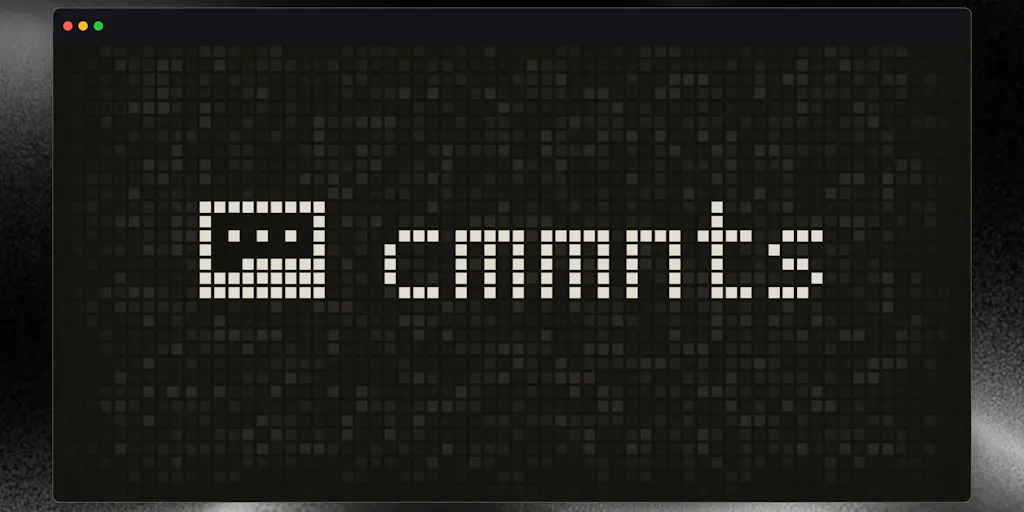
That’s why cmmnts, a Product Hunt launch from Sanjeeb Sahoo, caught my attention. It’s not another scheduling tool or AI content generator. It’s a comment system designed for documentation pages, static websites, and blogs — the places where your most qualified audience already is, but where you’ve had no way to capture their voice. And in an era where platforms are actively throttling outbound traffic and algorithm changes keep shifting under our feet, owning your conversation layer isn’t a nice-to-have. It’s becoming the entire game.
What Problem This Actually Solves for Social Media Operators
Let me paint a scenario that might feel familiar. You’ve built a following on Instagram and TikTok. You’ve got a newsletter that converts. You’ve even got a blog where you publish long-form versions of your content breakdowns. But your blog is static — maybe it’s built on a simple framework, or you’re using a documentation tool for your product’s help center. Every time someone wants to ask a question or point out an error, they have to email you or hunt for your social profiles.
The friction is killing your feedback loop.
The maker’s own framing on the Product Hunt page is straightforward: “We saw that a lot of documentation pages could use comments right on the page, so people can report issues, ask questions, or share feedback without having to go somewhere else.” That’s the pitch — and it’s more relevant to creators than it might first appear. When you publish a tutorial about your content workflow or a breakdown of a platform algorithm update, the people reading it are your peers, potential clients, or future collaborators. Their questions are gold. Their corrections save you from publishing misinformation. And their engagement signals to search engines that your page is alive.
From an operator’s perspective, the appeal is the infrastructure burden. Adding and maintaining a comment system is genuinely painful. If you’ve ever tried to self-host one, you know the drill: database updates, spam filtering, moderation queues, and the constant anxiety of a security vulnerability. The team behind cmmnts is positioning it as a snippet-based solution — when asked whether a basic static site can integrate it, the response was simply “Yeah 👍”. That’s the entire value proposition: drop in a script, and suddenly the dead-end pages of your digital presence become two-way conversations.
For social media managers, this solves a problem that’s been quietly eating our analytics for years. We drive traffic from Instagram and TikTok to our blogs and landing pages, watch the sessions spike in our analytics, and then lose the thread. We know people are reading, but we can’t hear what they’re thinking. The comment section on a blog post isn’t just a feature — it’s qualitative data that no dashboard can give you.
How It Differs From the Incumbents You Already Know
If you’ve been in this game for a while, you’re probably thinking about the established players. Disqus has been the default comment layer for over a decade. Commento and Remarkbox have carved out privacy-focused niches. And if you’re building on a specific platform, you might use GitHub Discussions for developer docs or the native comment systems baked into Ghost or Substack. So what makes cmmnts different?
The first differentiator is the moderation model. When a Product Hunt commenter asked about spam handling, the response was that the system uses a combination of manual filtering, admin dashboards, and an automatic flagging mechanism — five or more reports automatically remove a comment from public visibility. That’s a community-driven moderation approach that scales better than a solo creator manually approving every comment. It’s closer to how Reddit handles moderation than how traditional blog comment systems do, and for a solo operator, that’s meaningful. You don’t want to be refreshing a moderation queue at midnight when you should be editing tomorrow’s reel.
The second differentiator is the anonymity question. One commenter raised a sharp concern: “do mentions work for anyone or only people who already signed up on that site? asking bcoz anonymous comments plus mentions sounds like a moderation headache.” The maker’s response was candid — it supports both, uses system fingerprinting under the hood, and acknowledges the approach may need refinement. That transparency is rare in product launches, and it tells me the team is thinking about the real-world abuse vectors rather than just demo-day scenarios.
The third thing that genuinely surprised me is the Experiments/Lab section. The maker teased “interactive, crazy little games hiding in the Experiments section” and pointed to a games page where you can “play with your friends, partner, family — or, if nobody’s around, challenge the computer.” On the surface, this seems like a bizarre addition to a comment infrastructure tool. But from a creator-economy perspective, it’s actually a play for engagement stickiness. Comments are inherently social, and games are inherently social. If the team can blur the line between commenting and playing, they might have found a hook that keeps people returning to pages that would otherwise be static reference material.
Pricing is still marked “coming soon”, and the maker explicitly said, “We haven’t set pricing yet. We’d rather hear from you first and get it right.” For comparison, Disqus has a free tier and paid plans that scale with features, while Commento offers a straightforward subscription. The open question is whether cmmnts will follow the freemium model or try something different.
Why TikTok Creators Should Care More Than LinkedIn Ones
Here’s my take on where this matters most. If you’re a LinkedIn creator, your comment section is already a distribution engine. LinkedIn’s algorithm rewards conversation density — posts with active comment threads get pushed to more connections’ feeds. You don’t need a third-party comment system because the platform gives you one.
But if you’re a TikTok creator or an Instagram Reels producer, your situation is completely different. You’re driving massive traffic to link-in-bio pages, blog posts, and documentation — and then losing the conversation. TikTok’s algorithm doesn’t reward outbound clicks; it rewards watch time and retention within the app. So when you do manage to get someone to your own property, you need to maximize the value of that visit. A comment section on your blog post turns a one-time visitor into a returning participant. It gives you a reason to email them back, a reason to build a community that isn’t held hostage by platform decisions.
The creators I know who are building durable businesses are the ones diversifying their audience touchpoints. They’re not just posting on TikTok and hoping; they’re building email lists, communities, and owned properties. A lightweight comment layer is the missing piece that lets those properties feel alive.
What Creators and Social Media Teams Can Borrow From This
Even if you never install cmmnts, the underlying philosophy is worth stealing. Here’s what I’m taking from this launch:
First, reduce friction between your content and your audience’s response. Every extra step you put between a reader and their ability to react is a step that loses engagement. If someone reads your blog post and has to open a new tab to tweet at you, most of them won’t bother. The comment section — whether it’s from cmmnts, Disqus, or a native platform — captures the impulse in the moment. That’s why I’m now auditing every page I publish and asking: where can someone react to this right now?
Second, embrace community moderation as a feature, not a liability. The five-reports-and-it’s-hidden approach is elegant because it distributes the moderation burden. As a solo creator, you can’t watch every comment. But your audience can — and they will, if you give them the tools. This is the same principle behind community guidelines on Discord servers and subreddit rules. Trust your community to help you keep the space clean.
Third, experiment with play. The games-in-a-comment-system angle seems frivolous until you think about what it does to dwell time. If someone lands on your documentation page and can challenge a friend to a quick game, they’re spending five extra minutes on your property. That’s five more minutes of brand exposure, five more minutes of potential conversion. I’m not saying every creator needs to embed games in their blog — but the principle of making your owned properties more interactive is sound.
Fourth, the open-source roadmap matters. The maker confirmed the project will eventually become open source, with the cloud version serving as a testing ground first. For creators who are technical enough to self-host, this is significant. Open-source comment systems give you data ownership and customization options that SaaS products can’t match. If you’re building a serious content business, owning your conversation data is as important as owning your email list.
Where the Math Breaks
Let me be the skeptic for a moment. The moderation approach has a genuine weakness. System fingerprinting is a decent anti-abuse measure, but it’s not foolproof. VPNs, incognito modes, and shared devices can all produce false positives or negatives. If a troll is determined enough, they’ll find a way around it. And if five reports automatically hide a comment, a coordinated brigade could silence legitimate criticism by mass-reporting it.
There’s also the question of scale. The maker was honest that the cloud version is being tested “under real-world load” before the open-source release. That tells me the infrastructure isn’t battle-tested yet. When a comment system goes down or gets slow, it doesn’t just affect one page — it affects every page that embeds it. For a creator whose blog post is driving a product launch, a broken comment section is a bad look.
And here’s the bigger structural question: comment sections on blogs have been in decline for years. The conversation moved to social media because that’s where the audiences are. Bringing comments back to your own property requires you to actually have an audience that visits your property. If you’re a creator who lives entirely on Instagram and TikTok, a blog comment system is solving a problem you don’t have yet. This tool is for creators who already have a destination — a blog, a documentation site, a product page — and need to activate the traffic they’re already getting.
The anonymous comment angle is also a double-edged sword. Anonymity lowers the barrier to participation, which is good for getting questions from people who might be shy. But it also lowers the barrier to abuse. The maker acknowledged this tension directly when responding to the moderation question: “as you said, it can be a moderation headache.” That’s the right attitude — but it’s also a warning that the early versions may be rough around the edges.
My Judgment Call: Who This Is Actually For
In my experience testing similar tools — and I’ve tried more comment widgets than I care to admit — the ones that stick are the ones that solve a specific workflow problem rather than trying to be everything to everyone. cmmnts is clearly aimed at developers and technical founders who run documentation sites and static blogs. The use case is obvious: if you’re publishing API docs or a knowledge base, having comments right on the page lets users flag issues without filing a formal support ticket.
For social media operators, the relevance is more indirect but still real. If you run a content studio that publishes tutorials, case studies, or thought leadership pieces on your own domain, this gives you a way to capture the conversation that would otherwise scatter across social platforms. And if you’re an indie founder building a product alongside your content operation, the documentation use case is directly applicable.
What I’d bet on: the open-source release will be the moment this gets interesting. If the team delivers on that promise with a stable, feature-rich version, they’ll have a real differentiator. Most comment systems are proprietary SaaS. An open-source option with a cloud fallback gives technical creators both control and convenience.
What I’m less sure about: the games angle. It’s charming, and it clearly generates engagement on the Product Hunt page — the maker’s comment about playing games with friends and family got responses. But I’m not convinced it’s a retention driver for the core product. It feels like a growth hack rather than a durable feature. If the games become a distraction from the moderation and reliability work, that’s a misallocation of resources.
What I’d Watch / Test Next
Here’s what I’d do this week if I were a creator or social media operator evaluating this space:
First, test the snippet on a low-traffic page. The maker confirmed that adding it to a basic static site is as simple as embedding a snippet. Don’t wait for the open-source release — throw it on a sandbox or a blog post that gets modest traffic and see how the moderation dashboard feels. The real test of any comment system isn’t the happy path; it’s how it handles your first spam wave and your first abusive commenter.
Second, watch the pricing announcement. The maker said pricing is “coming soon” and they want community input. That’s an opportunity. If you’re a potential customer, engage with the Product Hunt thread and tell them what you’d pay. Early pricing conversations often shape the final model, and your input could influence whether there’s a viable free tier.
Third, monitor the open-source timeline. The stated plan is to test the cloud version under real-world load, gather feedback, then release the open-source version. For creators who are technically inclined, this is the moment to get involved. Contributing early to an open-source project that aligns with your content infrastructure is a way to shape the roadmap.
Fourth, audit your own comment gap. Go through your owned properties — blog, documentation, landing pages — and identify where conversations are dying. If you’re driving traffic from social media to pages that have no way to capture reactions, you’re losing data. Whether you solve it with cmmnts, Disqus, or a native platform solution, the fix is the same: make every page you own a place where your audience can talk back.
The creator economy has spent the last five years building distribution and the next five will be spent building retention. Comment sections are the most underrated retention tool we have. They turn passive readers into active participants, and they give you a feedback loop that no vanity metric can replace. Whether cmmnts becomes the default answer or just another option in a crowded field, the question it raises is the important one: are you actually listening to the people who show up on your own turf?


