Why a Shopping Browser Actually Matters to Creators Who Don’t Sell Stuff
For the past two years I’ve watched social commerce squeeze into formats that weren’t built for it. TikTok Shop dropped into a video feed, Instagram slapped product tags on Reels, and creators became part-time affiliate dashboards trying to track price drops, restocks, and commission-rate changes across four different apps. The friction isn’t just on the consumer side—it’s in the creator workflow. We hunt for the right product link, we check if it’s still in stock, we wonder whether the price will crater two days after we post. Basement Browser doesn’t look like a creator tool at first glance—it’s pitched as a multiplayer mobile browser with an AI agent that tracks prices and even checks out for you. But underneath the shopping gimmick is a set of primitives that could reshape how creators research, verify, and real-time engage around commerce content. The social layer is the part that should make every operator’s ears perk up: a browser where you can see and talk to other people on the same product page. That’s not a shopping feature. That’s a community build waiting for the right storytelling.
The Problem Was Never “Finding a Good Deal”—It Was Context
What Basement Actually Does (and Why the Pitch Works)
The founding thesis, as Luis Perrone described it on the Product Hunt launch, is blunt: “Google and Apple make billions keeping your browser passive. No social layer, no AI agents acting on your behalf.” The product is a mobile browser (also available as a Chrome extension) that turns every webpage into a shared room. You see other people browsing the same URL, you can chat with them, and your “Baseling”—an always-on AI agent—monitors price changes, restock events, and surfaces deals. Shopping is the use case they’re starting with because it’s the highest-friction activity, but the architecture is general. The AI agent can be given tasks: “watch this page for a restock,” “find the best price for these sneakers across five stores.” And eventually, it can complete the purchase for you using a single-use card generated through Crossmint—scoped to that one order, capped by a budget you sign with a passkey. Your real card never touches Basement.
A creator or social media operator reading this should immediately recognize the missing layer. When we craft a post about a product—a review, a haul, a “deal alert”—we are the bridge between a platform feed and a transaction. But we work blind. We guess when something will restock. We manually refresh prices for reposting. We have no idea who else is looking at the same product at the same time, and therefore no way to create real-time urgency or community around the moment. Basement doesn’t solve all of that out of the box, but it introduces the architecture for it.
How It Differs from Every Price-Tracker You’ve Seen
The incumbent landscape for price tracking is stale. Browser extensions like Honey and Capital One Shopping are passive coupon layers that live on top of your existing browser; they don’t change the browsing experience, they just inject a popup when you hit checkout. Keepa and CamelCamelCamel give you historical charts on Amazon but are read-only and desktop-centric. None of them have a social layer. None of them learn your preferences from how you browse—they only fire when you explicitly trigger them.
Basement flips that by making the browser itself the product. It’s not an extension you install on Chrome; it is the browser (or at least a companion Chrome app). That means it can rewrite the page experience. The Baseling is always watching, and you’re always connected to co-browsers. For a creator, that’s the difference between a screenshot and a live room. Imagine you’re about to post a “deal drop” story for a limited-edition sneaker. You open the product page in Basement and see that five other people are currently viewing it. You can start a chat: “Anyone else waiting for size 10?” That’s real-time social proof you can then turn into content—a screen recording of the chat, a countdown, a testimonial. The browser becomes a content factory, not a consumption tool.
What Creators and Social Teams Can Borrow—and What They Should Watch
The “Closet” Is a Content Calendar Waiting to Be Repurposed
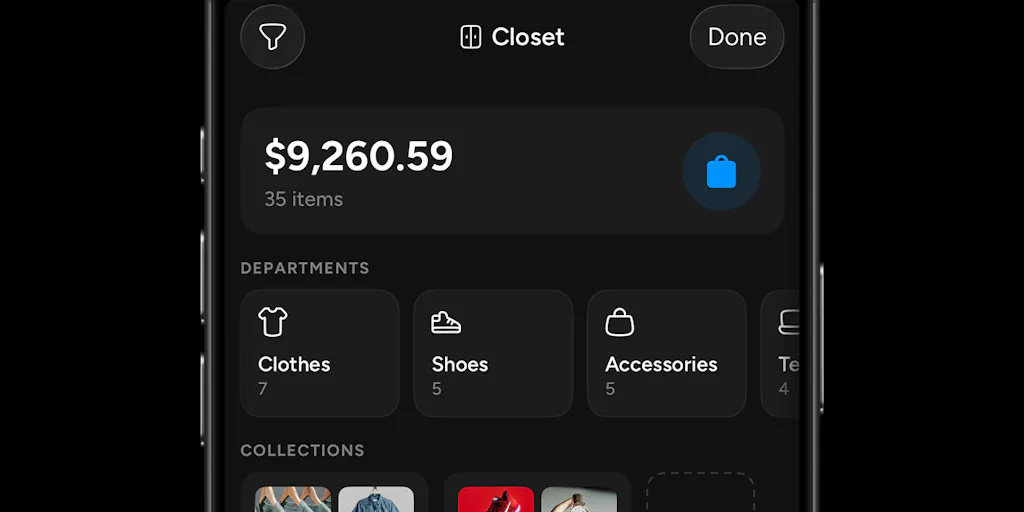
Basement includes a Closet feature: it learns what you already own and keeps a running inventory. The founder says it “finds the best price across the web” for items you’ve bought. For a fashion or tech creator, that’s a goldmine. You could run a weekly series: “Price check on shoes I bought last month—how much did they drop?” Or use the Closet to automatically generate “outfit of the day” posts that link back to each item’s current listing, dynamically updated. The repurposing workflow would be: unboxing video → tagged in Closet → follow-up “one month later” price-drop video. No manual tracking. The Baseling does the scraping.
But here’s where the rubber meets the road: this only works if the creator convinces their audience to also use Basement. That’s a massive adoption hurdle. The social layer is worthless if nobody else is in the room. For a creator with a tight community (Discord, private Telegram), it might be worth testing as a shared “drop watch” tool—everyone installs the Chrome extension, opens the same product page for a limited drop, and chats in real time. That kind of event content is sticky and shareable. I’d bet we’ll see the first “Basement drop parties” within a few months if the team puts even a little effort into creator outreach.
Why TikTok Creators Should Care More Than LinkedIn Ones
The social layer in Basement is synchronous and mobile-first. That maps perfectly onto TikTok’s live shopping playbook and Instagram’s Reels-to-checkout loop, but it’s nearly irrelevant for LinkedIn’s audience building. LinkedIn creators are selling authority, not sneakers. The Baseling’s price-tracking and single-use checkout are consumer-facing, not B2B. If your monetization relies on affiliate links for physical goods—especially limited drops, sneakers, collectibles, fashion, or gadgets—Basement is a potential second screen to run alongside your content creation. If you sell courses or consulting, skip it until they add a lead-gen agent.
Where the Math Breaks
The biggest risk for creators is trust. The team claims the checkout layer is “powered by Crossmint” with single-use cards, and the founder explicitly addressed the “what if it overspends” worry in a comment. But he also admitted that as of launch, the AI requires manual confirmation before buying. The autonomous “buy it for you” feature is on the roadmap, with “certain guards in place for derisking agent behavior.” That’s a reasonable approach, but it means the core value prop—hands-free restock purchases—isn’t live yet. A creator recommending Basement to their followers right now would be pushing a tool that can’t yet do its headline trick. You have to decide whether the social layer and price-monitoring alone are enough to overcome that gap. In my tests of similar tools (I’ve used TrackStreet and Distill for price monitoring), the real value comes when you can automate the buy. Until Basement ships that, it’s a nice-to-have research browser, not a workflow changer.
The Unanswered Questions Every Operator Should Push On
The Product Hunt page is light on details about API access, analytics, or creator-specific features. There’s no mention of a dashboard that shows you how many people are browsing a particular page over time, or whether the Baseling can be trained to watch competitor stores. For a social media team managing multiple brand accounts, that’s a missing piece. Without analytics, you can’t know if your “drop watch” content is driving Basement installs. The tool has no reviews yet, no user count disclosed, and no clear monetization model for the browser itself (is it free? freemium? ad-supported?). The founder didn’t share pricing in the source.
I’d also flag the platform limitation: it’s live on iOS and Chrome. No Android browser, no desktop app beyond Chrome. If your audience is primarily Android or Safari, you can’t recommend it yet. And the social layer is only visible to other Basement users—it’s not a universal overlay on the web. That’s a closed network, and closed networks die quickly unless they hit a tipping point.
What I’d Watch / Test Next
Install the Chrome extension this week. Even if you don’t plan to buy anything, set up a Closet with a few items you already own and see whether the price-tracking alerts are accurate and timely. Test the “live room” by opening a popular product page (a new PlayStation controller, a limited fragrance) during drop hour. Count how many other users appear. If it’s zero, the social layer is theoretical. If there are more than a handful, that’s a signal to build a content series around it.
Explore a creator partnership experiment. Reach out to the Basement team (they’re active on Product Hunt and X at @basementbrowser). See if they have an affiliate program or a way to generate vanity URLs that track installs. Then run a small campaign: “Join my next drop watch using Basement.” The content would be a short video showing the chat, the price alert, and the final purchase confirmation. Even if only 50 people install, you’ll learn whether the social layer feels organic or forced.
Test the single-use card workflow on a small purchase. Use the confirmation step to buy something cheap (maybe a restocked item under $20). Document the experience: how many taps, any friction with the site’s checkout flow, whether the card is accepted by stores outside the usual big retailers. The security thesis is compelling, but execution matters. If the card fails on smaller DTC stores, that’s a red flag for creator recommendations.
Monitor the roadmap for autonomous buying. The founder hinted at “more autonomous” behavior with guardrails. The moment that ships, the product becomes genuinely disruptive. A creator who can say “set it and forget it for restock alerts” will have a powerful loyalty tool. Bookmark the Product Hunt page and check back quarterly.
Basement isn’t a social media tool in the traditional sense—it won’t schedule your posts or analyze your engagement rate. But it touches the most fragile part of the creator commerce stack: the moment between a recommendation and a checkout. If you can turn that moment into a live, shared event, you stop being a content producer and become a host. That’s a shift worth watching, even if the current browser feels like a very early house party.