The real bottleneck in AI-assisted content work isn’t the model — it’s the context you keep re-explaining
If you run social for a brand, a creator business, or a small portfolio of clients, you’ve probably already folded an AI agent into your workflow somewhere. Maybe it’s drafting captions, maybe it’s summarizing a long-form video into a dozen short-form hooks, maybe it’s auditing your last month of posts for patterns. And if you’ve done that for more than a few weeks, you’ve hit the same wall I have: the agent is smart, but it has no memory of your operation. Every new session starts from zero. You paste the same brand voice doc, re-explain the same audience, re-list the same banned phrases, re-state which platform gets which CTA. Multiply that across the three or four agents you’re now juggling — one for research, one for copy, one for repurposing, one for analytics Q&A — and the “AI leverage” you were promised quietly turns into a part-time job managing AI. That’s the problem space Campfire is poking at, and even though it’s a developer tool on its face, I think social operators should be paying attention, because the underlying pain is identical.
What Campfire actually is, and what problem it’s trying to solve
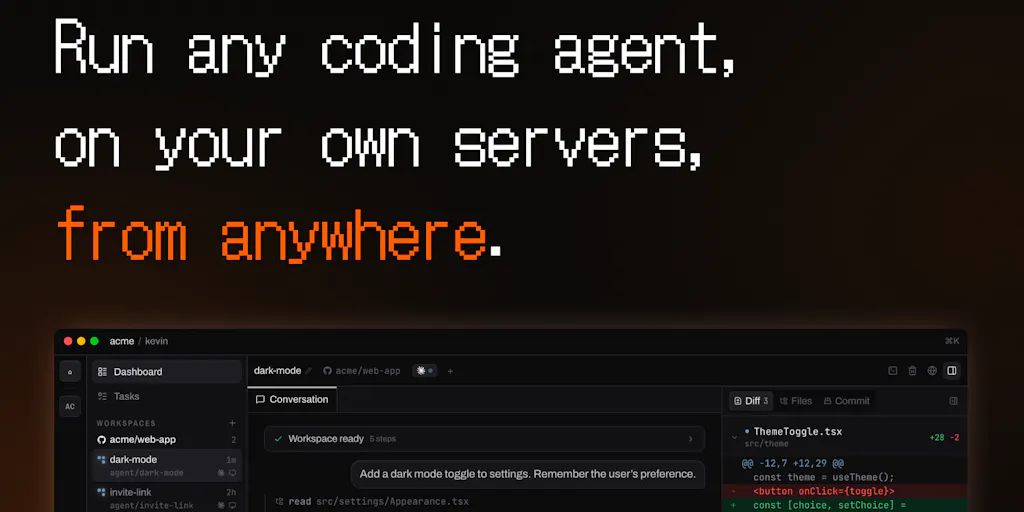
Let me describe it plainly, because the Product Hunt listing is written for a developer audience and the social-media relevance is buried. Campfire is an open-source shared workspace for humans and coding agents, built by Sergio Rovira under the banner of Boring Infra Co.. In the maker’s own framing, the goal “isn’t to replace Claude Code, Codex, OpenCode, or whatever agent you like using” — you keep your existing agents and give them a shared place to work together, sharing context around “what we’re trying to do, what’s been decided, what we’ve learned, what’s being worked on, and what’s already happened.”
The origin story is the part that should feel familiar to anyone running multi-platform social. Rovira describes having one agent researching, another working on a different part, a third reviewing the work — all on the same project, each “basically in its own little world,” with the human as the only connective tissue, “jumping between sessions trying to keep everything together.” Swap “coding agents” for “caption writer, hook generator, analytics summarizer” and you have described my average Tuesday. The product is early — the maker says so explicitly, which is why it’s open source and being put in front of people — and pricing is not disclosed on the listing. It’s also sitting under a “Boring Infra” company label, which tells you the positioning is deliberately unglamorous: infrastructure, not magic.
Why a “coding agent workspace” matters to people who don’t write code
Here’s the mental leap I’d ask you to make. The thing Campfire is really selling isn’t code assistance — it’s shared state between parallel AI workers. That’s a horizontal problem. Every content team I know that has scaled past “one person and ChatGPT” is now running some version of a multi-agent pipeline: a research pass, a drafting pass, a platform-adaptation pass, a compliance/brand-safety pass, a scheduling pass. The agents are different tools with different strengths, and the human is the message bus. Campfire’s bet is that the message bus should be a product, not a person.
If that bet is right, the implications for social teams are bigger than for solo developers, because content operations have more context that needs to persist — voice guidelines, audience segments, historical performance, platform-specific constraints, legal dos and don’ts — and less tolerance for an agent hallucinating a claim that violates brand policy.
How it stacks up against what social teams actually use today
I want to be careful here, because Campfire is not a social media management tool and I’d be doing you a disservice by pretending it competes with one. It doesn’t. If you’re looking for scheduling, publishing, and unified analytics across Instagram, TikTok, YouTube, X, LinkedIn, Facebook, Threads, and Pinterest, you’re shopping in a different aisle: Buffer, Hootsuite, Later, Metricool, and Sprout Social are the incumbents you already know, and they’re solving the distribution and measurement layer. Campfire is solving the coordination layer underneath your AI tooling, which none of those platforms touch in any meaningful way.
The more honest comparison is against the ad-hoc stack most operators have assembled: a notes app for the brand voice doc, a spreadsheet for the content calendar, a shared drive for assets, and a browser with eight agent tabs open. That stack works — I’ve run it — but it has a specific failure mode: context drift. Session three of a campaign, your caption agent no longer remembers that you killed the “game-changer” phrasing in session one, so it creeps back in. Your analytics agent doesn’t know you already tested the carousel format last quarter, so it recommends it again as a fresh idea. Nobody’s wrong; there’s just no shared memory.
My take: Campfire is closer in spirit to what Notion tried to become for human teams — a single source of truth — except the “team” now includes non-human workers. Whether that framing lands with creators is an open question, and I’d bet most social operators will bounce off the developer-oriented language before they ever get to the value. That’s a positioning problem, not necessarily a product problem.
Where the math breaks
I want to flag a real limitation before the enthusiasm gets out of hand. Shared context only helps if the context is good. If your brand voice doc is three bullet points from 2023 and your audience definition is “women 25–45 who like wellness,” no amount of agent coordination will save you — you’ll just be propagating vague inputs to more workers, faster, with more confidence. Campfire, or anything like it, amplifies whatever you feed it. Garbage in, coordinated garbage out. The tooling doesn’t fix strategy; it removes an excuse for not having any.
There’s also a cost question the listing doesn’t answer. Running multiple agents in parallel against a shared workspace means multiple concurrent API calls, and depending on which models you’re using, that’s real money per campaign. The maker doesn’t disclose pricing or usage economics, and I wouldn’t assume “open source” means “free to operate” — it usually means “free to install, you pay the inference bill.” For a solo creator testing one agent, that’s negligible. For an agency running five client campaigns across four agents each, it’s a line item you need to model before you commit.
What creators and social teams can borrow from Campfire’s design
Even if you never install it, there are three operational ideas here worth stealing this week.
1. Treat “context” as a first-class asset, not a prompt you retype
The single highest-leverage thing I’ve done for my own AI-assisted content workflow is to stop treating prompts as disposable. Every recurring task — caption drafting, hook generation, repurposing a long video into shorts — now has a persistent context file that lives outside any single chat session: audience, voice rules, banned phrases, platform quirks, examples of what worked and what flopped. When I switch tools, I bring the file. This is exactly the behavior Campfire is trying to institutionalize, and you can do a crude version of it today in Notion, Obsidian, or even a pinned Google Doc. The point isn’t the software; it’s the discipline of externalizing what’s currently only in your head.
2. Separate the agents by job, not by platform
The maker’s setup — one agent researching, one building, one reviewing — maps cleanly onto content work. In my own tests of similar multi-agent setups, the biggest quality jump came not from a better model but from giving each agent a narrow, non-overlapping job: a researcher that only gathers and cites, a drafter that only writes, a critic that only finds weaknesses. When one agent tries to do all three, it grades its own homework and the output gets bland. If you’re using Claude, ChatGPT, or Gemini for content, try splitting the task across two sessions with different instructions and see if the second-pass quality improves. I’d bet it does.
3. Make the handoff visible
The comment from Robin de Lacroix on the launch thread nails the emotional core of this: “I’m usually the only one who remembers what got decided three sessions back, and it wears on me.” That’s not a tooling complaint, it’s a documentation complaint, and it’s the most common burnout pattern I see in social teams. The fix isn’t heroic memory — it’s a decision log. Every campaign gets a running doc of what was decided, when, and why. It takes four minutes a day and it saves you from re-litigating the same creative argument every quarter.
Why TikTok creators should care more than LinkedIn ones
This is a judgment call, but I’ll make it: the creators who will benefit most from agent-coordination tooling are the ones operating at the highest content velocity with the shortest shelf life. A LinkedIn ghostwriter publishing three posts a week has time to be thoughtful. A TikTok operator posting twice daily, testing hooks, riding trends, and repurposing across Reels and Shorts has no time to re-brief an AI every session — and the cost of a stale context (a trend reference that’s two weeks dead) is much higher. High-velocity, short-half-life content is where shared agent context pays for itself fastest. If your output cadence is low and your content is evergreen, you can afford to keep doing it the manual way.
Where I think Campfire falls short — and who shouldn’t bother
Balanced view time. First, it’s early, and the maker says so. Early open-source tools mean rough edges, sparse documentation, and a community you may end up contributing to rather than just consuming. If you’re not comfortable in a terminal or reading a README, this is not your tool today.
Second, the developer framing is a genuine barrier. Nothing in the listing speaks to marketers, and I don’t think that’s an accident — the maker is building for the audience he knows. For a social operator, that means you’d be an early adopter translating a dev tool into a marketing use case, which is doable but not free.
Third, and most importantly: if you’re running a single agent for a single task, you don’t have this problem yet. Campfire solves coordination overhead, and coordination overhead scales with the number of parallel workers. One creator, one agent, one platform — you’re fine. This is a tool for people who’ve already felt the pain of juggling three or more agent sessions and losing the thread between them. If that’s not you, bookmark it and come back when it is.
I’d also want to see, before recommending it broadly: how it handles conflicting context (what happens when two agents disagree?), how context is versioned as a campaign evolves, and whether there’s any audit trail — because for regulated industries, “the AI remembered wrong” is not an acceptable answer. None of that is disclosed in the listing, and I won’t pretend to know.
What I’d watch / test next
Concrete steps for this week, in order of effort:
- Audit your current context loss. For the next five days, note every time you re-explain something to an AI that you’ve explained before. That list is your business case for a shared workspace — and it’s also the raw material for the context file you should build regardless of whether you ever touch Campfire.
- Build one persistent context doc for your highest-frequency task and use it across every agent session for a week. Measure nothing fancy — just notice whether your first-draft quality improves.
- If you’re already running three or more agents, go read the Campfire launch thread and the maker’s request for feedback on how people are working today. The comment section is where the real signal lives on early tools.
- Keep your scheduling layer separate. No matter how good your agent coordination gets, you still need a real publishing and analytics stack — Buffer, Metricool, or whatever you already trust — because agents don’t post to Instagram, TikTok, or YouTube for you, and API rate limits and platform ToS don’t care how clever your workflow is.
My honest read: Campfire is a bet that the next wave of AI productivity gains comes from coordination, not raw model capability. I think that bet is directionally right. Whether this specific early, developer-flavored, open-source project is the one that captures it for social teams is genuinely unclear — but the problem it names is real, and the operators who solve it first will compound their output in a way the rest of us won’t.