The real lesson from Firetower’s launch isn’t about coding agents — it’s about what “always-on” work should mean for your content pipeline
If you run social for a living, you’ve felt the exact pain that Firetower is trying to solve — just in a different costume. Your work doesn’t stop when your laptop closes. A trending audio peaks at 11pm, a comment war needs moderation at 6am, a client wants a TikTok draft “before the morning standup.” The promise of an agent that keeps running on infrastructure you control, survives disconnects, and pings your phone when it needs a decision isn’t a developer story — it’s the shape of the next two years of social operations. So let’s read this launch the way a social media manager should: not as “another AI tool,” but as a signal about where persistent, remote, human-in-the-loop automation is heading.
What Firetower actually is, and the problem it’s really solving
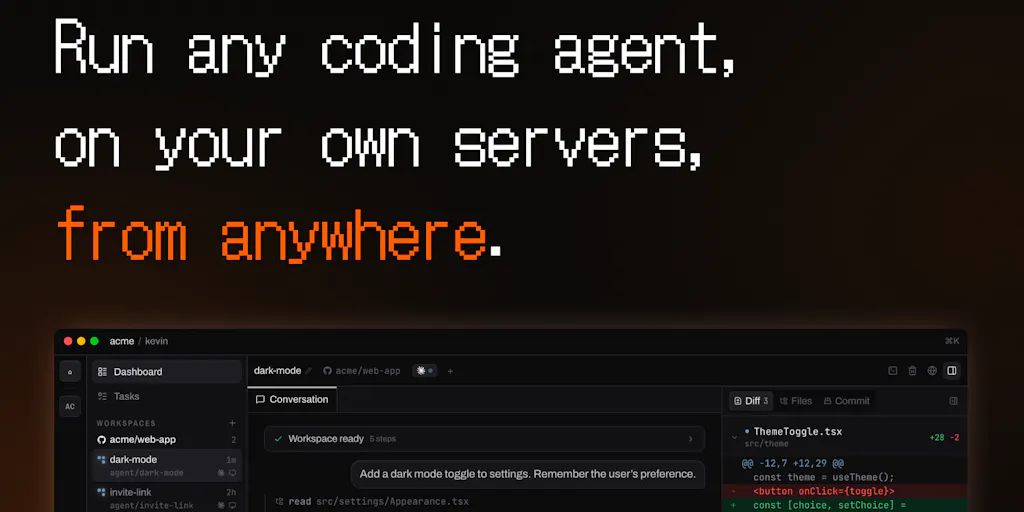
Firetower is, per its maker, an open-source platform for running coding agents — Claude Code, Codex, or Kimi Code — on infrastructure you control rather than on your laptop. The maker’s framing is precise: instead of keeping agents tied to a local machine, Firetower runs them on remote machines where sessions survive disconnects, work happens in isolated Git worktrees, and you can check in from desktop or phone. You can run multiple agents in parallel, connect your own servers, and switch between agents depending on the task. The core is written in Rust, and the maker claims the agent workers add no memory overhead — “unlike some alternatives,” in their words.
That’s the surface. The deeper problem it’s solving is state. Anyone who has run an AI agent locally knows the failure mode: you kick off a long task, your laptop sleeps, the session dies, and you start over. For a developer that’s annoying. For a social media operator who’s trying to chain together research, drafting, scheduling, and reply management across seven platforms, it’s fatal — because the whole point of automation is that it runs while you’re doing something else.
Why “sessions survive disconnects” matters more than it sounds
When I’ve tested agent-style workflows for content — say, pulling a week of YouTube comments, clustering them into themes, and drafting LinkedIn posts from the top three — the biggest time sink isn’t the model. It’s babysitting. A session that dies mid-run means re-feeding context, re-authenticating, re-explaining the brand voice. The Firetower maker’s answer to a direct question from Gal Dayan about whether sessions stay alive across client disconnects is, notably, not answered in the thread — which is exactly the kind of gap I’d want closed before I’d trust it with a real campaign. The maker does say a push notification system lands “this week,” letting you take over from your phone when an agent is stuck on a permission prompt. That’s the human-in-the-loop primitive that matters.
How it stacks up against the tools you already pay for
Here’s where I have to be honest about category confusion, because it’s the most common mistake I see creators make when they read a launch like this. Firetower is not a Buffer, Hootsuite, Later, or Metricool replacement. It doesn’t publish to Instagram, it doesn’t schedule TikToks, it doesn’t pull analytics dashboards. If you need that, go buy that — those tools are mature and cheap relative to the cost of building your own.
What Firetower competes with, conceptually, is the DIY automation layer that sits behind your scheduler: the scripts, the Zapier or Make workflows, the half-broken n8n graphs, the “I’ll just ask ChatGPT to write 30 captions and paste them manually” ritual. That layer is where most social teams quietly lose the most hours, and it’s the layer that AI agents are finally good enough to own — if they can run persistently and be interrupted safely.
The incumbents you should compare it to (and why they’re different)
- GitHub Actions and similar CI runners: persistent, remote, but built for deterministic jobs, not conversational agents that need mid-task input.
- Modal / Replicate: great for running models, not for orchestrating multi-step agent sessions with human approval gates.
- Cloud dev environments like Gitpod or Codespaces: closer in spirit, but their mental model is “a workspace for a person,” not “a fleet of agents you supervise from your phone.”
- Local agent runners like the Claude Code CLI itself: powerful, but the state dies with your machine.
Firetower’s bet — remote, isolated worktrees, phone-based approvals, bring-your-own-server — is a bet that operators want their own infrastructure, not another SaaS silo. My take: that’s the right bet for teams with compliance concerns or heavy custom workflows, and the wrong bet for a solo creator who just wants captions written. Pricing isn’t disclosed in the launch thread, which is a real gap for anyone trying to budget.
What social teams should steal from this launch
Even if you never run a coding agent, three patterns here are worth copying into your content operation this quarter.
1. Treat every content task as a session, not a one-shot prompt
The Firetower framing — “persistent remote workers you can launch, leave running, and come back to” — is a better mental model for content than “generate me 10 posts.” When I map a client’s weekly workflow, the tasks that actually consume time are long-running and interruptible: a competitor audit, a repurposing pass across CapCut clips and Canva carousels, a comment-moderation queue. Those aren’t prompts. They’re sessions with checkpoints. Design your AI usage the same way and you’ll stop re-explaining context every morning.
2. Build approval gates before you build autonomy
The most useful detail in the whole thread is the push-notification feature. The maker explicitly says you’ll be pinged when an agent gets stuck and can “take over” from your phone. That’s the correct architecture for social: AI drafts, human approves, AI publishes. If your current stack has no approval gate between “AI wrote it” and “it’s live on X or Threads,” you have a brand-safety incident waiting to happen. Steal the gate, not the agent.
3. Own your worktrees — literally and metaphorically
Greg Glazewski asked the sharpest operational question in the thread: who cleans up worktrees once a branch is merged, and what happens to a workspace that’s been idle for days? The maker’s answer — closing the workspace sweeps it automatically — is fine, but the idle case was left open. Translate that to social: what happens to the drafts your AI generated three weeks ago that nobody published? Where do they live? Who deletes them? Most teams have no answer, and it shows up as a bloated Notion graveyard and a Google Drive full of “final_v3_ACTUALLYFINAL.mp4.”
Where my judgment says Firetower falls short (and who should skip it)
I want to be balanced here, because the launch thread is warm and the maker is responsive, but warmth isn’t a spec sheet.
Open questions the thread doesn’t answer. The session-survival question from Gal Dayan is the single most important one for the product’s core promise, and it’s unanswered. The idle-workspace expiry question is unanswered. Pricing is not disclosed. Whether the “no memory overhead” claim holds under many parallel agents is asserted, not benchmarked. None of these are red flags — they’re just the things I’d want before recommending it to a team.
Who this is NOT for. If you’re a solo creator whose entire stack is a phone and CapCut, Firetower is overkill and will cost you more in setup than it saves. If you don’t self-host anything and don’t want to, the “connect your own servers” pitch is a liability, not a feature. If you need publishing, scheduling, and analytics in one dashboard, buy Metricool or Later and move on.
My take on the positioning risk. “Open-source platform for running coding agents” is a developer-native pitch. The social-media use case I’ve described above is adjacent, not native — you’d be repurposing a dev tool for content ops, which means you own the glue. That’s fine for a technical growth marketer. It’s a hard sell for a social manager who just wants the job done.
What I’d watch / test next
This week, before you touch anything like Firetower, do three cheap things. First, audit your current automation stack and write down every task that dies when your laptop sleeps — that list is your real ROI case for persistent agents, and it’ll tell you whether this category is worth your attention at all. Second, pick one long-running content task (a competitor audit, a repurposing pass, a comment-clustering job) and run it as a session with explicit checkpoints and a human approval gate, using whatever tools you already have. Third, go read the Firetower launch thread yourself and watch for answers to the session-survival and idle-workspace questions — if the maker ships the phone-approval flow and documents session persistence, this becomes a genuinely interesting primitive for social ops. If those gaps stay open, file it under “watch, don’t adopt,” and keep your budget on the schedulers and editors that already work.