The Real Bottleneck in Creator Tooling Isn’t Content — It’s the Plumbing
Every social media operator I know has the same dirty secret: the actual publishing is the easy part. What eats the week is the glue. The API key for the scheduling tool. The OAuth dance to reconnect a client’s Instagram after Meta rotates a token. The billing account for the transcription service you use twice a month. The spreadsheet that maps which automation owns which account. If you have ever tried to wire an AI agent into your stack — to draft captions, pull analytics, or auto-repurpose a YouTube long-form into six platform-native cuts — you already know that the integration layer, not the model, is where projects die.
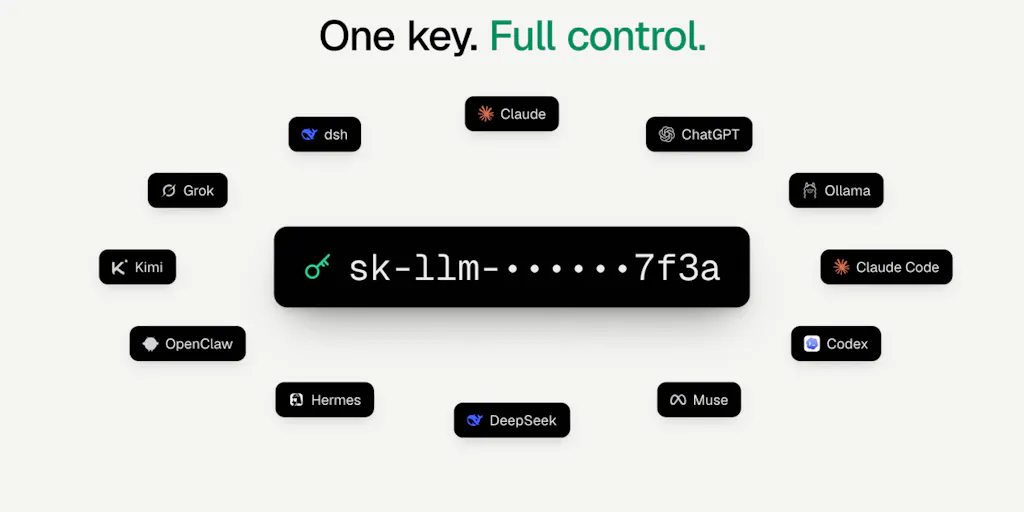
That is exactly the problem space Composio is circling, and its latest launch, Composio Instant, is worth a close look from anyone running social at scale. The pitch, per the maker’s own launch comment, is deceptively simple: give your agent one wallet, and let it call tools on demand — web search, scraping, voice, transcription, enrichment, SEO data — without you signing up for ten accounts and managing ten API keys. New wallets get $2 in credit to test. Whether that’s a novelty or a genuine shift in how creators build their automation stack is the question I want to work through here.
What Problem This Actually Solves (And Why Creators Should Care)
Let me be concrete about the pain. When I scheduled a month of cross-platform posts last quarter — roughly 30 pieces across five networks — the publishing itself took an afternoon in Buffer. The surrounding automation took days. I wanted an agent to pull last week’s top-performing Reels, transcribe them, rewrite the hooks for LinkedIn, generate thumbnails, and log everything to a Notion database. Each of those steps is a different vendor with a different auth model, a different rate limit, and a different billing relationship. Multiply that by a handful of client accounts and you have what one founder in the launch thread called “a tax”: building OAuth for a thousand apps is not a product, it’s overhead.
Composio’s framing is that the integration layer should be rented, not built. The company positions itself as a practical integration layer for AI agents, and the founder reviews on the page back that up — makers of Pally, Stanley For 𝕏, and VoiceOS describe using it to add secure agent connections and common MCPs without rebuilding connectors from scratch. The recurring benefits cited are managed authentication, a unified SDK, and skipping the maintenance grind. That’s the “for developers” side.
Instant is the consumer-facing twist: instead of you bringing your own accounts and keys, Composio holds the keys and meters usage per call. The maker, Darko, frames it as pay-for-what-the-agent-actually-uses, with spend visible in your logs, and compatibility with Claude, ChatGPT, Cursor, Codex, and other MCP clients. A maker reply also notes each instant tool call costs “just a fraction of a cent,” which is why the $2 stretches further than it sounds — though I’d treat that as a vendor claim until you’ve watched your own meter.
Why this matters more to a solo creator than to an enterprise
Enterprises have platform teams. A solo creator running six client accounts does not. The value of not provisioning a separate Firecrawl or transcription subscription for a workflow you’ll use forty times is disproportionately high when you are the ops department. This is the same logic that made Zapier indispensable to marketers a decade ago — abstract the connectors, charge for the abstraction. Composio is betting the agent era needs the same layer, but with auth and tool-calling baked in rather than bolted on.
How It Stacks Up Against the Incumbents
The honest comparison set here isn’t scheduling tools — it’s the integration and automation middle layer. The launch page itself surfaces the alternatives founders weighed: Pipedream, Nango, and Merge. That’s a useful map.
- Pipedream is the developer-favorite workflow runner — great for event-driven automations, but you’re still assembling and maintaining the logic yourself.
- Nango focuses on auth and sync for product integrations; strong if you’re building a SaaS, less turnkey for a creator who just wants an agent to transcribe a video.
- Merge is the enterprise-grade unified API play — powerful, but aimed at engineering teams with procurement cycles, not a two-person content studio.
- Zapier / Make remain the no-code default for marketers, but they’re workflow-first, not agent-first; the mental model is triggers and actions, not “let the model pick a tool.”
Composio’s differentiation, as I read it, is the combination of breadth (the page references 1000+ apps and, per a maker comment, around 2000 instant tools) with an agent-native interface via MCP. That MCP angle is the part I’d watch most closely. If your content stack increasingly runs through Claude or Cursor-style clients, an integration layer that speaks MCP natively removes a translation step that Zapier and Make still make you do manually.
Where the math breaks
Here’s my skepticism, flagged as opinion: metered pay-per-call pricing is wonderful for spiky, experimental workflows and quietly expensive for steady-state ones. A creator who transcribes every video every day may find a flat subscription cheaper than a wallet that drains per call. The maker’s answer — that Composio is “equal to or lower than the least cost present” across its tools, plus 30–100% partner discounts on 15+ apps — is a claim I can’t verify from the page, and I’d want to model my own usage before trusting it. There’s also the unanswered question a commenter raised directly: can a rogue loop in Cursor drain the $2 in minutes? The makers didn’t give a hard yes or no on the page. Budget caps and spend alerts are the first thing I’d test.
What Social Teams Can Borrow From This Playbook
Even if you never touch Composio, the launch is a useful template for how to think about your own content operations. Three transferable lessons:
1. Treat integrations as infrastructure, not projects. The reason creators burn out on automation is that every new tool feels like a one-off build. The healthier mental model — the one Composio is selling — is a standing layer where adding a tool is a config change, not a sprint. When I audit a client’s stack now, I ask which connectors are load-bearing and which are duct tape. The duct-tape ones are candidates for a managed layer.
2. Meter your experiments. The $2 credit, the per-call pricing, the spend-in-logs visibility — that’s a discipline worth copying even with flat-rate tools. Know what each automation actually costs per run before you scale it across ten accounts.
3. Design for the agent, not just the human. Most social tools are built for a person clicking buttons. The next wave assumes a model is doing the clicking. If your workflow can’t be expressed as “here’s a goal, here are the tools, go,” you’ll be re-platforming soon. That’s true whether you use Composio, Make, or roll your own with the platforms’ native APIs.
A sidebar for the platform-specific crowd
If you’re a TikTok-first creator, the transcription-and-repurposing use case is the obvious win — pulling hooks from long video and reshaping them for short-form is exactly the kind of multi-tool chain Instant is built for. LinkedIn-first operators get less immediate value; the tooling gap there is more about scheduling and analytics than raw tool access, and incumbents like Metricool or Later already cover a lot of that ground. Pinterest and Threads users are mostly underserved by everyone, so don’t expect magic there.
Where My Judgment Says It Falls Short
Balance matters, so let me be blunt about the gaps. First, the page’s review base is thin — “sparse and come entirely from founders,” by its own summary, based on 10 reviews. That’s not disqualifying, but it means the social proof is early-stage and self-selected. Second, the “For you” versus “For developers” distinction confused at least one commenter enough that they asked twice whether Instant is available to developers; the answer was yes, but the messaging could be sharper. Third, and most important for social operators: this is not a social media management tool. It won’t schedule your posts, it won’t give you a unified analytics dashboard, and it won’t replace Buffer, Hootsuite, or Later. It’s the plumbing underneath those tools, or underneath your custom agent that talks to them.
Who is this NOT for? The creator who posts manually three times a week and has no automation ambitions. The team that already has a mature, cheap integration stack and no agent workflows. Anyone who needs enterprise governance and zero-data-retention guarantees today — the page mentions ZDR and governance on the developer side but doesn’t spell out the details, so I’d ask before committing client data.
What I’d Watch / Test Next
Concrete steps for this week, whether or not you’re sold:
- Spin up the $2 wallet and run one real workflow — transcribe a video, generate three caption variants, log to your database. Watch the per-call spend in the logs and see if the meter matches the “fraction of a cent” claim.
- Stress-test the runaway-loop fear. Point Cursor or Claude at a task with a deliberate loop and see whether you can cap spend before it drains. If there’s no hard budget limit, that’s a dealbreaker for client work.
- Map your current duct-tape connectors and price them against a metered alternative. Flat subscriptions often win on steady-state volume; wallets win on spiky experiments.
- Watch the MCP ecosystem. If your content stack is drifting toward agent-native clients, an MCP-speaking integration layer is a bet worth tracking — but track it, don’t bet the studio on it yet.
My take: Composio Instant is a smart reframing of a real, boring, expensive problem. It won’t make your content better, and it won’t replace the tools you already love. But if the next year of creator tooling really does run through agents, the layer that holds the keys is going to matter a lot — and right now, this is one of the more interesting bets on that layer.