The Creator Workflow Is About to Get a Lot More Concurrent — Here’s Why That Changes Everything
If you’ve spent any serious time running social accounts, you know the real bottleneck was never creativity. It’s continuity. I can’t count how many times I’ve briefed a designer or an editor on a campaign, watched them nail the first three assets, and then watched the fourth one drift — the color temperature shifts, the caption voice wobbles, the CTA formatting quietly mutates. By the time you’re scheduling batch six of a month-long push, you’re not managing content anymore; you’re managing institutional amnesia. Every handoff between a human and a tool, or between two tools, is a chance for context to leak out. And now that we’re all trying to delegate chunks of production to AI agents, that leak becomes a flood. An agent doesn’t get tired, but it also doesn’t remember unless you build the memory into the infrastructure. So when I see a tool that treats AI agents as collaborators with a shared memory of design decisions rather than as one-off prompt-executing vending machines, my ears perk up. Because the difference between a content operation that scales and one that collapses under its own inconsistency is exactly this: whether your tools remember what you decided last Tuesday.
The launch that caught my attention this week is Doop, an open-source infinite canvas platform from SlideSpeak founder Kevin Goedecke. And before you dismiss it as another design tool for developers, let me explain why a social media operator should care about a canvas where Claude Code and Codex cursors are moving around like ghost collaborators. It’s not about the drawing. It’s about the state.
The Problem That Design Tools Never Solved, and Why Agents Made It Worse
Let’s talk about the actual operational pain here. Most design tools — and I’ve used all the big ones, from Canva for quick thumbnails to Figma for proper brand systems — are built on a single-player assumption. You are the actor. The tool is the surface. Even when Figma added multiplayer cursors, it was still humans driving those cursors. The tool never had opinions, never made decisions, never needed to be brought up to speed on what the brand voice sounded like in Q3 versus Q4.
Then AI agents showed up. And suddenly we had a new kind of worker in the studio — one that could generate, iterate, and produce at a speed no human can match. But here’s the catch that everyone glosses over: agents are stateless by default. You prompt Claude Code to design a carousel, it does a great job, you say “now do the same for the LinkedIn version,” and it looks at you like a goldfish that just swam past a new castle. It has no idea what it did five minutes ago, let alone what the brand guidelines were that you uploaded in January. The agent doesn’t have continuity. It has a context window that resets.
The maker’s framing on the Product Hunt page is spot-on: most design tools aren’t built to work with AI agents as first-class citizens. In my experience testing similar workflows — where I’ve tried to get ChatGPT to produce a month of Instagram graphics that maintain a consistent visual identity — the failure mode is always the same. The first piece is perfect. The second piece is close. The third piece has drifted. The fourth piece looks like a different brand entirely, because the model has no persistent memory of the design decisions made in pieces one through three. It’s not a prompt engineering problem. It’s an architecture problem.
What Doop Actually Does Differently — and What It Shares With the Incumbents
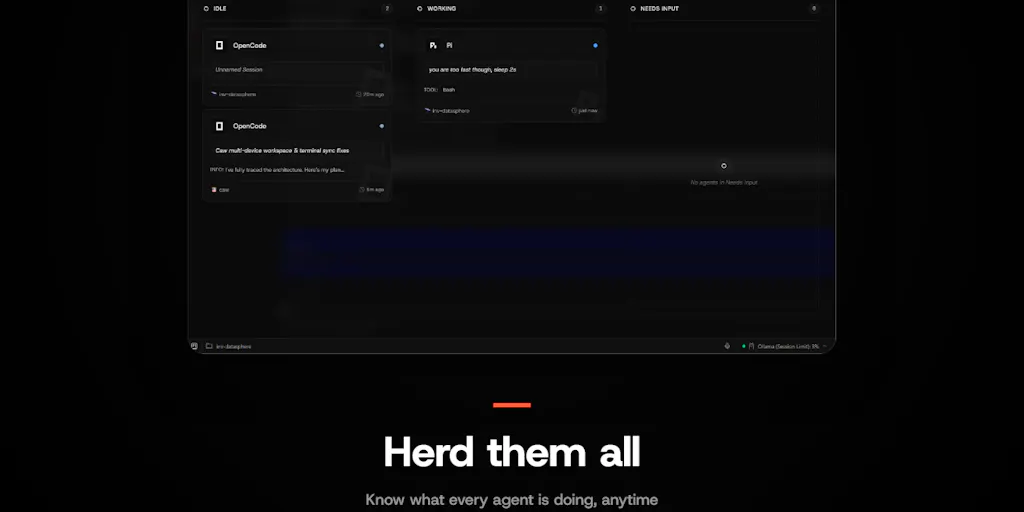
So what’s the actual mechanism here? The core pitch is that Doop is an infinite canvas where AI agents are real collaborators. You see their cursors. They stream designs frame by frame. They review each other’s work. And critically, they share one memory of your decisions, your design taste, and your context. The “bring your own AI” angle is significant — you connect the Claude or ChatGPT subscription you already pay for, rather than buying into a proprietary model stack. The maker is explicit: no platform tokens, no markup. Any MCP agent can join a canvas — Claude, Codex, Cursor, OpenClaw.
Let me unpack why that matters for people who don’t write code. MCP, or Model Context Protocol, is the standard that lets different AI tools talk to each other and to external systems. When the maker says any MCP agent can join a canvas, they’re saying Doop isn’t locked to one AI vendor. If you’re a Claude shop today and you switch to Codex next quarter, your canvas doesn’t break. That’s a big deal in a landscape where tool lock-in is the default strategy.
Now, how does this compare to what’s out there? The maker explicitly positions Doop as an open source Claude Design and Paper Design alternative. Those are newer entrants in the AI-design space, but the more relevant comparison for my audience is against the workflow tools you’re actually using. When I schedule 30 posts across 5 platforms in a month using something like Buffer or Metricool, the content has already been made. The scheduling tool doesn’t care about design continuity. The design tool doesn’t care about scheduling. And the AI tool that helped you draft the caption doesn’t care about either.
Doop is trying to solve a different layer of the stack. It’s not a scheduler. It’s not an analytics platform. It’s a production environment where the thing being produced is visual content, and where the producers include non-human agents that need to stay on the same page. The shared memory feature — which stores hard design rules in an editable markdown file similar to a DESIGN.md, plus a knowledge graph under the hood that tracks design decisions and style preferences — is the piece that caught my eye. They’re using Cognee for the memory database, which is a smart choice for graph-based memory rather than just vector embeddings.
What Creators and Social Media Teams Can Actually Borrow From This
Here’s where I think this gets interesting beyond the narrow use case of “designing with agents.” The underlying philosophy — that AI collaborators need persistent, structured memory — is directly applicable to how you run your social operation, even if you never open Doop.
The DESIGN.md concept is genius for content operations. The idea that you’d have an editable markdown file that encodes hard rules — not soft preferences, but hard rules — is something every team should steal. Not for design, but for voice, tone, and format. I’ve started doing this manually in my own workflow. I have a master document that says things like “We never use exclamation points in LinkedIn posts,” “All Instagram carousels must have the hook on slide one with no more than 12 words,” “TikTok captions must be under 75 characters to avoid truncation.” When I hand off to an AI assistant, I paste that document in. But that’s fragile. Doop’s approach — making it a persistent, versioned file that the agent reads from automatically — is how you’d want it to work at scale.
The multi-agent review loop is where the efficiency actually lives. The maker describes agents reviewing each other’s work. In my experience, the most time-consuming part of content production isn’t the first draft — it’s the revision cycle. If you’ve got one agent generating and another agent critiquing against the brand guidelines, you’ve automated the QA process that usually eats your afternoon. The “agents forgetting design decisions is the usual pain” comment from a commenter on the launch page resonates deeply. That’s the same pain I feel when I ask an AI to adapt a successful Reel into a static LinkedIn post and it loses the core hook because it doesn’t remember what made the Reel work.
Let me give you a concrete scenario. Last month, I was producing a 12-piece content series for a client launch. The visual identity was tight — specific gradients, specific type treatments, a recurring visual motif. I tried to delegate the asset production to an AI image tool. The first three pieces were on-brand. By piece seven, the motif was gone, the gradient had shifted, and the type was wrong. I had to go back and re-prompt with reference images every single time. That’s not scalable. That’s babysitting. Doop’s shared memory — where the agent holds onto the design decisions and style preferences across sessions — is the fix for that specific headache.
Where the Math Breaks: My Honest Concerns
Now let me be clear about where I think this falls short, because blind enthusiasm helps no one. First, the target user is not a typical social media manager. The language on the launch page — MCP agents, Claude Code, Codex, OpenClaw — assumes a technical fluency that most content operators don’t have. The installation process, while described as “pretty straight forward” by the maker, still requires you to understand what an MCP connection is and how to hook up your existing Claude or Codex subscription. For a solo creator who’s comfortable in CapCut but has never opened a terminal, this is a non-starter. This is a tool for the technical founder who also does their own content, or for a team with a developer on staff who can wire things up.
Second, the memory solution has open questions. When a commenter asked whether the memory is a file in the repo or hosted, the maker’s answer revealed a hybrid approach: an editable markdown file for hard rules plus a knowledge graph stored via Cognee. That’s elegant, but it raises practical concerns. If the memory lives in a knowledge graph, how portable is it? If I want to leave Doop and take my brand memory with me, can I export it? The source is silent on that. And the knowledge graph is only as good as the structure you put into it. Garbage in, gospel out — if you don’t carefully curate what decisions get recorded, you’ll have a graph full of noise.
Third, the “no platform tokens, no markup” claim cuts both ways. It’s great that you can bring your own AI subscription. But that means Doop’s quality ceiling is tied to whatever model you connect. If Claude has a bad day or Codex changes its behavior, your design output changes too. There’s no abstraction layer protecting you from model drift. In my experience, that’s a real risk when you’re producing consistent branded content over months.
Fourth — and this is the big one for social media operators — Doop is a design tool, not a distribution tool. It solves the production problem. It does nothing for the scheduling, analytics, or platform-specific optimization problems that dominate a social media manager’s day. The maker’s example of using Doop to design ad creatives with Claude is telling — that’s an ad creative workflow, not a full-funnel social operation. You’d still need your Buffer or your Hootsuite to get that content out the door.
Why TikTok Creators Should Care More Than LinkedIn Ones
Here’s a nuance worth unpacking. The value of shared agent memory scales with the volume and speed of your content production. A LinkedIn creator posting three times a week can get away with manual consistency checks. A TikTok creator or a brand account posting three times a day cannot. The algorithm rewards consistent posting cadence, and the content needs to feel like it comes from the same brand voice even when you’re producing at volume.
When TikTok moved toward pushing more branded content and longer-form video, the production pressure went up. You can’t hand-review every asset when you’re shipping a dozen pieces a day. The agents need to internalize the brand rules and apply them without supervision. That’s where Doop’s shared memory model becomes not just convenient but necessary. The LinkedIn crowd, with their lower volume and higher tolerance for polished-but-slower output, can keep using the old manual review workflows. The TikTok and Instagram Reels crowd, competing in a feed where the algorithm punishes inconsistency, needs agents that remember.
What I’d Watch and Test Next
If you’re a social media operator and this piqued your interest, here’s what I’d actually do this week — not next month, this week.
First, steal the DESIGN.md concept immediately. You don’t need Doop for this. Open a Google Doc or a markdown file and write down your top ten hard rules for content — voice, format, visual style, CTA placement. Make it specific enough that a stranger could follow it. Then, the next time you use an AI tool for content production, paste those rules in and see if your output consistency improves. It will. That’s a zero-cost experiment.
Second, if you’re technically inclined, take Doop for a spin with your own subscription. The bring-your-own-AI model means you’re not paying for another platform token. Connect your Claude or ChatGPT subscription, set up a simple canvas with one brand rule, and see if the agent actually holds the line across multiple generations. My bet is you’ll be impressed by the memory feature and frustrated by the setup friction. That’s the trade-off of early-stage open-source tools.
Third, watch the MCP ecosystem closely. Even if Doop isn’t your tool, the fact that MCP agents can collaborate on a shared canvas is a signal. Within the next twelve months, I’d bet we see scheduling platforms like Buffer or Later integrate agentic workflows where the AI doesn’t just suggest a caption — it designs the asset, checks it against your brand memory, and schedules it. The tool that owns the memory layer will own the workflow. Doop is an early bet on that future.
Fourth, test the multi-agent review loop in whatever tool you have. If you’re using ChatGPT or Claude for content, try a two-agent setup: one generates, one critiques against your hard rules. You don’t need an infinite canvas for that. But if the review agent catches things the generation agent missed, you’ll understand why the shared memory approach matters.
The bottom line is this: the creator economy is moving from human-only production to human-agent collaboration, and the tools that win will be the ones that solve the memory problem. Doop is an early, opinionated attempt at that solution. It’s not ready for the average social media manager — the setup is too technical, the distribution layer is missing, and the long-term portability of its memory graph is an open question. But the ideas are right, and the ideas are portable. Steal the memory concept. Test the multi-agent workflow. And keep an eye on whoever figures out how to make agentic design memory work for people who don’t know what MCP stands for. That’s the tool that’ll actually change your workflow.