The creator tooling market has a new entrant, and it’s not what you think
Every few weeks a new scheduling or automation tool lands on Product Hunt promising to “10x your reach,” and the creator economy collectively rolls its eyes. We’ve been here before — with Buffer, Hootsuite, Later, and a graveyard of half-built dashboards that never solved the actual bottleneck: getting a consistent, platform-native output cadence without burning out the person behind the account. So when I saw Ever Beyond: Space Conquest hit the front page, my first instinct was to skip it. It’s a game, not a SaaS tool. But the maker’s note — Gökhan D. writing that he’s been building it for “about six years,” iterating on systems, and deliberately designing for both active and idle play — stopped me cold. Because that dual-mode design problem is exactly the problem every social media operator faces in 2025: how do you build something that rewards attention when you have it, and keeps compounding when you don’t?
What the product actually is, and why a game launch belongs in a creator’s feed
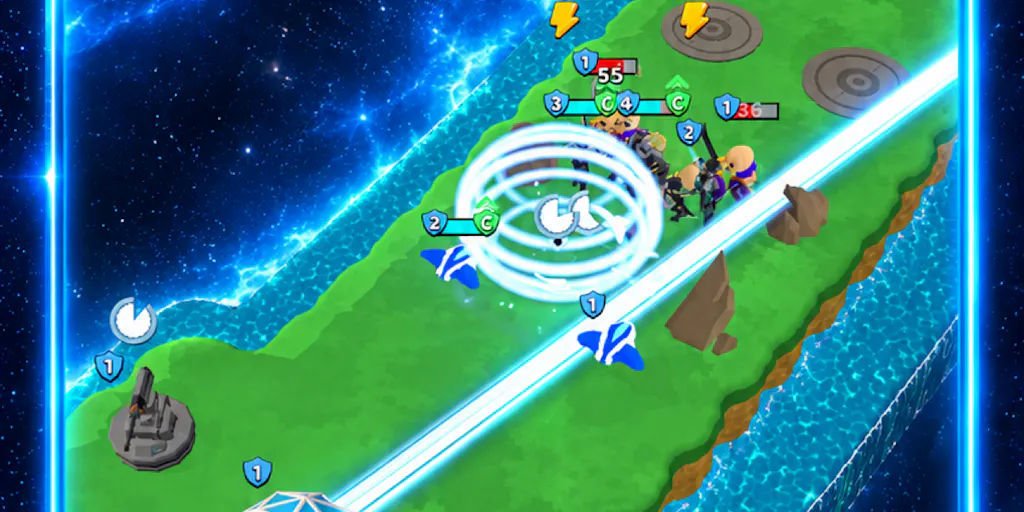
Let me be honest about the framing here. Ever Beyond: Space Conquest is an idle strategy game — a genre that sits somewhere between Cookie Clicker and the deeper 4X systems you’d find in Stellaris. The maker describes it as a project that “started with me trying to make an idle game I’d personally enjoy” and grew into “a much bigger project than I originally expected.” That’s the entire factual payload of the launch page. There’s no pricing disclosed, no user count, no funding announcement, no team size. Just one maker, six years, and a release.
So why am I writing about it for social media managers? Two reasons, and I want to be transparent that the second is entirely my own read.
First, the practical one: idle games are a content category that performs disproportionately well on short-form video. If you run a gaming-adjacent account — or a “cozy productivity” or “ambient focus” account, which have exploded on TikTok and YouTube Shorts — a new idle title with deep systems is raw material. Six years of iteration means there’s actual mechanical depth to show, not just a tap-to-earn loop. That’s the difference between a video that gets 2,000 views and one that gets looped for watch time.
Second, the meta reason: the maker’s design philosophy — “you can actively manage things and make strategic decisions when you feel like it, but you can also leave the game idle and still make progress” — is the single best articulation I’ve seen this year of what a modern content operation should feel like. Not a treadmill. Not a firehose. A system that rewards you when you show up and doesn’t punish you when you don’t.
Why TikTok creators should care more than LinkedIn ones
Here’s the platform math. TikTok’s algorithm weights watch time and completion rate heavily, and idle-game content is almost purpose-built for both — the screen is visually busy, the numbers tick up, and there’s no narrative cliff you have to resolve in three seconds. A 45-second screen recording of a mid-game Ever Beyond session can hold attention the way a talking-head clip can’t.
LinkedIn, by contrast, rewards dwell time on text and document carousels, and its audience skews toward professional services. An idle space game is not going to move a B2B feed. I’d bet most LinkedIn creators who try to force this angle will get the algorithmic cold shoulder — not because the content is bad, but because the intent mismatch is too wide. My take: if you’re a LinkedIn-first operator, skip this one. If you’re on TikTok, YouTube Shorts, or even Pinterest (idle game aesthetics do surprisingly well in “gaming setup” and “cozy desktop” boards), there’s a window here before the category gets saturated.
The real lesson: dual-mode design as a content operating principle
Strip away the game and what Gökhan D. has built is a case study in a design pattern I think every social media team should steal. He explicitly optimized for two user states:
- Active mode: the player logs in, makes strategic decisions, manages systems, feels agency.
- Idle mode: the player walks away, and the game keeps producing progress in the background.
Now map that onto your content operation. Most creators I know run in one of two failure modes. Either they’re in permanent active mode — posting daily, replying to every comment, chasing every trend — until they burn out in six weeks. Or they’re in permanent idle mode — batch-scheduled a month of posts via Metricool or Buffer, then ghosted the comments section, and watched engagement rate crater because the algorithm reads “no replies” as “low-quality account.”
The dual-mode model says: build systems that compound while you’re away, and reserve your active energy for the moments that actually move the needle.
Where the math breaks
Here’s the honest caveat. Idle progress in a game is bounded by the designer’s tuning — the maker controls the rate. Idle progress in a content operation is bounded by distribution mechanics you don’t control. A scheduled post doesn’t accumulate engagement while you sleep the way an idle game accumulates resources; it either lands in the first 30–60 minutes or it doesn’t. So the analogy is useful as a mindset, not as a literal operating model.
What does compound while you’re away: SEO-indexed YouTube long-form, Pinterest pins that keep surfacing for months, evergreen Threads posts that get resurfaced by the algorithm weeks later, and email captures from a Linktree or Beacons landing page. Those are your true idle systems. Everything else is active-mode work dressed up as automation.
How this compares to the tools you’re probably already paying for
I want to be careful here, because Ever Beyond is not a competitor to Hootsuite, Later, or Sprout Social. It’s a game. But the comparison is instructive because it shows what those tools get wrong.
When I scheduled 30 posts across five platforms last month using a mainstream scheduler, the workflow was: draft in Notion, export to Canva for visuals, cut video in CapCut, upload to the scheduler, set per-platform captions, set per-platform thumbnails, then manually re-verify everything because the API previews are unreliable. That’s four tools and a QA pass for one week of content. The scheduler claims to save time; in practice it relocates the time cost from “posting” to “preparing to post.”
What a six-year solo project like Ever Beyond demonstrates — and what the big scheduling incumbents have largely failed to internalize — is that depth of system integration beats breadth of feature checklist. One person, iterating for six years on a coherent set of mechanics, produces something more usable than a venture-funded tool with 40 integrations nobody asked for. I’d argue the same principle applies to your content stack: fewer tools, deeper integration, better output.
The repurposing workflow I’d actually run
If you’re a gaming creator picking this up, here’s the concrete workflow I’d test this week, grounded in how short-form distribution actually works:
- Record 20–30 minutes of Ever Beyond gameplay in active mode, capturing the strategic decision moments.
- Cut three vertical clips in CapCut — one “big decision” clip, one “satisfying progress” clip, one “here’s what I’d do differently” clip.
- Post the decision clip to TikTok with a hook in the first 1.5 seconds (watch time lives or dies here).
- Post the progress clip to YouTube Shorts with a longer description for search indexing.
- Post the “what I’d do differently” clip to Instagram Reels with a comment-bait question.
- Track which clip format wins using UTM-tagged links to a landing page, not just native analytics — native metrics lie about cross-platform attribution.
That’s one recording session, three posts, three platforms, one measurement layer. That’s the dual-mode principle applied.
Where I think this falls short, and who shouldn’t bother
Let me be straight about the limitations, because the launch page gives me almost nothing to work with and I refuse to fill the gaps with hype.
The source is thin. The Product Hunt listing contains one maker comment and no pricing, no platform availability details, no roadmap, no user numbers. The maker claims six years of development and a “latest version with all the systems in place” — that’s a maker’s characterization, not a verified fact. If you’re deciding whether to build content around this game, you’re betting on an unproven title with no disclosed traction. That’s a real risk.
The creator angle is indirect. This is not a tool for social media managers. It’s a game that could be content material for a specific niche of creator. If you’re a B2B SaaS marketer, a lifestyle creator, or a food account, there is nothing here for you. I want to be explicit about that rather than dress up a game launch as a universal lesson.
The genre is crowded. Idle games are one of the most saturated categories on mobile. Ever Beyond is competing against titles with massive UA budgets and years of live-ops tuning. A solo six-year project can be excellent and still get buried. My take: the content opportunity is real, but the window is short and the ceiling is uncertain.
Who this is not for
- B2B and LinkedIn-first creators — wrong audience, wrong format.
- Anyone looking for a scheduling, analytics, or automation tool — this isn’t one.
- Creators who need guaranteed virality — no game launch offers that, and this one discloses nothing about traction.
- Teams that need documented APIs, SLAs, or support — not disclosed, and unlikely for a solo project.
What I’d watch / test next
Here’s what I’d actually do this week if I ran a gaming or ambient-content account, and what I’d watch before committing more than a few hours.
Test: Record one 20-minute session of Ever Beyond: Space Conquest and cut three clips in the format above. Post them across TikTok, YouTube Shorts, and Instagram Reels. Give it seven days. If completion rate on any clip clears your account’s median, the category is worth a second session. If it doesn’t, you’ve lost two hours and learned something about your audience.
Watch: Whether Gökhan D. publishes pricing, platform availability, or a roadmap in the comments. The Product Hunt page is the only source right now, and it’s silent on all three. If the maker engages with the launch thread, that’s a signal the project has legs; if it goes quiet after launch day, treat it as a hobby project, not a content pillar.
Borrow: The dual-mode design principle. Audit your own content operation this week and ask which parts compound while you’re offline and which parts only work when you’re actively posting. If the answer is “almost everything is active-mode,” you’ve found your real bottleneck — and it has nothing to do with which scheduler you’re paying for.
That’s the honest read. A game launch, a design philosophy worth stealing, and a content window that may or may not be open. Test it cheaply, measure it properly, and don’t confuse a maker’s six-year commitment with a market opportunity. Those are two different things.