Every serious creator operator I know is quietly running a multi-agent content operation now. One bot repurposes a long-form video into five short-form clips. Another drafts the caption and hashtags. A third queues everything into a scheduler. A fourth scans comments overnight. And almost all of us are hitting the same wall: each agent is reading a slightly different version of the brand. The voice rules live in a docs page; the formatting rules live in an LLM’s custom instructions; the link rules live in a chat thread nobody will find again. None of it syncs. That is the exact collapse HAR — an open-source developer tool that just shipped — was built to fix for software teams, and the fix transfers to content operations more directly than its packaging suggests.
Why your content stack is collapsing the same way a multi-agent codebase does
The maker, Antoine Frau, says he spent the past year trying to scale agentic coding workflows and software factories at his company and kept hitting the same four walls. His launch post lists four failure points, and each one has a content-ops twin.
First, there is no standard way to run or verify a repo. The knowledge of how a project works is scattered across a README, a CLAUDE.md, editor rules, and CI config, all drifting out of sync with each other and with the actual code. Translation: your brand knowledge is scattered across a docs page, an LLM’s custom instructions, a design template, and a content-calendar tab that stopped being maintained months ago. Every AI tool you point at your content is reading a slightly stale version of the truth — and the newest agent is usually reading the most outdated version with the most confidence.
Second, agents on one repo collide. Shared dev server, shared database, shared ports, conflicting git state. The content version of this: two tools writing to the same draft folder, a repurposing bot overwriting a caption the moment it’s finished, a voice update deployed to one tool while the other three keep generating from the old one. I have personally watched a scheduling tool pull a caption before the repurposer finished editing it, because both were pointed at the same queue and neither knew the other existed. The fix in HAR is per-agent isolation — worktree, branch, ports, database. The fix in your stack is the same shape: separate slots for separate jobs.
Third, trusting a change means re-verifying it yourself, which defeats the point of running a fleet. This is the moment most creators quietly give up on AI-assisted publishing. You spend as much time editing the AI’s output as you would writing it yourself, so the automation saves nothing. HAR’s answer is that a change only lands if it passed a deterministic pipeline, and the evidence travels with it. Your answer should be a pre-publish gate your content has to pass before it touches a scheduler.
Fourth, vendor sandboxes lock you in. If the setup lives in someone’s hosted dashboard, switching agents later means rebuilding everything. Any creator who has migrated a content calendar from one scheduling SaaS to another knows this pain exactly: the queue exports, the logic doesn’t.
One of the first commenters on the launch, Raj Nagulapalle, put it more sharply than the makers did: “the single in-repo contract replacing scattered CLAUDE.md / README / editor rules / CI config is a genuinely sharp design call. config drift across those files is what makes multi-agent setups brittle, every agent reading a slightly stale version of the truth.” He was talking about software repos. He was also describing every content team I know.
What HAR actually does (and what it doesn’t)
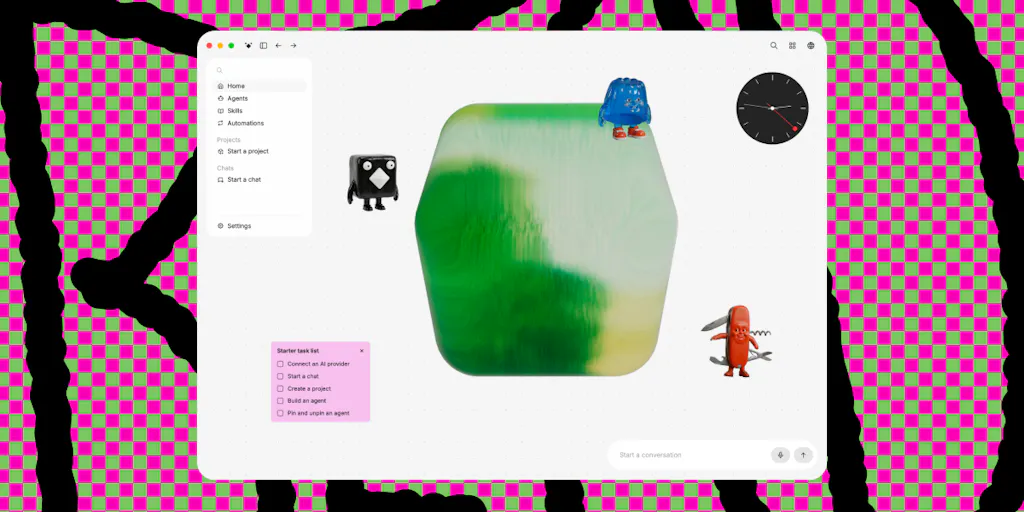
HAR is a CLI and an MCP server. It does not replace your agents; it orchestrates the environment they run in. It works with Claude Code, Cursor, Codex, or any MCP agent. The launch describes four mechanisms.
- Isolation. Each agent gets its own git worktree, branch, ports, and database. Nothing is shared with the main checkout or another agent’s slot, so a fleet runs in parallel without colliding on a dev server, DB, or ports.
- Deterministic validation gates. HAR runs the project’s real checks through a fixed pipeline, binds the result to the exact code that passed, and enforces it at commit time. The maker’s claim: an unverified tree cannot land.
- Verifiable proof. Every run leaves logs, artifacts, and a validated tree hash tied to the exact code checked. A reviewer inspects the evidence instead of trusting the agent’s self-report.
- Observability. Mission Control is a local dashboard showing every repo, worktree, run, and validation in one place.
Underneath it all is the contract. One file, committed to the repo, that every agent reads the same way. It replaces the scatter of a README, a CLAUDE.md, editor rules, and CI config that drift apart. When you run har init, it scaffolds a full contract template — the maker says the schema is “as little opinionated as possible”: a template per repository type (web, CLI, mobile, etc.), and for a web app it includes a full-stack example so the agent can match the real repository’s shape. The file is created in your repository, so you own it.
That last part matters more than it sounds. When a commenter asked how opinionated the schema is, the maker compared it to shadcn: “we create the file in your repository so you own it, and you customize it how you want.” Not a SaaS settings page. Not a hosted prompt store. A file you can read, edit, version, and take anywhere.
Now what it does not do. It’s not a testing framework; it runs whatever checks you already run, and you extend verification with plugins or any command in your existing workflow. It doesn’t make any single agent smarter. The roadmap is honest about the open gaps: there’s har env maintain for checking drift against the initial template, but the more interesting har doctor — a command that would prompt an agent to look for recent architecture changes that could break the startup flow — is described as the next step, not a shipped feature. Pricing beyond the open-source core is not disclosed. User counts are not disclosed. This is a day-one release, not a proven platform.
Why the shadcn model is the part creators should steal
Every major content tool I can think of runs the opposite model from HAR. Buffer hosts your queue. Scheduling incumbents host your calendar, your analytics, and increasingly your AI assistant inside their dashboard. The moment you leave, the logic stays behind. HAR’s bet — and the shadcn analogy is the tell — is that the operating intelligence of a multi-agent system should live in a file you own, not in a vendor’s database.
For creators, that’s the structural insight: your content operating system should be portable. Voice rules, platform formats, posting cadence, validation checks — all of it can be a document you control, with a version history, instead of a feature you rent. When the platform algorithm shifts (and it will), or when a tool you love gets acquired and degraded (and it will), the contract is the thing you keep. My take: this ownership model is the most transferable idea in the whole launch — more than worktrees, more than tree hashes, more than the dashboard. A creator who owns a voice contract can switch tools in an afternoon. A creator who rents one is stuck.
What creators and social media teams can borrow this week
You don’t need a CLI to steal HAR’s discipline. Four mechanics, four translations.
Isolation first. If you run more than one brand, or more than one platform pipeline, stop letting your agents share a workspace. Separate draft folders, separate schedulers, separate asset libraries, and — most importantly — separate instruction files. When I run a personal account next to a client account, the one thing I never share is the instruction document. Two agents writing to one draft queue will overwrite each other eventually, and you’ll find out at the worst moment, usually after a half-finished caption goes live. HAR’s per-agent worktree is the mental model: one job, one slot, no shared mutable state.
Validation gates. The most valuable thing a content operator can copy is the idea of a fixed pipeline that must pass before anything lands. For code, the gate is tests enforced at commit time. For content, the gate is a pre-publish checklist enforced before anything enters the scheduler: links resolve and carry the right UTM parameters; captions fit platform limits; images have alt text; banned words are absent; tone matches the contract; disclosure rules are satisfied. Most scheduling tools have an approval step, but approval is a human eyeball. A gate is a system that refuses. The difference shows up in the boring stuff: broken links, missing UTMs, and tone drift are exactly the errors an LLM will repeat confidently until something stops them. Engagement rate is a lagging indicator — it tells you after the post that the system failed. A gate tells you before.
Verifiable proof. HAR binds every result to the exact code that passed and leaves artifacts for review. The content translation: when an AI-assisted post goes wrong, you should be able to trace which agent, which prompt version, which contract version, and which validation step produced it. In my own workflow, I keep the prompt, the source asset, and the contract version in the same row as the published post. It costs thirty seconds per post and saves hours of forensic work after a misfire. It also changes the conversation with a client or a boss from “the AI did it” to “here is exactly which instruction failed, and here is the fix.”
Observability. Mission Control is a watchtower for the whole fleet. You can build the same thing for content with a shared tracker — the discipline is that every agent run leaves a visible trace: what it produced, when, and against which rules. If you can’t see the whole pipeline on one screen, you don’t have a pipeline. You have a chaos ensemble.
Why TikTok creators should care more than LinkedIn ones
The four mechanics don’t matter equally everywhere. Their value scales with cadence and volume, which is why TikTok creators have more to gain than LinkedIn operators. TikTok is a volume-and-speed game: the algorithm tests content quickly, the trend window closes in hours, and repurposing is the only way to keep the feed full. One stale instruction in your repurposing agent — an old aspect ratio, an outdated CTA, a banned-word list that no longer matches the platform’s current moderation mood — and you burn the window on a caption-shaped misfire. Isolation and fast validation gates matter most where the cadence is highest.
LinkedIn is slower and higher-stakes per post. One genuinely bad post can cost a deal or a reputation, but there’s time for human review, so the isolation and speed mechanics matter less. What matters more is the audit trail and the tone gate. In my experience, config drift hurts hottest where output is highest — which is exactly why the most automated pipelines, in code and in content, are also the most brittle ones.
The bigger picture: every AI tool is becoming a multi-agent problem
The creator-economy stack is already a fleet. Scheduling SaaS, repurposing automation, AI design and editing tools, comment moderation, analytics — each ships its own agents, its own settings, its own memory of your brand. The platform algorithm shifts of the last two years — watch-time and retention weighting on short-form feeds, dwell time on LinkedIn, the continuing Reels push — all push in the same direction: post more, iterate faster, repurpose everything. That pressure pushes creators toward automation, and automation without a shared contract produces exactly the failure list HAR names: drift, collision, untrusted output, lock-in.
There’s a mechanical detail most tool roundups miss: running a fleet of repurposing agents means hitting platform API rate limits at exactly the wrong moment, and the isolation principle applies to rate-limit budgets, too. If your repurposer and your scheduler share one API credential and one instruction set, they’ll trip each other. The winning setup treats each pipeline as a separate slot with its own limits and its own copy of the rules.
The bigger signal, to me, is that the software world is arriving at a problem the content world already has. Version control was invented to solve this for code; we don’t have an equivalent for brand voice. A tool that gives creators a repo for content operating rules — a single contract, enforced gates, an audit trail — is the tool that wins the next wave of creator tooling. My take: it won’t look like HAR. It will look like a scheduler with git semantics, or an MCP-based content contract that survives platform and model changes.
The vendor lock-in critique applies word-for-word. The makers call out the trap directly: if the setup lives in someone’s hosted dashboard, switching agents later means rebuilding the whole thing. That argument was aimed at LLM vendors, but every creator who has tried to export a year of content strategy out of a sunsetting SaaS has lived it. The tools that survive the next shakeout will be the ones that let you own your operating logic instead of holding it hostage in a dashboard.
Where the math breaks
Let me balance the ledger. HAR is a developer tool, and its transfer to content operations is analogical, not literal. The contract schema, the CLI, the git worktrees, the MCP server — a non-technical creator is not installing this on a Tuesday afternoon. There is no creator profile in the har init templates; the archetypes are web, CLI, and mobile apps.
The validation gates run code checks, not brand-safety checks. HAR will not catch a caption that violates your disclosure rules or a link missing its UTM. You would have to build the content-equivalent gate yourself, which means the hard part — deciding what “verified” means for a post — is still your job. The source is also silent on anything you’d want before adopting: pricing beyond the open-source core is not disclosed, and traction numbers are not disclosed. One early commenter called it “not an obvious solution to that problem,” which is the honest version of the product story. It’s a sharp design, not a finished ecosystem.
So who is this not for? Solo creators with one brand and a single agent: over-engineered. Teams that want a friendly GUI: wrong tool. Anyone expecting a content-specific product: this is a dev tool with a useful mental model. It’s for operators who already think in repos — or who are willing to learn.
What I’d watch / test next
This week, do the HAR exercise without installing anything. Inventory every place your brand voice and posting rules currently live — docs, custom instructions, templates, chat threads. Then write the single contract: voice rules, do/don’ts, platform formats, link and UTM rules, disclosure and banned-word lists. One file. Point every AI tool at it, and stop feeding the others. Then build the gate: a pre-publish checklist every AI-assisted post must pass — links, limits, alt-text, tone, disclosure — enforced before anything touches a scheduler.
For the tool itself: I’d watch whether the contract model normalizes across the MCP ecosystem. The demo video is worth ten minutes. If you’re technical, run the CLI and stress the isolation with two agents on one repo; if you’re not, steal the mental model. The feature I’m watching for is har doctor — because the moment an agent can detect drift in your content architecture, the fitness function of the creator economy changes. That’s the product I’d use, even if it looks nothing like this one.