Why Every Social Media Operator Should Care About an AI That Knows When to Shut Up
If you’ve ever run a community Discord, managed brand mentions in a crowded Telegram group, or watched a customer-support bot derail a perfectly good conversation, you already know the pain that the Product Hunt launch of Humalike is trying to solve. We’ve spent years chasing better LLMs, better prompt engineering, better RAG pipelines—and yet the most common complaint about AI in social spaces isn’t that it’s wrong. It’s that it’s annoying. It answers every message. It talks over people. It blasts a paragraph when a single emoji would do. The gap between a useful assistant and a social liability isn’t model quality—it’s turn-taking, pacing, and the ability to read a room. Humalike is the first product I’ve seen that treats that behavioral layer as a first-class infrastructure problem rather than an afterthought in a system prompt. For anyone running social accounts or community channels where bots are part of the daily workflow, this is the direction the industry needs to go.
What Problem Humalike Actually Solves (And It’s Not “Better Responses”)
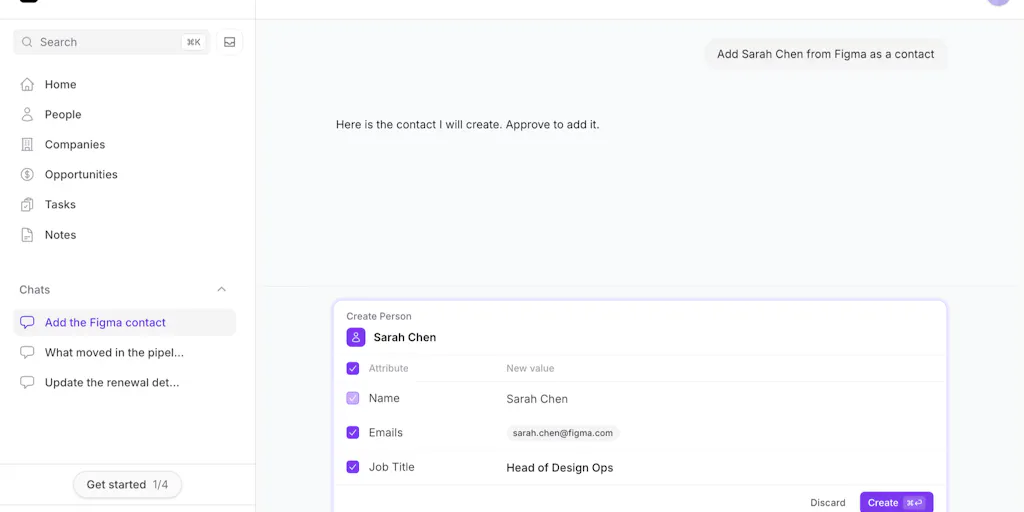
The core insight from the Humalike team—Martí Carmona Serrat and the Spanish-Polish team backed by early investors in ElevenLabs and Revolut—is beautifully simple: we’ve been optimising the wrong metric. Most agent builders measure response quality, latency, and factual accuracy. Humalike measures when not to respond. Their product is a plugin for the Hermes agent (a general-purpose AI assistant) that adds a behavioral layer: it decides when to jump into a group chat and when to stay silent, it paces replies to feel human (short bursts, typing delays, pauses), it learns the tone of the group over time, and it remembers who people are and what matters to them.
In group chats on Slack, Telegram, and WhatsApp, this changes the entire feel of the interaction. I’ve run community management for a few mid-sized creator brands—think 2,000–5,000 members across Discord and Telegram. The number-one user complaint about any bot we deployed was not “it gave wrong info” but “it’s always there.” Even a well-trained model that answered every query correctly would kill organic conversation because members felt watched and replied to constantly. We tried tuning system prompts to “be less active” and “only respond when directly mentioned,” but that’s a crude binary. Humalike’s approach—a separate classifier that runs the “should I speak gating” decision—is architecturally smarter. It’s not the same model that generates the response making two decisions; it’s a lightweight classifier (likely a small fine-tuned model or even a rules-based heuristic) that filters first. Maker Mateusz Jacniacki confirmed in the comments that this decision layer lives on Humalike’s side, not the Hermes runtime, and that cost per turn is low enough that 10,000 free credits should cover months of normal use.
For a social media operator, the practical win is immediate: you can drop a Humalike-equipped agent into a customer-support channel or a community Q&A channel without turning the channel into a bot monologue. The agent jumps in only when it can actually add value—when someone asks “how do I schedule a post?” or when a known member asks a question the agent has context for. Otherwise it stays quiet, letting human members carry the conversation. That’s the difference between a bot that feels like a helpful colleague and one that feels like a group chat spammer.
How It Differs From Every Other Chatbot You’ve Used
Compare Humalike to the tools most social teams already know: ManyChat, Intercom, Tidio, or even a custom GPT agent in Discord. All of these let you define triggers, keywords, and response templates. None of them model conversational rhythm. They answer if the trigger fires, regardless of whether the thread is still active, whether another member is typing, or whether the channel is in a heated debate that the bot shouldn’t interrupt. I’ve seen Intercom bots reply to a customer’s “thanks” with a full product pitch because the word “product” appeared in the previous message. That’s not a bad model; it’s a missing behavioral layer.
Humalike’s plugin also introduces what the team calls “Norms / Social Memory.” In the comments, Martí Carmona Serrat explained that the agent starts with a personality X and adapts over time, though he was honest that “it’s not perfect yet.” This is where the product differs from a simple turn-taking heuristic. The agent learns that “in this group we use emoji-heavy responses” or “in this group we tend to ask follow-up questions.” That’s not a feature you get from a standard GPT fine-tune.
However, there’s a critical trade-off that makes Humalike unsuitable for many social media use cases today. The product is a plugin for the Hermes agent, not a standalone platform. If you’re not already running Hermes in your organization, you have zero reason to adopt this tomorrow. And Hermes itself is a relatively new entrant—not as widely deployed as, say, a custom GPT via API or a bot on a platform like Zapier + OpenAI. So while the concept is compelling, the distribution is narrow. The team’s own responses indicate they see it as a proof-of-concept: “the Hermes plugin uses Humalike APIs that are transferable from product to product.” So the real product is the API, not the plugin. For a social media operator, the takeaway is to watch for when Humalike launches standalone integrations for your stack.
Why Discord Community Managers Should Care More Than LinkedIn Content Creators
This behavioral layer is far more relevant for real-time, conversational channels than for platforms where content is broadcast and responses are async. If you run a Discord server for your audience, every bot message competes with human conversation. The cost of a false positive—the bot speaking when it shouldn’t—is high: members get annoyed, ignore the bot, or even mute the channel. On LinkedIn, comments on a post are less time-sensitive; a bot that replies to every “great post!” with “thanks! anything else?” is still annoying, but the annoyance is spread out across hours or days. In a live chat, the window where a message is relevant is a few seconds. Humalike’s “should I speak” gating is exactly the kind of infrastructure that makes community bots viable in fast-moving channels. I’d bet that if the team extends to Discord natively (they currently support Slack, Telegram, and WhatsApp), community managers will be the first power-users.
What Creators and Social Media Teams Can Borrow From This Concept
Even if you never install the Humalike plugin, the behavioral-layer philosophy has practical lessons for anyone building automated social presence.
First, decouple your “what” from your “when.” Most AI workflows I see have a single prompt that decides both content and timing. If you’re using a GPT to auto-reply to Instagram comments, you can build a lightweight classifier in front: a rules engine that checks whether the comment merits a reply (is it a question? is it a complaint? does the user have a history of engagement?) before the model even generates text. This reduces both API costs and user irritation. Tools like n8n or Make let you add such a step with simple webhooks. I’ve used a similar pattern to throttle brand replies to “I love your content” with a “thank you” only if the user’s last reply was more than 24 hours ago. The result was less spam, more meaningful interactions.
Second, model memory boundaries. The most detailed technical exchange in the Humalike comments revolved around this: if User A tells the agent something private in a 1:1 thread, should that memory be available when the agent is in a group chat with User B? Maker Maks Bilski admitted that “for now, the underlying memory doesn’t prevent it.” That’s a hard problem—and for social media operators who might want to deploy an agent that knows customer purchase history, this is a deal-breaker until solved. But it highlights the importance of designing separate memory stores per context. In my own tests of custom GPT assistants for client support, I always store conversation threads in separate database records with access control labels. Humalike’s approach to “Norms / Social Memory” is an interesting angle, but until they solve cross-context leakage, it’s not ready for enterprise-grade community management where privacy matters.
Third, embrace silence as a feature. The Humalike team explicitly biases the agent toward silence—Mateusz Jacniacki wrote that “it’s way harder to make agents biased toward silence, false positives are much harder to get rid of than false negatives, and they make the agent super annoying.” This is directly applicable to how you configure any automated social response. Most scheduling tools like Buffer or Later let you set auto-replies only for keywords. But you can take it further: never auto-reply to a thread that has fewer than three messages, or never reply to a comment that contains only emoji. The rule is: if you’re not 80% sure the reply is useful, don’t send it. That’s a higher bar than most tools encourage, but it’s the difference between a bot that feels helpful and one that feels like noise.
Where My Judgment Says It Falls Short
I want to give a balanced view because the Product Hunt launch thread itself is refreshingly honest about limitations. Here’s where Humalike isn’t ready for prime-time social media operations:
The “Vibes-Based” Benchmark Problem
When asked for a concrete definition of “social intelligence,” Martí Carmona Serrat responded that they measure it “vibes-based” and are working on benchmarks including this arXiv paper. For a product that claims to solve a critical interaction problem, this is a red flag. As a social media operator, I need to know: does this agent improve engagement rate? Reduce user complaints? Increase first-response satisfaction? Without an evaluation suite—and the team admits this is early-stage research—any claim of “social intelligence” is a promise, not a deliverable. I’d want to see a controlled study comparing a Humalike-equipped agent to a naive version in the same channel, measuring metrics like “messages sent by the agent that get a reply” (i.e., conversational uptake) or “user-reported annoyance.” The team’s honesty is commendable, but it means I cannot yet recommend it as a production tool for any client.
Latency and the Interruption Handling Problem
Threads in the launch comments raised the exact operational concern: in a fast-moving group chat, every “should I speak” check adds latency, and by the time the agent decides yes, the conversation has moved on. The maker response explains that they re-run the decision after an interruption, and that “it’s not perfect.” In my own testing of similar gating layers—I once built a simple turn-taking filter using a local binary classifier that ran on every message—I found that even an extra 300ms per message created an unnatural feel in channels with 5+ messages per minute. Humalike’s decision lives on their hosted service, which adds network round-trip time on top of model inference. For low-traffic channels (family chats, small support groups), it’s fine. For a busy creator community with hundreds of active members, the agent will lag behind the conversation. The team acknowledges this: “in our testing it’s not a deal breaker in chat, LLMs are fast enough compared to humans that actually have to type each message.” But a human who types fast can still produce a 500ms message; an LLM that takes 2 seconds to decide and generate will be left behind.
Not Yet a Platform for Social Media Operators
The Hermes-only dependency limits applicability. Most social teams I work with use either dedicated community platforms (Discord, Circle, Mighty Networks) or traditional social networks (Instagram, Facebook, LinkedIn). Humalike’s current integrations—Slack, Telegram, WhatsApp—are messaging platforms, not content-driven social platforms. If you’re running a brand’s Instagram DMs or Facebook Group, you can’t drop this in today. The team’s roadmap is focused on conversational group chats, not comment sections or DMs at scale. For the typical social media manager, this is a philosophical lesson more than a tool to install.
Memory Boundaries Are a Serious Concern
I flagged this earlier, but it deserves its own point. The exchange between Franz Brian Briones and the makers reveals that cross-context memory leakage is unsolved. If you use an agent in a private support channel and the same agent in a public community channel, private conversations could inform public responses. For creators and brands, that’s a compliance and trust catastrophe. Until Humalike implements strict per-channel memory isolation that never leaks context across boundaries, I would not deploy this in any environment where personal data or sensitive conversations occur. That rules out most community management use cases today.
What I’d Watch / Test Next
Despite these caveats, the concept of behavioral infrastructure is worth engaging with now. Here’s my concrete advice for social media operators who want to stay ahead:
Install the Hermes + Humalike plugin in a low-stakes group chat. You get 10,000 free credits—enough for weeks of testing in a small family or friend group. Observe whether the agent feels less intrusive than a standard GPT. Pay attention to false negatives: times when the agent should have spoken but stayed silent. That’s the failure mode that matters more than false positives, as the team noted. If you find the agent missing critical questions, the behavioral layer is too conservative.
Replicate the gating logic in your own stack. Even if you never touch Hermes, you can build a “should I reply” classifier for your existing auto-response tools. Use Zapier or Make to check the thread velocity (number of messages in the last 30 seconds) and the context (does the comment contain a question?). If both conditions are low, skip the auto-reply. This is a simple rule that mimics Humalike’s approach without the latency cost of a model call.
Follow the arXiv benchmark trail. The paper linked by the maker is likely part of a growing research area on social intelligence for AI. Subscribe to it. When benchmark suites for conversational behavior become standardized, we’ll finally have a way to evaluate products like Humalike objectively. For now, assume any claim of “social intelligence” is a directional goal, not a proven capability.
Watch for API expansions. The team’s stated intent is to make Humalike’s behavioral APIs usable from any product. If they release a standalone SDK or a no-code plugin for Discord, that’s the inflection point for community managers. I’d check their Product Hunt page monthly for updates.
Humalike is not a ready-to-ship solution for social media management in 2025. It’s a research prototype with a clever architectural idea that points to where the industry is headed. The next year will tell us whether the team can turn “vibes-based” into a reliable API and whether they can solve the hardest problems—memory isolation and latency under load. For now, I’m watching, testing, and stealing the core principle: the most valuable thing your AI can do is stay quiet until it’s needed.