The Context Problem Nobody Talks About in the Creator Stack
If you have ever tried to hand off a content workflow to an AI assistant, you already know the dirty secret of the creator economy: the tools remember nothing. You paste your brand voice doc, your pillar topics, your banned-words list, your UTM conventions, and forty-five minutes later the session resets and you are re-explaining the same constraints to a goldfish with a GPU. For social media operators juggling Instagram, TikTok, YouTube, X, LinkedIn, Facebook, Threads, and Pinterest, the real bottleneck is not generating copy — it is the constant re-loading of context that should live somewhere permanent. That is the exact wound Dropstone, a new AI coding-agent product from Dropstone, is trying to stitch shut. And even though it is pitched at developers, the underlying thesis — persistent memory plus runtime intelligence across surfaces — is the most important idea in creator tooling right now.
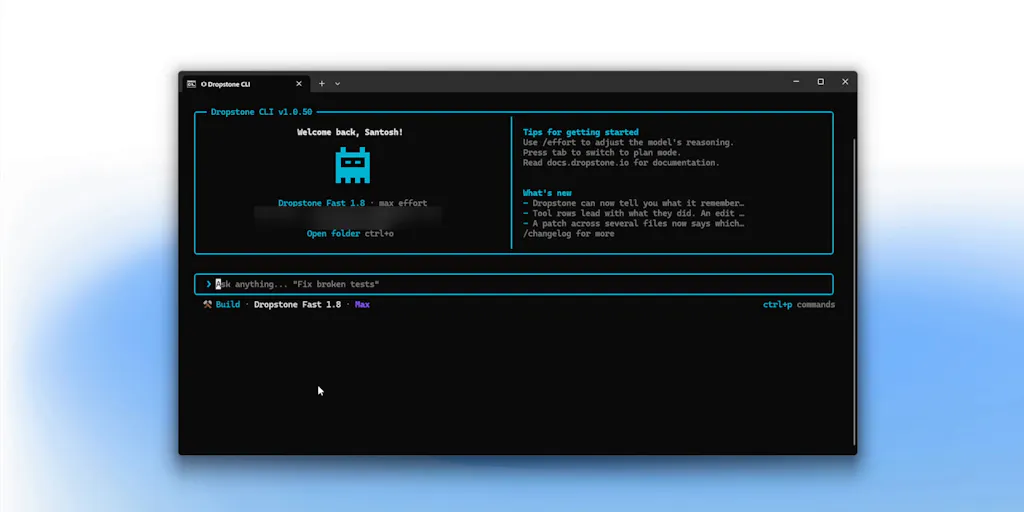
The maker, Santosh Arron, frames it plainly: context gets lost between tools, workflows, and projects, and using AI at scale gets expensive. Dropstone bundles Chat, CLI, VS Code, and an SDK into what the team calls one intelligence layer, with persistent memory and runtime intelligence as the core pitch. You can start free, and plans run from $5 to $150, with enterprise deployment available on request. The Dropstone CLI lets you work in the terminal while the agent uses project context to understand a codebase and execute tasks.
Here is why I think that matters to anyone running social accounts, even though Dropstone is not a social tool. The last eighteen months of creator tooling have been a race to bolt generative AI onto scheduling dashboards — Buffer, Hootsuite, Later, Metricool all shipped AI caption assistants. Almost none of them solved memory. Every session starts cold. Dropstone is a reminder that the moat is not the model, it is the context layer wrapped around it.
What Dropstone Actually Solves (and What It Doesn’t)
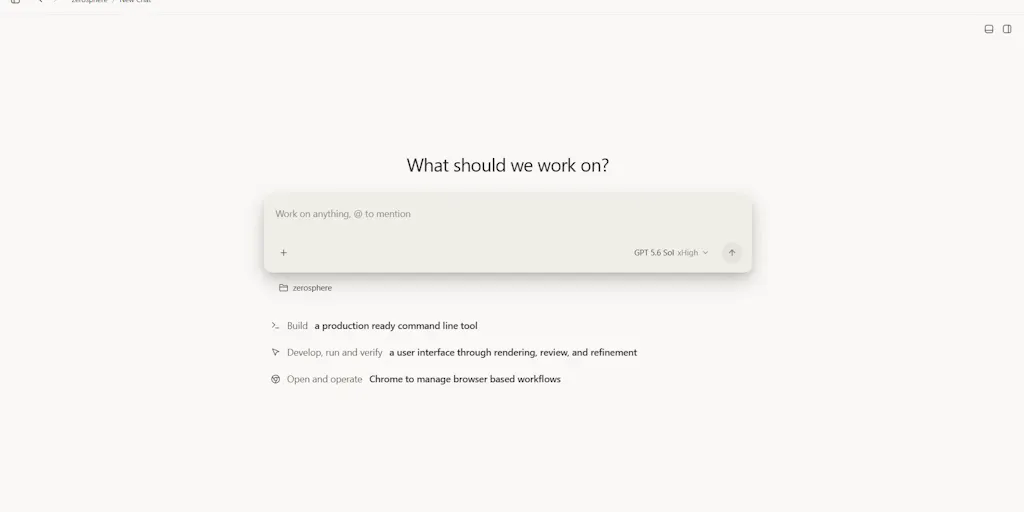
Strip away the developer framing and Dropstone is three things: a chat surface at chat.dropstone.io, a CLI agent, and an SDK, all sharing a memory layer. The maker’s stated problem is that AI coding tools lose context between tools and projects, and that scaling AI usage gets expensive. Dropstone’s answer is to centralize the workflow so context accumulates rather than resets.
In my own experience testing similar “memory-first” agents, the difference between a tool that remembers and one that does not is roughly the difference between hiring a freelance social manager who has read your brand book and hiring a stranger off the street every Monday. The mechanical reason is simple: most LLM interfaces are stateless by design. Unless you build a retrieval layer that injects prior context into every prompt, the model has no idea you already told it your TikTok captions should never exceed 150 characters or that your LinkedIn voice is deliberately more formal than your Threads voice. Dropstone is betting that persistent memory plus execution (actually running tasks, not just chatting) is the wedge.
Why this is a developer tool that creators should still study
I want to be honest about scope: Dropstone is built for developers, and the maker says so explicitly. It is not going to schedule your Reels or pull your Pinterest analytics. But the architecture is a preview of where creator tools are heading. When a commenter on the launch page, Amrani Yasser, writes that correcting it once means the lesson persists across sessions — “like a teammate instead of a fresh intern every morning” — that is the exact feature every social media manager has been begging Canva, CapCut, and their scheduler of choice for. The lesson transfers even if the product does not.
How It Stacks Up Against the Incumbents
The honest comparison set for Dropstone is not Buffer or Later — it is Cursor, GitHub Copilot, and Claude Code, plus a long tail of agent frameworks. Those tools have distribution and model quality on their side. Dropstone’s differentiator, per the maker, is the combination of persistent memory, execution capability, and predictable costs — the three things he explicitly asks the community to weigh in on.
That pricing transparency is worth noting. Plans from $5 to $150 with a free tier is aggressive positioning against tools that often hide usage-based billing until you get a surprise invoice. For a solo creator running AI-assisted content ops across seven platforms, cost predictability matters more than raw capability, because unpredictable API bills kill margins faster than slow output. I would not read the $5–$150 range as a permanent commitment — pricing pages change — but the framing tells you the team understands that “AI at scale gets expensive” is a real pain, not a marketing line.
Where I would push back: the launch page does not disclose user counts, funding, model providers, latency benchmarks, or how the memory layer handles data privacy and retention. Those are not nitpicks. If you are feeding a persistent agent your proprietary workflows, you need to know where that memory lives and who can read it. Not disclosed is not the same as bad — it just means you should ask before you commit.
What Creators and Social Teams Should Actually Borrow
The transferable lesson from Dropstone is not “go buy a coding agent.” It is that you should be building your own persistent context layer regardless of which tools you use. Here is how I would operationalize that this week.
Build a brand context file, not a brand guideline PDF
Most social teams have a 40-page brand book nobody reads. Instead, maintain a single plain-text or markdown file — your voice rules, banned phrases, CTA conventions, hashtag policy, platform-specific tone shifts — and paste it into every AI session. This is the poor man’s version of Dropstone’s persistent memory. It costs nothing and it fixes 80% of the “the AI doesn’t sound like us” problem.
Treat repurposing as a context problem, not a volume problem
The reason cross-posting from YouTube to TikTok to Instagram Reels to Pinterest fails is that each platform’s algorithm rewards different signals. TikTok weighs watch time and completion rate heavily. LinkedIn rewards dwell time and comment depth. Pinterest is a search engine, so keyword-rich descriptions matter more than hooks. If your AI assistant does not know which platform it is writing for, it will produce mush. Feed it the platform, the format, the goal, and the constraint — every single time, until you have a memory layer that does it for you.
Where the math breaks
Here is the uncomfortable part. Persistent memory sounds great until you realize that bad context persists too. If you teach an agent a tone rule in January and your brand pivots in June, the memory becomes a liability unless you actively prune it. Dropstone’s model — correct it once, it sticks — is only as good as your maintenance discipline. In my experience, memory layers need quarterly audits the same way UTM tracking needs quarterly audits, or you end up attributing traffic to campaigns that ended months ago.
Where My Judgment Says Dropstone Falls Short
I have not run Dropstone in production, so treat this as an outside read, not a verdict. Three concerns stand out.
First, the audience mismatch. The maker is building for developers, and the launch page is written for developers. That is fine, but it means creators should not expect a social-native experience. There is no scheduler, no analytics dashboard, no asset library. If you want an all-in-one creator platform, look at Metricool or Later. Dropstone is a context engine, not a content calendar.
Second, the trust question. Persistent memory across Chat, CLI, VS Code, and SDK means your context is moving across surfaces. The launch page does not explain how that data is encrypted, where it is stored, or whether it trains on your inputs. For enterprise teams — and the maker does mention enterprise deployment — those answers need to exist before procurement signs off. Until they are published, I would keep sensitive client work out of any persistent agent.
Third, the “predictable cost” claim is asserted, not proven. The $5–$150 range is a good signal, but without knowing token limits, rate limits, or what triggers overage, you cannot actually model your bill. I would want to see a usage calculator before trusting the word “predictable.”
None of this means Dropstone is a bad product. It means it is early, and early products deserve scrutiny proportional to how much of your workflow you hand them.
What I’d Watch (and Test) Next
If you run social for a brand or yourself, here is what I would do this week, in order.
First, build your own context file — voice, platform rules, banned phrases, CTA conventions — and start pasting it into every AI tool you use. Measure whether output quality improves before you spend a dollar on new software. Second, if you are technical enough to use a CLI, kick the tires on the Dropstone CLI or the free tier of Dropstone Chat and watch specifically for whether memory actually persists across sessions the way the maker claims. Third, ask the team directly — in the Product Hunt comments or via their site — about data retention, encryption, and what happens to your context if you downgrade. Fourth, keep an eye on whether Buffer, Hootsuite, or Later ship a persistent brand-memory feature in the next two quarters. My bet is they will, because the Dropstone thesis — that context, not generation, is the real product — is correct. The only question is who ships it first for creators.