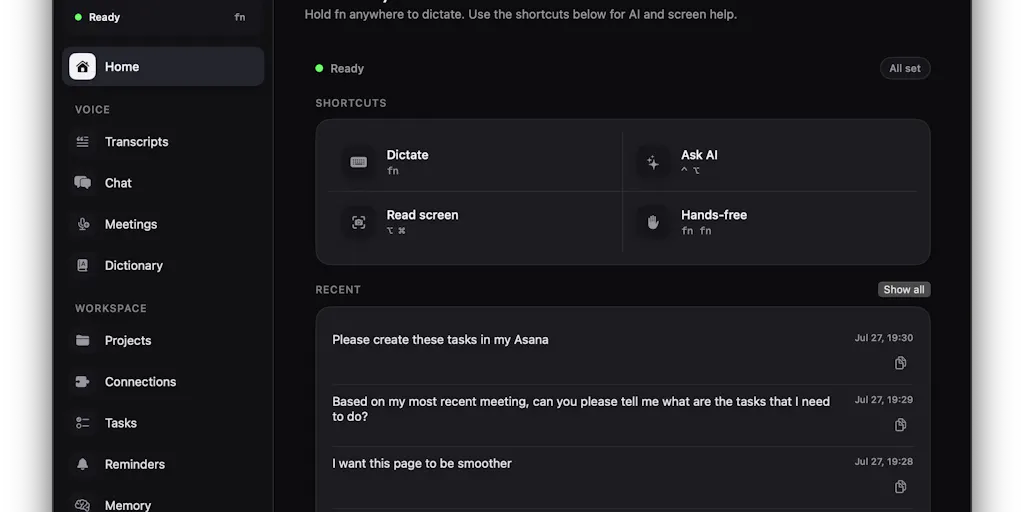
The Most Productive Tool I Tested This Month Wasn’t a Scheduling App — It Was a Mac Planner
Here’s the uncomfortable truth about the creator economy in 2025: we’ve optimized the publishing side to death and completely neglected the thinking side. I can schedule 30 posts across five platforms in an afternoon, pipe everything through a repurposing pipeline, and have my analytics dashboards auto-generate weekly PDFs — but ask me what I’m actually trying to achieve with all that output, and I’ll stare at you like a deer in headlights. That’s the gap Hyperfocus is aiming at, and it’s why a free, goals-first Mac planner from a productivity coach named Dmitrii Tsepelev has become the most interesting tool I’ve looked at this month — not because it’s another content engine, but because it’s a rare piece of software that treats deciding what matters as the actual work. For anyone running accounts where the algorithm feels like a slot machine and the content calendar feels like a treadmill, that’s a genuinely radical premise.
The Problem: Your Content Pipeline Is a Perfectly Optimized Machine for Producing Noise
Let me paint a picture that will feel painfully familiar. Last month, I ran a content sprint for a client — 45 pieces of content across TikTok, Instagram, LinkedIn, and YouTube Shorts. Every piece was on-brand, on-schedule, and technically well-crafted. The engagement metrics were… fine. But when I sat down to review the quarter, I couldn’t tell you what any of it was for. We had grown the accounts, sure, but grown them toward what? More followers? More views? Those are vanity metrics, and I knew it even while I was optimizing for them.
That’s the disease that Hyperfocus is trying to treat. Tsepelev’s argument, laid out in his Product Hunt launch post, is that task managers have fundamentally gotten productivity wrong. They’re built around an inbox — they capture tasks, organize them, and present you with a list. But that list is reactive. It’s a mirror of everything that’s been thrown at you, not a reflection of what you’ve decided matters. The result is what he calls “a long list of todos that makes you feel busy without making you productive.” I’d add a creator-economy translation: the content calendar has become our todo list, and we’re checking off posts the way office workers check off emails.
The deeper problem is structural. Tools like Todoist and Things 3 are brilliant at what they do — capturing and organizing tasks with zero friction. But they’re agnostic about why you’re doing any of it. They don’t have an opinion. And in a world where the average creator is juggling three platforms, a newsletter, a podcast, and a Patreon, having a tool that doesn’t push back is a liability, not a feature. We need something that says “wait, why are you spending six hours on a TikTok transition when your stated goal for the quarter was to grow your LinkedIn newsletter?” Hyperfocus is the first tool I’ve seen that actually tries to have that argument with you.
What Hyperfocus Actually Does Differently — and Why It Matters for Creators
The core mechanic is deceptively simple: instead of starting from a task list, you start from goals. You define what matters most for the next few months, then plan your weeks and days around those goals. That’s the “goals-first” framing, and it’s a genuine inversion of how every major task manager works. When a commenter asked Tsepelev why he chose that as his wedge instead of building a better todo list, he gave an answer that should resonate with anyone who’s ever felt buried in their own content pipeline: he’d been working backwards from goals for years, and he was “really confused why there was no tool on the market that worked that way without being over-complicated.”
The second piece is what makes it interesting rather than just well-intentioned. As you write your goals and plans, the app gives you real-time feedback — Tsepelev describes it as “Grammarly, but for goals and plans.” It flags overplanning, unclear goals, and missing breakdowns. One commenter, Lisa, immediately zeroed in on this: “Real-time flags on overplanning is the part I’d use. That’s my exact failure mode most weeks.” That’s the creator disease in one sentence. We overplan because we’re terrified of the algorithm going quiet, so we fill every slot with content, most of which is noise. A tool that catches you doing that — in the moment, while you’re planning, not after you’ve wasted a week — is worth more than another AI content generator.
The third piece is the AI layer, and this is where I want to be careful. The team claims the AI acts like a coach rather than an autopilot. As Alexandra Senkina, another maker on the project, put it: “instead of just doing the work for you, the agent acts like a coach that helps you plan, prioritize, and break things down, so you always stay in control instead of producing some slop that you don’t trust.” That’s a meaningful distinction. Most AI content tools are trying to replace the thinking — they’ll generate your caption, your hook, your entire post. Hyperfocus is trying to structure your thinking, which is a fundamentally different and arguably more valuable use of the technology.
Why TikTok Creators Should Care More Than LinkedIn Ones
Here’s where my take diverges from the average productivity-app review. A goals-first planner isn’t equally useful across the creator economy — it’s dramatically more useful for certain types of content operations, and almost useless for others.
For TikTok creators, the platform’s algorithm is famously driven by watch time and completion rate, which means the content itself is the strategy. You can’t schedule your way to success; you have to iterate, test hooks, and react to trends in hours, not weeks. A goals-first planner is genuinely useful here because it forces you to step back from the daily firehose of trend-jacking and ask “what am I actually building?” The creators I know who are successful on TikTok long-term aren’t the ones who post the most — they’re the ones who have a clear niche, a clear audience, and a clear point of view. Hyperfocus could plausibly help with that clarity, because it makes you articulate the goal before you start planning the posts.
For LinkedIn creators, the calculus is different. LinkedIn’s algorithm rewards engagement and dwell time on posts, but the content is lower-frequency and higher-stakes. You might post three times a week, not three times a day. The problem there isn’t overproduction — it’s underthinking. You can post a half-baked thought and get away with it because the bar is lower. A goals-first planner would be useful there too, but for the opposite reason: it would force you to connect each post to a larger narrative about your expertise, rather than just firing off hot takes.
The real divide, though, is between creators who are building an audience and creators who are building a business. If you’re just trying to grow followers, a goals-first planner is probably overkill — you just need to post consistently and chase trends. But if you’re trying to turn your content into a revenue stream — through sponsorships, products, or services — then you need a strategy that connects your content to your business goals. That’s where Hyperfocus earns its keep. The app’s structure — long-term goals feeding into weekly plans feeding into daily tasks — is exactly the kind of top-down thinking that separates creators who treat their content as a business from creators who treat it as a hobby.
What Creators and Social Media Teams Can Steal From This (Without Switching Tools)
I’m not going to tell you to abandon your current stack. I’m a heavy user of Buffer for scheduling and Canva for design, and I’m not switching to a Mac-only planner for my content operations. But there are three operational lessons from Hyperfocus that any creator or social media team can adopt this week, regardless of what tools you’re using.
First: run a goals-first planning session every month. Before you plan a single post, write down what you want to achieve in the next 90 days. Not “grow on Instagram” — something specific and measurable, like “reach 10,000 email subscribers” or “land three sponsored posts.” Then work backwards: what weekly content themes support that goal? What daily posts feed those themes? This is the Hyperfocus method applied to your content calendar, and you can do it in a Google Doc.
Second: build a “pushback” step into your planning process. The most valuable feature of Hyperfocus isn’t the AI — it’s the feedback. It catches overplanning and unclear goals. Most content teams don’t have that. They have a content calendar that fills up because it’s easier to add a post than to defend why you’re not posting. Add a weekly review where you ask “does each piece of content this week serve a stated goal?” If the answer is no, cut it. The algorithm will survive your absence.
Third: separate “thinking” time from “doing” time. Hyperfocus has focus sessions and planning rituals built in. You can replicate that by blocking 30 minutes every Sunday to plan your week, and 15 minutes every morning to review your daily priorities. The tool doesn’t matter — the ritual does. The reason most creators feel like they’re drowning in content is that they’re spending all their time producing and none of it thinking. That’s not sustainable, and it’s not even productive. It’s just busy.
Where the Math Breaks: Limitations, Open Questions, and Who This Is NOT For
Let me be clear about what Hyperfocus is not. It’s a Mac-only desktop app, which immediately excludes a huge swath of creators who live in the browser or on Windows. It’s free, which is great, but it’s also early — Tsepelev explicitly says “Hyperfocus is still early, and any feedback would be really helpful.” That means you’re signing up for rough edges, missing features, and the possibility that the project pivots or stalls.
The integration story is thin. When asked about integrations, Tsepelev’s answer was honest: “right now we don’t have much.” There’s an OpenRouter integration if you want to pay for AI as you go, and MCP connections to Claude and Codex are on the roadmap, but that’s it. For a creator who lives in a multi-tool ecosystem — scheduling apps, analytics dashboards, design tools — that’s a significant gap. One commenter asked for an export function so they could sync daily tasks to Todoist, and Tsepelev’s answer was to point them at the SQLite database and suggest they write a script. That’s a power-user solution, not a mainstream one.
There’s also a deeper question about whether the “goals-first” framing actually works for content creation. Content is inherently reactive — you respond to trends, algorithm shifts, and audience feedback. A goals-first planner assumes you can predict what you’ll need to do months in advance, which is often not true in this space. The tool might be better suited for product people and indie founders — the audience Tsepelev says he’s been coaching — than for creators who need to stay agile. My take: it’s a useful complement to a reactive content workflow, not a replacement for it. Use it for your strategic goals, but don’t try to plan every post three months out.
And finally, the AI feedback feature is the part I’m most skeptical about. The team claims it catches overplanning and unclear goals, and that sounds great in theory. But in my experience testing similar AI coaching tools, the feedback tends to be either too generic (“your goal could be more specific”) or too aggressive (flagging everything as overplanned). The quality of the feedback will be the difference between this being a useful tool and being another AI gimmick. I’m not saying it doesn’t work — I’m saying I haven’t seen enough evidence to trust it yet.
What I’d Watch / Test Next
If you’re intrigued by the goals-first premise, here’s what I’d do this week — and it doesn’t require downloading Hyperfocus, though it’s free and worth a try if you’re on a Mac.
First, run a personal goals-first audit. Take your content calendar from last month and categorize every post by which stated goal it served. I’d bet most of them served no goal at all — they were just filling space. That audit alone will tell you more about your content strategy than any analytics dashboard.
Second, if you do try Hyperfocus, use it for a week with a specific content goal in mind — say, “grow my newsletter by 20% this quarter” — and see whether the daily planning ritual actually changes what you produce. The team’s claim is that starting from goals makes you more productive than starting from tasks. That’s a testable hypothesis, and you can test it with or without the tool.
Third, watch what happens with the integration roadmap. If Hyperfocus ships MCP support for Claude and Codex, it becomes genuinely interesting as a planning layer that can feed tasks into your existing automation stack. That’s the moment I’d take it seriously as a piece of the creator workflow rather than a standalone productivity experiment.
The broader takeaway, though, is bigger than any single tool. The creator economy has spent five years optimizing distribution and production — faster scheduling, smarter repurposing, better analytics. We’ve built an incredible machine for making content. But we’ve forgotten to decide what the machine is for. Hyperfocus is a small, early, Mac-only app that might not survive contact with the market. But the question it asks — “what actually matters, and are you planning your work around it?” — is the most important question in the creator economy right now. Whether you answer it with this app, a Google Doc, or a piece of paper, the discipline of answering it is the real competitive advantage.