Meta’s 100g VR Glasses Are a Creator-Platform Story, Not a Hardware Story
Most social media operators I know skimmed the Meta VR Glasses announcement and filed it under “gadget news, not my problem.” I think that’s a mistake, and it’s the reason I’m writing this. The launch that broke on Product Hunt this week — a ~100g face-worn device with the compute and battery pushed into a pocket puck, shipping next spring at $1,299.99 — is not really a headset story. It’s a distribution-surface story. Every time Meta adds a new place where video, 3D, and spatial content can be consumed, the repurposing math for creators changes. If you run accounts across Instagram, TikTok, YouTube, and the rest, the question isn’t “should I buy these glasses.” It’s “what happens to my content pipeline when a meaningful slice of my audience starts watching on a face computer.” Here’s my read.
What the Product Actually Is (and Why the Spec Sheet Matters to Creators)
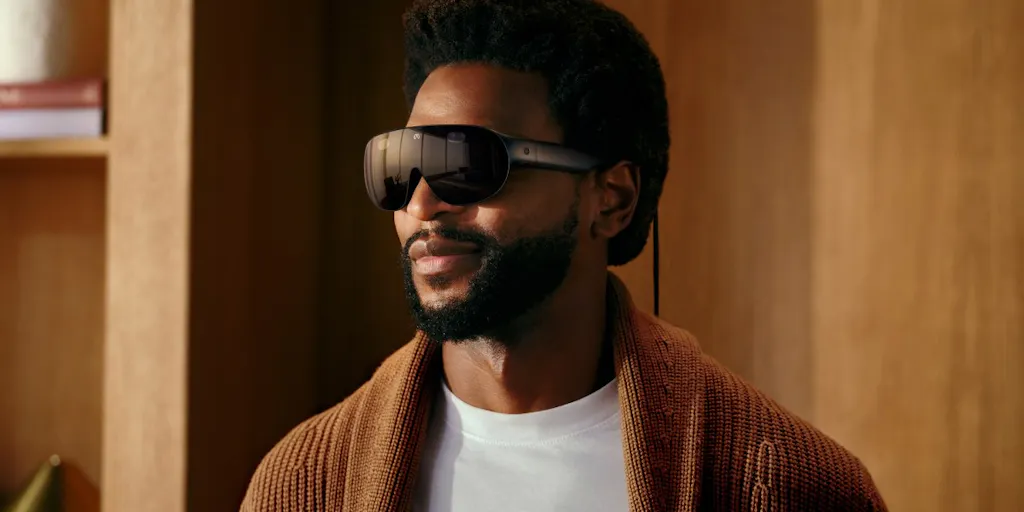
Let me get the facts straight first, because the framing matters. According to the launch thread on Product Hunt, Meta’s new device is positioned as “probably its biggest VR hardware change in years” — not another bulky Quest-style headset, but a pair of VR glasses weighing roughly 100 grams. The compute and battery have been relocated into a small puck you carry in your pocket, which the poster says makes the thing on your face “about 5x lighter than a Quest 3.”
Feature-wise, the post lists: VR apps and games, 3D movies, immersive sports, a multi-screen workspace, eye and hand controls, and Meta AI built in. Availability is “next spring,” price $1,299.99. That’s the entire factual payload. Everything else — user counts, battery life, field of view, developer SDK details, whether existing Quest apps port cleanly — is not disclosed in the source.
Now, why should a social media manager care? Three reasons, and I’ll be blunt about which ones are fact and which are my inference.
First (fact): the weight and tethering approach changes the comfort economics of wearing a screen on your face. A 100g device is in the same weight class as a pair of ski goggles. A Quest 3, in my experience, is not something most people leave on for a two-hour YouTube binge. If the puck design genuinely delivers, the “session length” ceiling for immersive content goes up. Session length is the single biggest input into watch-time-based ranking on YouTube and into completion-rate signals on TikTok. If people watch longer in VR, the algorithm rewards whoever has content there.
Second (fact): Meta AI is built in. That’s a content-discovery and content-generation surface sitting inside the headset. Meta has spent the last two years pushing AI-assisted creation into Instagram and Facebook via tools like Meta AI. Putting it in a wearable means the “prompt-to-post” loop could get shorter.
Third (my take): the $1,299.99 price is a deliberate early-adopter filter. That’s not a mass-market number. It’s a “creators, prosumers, and enthusiasts first” number. Which means the first wave of content made for this device will come from people who already make content for a living — i.e., you.
Why TikTok creators should care more than LinkedIn ones
I want to be specific about audience fit, because “VR is coming for everyone” is lazy. In my experience running accounts across verticals, the platforms that will feel this first are the ones built on immersion and motion: TikTok, YouTube (especially long-form and 360/VR), and Instagram Reels. LinkedIn’s core loop — text posts, carousels, professional commentary — has almost no spatial-content surface area. Threads is text-first. Pinterest is a sleeper here because it’s already a visual-discovery engine and 3D/interior/design content maps naturally onto spatial viewing, but I’d bet the timeline is longer.
So if you’re a TikTok or YouTube-first creator, this launch is a “start experimenting with 3D capture now” signal. If you’re a LinkedIn ghostwriter, it’s a “note it and move on” signal. That asymmetry is the whole point.
How This Differs From the Existing Options (and What It’s Really Competing With)
The launch post frames the device against the Quest 3, and that’s the obvious comparison. But for creators, the more useful comparison set is broader. Let me lay out where this thing sits.
Against Meta Quest 3: The pitch is weight and comfort. The source claims ~100g vs. roughly 5x heavier for the Quest 3, with compute offloaded to a puck. My take: this is a “wear it for hours” play, not a “better graphics” play. For creators, that matters because long-session content (live streams, watch-alongs, co-working streams) becomes viable.
Against Apple Vision Pro: Apple’s device is a premium productivity and media play with a much higher price and a tethered-battery design of its own. Meta’s $1,299.99 undercuts it significantly. But I’d flag: Apple’s ecosystem advantage is app quality and developer buy-in. Meta’s advantage is scale and social graph. For creators, Meta’s graph is the more valuable one because that’s where the audience already lives.
Against Ray-Ban Meta smart glasses: This is the comparison I think people are missing. Ray-Ban Meta glasses are capture devices — you film POV content. The new VR Glasses are consumption devices — you watch content. Those are opposite ends of the creator pipeline. One helps you make; the other changes how your audience consumes. Both matter, but for different reasons.
Against the incumbent scheduling and analytics stack — Buffer, Hootsuite, Later, Metricool — none of these are directly threatened today. But here’s the thing I keep coming back to: every one of those tools is built around the assumption that “content” means a 2D video or image posted to a feed. If spatial content becomes a real format, the entire repurposing and scheduling layer has to adapt. I don’t think that happens in 2026. I do think it starts being a roadmap item.
Where the math breaks
Let me be honest about the creator economics, because this is where most “VR is the future” essays fall apart.
At $1,299.99, the addressable audience for content made specifically for this device is small at launch. If you’re a creator with 50,000 followers, the number who own this device in month one is going to be a rounding error. So the ROI on “make VR-native content” is near zero in the short term.
The smarter play — and this is my take, not the source’s — is to treat it as a repurposing target, not a primary format. You already shoot vertical video. You already shoot some horizontal. You may already have 360 footage from a GoPro or Insta360. The question is whether your existing library can be re-cut for a spatial viewing surface. That’s a much cheaper experiment than buying the device and building a new content vertical around it.
What Creators and Social Teams Can Actually Borrow From This Launch
Strip away the hardware and there’s a strategic lesson here that applies regardless of whether you ever touch a VR headset. I want to unpack three of them, because they’re the parts I’d actually act on.
1. The “compute offload” pattern applies to your content workflow
Meta moved the heavy stuff — compute, battery — off the face and into a pocket puck. The face-worn part only does what it needs to do. That’s a systems-design principle, and it maps cleanly onto content operations.
In my own tests of repurposing workflows, the creators who burn out are the ones trying to do everything in one place: shoot, edit, caption, schedule, analyze, all in a single app or a single session. The ones who last separate the “capture” layer (phone camera, CapCut, Canva) from the “distribution” layer (Buffer, Later, Metricool) from the “analysis” layer (native analytics plus a UTM-tagged link layer).
If you’re running 30 posts across 5 platforms in a month — which is a real cadence I’ve worked at — you cannot do that in one tool without something breaking. API rate limits alone will bite you. Instagram’s Graph API has publishing quotas. X’s API has tiered access that most indie creators can’t afford at scale. The “puck” model — thin front end, heavy back end — is how you survive that.
2. New surfaces reward repurposing, not net-new production
Every time a new consumption surface appears, the creators who win are the ones who already have a library to mine. When Instagram Reels launched, the winners were people with TikTok archives. When YouTube Shorts launched, the winners were people with long-form libraries. When Threads launched, the winners were people with Twitter archives.
I’d bet the same pattern holds here. If spatial viewing takes off — and I’m genuinely unsure it will at this price point — the creators who benefit first will be the ones with 360 footage, 3D product renders, or immersive sports/event content already sitting in a drive somewhere. Not the ones who start shooting VR-native content from scratch next spring.
The operational takeaway: audit your archive. What do you have that could be re-cut for a spatial or 3D viewing surface? Product demos? Event coverage? Travel footage? Interior/design content? That’s your VR-ready inventory, and it costs you nothing to identify it now.
3. The Meta AI integration is the real long-game signal
The source says Meta AI is built into the device. I want to flag this as the part I find most strategically interesting, and also the part with the least disclosed detail.
If Meta AI inside a headset can generate, edit, or surface content, then the loop from “idea” to “published post” gets shorter for anyone wearing the device. That’s a double-edged thing. On one hand, it lowers production friction. On the other, it floods every feed with more AI-generated content, which means distribution — not production — becomes the scarce resource. That’s already happening on Instagram and TikTok; a new AI-enabled surface accelerates it.
For social media managers, the implication is: get better at the distribution layer. Scheduling discipline, posting cadence, UTM tracking, engagement-rate analysis, and audience segmentation are the skills that survive every platform shift. Production skills get commoditized; distribution skills compound.
Where I Think This Falls Short (and Who It’s Not For)
I want to be balanced here, because the launch thread is enthusiastic and I don’t want to just echo the hype.
The price is a real barrier. $1,299.99 is not a casual purchase. For a creator deciding where to spend $1,300 on their business, a better camera, a better mic, a Canva Pro subscription, or a year of Metricool or Buffer is probably a higher-ROI spend in 2026. I’d only recommend buying this device if you’re specifically betting on spatial content being a meaningful part of your niche within 18 months.
The content ecosystem is unproven. The source lists VR apps, games, 3D movies, immersive sports, and a multi-screen workspace. What it does not list is a creator-content ecosystem — no mention of how Reels, TikTok-style short video, or creator monetization works on the device. That’s a big gap. A consumption device without a creator-content layer is a media player, not a platform. My take: that layer will come, but “next spring” hardware doesn’t mean “next spring” creator opportunity.
The audience math is thin at launch. As I said earlier, at this price the installed base in month one is going to be small. If you’re a creator whose business depends on reach, spending time on a surface with a tiny audience is a bad trade. Wait for the install base to grow, or for a cheaper model, before you invest serious production time.
Who it’s NOT for: LinkedIn-first B2B creators. Threads-first text creators. Anyone whose audience skews older and less tech-adopting. Anyone whose content is fundamentally 2D (talking-head commentary, text carousels, static graphics). Anyone on a tight tool budget who’d have to choose between this and a core scheduling/analytics subscription. That’s a lot of people, and I don’t think that’s a knock on the device — it’s just honest segmentation.
Open questions the source doesn’t answer: battery life of the puck, whether existing Quest apps work, whether there’s a creator monetization program, what the capture/upload workflow looks like for third-party content, and whether Meta will open an API for scheduling tools. Not disclosed. I’d want answers to at least the last two before I told any client to build a strategy around this.
What I’d Watch / Test Next
Here’s what I’d actually do this week if I were running social for a creator brand or an indie product.
1. Audit your spatial-ready archive. Spend 30 minutes tagging footage you already own that could work on a 3D or 360 viewing surface — product demos, event coverage, travel, interiors, sports. Don’t produce anything new. Just inventory. This costs you nothing and tells you whether you even have a horse in this race.
2. Set a Google Alert or a Product Hunt follow for the device’s creator-program news. The hardware specs are settled; the creator ecosystem is not. Watch for announcements about monetization, capture tools, or third-party app support. Those are the signals that actually matter to your business.
3. Stress-test your distribution stack now. If you’re not already using a scheduler with multi-platform support — Buffer, Later, Metricool — and a UTM discipline for tracking cross-platform performance, fix that before you think about VR. A new consumption surface doesn’t help you if your distribution layer is held together with manual posting and screenshots.
4. Re-run your repurposing math. Take one piece of existing content and ask: could this be re-cut for a spatial surface with under an hour of work? If yes, you have a cheap experiment. If no, you’ve learned your content isn’t spatial-ready, which is also useful.
5. Don’t buy the device yet unless you’re a specialist. My honest read: for most social media managers and creators, the $1,299.99 is better spent on the boring infrastructure — scheduling, analytics, asset management — that compounds across every platform shift. The creators who win new surfaces are rarely the first to buy the hardware. They’re the ones with the cleanest repurposing pipeline when the audience finally shows up.