Every time I open a video editor and type “royalty-free music” into a search bar, I know I’m about to lose an hour to a file that’s almost right. The beat lands at 0:04, but the drop I need for the text hook doesn’t come until 0:19. The track works for a podcast but not for a sponsored Reel. The audio is clean, but it’s also lifeless. That’s the gap Mubert is trying to fill: not another AI song generator, but an API that treats music as an editable, streamable, licensable infrastructure layer. For social media operators, that is more interesting than “AI music” — because it promises to make audio a controllable part of the creative workflow, not a last-minute scavenger hunt.
What This Actually Solves: The Publishable-Asset Problem
Most social media teams treat music like a stock photo. You search, download, cut, export. That works for a talking-head video with a quiet bed, but it breaks the moment the edit depends on the beat. Short-form distribution now runs on watch time, rewatch rate, and completion. Audio is one of the invisible levers you pull to keep a viewer from leaving. The platforms know it; that’s why TikTok keeps pushing sounds, and why Instagram Reels is built around audio hooks. When the music is a fixed file, you fit the edit to the song. When the music is generated to spec and then editable, the song starts fitting the edit. That’s the problem Mubert’s API release is actually attacking.
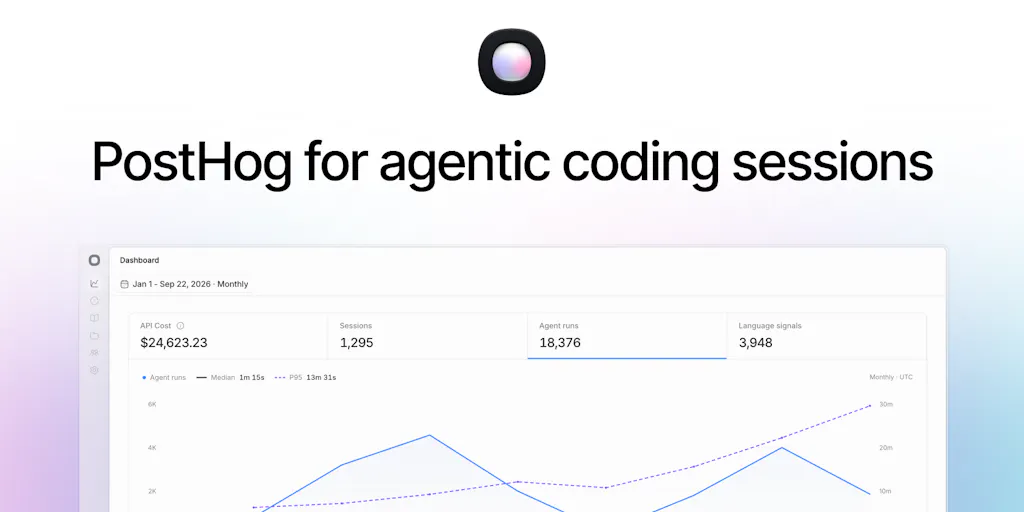
Mubert’s launch page says the API can “edit tracks & stems, get consistent music with our latest engine,” generate tracks up to two hours long, stream music in real time, and integrate via “Skills” for Claude and Codex. Alex Mubert, one of the makers, says the release gives you “full control on the music you generate.” In my experience, that control is what separates an API worth integrating from a shiny toy.
Compared with the usual options, this is a different category. Epidemic Sound and Artlist have beautiful catalogs and clean licensing, but you still pick from finished masters. Suno and Udio can generate a song that sounds shockingly produced, but they are not built to hand you clean stems or to sit inside a product workflow as a licensed API. Mubert is trying to occupy a middle space: generative, editable, and legally claimable.
One reviewer on the launch wrote that the adaptive playlists feel surprisingly natural for AI-made music. I’d want to test that myself; “surprisingly natural” is a low bar in a category where “robotic loops” is the default. But it tells me the company is thinking about user experience, not just audio output. Mubert also calls itself “the world’s first AI-operated technology that generates music in real-time.” I’d file that under positioning, not spec. What matters is whether the output can survive the actual conditions of social video: loud voiceover, mobile speakers, quick cuts, and a brand’s existing sonic identity.
Why TikTok creators should care more than LinkedIn ones
TikTok’s algorithm doesn’t reward the song; it rewards the completion, the rewatch, and the share. Audio is a retention lever. If the beat drops exactly when you cut to the product shot, the video feels expensive. If the music drags, viewers swipe. A stem-swapping, duration-flexible music API can change how many cuts you can make on a hook. On LinkedIn, by contrast, a background track is mostly decoration; the algorithm is driven more by comments and dwell time on text, and few LinkedIn video formats hinge on musical structure. So if your team lives on TikTok and Instagram Reels, this is worth a technical conversation. If you’re publishing mostly on LinkedIn, your current library is probably fine.
Stems Are the Feature That Changes the Workflow
Stems are the individual layers of a track — drums, bass, melody, pad, vocals. Desktop producers treat stems as standard. Social video editors rarely get them. Mubert says the updated API lets you edit a track and swap a single stem instead of starting over. In practice, that means you could mute the percussion under a voiceover, lower the bass during a quiet moment, or replace a synth line that clashes with a brand’s sound. If it works, it turns AI music from a slot machine into a production tool.
One commenter on the launch, Asad M., said it plainly: “Stems are the part that changes the workflow, everything else is a nicer reroll. The moment I can mute one layer and re-render only that, music stops being a slot machine and becomes an editable asset.” I agree with that more than with any of the product copy. But then the maker’s answer puts a speed limit on it. Kirill Kiryanov said the release wasn’t optimized for latency, and that a stem swap costs roughly what generating a track costs. It’s a revision tool, not a real-time operation.
For a social media operator, that distinction changes what you can build. If I imagine a future where a creator clicks “less drums” on a track while watching a live preview, this API is not there yet. If I imagine a workflow where I generate a draft, edit the video, then request a stem change and wait for a rendered file, that works. You just need to budget for two generations per final track.
Where the math breaks
Here is where I get skeptical. The source doesn’t disclose pricing for the API, latency targets, rate limits, or SLAs. The maker explicitly separates real-time streaming from stem editing. So the headline feature — “edit tracks and stems” — is not a lightweight tweak; it’s a full generation job. For an indie founder building a music tool, a user-facing “remix” button could eat your API bill in a week. If you put a slider on top of this, you need a hard cap before you even start. The unit economics are the product. Until Mubert publishes them, treat “infinite control” as a demo, not a default.
What a Social Media Operator Can Borrow From Mubert’s Product Thinking
Even if you never call an API, the way Mubert frames music is worth stealing.
First, music is a system, not a file. Mubert asks for a prompt, a duration, a genre, and then treats the result as something you can revise. Your content ops should do the same. When you pick a track for a video, log the mood, BPM, instrumentation, and why it worked. That way you can rebuild a “vibe” without starting from scratch every time.
Second, plan for revision. Mubert’s update treats a track as work-in-progress. Your content operations should treat every music asset as something that will need a 15-second cut, a vertical version, and a no-vocal mix. If the music you license can’t be split into layers, you’ll end up over-editing video around a fixed beat.
Third, integration speed is a feature. The team’s Skills integration for Claude and Codex means a developer can scaffold an integration without reading a 40-page API doc. That is a lesson for every SaaS tool: the fastest API is the one you can reach from a chat prompt.
Mubert also frames music as a way to boost user LTV through UX personalization and lifestyle branding. That’s marketing language, but it matches what social teams already know: the right audio keeps people in the environment longer. If you run a community platform or a fitness app, dynamic background music that changes with time of day or activity is a retention feature, not a nice-to-have.
Where the Judgment Gets Honest: Licensing, Consistency, and Fit
Licensing is the first place I’d poke. The Product Hunt page promises “worldwide copyright-protected AI-generated music via API.” That sounds like clearance, but it doesn’t tell you what the license covers. Does it cover ads? Paid apps? Client work? Livestreams? NFTs? One commenter, Berkay, said he got burned before by a license that covered his own content but excluded ads and anything shipped inside a paid app, so he ended up self-hosting a model instead. Mubert’s launch thread doesn’t answer the same question. I’d ask in writing before any implementation, and I’d want a usage matrix, not a tagline.
Consistency is the second place I’d push. The launch post says “consistent music,” and the maker says the team focused on consistency across a track. But the more important consistency for branding is across sessions. Asad M. asked whether the same seed and prompt returns the same track next month, because branded content gets revised weeks after it ships. That is the right question. In my experience, a generated track you can’t reproduce is not an asset; it’s a memory. The launch page doesn’t address deterministic regeneration. Not disclosed.
Who this isn’t for: solo creators who just need a music bed for a talking-head YouTube video. You’re better off with a library or with Mubert Render, Mubert’s earlier content-creator tool. Big brands that need human-composed scores with union musicians won’t substitute AI music. And builders who need deterministic, reproducible output across months should wait until the API documents seed and version behavior.
Mubert has been iterating on this for years — the launch history shows eight launches, including the Mubert AI Music API back in 2019. That history matters. But it also means the company has had years to document licensing and reproducibility, and this launch still leaves those questions open.
What I’d Watch / Test Next
Here’s what I’d do this week, depending on your role. If you’re a social media manager, pick a video that already has a voiceover and a licensed track, generate a two-minute replacement with Mubert’s API or Render tool, and test whether you can lower the drums under the voiceover without collapsing the rest of the mix. That’s the workflow that makes or breaks this product. If you’re a founder, get the pricing sheet — not disclosed on the launch page — and estimate cost per finished minute, then multiply by the number of revisions you usually ship. If a stem swap costs a full generation, your “edit” button needs a confirmation dialog. If you’re building a music product, ask two questions in writing: does a seed and prompt reproduce the same track next month, and does the license cover paid apps and ads? If the answer is vague, keep your generator abstraction layer loose enough to switch providers. If you run livestreams, test the real-time streaming endpoint for hours of ambient background. Infinite non-repeating music is genuinely valuable for long-duration channels — but only if the licensing and cost hold up.