The analytics layer for AI-assisted work is arriving — and social teams should be paying attention
Every social media operator I know is quietly running two jobs now: the visible one (publishing, engaging, reporting) and the invisible one (prompting Claude, Codex, and whatever else to draft captions, cut hooks, summarize comments, and remix long-form into shorts). We measure the first job obsessively — reach, watch time, saves, UTM-attributed conversions — and we measure the second job not at all. That asymmetry is starting to cost teams real money and real learning. So when a tool shows up that tries to instrument the invisible job, I pay attention even if it wasn’t built for us. That’s why Opaline caught my eye: it’s a team-wide, message-level analytics layer for Claude Code and Codex sessions, built by evren and his team at ObsessionDB. On the surface it’s a developer tool. Underneath, it’s a preview of the dashboard every content team will need within eighteen months.
What Opaline actually solves — and why the framing matters more than the feature list
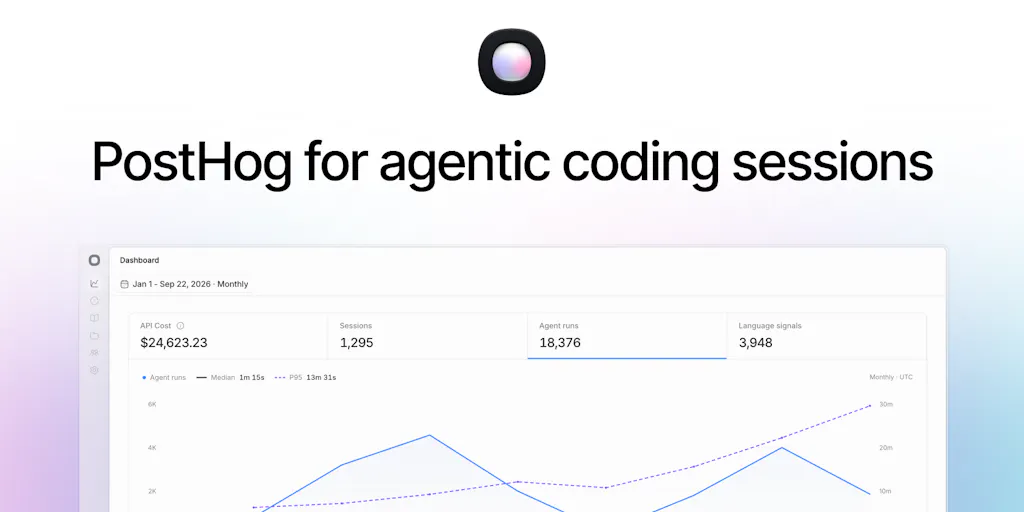
The maker’s own pitch is blunt: the tools people use today, like ccusage or the built-in /insights inside Claude Code, are “single-user, single-model, and pretty shallow.” They’ll tell you how many tokens you burned and what it cost, maybe surface a high-level insight or two. For a solo dev that’s fine. For a team running thousands of sessions across dozens of repos and multiple models, it’s useless — there’s no shared view, no history, no way to learn from what a teammate figured out three weeks ago. Opaline’s answer is to make agentic coding sessions observable the way you’d observe a website: sessions, prompts, token spend, where AI helps versus where it slows you down, all rolled up at the team level.
If you’ve ever tried to run a content operation with more than three people, that problem statement will feel uncomfortably familiar. Right now, if a social manager on my team writes a killer prompt that turns a 40-minute podcast into twelve on-brand TikTok hooks, that prompt lives on their laptop. When they leave, it leaves. When someone else struggles with the same task, they reinvent the wheel from scratch. We have no shared prompt library with attribution, no cost-per-output view, no way to see which AI workflows are actually producing publishable drafts versus which ones are burning tokens on garbage. Opaline is solving that for engineers. Nobody has solved it cleanly for social teams yet.
The “website analytics” analogy is doing a lot of work here
The maker’s framing — “understanding how your team works with coding agents should be effortless, like you’d never run a website without analytics” — is the sentence I’d steal for my own pitch decks. It reframes AI usage from a personal productivity habit into an operational asset that needs instrumentation. That’s the mental shift most social teams haven’t made yet. We treat ChatGPT and Claude as tools we use, not as systems we run. The moment you start running them, you need the same things you need for any channel: baseline metrics, trend lines, cohort comparisons, and a way to attribute outcomes back to inputs.
How it stacks up against the incumbents you probably already pay for
Here’s where I have to be honest about the comparison set, because it’s not the one you’d expect. Opaline is not competing with Buffer, Hootsuite, Later, Metricool, or Sprout Social — those tools instrument what you publish. Opaline instruments what you prompt. The closer analogues are the native usage dashboards inside Anthropic’s Claude and OpenAI’s platform, plus open-source utilities like ccusage that the maker explicitly calls out as too shallow for team use. Where Buffer gives you a unified calendar across Instagram, TikTok, LinkedIn, and X, Opaline gives you a unified session log across Claude Code and Codex. Where Metricool gives you competitor benchmarking and best-time-to-post, Opaline gives you model-version splits and token-cost attribution.
The interesting overlap is with the analytics layer you already run for social. If you’re using a tool like Sprout or Brandwatch to attribute engagement back to content decisions, you already understand the value of a shared source of truth. Opaline is essentially arguing that AI sessions deserve the same treatment. My take: they’re right, and the social tooling vendors are going to bolt this on within a year, either by acquisition or by shipping their own lightweight version. In the meantime, teams that adopt a dedicated layer early will have a compounding advantage in prompt libraries and cost visibility.
Why TikTok-first creators should care more than LinkedIn-first ones
If your content engine runs on volume — ten TikToks a day, five Reels, three Shorts, a dozen X posts — you’re already using AI to keep up, whether you admit it or not. The cost-per-output math on a high-volume short-form operation is brutal, and it’s completely invisible today. A LinkedIn-first creator publishing three thoughtful posts a week can afford to treat AI as a personal assistant. A TikTok-first operator running a faceless channel network cannot. Opaline’s core insight — that you need message-level visibility to know which prompts are earning their keep — scales directly with publishing volume. The higher your output, the more you need this.
Where the math breaks
Two things I’d flag before anyone gets too excited. First, Opaline tracks Claude Code and Codex sessions — not ChatGPT web, not Claude.ai, not Gemini, not the dozen other surfaces your team actually uses to draft captions and hooks. So even if you adopted it tomorrow, it would only see a slice of your AI-assisted workflow. Second, the “positive replies by the user” signal the maker mentions as a proxy for session quality is a weak proxy for content work. A good caption isn’t a good caption because you replied positively to the model — it’s good because it earned a save, a share, a comment. Until Opaline (or someone) connects session data to downstream publishing performance, the feedback loop stays incomplete for social teams. That’s not a knock on the product; it’s a boundary of what it’s designed to do.
The transferable playbook: what social teams should borrow right now
Even if you never touch Opaline, three ideas from this launch are worth stealing for your own operation this quarter.
One: instrument the invisible job. Pick one AI surface your team uses daily — Claude, ChatGPT, Gemini, whatever — and start logging sessions manually for two weeks. Not the content, just the metadata: who prompted, what task, which model, roughly how many tokens, and whether the output shipped. You’ll learn more about your AI ROI in fourteen days than in a year of vibes.
Two: build a shared prompt library with attribution. The maker’s backstory is that at ObsessionDB, “when someone struggled with a skill, it stayed on their machine.” That’s a leak. A simple Notion or Airtable doc — prompt, author, use case, last updated, sample output — captures 80% of the value Opaline provides for engineers. Pair it with a weekly 15-minute review where someone demos their best prompt of the week.
Three: split your metrics by model version. One commenter on the launch, Quentin Wendegass, raised a sharp point: model updates change the numbers, so month-over-month comparisons might just be showing you a new model instead of your team getting better. The maker confirmed you can split by model version in the dashboard. For social teams, the equivalent is tagging every AI-assisted piece of content with the model and prompt version that produced it, so when a format suddenly stops working, you can tell whether it’s the algorithm, the creative, or the model.
Where I think it falls short — and who shouldn’t bother
Opaline is explicitly built for engineering teams running coding agents at scale. If you’re a solo creator with one Instagram account and you use ChatGPT to brainstorm captions twice a week, this is not for you, and the maker would probably tell you the same. The native /insights in Claude Code and free tools like ccusage cover your needs. Skip it.
For social teams, the real limitations are structural. The tool doesn’t see the surfaces you actually use most — no ChatGPT, no Claude.ai, no Gemini, no CapCut or Canva AI features, no Descript. It doesn’t connect session data to publishing outcomes, so you can’t yet answer “which prompt produced the Reel that hit 2M views.” And the security posture, while thoughtful — the maker says they filter known secrets for everyone and offer on-prem/self-hosted deployments for teams with high security standards, plus per-user control over what gets uploaded to the team dashboard — still requires you to trust that filtering works. One commenter, Sebastian, raised exactly this concern, and it’s the right one to raise. If your team handles client NDAs or embargoed campaign material, get the self-hosted story in writing before you pilot.
Pricing isn’t disclosed on the launch page. Neither are user counts or funding beyond the Y Combinator F26 batch affiliation mentioned in the maker’s post. I’d want both before recommending it to a team with real budget.
A note on the launch itself
The comment thread is unusually substantive for Product Hunt — real questions about model-version splits, security filtering, and outcome measurement, with the maker answering directly rather than with marketing copy. That’s a trust signal. It also tells me the team is still figuring out the “what does good look like” question alongside their users, which is honest but also means the roadmap is genuinely open. If you pilot now, expect to shape the product.
What I’d watch — and test — next
Three concrete moves for this week. First, if you run a content team of any size, spend one hour auditing where your AI-assisted work actually happens — which surfaces, which models, which people — and write it down. You can’t instrument what you haven’t mapped. Second, if you’re already using a social analytics tool like Metricool or Sprout, check whether they’ve shipped any AI-usage tracking yet; if not, file it as a feature request and see how they respond. Third, if you’re technical enough to self-host, spin up Opaline against a small team and watch two things over thirty days: whether the session data changes any actual decision you make, and whether the model-version split survives the next Claude or GPT release. If both hold, you’ve found a real layer. If neither does, you’ve learned something cheap.
The bigger story here isn’t Opaline specifically. It’s that the analytics layer for AI-assisted work is being built right now, in public, by teams who feel the pain acutely. Social media operators feel a version of that same pain every single day. The tooling will catch up. The question is whether you’ll have your workflow mapped and your metrics defined by the time it does — or whether you’ll still be guessing which prompts are worth the tokens.