The “Silly Game” Stack Is a Preview of Where Creator Tooling Is Headed
Every social media operator I know has the same quiet problem: the distance between an idea and a shippable piece of interactive content is still measured in days, not minutes. You can storyboard a Reel in an afternoon, but the moment you want something playable — a poll that behaves like a game, a branded mini-challenge for a launch, a “send this to a friend” loop — you’re suddenly negotiating with a developer, a no-code builder, or your own patience. So when a maker launches a platform whose entire premise is “describe a game, and it goes live,” I pay attention — not because I want to ship Mario Kart clones, but because the underlying workflow is the same one creators will soon demand for every interactive format. For the Wall and its Our Silly Games project are worth studying for exactly that reason.
What the Product Actually Is (and What Problem It Solves)
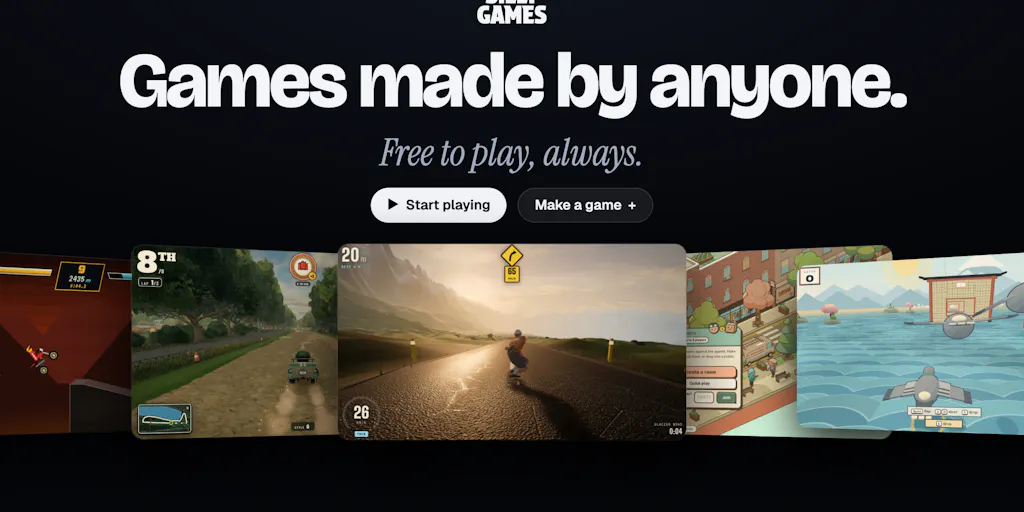
Let me separate the pitch from the mechanics. The maker, Henry Kirkness, describes a platform where you install a “skill” in Claude Code or Codex, describe the game you want, and the agent builds it. Connect your account to the agent and it submits and goes live “within minutes.” The stated motivation is refreshingly unglamorous: he kept rebuilding the same tricky primitives — leaderboards, multiplayer rooms, phone controls — so he built them once and offered them to others. It’s free for creators and players.
Notice what that actually solves. The hard part of shipping an interactive web game was never the idea; it was the plumbing. Leaderboards require persistent state and anti-cheat hygiene. Multiplayer rooms require real-time sync. Phone controls require touch-event handling that doesn’t feel like a 2011 Flash port. Those are exactly the components a solo creator abandons a project over. By packaging them as reusable infrastructure and letting an AI coding agent assemble them, the platform collapses the “last mile” that kills most side projects. The maker frames the whole thing as being “just for the fun of it” — and that framing matters, because it tells you the target user is a tinkerer, not an enterprise buyer.
Why this is a creator-economy story, not just a games story
Here’s my take, and I’ll flag it as opinion: the interesting thing isn’t the games. It’s the workflow. A creator who can go from “I want a playable thing for my audience” to a live URL in minutes has a new content format in their toolkit — one that generates the single most valuable signal in social distribution: a session, not a scroll. Platforms reward dwell time and repeat visits; a game is dwell time with a leaderboard attached. If you’ve ever watched a “guess the answer” Story sticker outperform a polished carousel, you already understand the mechanic. This platform is that instinct, productized.
How It Differs From What You’re Already Using
The honest comparison set here isn’t other game platforms — it’s the no-code and AI-builder tools creators already reach for. Cursor and Replit can absolutely produce a small browser game if you prompt them well; what they don’t give you is the pre-built leaderboard/multiplayer/phone-control layer or a hosting destination with a submission flow baked in. Claude Code and Codex are the build engines here, not the product — the product is the glue around them. Compared to something like GameMaker or Construct, the tradeoff is obvious: you surrender depth and polish for speed and zero setup. Compared to a no-code site builder like Carrd, you get actual interactivity rather than a landing page.
The closest analogue in spirit is the “vibe coding” wave — tools that let non-engineers ship small software by describing it. The differentiator the maker is betting on is curation of the boring parts. Any competent agent can write a game loop. Fewer can reliably wire a persistent leaderboard without exposing a trivial cheat. If the platform’s primitives are genuinely hardened, that’s a real moat; if they’re thin wrappers, it’s a weekend project with a landing page. The source doesn’t disclose how robust those components are, so I’d treat “hardened” as an open question, not a given.
Why TikTok and Instagram creators should care more than LinkedIn ones
This is a format-fit argument. TikTok and Instagram audiences are conditioned to participate — duets, stitches, polls, “comment your score.” A playable game with a shareable leaderboard slots directly into that behavior, and the “send to a friend” loop the maker explicitly asks for is native to those platforms’ distribution logic. LinkedIn’s engagement model rewards commentary and credibility signals, not arcade sessions; a mini-game there reads as a gimmick unless it’s a training simulation. So if you’re a growth marketer, my advice is to prototype interactive formats where participation is already the norm, then port the winners to the more formal platforms once you have proof.
What Creators and Social Teams Can Borrow From It
Even if you never touch this specific platform, three operational lessons transfer directly.
First: build your own primitive library. The maker’s insight — “I kept rebuilding the same tricky bits” — is the most reusable idea in the whole launch. Every social team I’ve worked with rebuilds the same things: the UTM taxonomy, the caption template, the repurposing checklist, the approval flow. Codify them once. When I standardized UTM naming across five platforms last year, the win wasn’t the tags themselves; it was that a junior operator could ship a campaign without asking me a single question. That’s the same leverage the maker is selling, just applied to content ops instead of game code.
Second: let agents handle assembly, not judgment. The workflow here — human describes, agent builds, human reviews — is the correct division of labor. In my own tests of AI-assisted content tools, the failures cluster around taste, not capability: the model can draft ten caption variants, but it can’t tell you which one fits your brand voice. Use AI for the plumbing and keep the editorial call. The maker’s flow implicitly respects this; the human still decides what the game is.
Third: treat “shareable by design” as a spec, not an afterthought. Notice the maker’s ask: play one and tell me which you’d send to a friend. That’s a distribution question baked into the product brief. Creators should steal that framing for every asset — before you publish, ask “what specifically would make someone forward this?” If you can’t answer in one sentence, the format is probably wrong.
The repurposing angle nobody’s talking about
A live game URL is raw material. The leaderboard screenshot is a Story. The “I beat level 3” moment is a Reel. The build process itself — prompting an agent into a working game — is a behind-the-scenes video that performs well on YouTube Shorts because it’s process content with a payoff. If you’re running a content calendar, an interactive asset like this generates a week of derivative posts from one build. That’s the repurposing math most teams underweight: they count the asset, not the spin-offs.
Where My Judgment Says It Falls Short
Balanced assessment time, because the launch page is thin on the details that matter to an operator.
Hosting and ownership are unclear. If you build a game through an agent and it “goes live on the site,” who owns it, where does the code live, and can you export it? The source doesn’t say. For a hobbyist, irrelevant. For a brand or a creator monetizing an audience, that’s a dealbreaker until answered. I’d want export before I’d build anything I cared about.
The free model raises sustainability questions. Free for creators and players is a great acquisition strategy and a terrible long-term business plan unless there’s a monetization path — not disclosed. That’s not a criticism of the maker; it’s a risk flag for anyone building a workflow on top of it. Platforms change terms when the runway shortens.
AI-generated games have a quality ceiling. Agents are good at assembling known patterns and bad at novel game feel. The commenter praising “Mario Kart-style drift boosts” is responding to craft, and craft is exactly what a prompt-to-game flow struggles to guarantee. My bet: the output will be fun for a session and rarely sticky for a week. That’s fine for a marketing moment; it’s not fine if you’re building a retention loop.
Who this is NOT for: teams that need analytics dashboards, A/B testing, or compliance review before publish. There’s no mention of any of that. If your workflow requires sign-off, this is a prototyping toy, not a production tool. And if you’re on Buffer, Hootsuite, or Later for scheduling, note that a game URL is just another link in your queue — the platform doesn’t plug into those workflows, so you’ll be copy-pasting.
Where the math breaks
Interactive content’s ROI depends on repeat plays, and repeat plays depend on leaderboard integrity and matchmaking. If the multiplayer rooms are thin or the leaderboards are trivially cheatable, the retention curve collapses and you’re left with a novelty. The maker built these primitives because they’re hard — which is an admission that getting them right is the whole ballgame. I’d test leaderboard durability before I’d trust it with a prize-based campaign.
What I’d Watch / Test Next
This week, if you’re an operator, do three concrete things. One: spend twenty minutes in Our Silly Games and note what makes you want to share a specific game — that’s your format brief for your own interactive experiments. Two: if you have Claude Code or Codex access, prompt a trivial game for your own brand and time how long it takes to something shareable; that number tells you whether interactive content belongs in your Q3 calendar. Three: ask the maker directly — in the launch comments — about export, ownership, and analytics. His answers will tell you more about the platform’s maturity than the landing page does.
What I’m watching long-term: whether the “agent builds it, platform hosts it” model becomes a standard distribution layer for interactive content, the way Canva became one for design and CapCut for short video editing. If it does, the creators who learn the prompt-to-playable workflow early will have a format advantage that’s hard to copy. If it doesn’t, we’ll still have learned something useful: the boring primitives are where the real leverage lives — in games, and in your content stack.