The Creator Economy Has an Internal Tools Problem — And It’s About to Become Your Problem Too
Here’s the thing nobody in the creator space wants to admit: the same AI revolution that lets you repurpose a 45-minute YouTube video into 12 TikTok clips, 5 LinkedIn posts, and a newsletter in under an hour is also quietly creating a governance nightmare inside every company that employs you, pays you, or licenses your content. When I look at the tools landing on Product Hunt these days, I’m not just scanning for the next editing suite or scheduling app — I’m watching how the underlying infrastructure of creative work is being rebuilt. And Prized — a YC-backed internal tool builder that launched this week — is one of those rare launches that tells you more about where the whole industry is heading than any “10x your reach” growth hack ever could.
The relevance to social media operators isn’t obvious at first glance. Prized isn’t a content tool. It doesn’t schedule posts, analyze engagement, or generate captions. But it solves the exact problem that’s been eating my week for the last six months: the gap between what AI lets you do and what it lets you get away with. When I’m running a brand’s social accounts, I’m constantly asking for internal data — customer testimonials from the CRM, sales numbers for a “we hit 100K followers” post, product roadmap details for a launch campaign. And every single time, that request goes into a black hole labeled “waiting on engineering.” Prized is what happens when that black hole gets a sign-in page and a sandbox. It’s not a tool for creators directly — it’s a tool for the people who are finally saying “no” to the bottleneck, and that changes the game for all of us who depend on those people.
What Prized Actually Solves (And Why It Matters Beyond the IT Department)
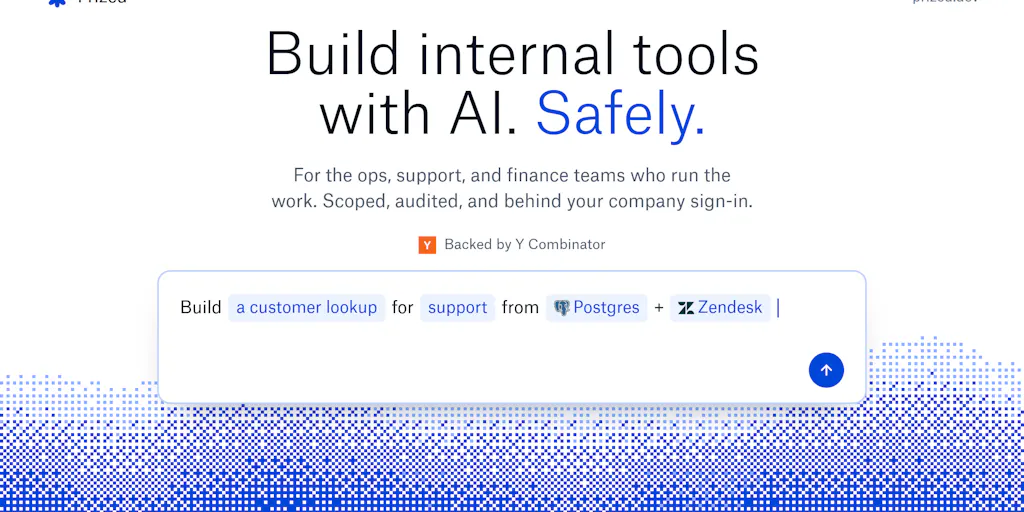
Let me be precise about what this product does, because the marketing copy obscures it. Prized is an AI-powered internal tool builder that lets non-engineers describe an app — a customer lookup, an admin panel, an approval flow — and get a functional full-stack application without writing code. The team claims the key innovation is that security isn’t bolted on after the fact; it’s “enforced in the infrastructure.” The sandbox never holds credentials, secrets are injected from a broker outside the generated code, every tool gets its own database role, and data access is audited. Destructive changes require human approval.
When I read the launch comments, the founder Marinos Eliades made a point that stopped me cold: “AI made building easy, and the people who understand workflows best (ops, support, finance) stopped waiting on engineering. They point Claude Code or Cursor straight at company data and ship a working tool in an afternoon with no permissions or audit trail.”
I’ve seen this exact scenario play out in my own client work. Last quarter, I was managing social for a DTC brand, and the community manager — a brilliant person who understood our audience better than anyone — built a custom Python script to pull customer sentiment data from our support tickets and auto-generate content briefs. She didn’t ask permission. She just did it. And it worked beautifully until it broke, and nobody knew what it was doing, what data it was touching, or how to fix it. That’s the shadow IT problem Prized is trying to solve. It’s not about stopping people from building — it’s about giving them a way to build that doesn’t terrify the security team.
For social media operators, the connection is direct. Every time I need a custom dashboard to track competitor activity, a tool to pull UTM-tagged campaign data into a single view, or an approval workflow for sponsored content, I’m currently at the mercy of whatever internal tooling exists — which is usually a spreadsheet that three people maintain and nobody trusts. Prized is the kind of tool that lets the person in the ops role (the one who actually understands the workflow) build that dashboard themselves, with data access scoped to exactly what they’re allowed to see.
Why TikTok Creators Should Care More Than LinkedIn Ones
Here’s where the platform-specific nuance comes in. If you’re a LinkedIn creator building a personal brand around thought leadership, you probably don’t need internal tools — you’re a solo operator. But if you’re a TikTok creator working with brands, or a YouTube channel with a team, or an Instagram account run by a social media agency, you’re constantly hitting the internal tools wall. You need access to campaign performance data, brand-safe content libraries, approval chains for sponsored posts, and reporting dashboards that pull from multiple ad platforms.
The TikTok-specific angle is sharper. TikTok’s algorithm rewards consistency and volume in a way that LinkedIn’s doesn’t — you’re expected to post multiple times daily, which means you need efficient content operations. The creators who crack that are the ones who have built systems: content calendars, approval workflows, asset libraries. And those systems are exactly the kind of thing Prized lets non-engineers build. A social media manager at an agency could describe an “approval flow for client content” and get a working tool with the right permissions — without waiting three weeks for the engineering team to get to it. That’s not a nice-to-have; that’s the difference between posting on schedule and falling behind.
How Prized Differs From What’s Already Out There
I need to be careful here, because there’s a crowded field of “AI internal tool builders” and “no-code app platforms.” The incumbents include Bubble, Retool, and Glide. But Prized’s positioning is meaningfully different in one key respect: the security model is infrastructure-level, not application-level.
Retool, for example, is a fantastic product — I’ve used it for client reporting dashboards, and it’s powerful. But it’s built for developers. It assumes you understand databases, API endpoints, and authentication flows. Bubble is more accessible, but you’re still building within their framework, and you’re responsible for configuring permissions correctly. Get it wrong, and you’ve got a data leak on your hands.
Prized’s approach — where the sandbox never holds credentials and every data access is audited — is closer to what I’d expect from a security-first platform like Vercel or Supabase than from a no-code tool. The claim is that security is enforced in the infrastructure, which means the generated code can’t accidentally expose data because the permissions are baked into the environment, not the application logic.
That’s a significant architectural distinction. When I tested similar tools in the past — and I’ve fiddled with several no-code builders for internal use — the weak point was always the developer who configured the permissions. With Prized, the permissions are inherited from the signed-in user’s role, and the database roles are automatically scoped. If that works as described, it eliminates an entire class of human error.
The deployment model also differs. According to the founder’s comment on Product Hunt, tools run in isolated sandboxes on AWS, firewalled from the internet except for approved data connectors. When you publish, it deploys into your workspace behind your SSO, with each tool getting its own Postgres database. You can connect to your VPC or allowlist their IP. That’s a serious enterprise-grade deployment story, not a consumer tool playing at business.
Where the Math Breaks
Now, let me be the skeptic for a minute, because there are numbers here that don’t add up yet. The source says Prized is “already powering teams at Avoca, Onyx Odds, and more” — but the actual user count, revenue figures, and churn rates are not disclosed. I’m not going to pretend I know what their traction looks like beyond those two named customers. In my experience, a Product Hunt launch with a couple of enthusiastic comments is not the same as enterprise adoption.
The bigger question is pricing. The source mentions a free tier with no card required, but no actual pricing details are provided. For a tool that’s targeting operations, support, and finance teams — not developers — the pricing model matters enormously. If they charge per seat, adoption will be slow because ops teams don’t have budget. If they charge per tool, it might work. If they charge based on data volume, that’s a different calculus. Not disclosed, and I’d want to know before betting real workflow on it.
There’s also the question of what happens when the generated code needs to be customized beyond the prompt. The founder mentioned in a comment that you can integrate with GitHub to pull in relevant context, but they “intentionally kept production separate to maintain a clear boundary between user-facing and internal development streams.” That’s a sensible boundary, but it also means that if the AI generates something that doesn’t quite fit your workflow, you’re either working around it or waiting for the tool to improve. There’s no escape hatch to “just edit the code” — which, for the ops person who’s not a developer, is fine, but for the power user who wants to tweak things, it’s a limitation.
What Creators and Social Media Teams Can Borrow From Prized’s Approach
Even if you never touch Prized, there are operational lessons here that translate directly to how you run your social media operation. I’m not talking about the tool itself — I’m talking about the philosophy underneath it.
Lesson One: Scope your data access before you need it. The most impressive part of Prized’s pitch is that permissions are inherited from the user, not defined by the tool. That’s a governance model, and it’s one that social media teams desperately need. When I’m running a brand account, I’m handling sensitive data — customer information, unreleased product details, internal performance metrics — and the line between “what I can see” and “what I should see” is often blurry. The creators who survive platform changes and brand partnerships are the ones who can demonstrate that they handle data responsibly. Building a permission model into your content operations — even if it’s just a spreadsheet that tracks who has access to what — is a competitive advantage.
Lesson Two: Automate the audit trail. The source mentions that “every data access is audited” in Prized. For social media teams, this translates to keeping records of who posted what, when, and with what approval. When a brand asks you to justify a post that didn’t perform well, or when a platform flags your account for review, having an audit trail is the difference between a quick resolution and a nightmare. I’ve had to reconstruct posting history from memory before; it’s not fun, and it’s not reliable.
Lesson Three: Build your own internal tools, even if they’re ugly. The whole premise of Prized is that non-engineers shouldn’t have to wait for engineering. The same logic applies to content operations. If you’re manually compiling a weekly report from five different platforms, build a spreadsheet that automates the data pull — or better, use a tool like Metricool or Buffer that does it for you. If you’re manually scheduling posts across platforms, use a scheduling tool. The point is: don’t let the “we don’t have a developer” excuse stop you from building the systems you need.
The Repurposing Workflow Connection
There’s a specific connection to content repurposing that I want to call out. The whole “create once, publish everywhere” workflow — recording a YouTube video and turning it into clips, quotes, threads, and posts — is essentially an internal tooling problem. You need a system that takes one piece of content and distributes it across platforms with the right formatting, the right captions, and the right timing. Tools like Canva and CapCut handle the creative side, but the operational side — the scheduling, the version tracking, the approval chain — is where things fall apart.
What Prized represents is the ability for a content operations person to build that system themselves. Describe a “content repurposing workflow” and get a tool that pulls from your master content library, applies the right templates, and routes each piece to the right platform with the right permissions. That’s not a pipe dream; that’s what the no-code + AI combination enables. The question is whether tools like Prized will make it easy enough for non-engineers to actually do it.
Where My Judgment Says It Falls Short
I’ve been positive so far, so let me balance the ledger. There are real weaknesses here, and you should know about them before you get excited.
First, the target user is not the solo creator. If you’re a one-person operation, Prized is overkill. You don’t need a sandboxed AI tool builder; you need a scheduling tool and a content calendar. The value proposition is for teams — specifically, teams at companies where there’s a meaningful gap between what operations people need and what engineering can deliver. If you’re reading this as an indie founder with a small team, this might be useful. If you’re a solo creator, move on.
Second, the “describe a tool and get an app” promise is harder than it sounds. I’ve tested AI code generators, and they’re impressive — but they’re also unpredictable. The generated tool might work for 80% of your use case, and the other 20% is where you spend your time. Prized’s approach of scoping permissions and enforcing security in the infrastructure helps with the governance side, but it doesn’t solve the fundamental problem of AI-generated code being subtly wrong in ways that are hard to detect. The founder’s comment about “destructive changes wait for a human” is reassuring, but it also means you need a human who understands what the destructive change would do — which brings you back to the engineering bottleneck you were trying to avoid.
Third, the trust model is unproven. The source says they’re YC-backed and have a free tier, but there’s no information about SOC 2 compliance, penetration testing, or security certifications. For a tool that’s handling company data, that’s a significant gap. I’d want to see their security documentation before connecting this to anything sensitive. The “sandbox never holds a credential” claim is strong, but it’s a claim, not a certification.
Fourth, vendor lock-in is real. If you build your internal tools on Prized, you’re committing to their platform. The tools run on their AWS sandbox, deploy into their workspace, and use their database roles. If you decide to leave, you’re not walking away with a codebase — you’re walking away with a description of what you wanted, not the implementation. That’s a significant switching cost, and it’s worth considering before you build anything critical.
What I’d Watch / Test Next
If you’re intrigued by the concept but not ready to commit, here’s what I’d do this week:
Test the free tier. The source says there’s a free tier with no card required. Sign up, describe a simple tool — something like a “customer lookup for the social media team” — and see what the generated result looks like. Pay attention to how the permissions are scoped, how the data connections work, and whether the tool actually does what you asked. Don’t connect it to anything sensitive yet; just get a feel for the workflow.
Map your own internal tools gap. Before you adopt any tool, spend an hour listing the things you’re waiting on engineering for. What dashboards do you need? What approval workflows are stuck in email threads? What data access would make your content operation faster? If you have a list of five or more items, Prized or something like it is probably worth a serious look.
Compare against the incumbents. If you’re already using Retool or Bubble, do a side-by-side comparison. Build the same simple tool in each and see which one feels more natural, which one gives you better permissions control, and which one you’d trust with real data.
Watch the security documentation. The biggest open question is trust. If Prized publishes SOC 2 Type II reports, security whitepapers, and clear data-handling policies, that changes the calculus. Until then, treat it as a promising experiment, not a production-critical dependency.
The bottom line: Prized is not a social media tool, but it’s a signal about where the creator economy is heading. The people who win in this next phase aren’t the ones with the best content — they’re the ones with the best systems. And systems are about to get a lot easier to build. Whether you use Prized or something like it, the lesson is the same: stop waiting for engineering, and start building the tools you need. The sandbox is ready.