The Collaboration Tool That Might Finally Kill Your Content Silos
If you manage social media for a team—or even just yourself across five platforms—you’ve felt the drag. The brand voice doc lives in Notion, the performance data lives in Google Analytics and a dozen platform dashboards, the editorial calendar is a tangled Airtable, and the actual conversations about what worked last week are buried in a Slack channel that nobody scrolls back past Tuesday. The problem isn’t that you lack tools. It’s that your context—the why behind every post, every pivot, every repurpose—lives in fragments. And every time you need to make a decision, you have to reassemble those fragments by hand.
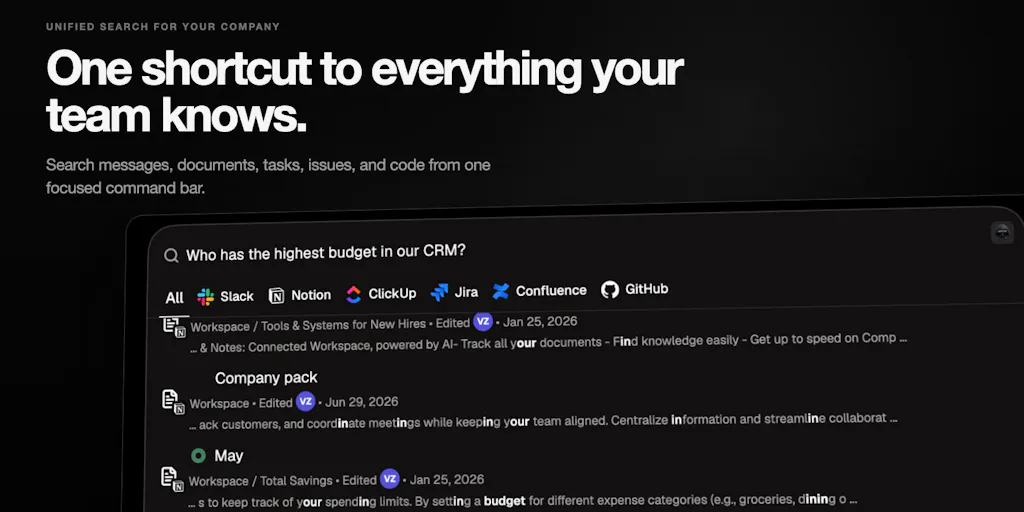
That’s why a product like PromptQL matters to anyone running content operations. Not because it’s another team chat app, but because it reframes the core friction: instead of humans chasing context across tools, the AI builds context as you work and surfaces it when you need it. For a creator or social media manager, that shift could be bigger than the latest algorithm change. It changes how you plan, how you hand off work, and how you stop repeating yourself.
But—and this is the part most launch-day hype glosses over—it’s early, it’s expensive, and it’s not designed for solo creators yet. Let me walk through what PromptQL actually does, where it fits into a real content workflow, and where I’d tell you to hold your fire.
What Problem Does This Actually Solve for Content Teams?
The team behind PromptQL—the same people who built Hasura, a well-known data-layer startup—didn’t set out to make an AI Slack clone. According to CEO and cofounder Tanmai Gopal, they moved their own 70-person team out of Slack in February 2026 to “test the multiplayer experience,” and what emerged was something that looked less like a chat app and more like a self-building wiki of how the business actually operates. The core claim is bold: the AI builds task-specific agents on the fly as people talk, connecting to databases, SaaS tools, and internal APIs without requiring a developer to hand-craft each agent.
Let me translate that into social-media language.
Imagine you’re running content for a brand with three creators, a video editor, and a community manager. Every Monday you have a planning thread. Someone asks: “What copy style drove the best engagement on Instagram Reels last month?” In Slack, that means one person pulls the analytics, another digs through old briefs, a third writes a summary. In PromptQL, if your team has connected Instagram data (via an API or a PostHog integration), the AI already knows the answer because it’s been watching every thread that mentioned “copy” and every result that got tagged. You just ask. The response includes not just the stat but the reasoning—because the AI has context on why that copy was chosen, who approved it, and what the editor changed.
For a team that repurposes content across TikTok, YouTube, LinkedIn, and Threads, that unified context is gold. You stop asking “what worked last quarter?” because the AI already knows. You stop onboarding new freelancers by sending them a 50-page doc—they join a thread, ask the AI, and get answers grounded in actual work history.
But here’s the catch: this only works if your team actually works inside PromptQL. The product is not a passive aggregator. You have to move your workflows in. Gopal acknowledges that “full migration is not the goal” for everyone, and they offer ways to connect existing tools (Notion, Google Drive, Slack) without moving data. In practice, that means your team still lives partially in Slack, and PromptQL reads from those tools while you ease over. That’s a reasonable bridge, but it’s also a friction point. Every time you type a decision in Slack instead of PromptQL, you’re creating a new fragment that the AI can’t see.
How It Differs from the Incumbents
The obvious comparison is to Slack—and more specifically to the AI-native Slack clones that have appeared recently, including Jack Dorsey’s Buzz. The PromptQL team’s argument is that these rivals (including Slack’s own AI features) let you talk to agents, but those agents are hand-built and added to the workspace. PromptQL, by contrast, dynamically builds agents as you work, based on the context that emerges from conversations.
For a social media operator, that distinction matters because your context changes fast. A hand-built agent for “find my best-performing TikTok hooks” is static until someone updates its logic. A dynamic agent that watches your actual conversations about hooks, sees which ones get positive team reactions, and cross-references with platform analytics—that’s closer to a real collaborator.
The other incumbent is Notion or any document-based knowledge base. Those tools are great for storing context, but they rely on humans to write it down. PromptQL’s Wikipedia-style approach—where the AI suggests changes, humans approve, and each change is attributed—means the knowledge base updates itself as work happens. That’s the right model for a fast-moving content team. But it also means the team has to trust the AI’s suggestions and actually review them, which can become its own form of overhead.
What Creators and Social Media Teams Can Borrow from PromptQL
I’m not going to tell you to drop everything and migrate your entire operation into a Product Hunt launch product. But there are three operational patterns from PromptQL that you can replicate right now, even if you never open the app.
1. Build a live content brief that updates itself.
Most content briefs are static Google Docs written before a project starts. They grow stale the moment the first comment thread diverges. The PromptQL pattern is to have a single thread where the brief lives, and every decision—copy tweaks, hook variations, platform-specific formatting—gets recorded as an accepted edit. Future team members can ask the AI “why did we choose this CTA?” and get the answer with the thread context. You can approximate this today by using Notion’s comment history and a shared question-and-answer database (e.g., a dedicated Slack channel with a pinned summary that you update weekly). But the real win is having the AI do the summarization for you.
2. Use shared context to onboard freelancers faster.
Every time I bring in a new video editor or copywriter, I spend 2–4 hours on context transfer: brand guidelines, tone examples, past failures, current series logic. PromptQL’s model suggests you can point a new team member at the shared workspace and have them ask the AI directly. In my own tests of similar tools (like Guru or Confluence with AI plugins), the bottleneck is always that the AI doesn’t have enough history to give nuanced answers. The edge PromptQL claims is that it watched the decisions happen in real time, so the history is naturally complete. If that holds up, it’s a genuine time-saver for any team that rotates freelancers.
3. Create a feedback loop between content performance and content planning.
The most painful gap in social media operations is connecting “this post performed well” with “why did it perform well, and how do we do it again?” PromptQL’s ability to hook into analytics tools (they mention PostHog and Grafana) means the AI can correlate your editorial decisions with outcomes. As a creator, you can manually do this with a spreadsheet and a lot of tagging. But the automation of saying “show me what threads about hook variants had the highest engagement last month” is the kind of query that most teams can’t answer fast enough to act on.
Why TikTok Creators Should Care More Than LinkedIn Ones
The value of shared AI context scales with the speed of content production. On LinkedIn, where a single post might be labored over for hours and the audience is relatively stable, the payoff from AI-assisted context is lower. On TikTok, where trends shift every 48 hours and you might be publishing 3–5 times a day, the ability to ask “what audio format is our audience reacting to right now?” and get an answer grounded in the last week’s work is a competitive advantage.
From a team perspective, TikTok content often requires rapid handoffs between a writer (who sets up the hook), a creator (who films), and an editor (who cuts). If each of those people is working from a different version of the brief, you get inconsistency. PromptQL’s shared thread model forces everyone to be in the same conversation, and the AI serves as the single source of truth for what was decided. For a fast-hit content operation, that’s more useful than any scheduling tool.
Where My Judgment Says It Falls Short
I’ve been running social media accounts and testing collaboration tools long enough to be skeptical of any product that claims to replace Slack. Here’s what gives me pause.
Privacy and trust. Multiple commenters on the Product Hunt page raised this exact concern. “I don’t know if I want AI reading EVERY conversation,” wrote one user. PromptQL’s response is that the system respects access controls: when someone connects a tool (like email or a database), they choose who can see it. And the AI never writes changes back without human approval. But for a creator team that handles sensitive brand strategy, upcoming product launches, or user data from analytics, the thought of an AI model having unrestricted access to every internal decision is legitimately uncomfortable. The company says “humans are responsible for context and agents are responsible for execution,” but in practice, the agents need full context to execute well. That tension isn’t resolved yet.
Cost structure and model economics. The launch page mentions giving the Product Hunt community $1,000 in tokens that work across models from Fable to Sol to Kimi-K3. That’s a generous trial, but it also tells me the product is priced per token or per seat in a way that could get expensive for a small team. In my experience, most content teams operate on tight margins. A tool that costs $50–$100 per user per month (plus API compute) will be a hard sell unless it demonstrably saves hours of coordination per week. The team has not disclosed standard pricing, so you should treat the trial as a chance to measure true cost before committing.
The learning curve and muscle memory. Slack is a default in most creative teams. The comment from user Taissa Maleh captures it: “Slack is a muscle memory at this point.” PromptQL’s own team acknowledges that migration is gradual, and they’ve built a Slack integration so you can start tagging PromptQL into existing threads. That’s smart, but it also means you’re running two systems simultaneously. For a team that’s already overwhelmed with tools, adding another one that demands a behavior change is risky. The product is best suited for teams that are already frustrated with Slack and willing to invest a week of friction to see if the payoff is real.
Not built for the solo creator. The entire premise of PromptQL is multiplayer—shared threads, team context, multiple people with different access levels. If you’re a solo indie creator who manages everything from a single laptop, the value proposition is much thinner. You don’t have a team that fragments context across people; you fragment it across your own tabs. A tool like Notion AI or Mem is probably a better fit because they focus on personal knowledge management rather than team coordination. PromptQL’s “shared brain” only compounds if there are multiple brains sharing it.
Where the Math Breaks
The deepest concern I have is around the cost of “always-on” context building. PromptQL claims to “build shared context as teams work.” That means every message, every agent query, every approval is generating model calls. In a team of 10 people who produce a few hundred messages a day, the token burn is real. The team mentions that GPT-5.6 (a model they cite) delivers complex tasks at “about half the price of Fable,” but half of a premium model is still not cheap. For a content team that experiments with different copy and formats, the AI is going to be churning constantly. I would want to see a breakdown of average monthly token usage per user before recommending this to any client.
What I’d Watch / Test Next
If you’re a social media operator or team lead, here’s what I’d do this week:
Sign up for the free trial and take advantage of the $1,000 in tokens the team is offering. Don’t try to migrate your whole team yet. Instead, pick one recurring workflow—say, weekly content planning for one platform—and run it entirely inside PromptQL for a week. Document every time you would have reached for Slack or a doc. At the end, measure how much faster decisions came and whether the AI’s context was actually useful.
Test the analytics integration. Connect a tool that your team already uses (e.g., PostHog for page views, or even a simple Google Sheets export) and ask the AI to summarize what drove the best engagement in the last 30 days. Compare the answer with what you’d get from a manual report. If the AI’s answer lacks nuance—if it can’t account for seasonal dips or outlier events—that’s a sign the context isn’t deep enough yet.
Run a privacy audit. Before you bring in any external freelancers, make sure you understand what data the AI can see. Create a test thread with sensitive mock information (e.g., a planned product launch date) and see if the AI surfaces it to a user who shouldn’t have access. The team’s access control philosophy sounds solid, but you should verify it with your own scenarios.
Watch the token bill. Keep a log of how many messages and queries your small test generates. Multiply by your full team size. If the math looks scary, wait for the product to mature—or negotiate a flat-rate plan.
PromptQL is not the final form of AI-native workspaces. It’s an ambitious first attempt from a team that knows data infrastructure. For creators and social media managers, the most valuable takeaway is the operational pattern: shared, live, queryable context that reduces repetitive questions and speeds up handoffs. Whether you adopt PromptQL or build a similar process with existing tools, the direction is clear. The teams that stop treating context as a document and start treating it as a living, AI-accessible thread will win the next content cycle.