The creator economy’s real bottleneck isn’t content — it’s the loneliness of the long build
Most social media operators I know are not short on ideas. They’re short on the specific, unglamorous infrastructure that turns an idea into something shipped — the parallel workstreams, the asset pipeline, the thing that keeps running while you sleep. That’s why the Product Hunt chatter around GPT-6 Astra and the maker story behind RepoRoad caught my attention this week. Neither is a social scheduling tool. Neither is a content repurposing engine. But both point at something every creator and social team is quietly wrestling with: how do you build a real publishing operation when you’re one person, or a two-person team, staring down eight platforms and a calendar that never stops? The answer, increasingly, is orchestration — and the makers building in public right now are showing us the playbook.
What these launches actually solve (and what they don’t)
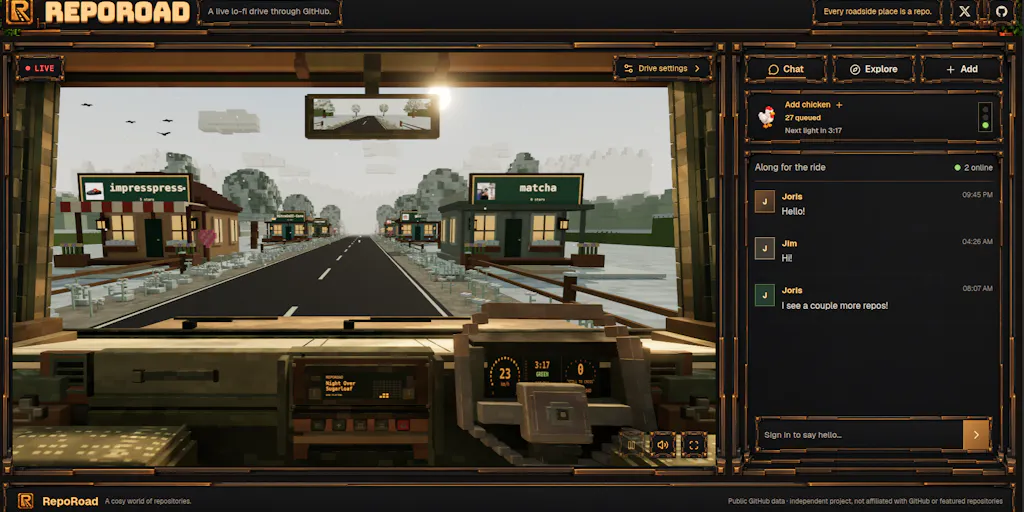
Let’s be precise, because the Product Hunt page is thin on hard specs and heavy on vibes. RepoRoad is described by its maker, Joris Suppers, as “less leaderboard, more neighbourhood” — a live, social space where developers show what they built, wander past other people’s work, and hang out at the same time. The chat, music, and animation are all live. The pitch is explicitly anti-grind: “a place where you’re not grinding alone.” That’s the whole product thesis, and it’s refreshingly narrow.
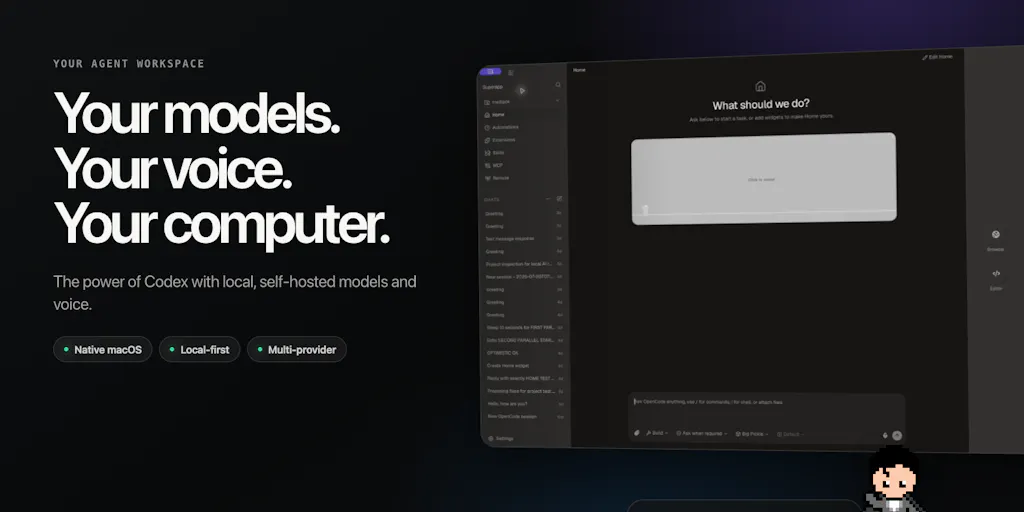
The Astra angle is different. In a reply on the same page, Suppers says Astra “helped me plan it, implement it, test it, and build out the whole engine — the voxel graphics and all of it — spawning sub-agents that worked in parallel.” He adds that “the resets saved me a few times” and that none of it “would have been possible on my own, especially in such a short timeframe.” That’s a maker testimonial, not a spec sheet, and I want to flag it as such: it’s a claim about workflow leverage, not a benchmark. Pricing is not disclosed. User counts are not disclosed. Retention data is not disclosed. If you’re evaluating this as a tool, you’re evaluating a prototype and a philosophy, not a mature SaaS.
Why this matters more to solo creators than to enterprise social teams
Here’s my take, and it’s the reason I’m writing about a dev-tool launch on a social media blog: the operational pattern Suppers describes — plan, implement, test, parallelize, reset — is exactly the pattern that breaks when a solo creator tries to run a multi-platform publishing cadence. Enterprise teams have Hootsuite seats and Sprout Social workflows and a person whose whole job is the calendar. A solo creator has a phone, CapCut, and whatever’s left of their evening. The leverage gap isn’t talent. It’s orchestration.
When I scheduled 30 posts across five platforms last month for a client, the actual writing took maybe four hours. The orchestration — resizing for Instagram Reels vs. TikTok vs. YouTube Shorts, rewriting hooks for LinkedIn vs. X, queuing in Buffer, checking Metricool for the best slots, building UTM strings so Google Analytics could attribute signups — took three times as long. That ratio is the entire problem. Any tool or workflow that compresses orchestration time is worth more than a tool that generates more content, because we are already drowning in content.
How it stacks up against the incumbents you already pay for
If you’re a social media manager, your stack probably looks like some combination of Later for visual planning, Buffer or Metricool for scheduling and analytics, Canva for assets, and a spreadsheet for everything the APIs won’t let you automate. The gap RepoRoad and Astra-style agent workflows expose isn’t a feature gap — it’s a category gap. None of those tools help you think. They help you execute a plan you already made.
That’s the honest comparison. Later and Buffer are execution layers. Canva is a production layer. Metricool is a measurement layer. What Suppers is describing with Astra is a planning and parallelization layer — sub-agents doing work in parallel while he focuses on the parts that need a human. If that pattern generalizes, it doesn’t replace your scheduler. It replaces the three hours you spend before you open the scheduler.
Where the math breaks
I’d bet the parallelization story is real but narrower than it sounds. Sub-agents working in parallel are great at well-scoped, verifiable tasks — generating variants, running tests, scaffolding boilerplate. They’re bad at judgment calls: does this hook feel desperate, is this trend already dead, will this joke land with a Threads audience that skews different from your Pinterest audience. In my experience testing similar agentic workflows, the failure mode isn’t quality — it’s coherence. Ten parallel outputs that don’t share a voice are worse than one slower output that does. The reset feature Suppers mentions is a tell: parallel work drifts, and you need a way to pull it back.
So the math breaks at the seam between generation and taste. If your bottleneck is volume, this helps. If your bottleneck is positioning — and for most creators past 10k followers, it is — this helps less than the demo suggests.
What creators and social teams should actually borrow from this
Forget the product for a second. The operational patterns on display are worth stealing this week, regardless of what tools you use.
Build in public, but build the meta-narrative too. Suppers didn’t just ship a repo. He shipped a story about shipping — the nights, the shower thoughts, the “row in a list” problem. That’s a content strategy. If you’re a creator, your build-in-public posts are not a distraction from your product; they are the product for the audience segment that follows makers. I’ve watched accounts grow faster on the meta-narrative than on the output itself, because the meta-narrative is inherently serialized and inherently human.
Ask two specific questions, not “any feedback?” Suppers ends with: does seeing it make you want to put your own repo out there, and what would bring you back a second time? That’s a retention question and an activation question, phrased for a comment thread. Most creators ask “thoughts?” and get nothing. Ask the two questions that map to your funnel — what made you click, and what would make you return — and you’ll get usable signal instead of applause.
Treat live presence as a feature. The “same time as whoever else is” framing is the interesting bit. Synchronous beats asynchronous for community, and most social tools are asynchronous by default. If you’re running a community — Discord, a Circle space, a Substack thread — the question isn’t “what content do I post” but “when are we all here together.” Scheduled posts don’t create presence. Live does.
Why TikTok creators should care more than LinkedIn ones
This is where I’ll be contrarian. The agentic-orchestration story maps much more cleanly onto short-form video than onto text platforms, because short-form video has more mechanical steps per unit of output. A TikTok post needs a hook, a cut, captions, a sound choice, a cover frame, a caption with the right hashtags, and a posting time that matches your audience’s scroll window. That’s six or seven discrete steps, most of which are automatable. A LinkedIn post needs a thought and a line break. The leverage from parallelization is proportional to the number of mechanical steps — which means the creators who benefit most from this pattern are the ones on TikTok, Reels, and Shorts, not the ones posting text.
The counterargument: video also has the highest taste premium, because a bad cut is instantly visible in a way a mediocre sentence isn’t. So the tools help you produce more, and the algorithm punishes you faster if the taste isn’t there. Net: higher ceiling, higher variance. Know which side of that you’re on.
Where my judgment says this falls short
Transparency time. Three things give me pause.
First, the source is a launch page, not a product spec. There are no benchmarks, no pricing, no integration list, no API documentation, no data on how the parallel agents handle rate limits or platform-specific constraints. If you’re a social media manager evaluating this for a team, you cannot make a buying decision on what’s here. You can make a curiosity decision.
Second, “less leaderboard, more neighbourhood” is a positioning statement, not a moat. It’s a lovely sentiment and I genuinely like it. But every social product says some version of this, and the ones that survive are the ones that solve a retention problem, not a vibes problem. Suppers himself flags this — “what would bring you back to the road a second time” — which tells me he knows the retention question is open.
Third, the Astra testimonial is a single-maker account. “None of this would have been possible on my own” is a strong claim, and I believe the experience was real for him, but it’s an n=1 anecdote about a specific project with a specific maker’s skill set. It’s not evidence that the same workflow will 3x your output. I’d treat it as a hypothesis to test, not a result to cite.
Who is this not for? Enterprise social teams with procurement processes and SOC 2 requirements — not yet, at least, based on what’s disclosed. Creators who are already at capacity on ideas and just need a better scheduler — you already have Buffer and Later; this isn’t the missing piece. And anyone who needs reliability guarantees today — prototypes are prototypes, and rough edges are part of the deal.
What I’d watch / test next
Here’s what I’d actually do this week if I were running a creator account or a small social team, and I wanted to pressure-test the orchestration thesis without waiting for the product to mature.
First, audit your own orchestration ratio. For the next five posts, time the writing and time the orchestration — resizing, rewriting, scheduling, UTM-building, cross-posting. If orchestration is more than half your time, you have a leverage problem and it’s worth solving with either tools or process. If it’s less, you have a taste problem, and no agent will fix that.
Second, steal the parallelization pattern manually. Pick one recurring task — hook variants, caption rewrites, thumbnail concepts — and generate ten versions in one sitting instead of one version across ten sittings. Then notice how many of the ten share a voice. That’s your coherence tax, and it’s the number that determines whether agentic workflows will actually help you.
Third, steal the two-question close. End your next three posts with the activation question and the retention question, mapped to your own funnel. “What made you stop scrolling?” and “What would make you come back tomorrow?” Watch which one gets better answers. That’s free audience research, and it’s the kind of thing that compounds.
Fourth, watch the RepoRoad roadmap. The maker’s stated next steps — lights on in windows for recent pushes, visuals based on commits and issues, a map of the whole road — are all ambient presence features. If those ship and retain, that’s a signal about what social platforms will look like in two years: less feed, more place. I’d bet that’s directionally right, and I’d bet the social schedulers of 2027 look a lot more like live spaces than like calendars.
The through-line: the next wave of creator tooling isn’t about generating more content. It’s about compressing the orchestration layer and making the work feel less solitary. Both of these launches are early, rough, and unproven. But they’re pointing at the right bottleneck, and that’s more than most launches manage.