The monetization gap no one fixes at the edge
Every creator knows the feeling: a post catches fire, DMs fill up with “take my money,” and then the link goes to a broken checkout or a two-week merchant onboarding. We talk about algorithm distribution, watch time, UTM links, and platform shifts — but the real chokepoint in the creator economy is the distance between attention and payment. A small Product Hunt launch called UniwebPay Skill by UniwebPay is trying to collapse that distance with payment links generated by an AI skill, with the team claiming no merchant onboarding or infrastructure overhead. The product itself is early, and I have questions, but the shift matters to anyone who monetizes content: payments are becoming a prompt, an agent action, a first-class part of the content workflow. That changes how we plan launches, funnels, and even attribution.
What problem it actually solves: the slowest part of shipping
I’ve managed social accounts where the hardest part of a sale was never the post — it was the checkout. The launch page positions UniwebPay Skill as “Financial Infra for the AI era” and says you can “Accept payments the moment you ship.” In the maker’s words on the launch discussion:
You can build an app in minutes. You can ship it in minutes. You can even acquire your first users in minutes. But getting paid still takes days. Merchant onboarding. KYC. Payment integrations. Regional payment methods. It feels like the slowest part of shipping has become payments.
That rings true to me. When I’ve set up paid communities, digital products, and client campaigns, the payment integration was always the part that could not be rushed. A traditional processor wants a merchant account, business details, bank verification, and often a wait period before you can move money. If you’re a creator who wants to sell an AI prompt pack during a spike in traffic, you don’t have a week to wait.
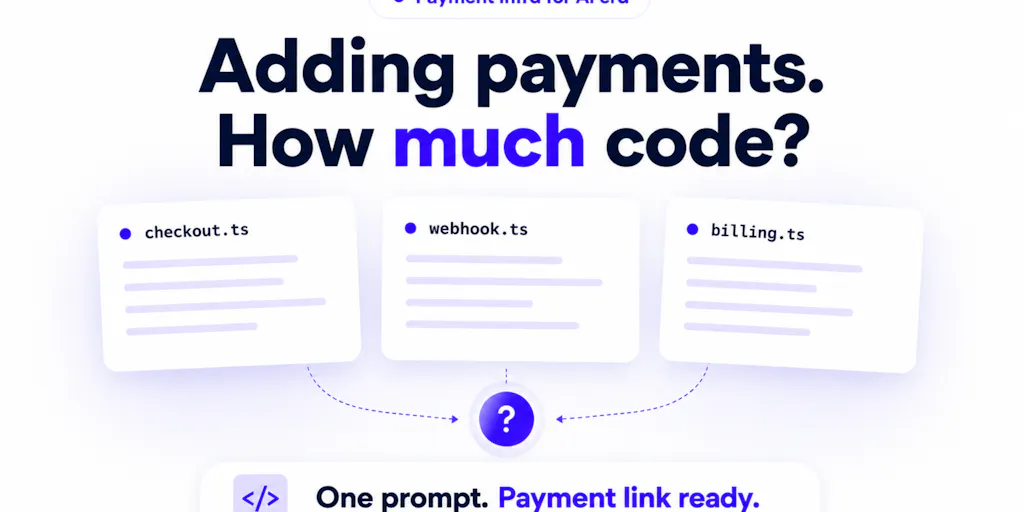
The product’s thesis is that accepting payment should be as simple as “Install the skill. Generate a payment link. Start accepting payments in minutes.” It’s essentially a payment-link product, but the framing is new: the checkout is not a page or an API call — it’s a prompt to an AI agent.
For social media operators, that is closer to the way content already works. The comments section is a checkout aisle. The DM is a cart. If the friction to get paid is lower, more of those “where do I buy this?” moments actually convert. The site promises “generate payment links, accept global payment methods, and start getting paid without the usual payment setup, merchant onboarding, or infrastructure overhead.” That sentence is doing a lot of work, and the part about “merchant onboarding” is exactly what I’d caution creators about, because in payments, nothing is ever truly free from compliance. But the direction is right: the easier it is to take money, the more experiments you can run.
This matters to social teams because most of us over-optimize the top of the funnel. We spend hours on hook optimization, thumbnail tests, and comment triggers, then send people to a checkout that feels like a 2004 shopping cart. A creator selling a $20 template should have a payment link that takes less time to open than the video took to upload. That’s the job.
How it differs from existing options: the checkout becomes a prompt
Product Hunt’s sidebar immediately puts UniwebPay Skill next to the payment processors you’d expect: Stripe, Dodo Payments, Juspay Hyperswitch, Razorpay, and inai. That’s the right landscape, but this product is not trying to be Stripe.
Stripe is a developer platform. You need code, a merchant account, and usually a compliance review before you can go live. Dodo Payments targets AI, SaaS, and digital products — it’s closer to a true competitor — but it’s still a payment processor you integrate into a product. Juspay Hyperswitch is an open source payment orchestration layer for teams that want control. Razorpay is a full finance stack. inai is a no-code payments platform, but “no-code” still usually means configuring workflows in a dashboard. UniwebPay Skill is different in one meaningful way: it’s a skill, not an SDK.
What is a skill? In the AI agent ecosystem, a skill is a capability an agent can invoke — like a tool. You install it, prompt it, and it produces an output. Here the output is a payment link. The official website says: “Install the skill. Generate a payment link. Start accepting payments in minutes.”
That framing is a bet on agentic commerce. Instead of writing code against a payments API, you plug a capability into an AI assistant and ask it to get you paid. The Product Hunt categories also list it under Unified API, which suggests the eventual ambition is broader than a single payment link — it wants to sit between AI products and whatever money infrastructure sits underneath. For social media operators, this is not an abstraction. The comment section is already a conversational interface. The DM is already a sales channel. An AI-generated payment link just shortens the path between the question “is this for sale?” and the answer “yes, here is the link.”
Why TikTok creators should care more than LinkedIn ones
TikTok creators should care more than LinkedIn ones for a simple reason: TikTok’s discovery is interest-based and impulsive. A single video can reach hundreds of thousands of people who don’t follow you, and the buying window is often seconds. A payment link that can be generated on the spot and dropped in a reply is a closing tool. On LinkedIn, the audience is professional and the buying motion is slower. Nobody clicks a payment link from a thought-leadership post to buy a $2,000 strategy session without a sales call. The product’s early sweet spot is the low-ticket, impulse-driven side of creator commerce — which TikTok, Instagram, and YouTube are built for.
The same logic applies to live shopping. Creators doing live streams are often afraid to share payment details in real time because they’re used to links being static and fragile. An AI-generated payment link changes that. It’s the difference between saying “link in bio” and actually sending a buyer a pay link while they are still watching.
What creators and social media teams can borrow from it
Even before UniwebPay Skill proves itself, the operational lessons are worth applying.
First, payments should be part of the content calendar, not an afterthought. When I plan a launch, I now ask: what is the simplest possible way to take money? A payment link is the default for first validation. You can always graduate to a full merchant account later. The mistake creators make is spending weeks integrating a payment processor before they know whether anybody will pay. That’s backwards. Ship the payment link first, then build the infrastructure around it.
Second, use the channel itself as the checkout. If you’re selling a $10 Notion template or a $15 prompt pack, an AI-generated payment link is more native than a link-in-bio page. Put the link in the first comment, the story reply, the email, the DM. The shorter the path, the higher the conversion. I’ve seen creators drive thousands of clicks to a landing page with a seven-step checkout flow and then wonder why none of that traffic turned into revenue. The payment link is not a downgrade — it’s a friction killer.
Third, track payment links like ads. If the link can carry UTM parameters, you can compare a TikTok post, an Instagram Story, and a newsletter mention on the same dashboard. Most social media managers overinvest in vanity metrics and underinvest in last-touch attribution. Payment links fix that because the payout is the event. In my experience, the teams that win are the ones who can connect a specific content asset to a specific dollar. A payment link is the easiest version of that.
Fourth, use AI to reduce setup, but not to remove judgment. The product’s most interesting promise is that AI handles the payment plumbing. But a payment link is a promise to a customer. Keep a human in the loop for amounts and descriptions until agentic payment rails are battle-tested. The speed is valuable; the trust is more valuable.
A caveat for creators who sell AI tools
If you are selling an AI-powered product, this category matters even more. Your buyer is already comfortable with agents, so paying through an agent-generated link is not a barrier. But if the link is wrong, the damage is worse because the mistake feels like the AI’s fault, not a normal human error. The same creator who would calmly wait for an invoice will lose trust if an agent sends them a payment link for the wrong amount or in the wrong currency.
That is why the trust mechanics matter so much here, not just the speed.
Where my judgment says it falls short
I have not run UniwebPay Skill through a real payment cycle, and the source material does not disclose pricing, settlement times, payout countries, fees, or dispute processes. That alone tells you how early this is. More importantly, the launch page’s own comments raise the exact questions every creator should ask before attaching a real revenue stream to a tool like this.
Merchant of record: the question Dale Mooney asks
Dale Mooney’s comment on the launch page is the most valuable thing on the page. He writes:
The frustrating part of payments is the thing you have removed, so the useful question is where it went rather than whether it is gone. Onboarding and KYC take days because somebody has to be accountable for who is collecting money from the public. That requirement does not disappear when the integration gets faster, it moves. So which is it: are you the merchant of record with builders sitting underneath you as sub-merchants, or is the KYC deferred rather than removed?
That is the right lens. A payment link provider can make KYC invisible, but someone still has to know who the seller is. If UniwebPay is the merchant of record, then every creator using it is a sub-merchant, and the platform’s risk appetite controls whether you keep selling. If KYC is deferred, you may not know the rules until the moment you try to withdraw. Both are legitimate models, but they fail differently.
This is especially important for creators who move revenue through ads, giveaways, or high-refund digital products. Payment processors routinely hold funds for risk review. If your business depends on a weekly payout, the model underneath matters more than the link generation speed. Mooney also raises the issue of termination: if the platform is the merchant of record, what does notice look like, and what happens to funds in flight? Nobody asks that until it has already happened to them.
Agent-generated payment links are a quiet liability
Mooney also names the problem that should worry every social media operator. He writes:
A payment link is a request for money in my name. If an agent can generate and send one, the failure is not a bad log line, it is a wrong amount, a wrong currency, or a description a customer reads on their statement and does not recognise. And it is quiet, because they either pay or they do not, and neither outcome tells me something went wrong.
This is what worries me about any AI-native payment tool. A human can catch a stray decimal point. An agent might not, and the customer might not complain — they just pay, or don’t, and both results look like a normal conversion. If a customer pays the wrong amount and later asks for a refund, the situation becomes messy. If a customer does not pay because the statement description looks unfamiliar, you lose the sale and damage the brand. The source does not say whether there is a human approval step before a link leaves, and that is a gap any serious operator should question before connecting this to real revenue.
The global payout leg is still fuzzy
Another commenter, Hazy, asks a perfectly practical creator question: “when you say ‘accept global payment methods,’ does that include the payout leg, or mainly acceptance? Outside the US that’s usually the harder half.” The launch page does not say. In my experience, “global payments” in fintech often means “global acceptance at checkout” while the payout side remains region-locked or slow. If you’re a creator in Southeast Asia, Latin America, or Eastern Europe, the speed of the payment link matters a lot less than whether the money can reach your local bank account. The product page lists “global payment methods” as a feature, but the payout leg is not disclosed. That is the difference between “we can take money from anyone” and “we can get money to you anywhere.”
Who is this not for? If you’re a regulated financial service, a high-risk merchant, a marketplace that moves money between buyers and sellers, or a business selling physical goods that need invoicing and tax support, do not make a payment-link generation skill your core infrastructure. This stage of the category is best suited to low-ticket digital products, early community launches, and first-dollar validation. For serious recurring revenue, you still need a proper merchant of record or a full payment processor — Stripe remains the default for a reason, and Dodo Payments is already trying to own the AI and SaaS niche. That is not a knock on UniwebPay Skill. Every useful fintech starts narrow.
What I’d watch / test next
If I were running a creator business this week, here is what I would do.
First, pick one low-risk digital product — a template, a guide, a mini-course — and set up the simplest possible payment link, from UniwebPay Skill or a comparable tool. Do not build a checkout page. Put the link in your bio and first comment, drive traffic for 48 hours, and see if people will pay without a full funnel.
Second, if you are seriously considering UniwebPay Skill, ask the maker three questions: Are you the merchant of record? Is KYC deferred or done upfront? Is there a human approval step for agent-generated links? If those answers are not public, treat the product as a validation tool, not a revenue engine.
Third, set up UTM parameters on whatever payment link you use so you can attribute a sale to a specific platform and post. If your payment links don’t support UTMs, use a link shortener that does.
Fourth, watch the AI-payment category broadly. The next real winner won’t be the tool that generates a link — it will be the one that solves the payout leg and the merchant-of-record question while keeping the speed. I’d bet the winners in this next phase are the ones who make the agent an assistant, not the final decision-maker.