The desk pet that wants your Spotify data is a preview of the next wave of creator tooling
Most social media operators I know are quietly running two jobs at once: making content, and managing the ambient software that surrounds making content. A digital pet that sits on your desk and picks your next song sounds like a toy. But look closer at Doco, the Product Hunt launch from maker Vatsal Upadhyay, and you’ll see a small, honest prototype of something bigger: a companion layer that watches your behavior, infers your state, and curates in real time. That’s the same pattern behind every “AI content assistant” pitch I’ve sat through this year — just with a cuter mascot and a smaller data set. If you publish across Instagram, TikTok, YouTube, X, LinkedIn, Facebook, Threads, and Pinterest, the question isn’t whether you’d buy a desk pet. It’s what this category of tool teaches you about attention, permission, and the limits of “it just knows.”
What Doco actually is, and what problem it’s really solving
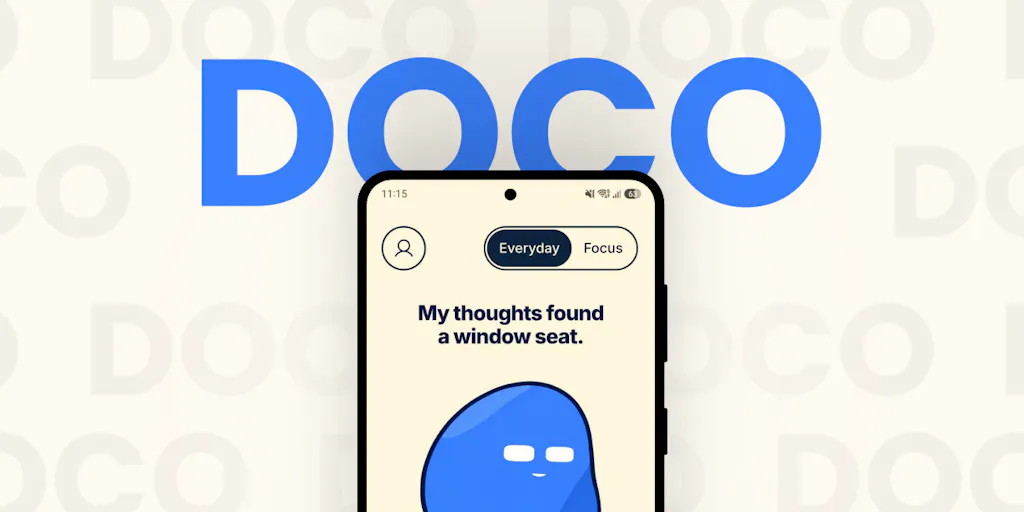
Let me be precise about the source, because the hype cycle around AI companions is already thick enough without me adding to it. Doco is described by its maker as “a digital pet that hangs out on your desk, keeps an eye on you only when you permit it, and picks the absolute best song from your Spotify playlist based on the time of day and your current mood.” That’s the entire product statement. There’s no pricing disclosed, no user count disclosed, no funding disclosed, and no roadmap beyond “I am still figuring out where to take this next.” The maker is refreshingly candid that he built it “purely because I wanted it, not to solve a massive problem or serve any grand purpose.”
That honesty is worth sitting with, because it’s the opposite of how most creator tools launch. The standard playbook is to manufacture a pain point — “creators waste 11 hours a week on repurposing” — and then sell the salve. Doco skips that. It’s a personal artifact that happens to be public.
The two modes are the actual product. In Everyday mode, it’s “a chill companion to sit with you.” In Focus mode, it “unleashes a boss persona that will happily roast you if you waste time.” That’s it. The Spotify integration is the connective tissue: it reads your top tracks, recent listening, and top artists, then picks something from that orbit based on time of day and inferred mood.
Why the “familiar artists only” answer matters more than the pitch
One commenter, Alheri Murya, asked the sharpest question on the thread: does it stay within familiar artists or introduce new music? The maker’s answer is the most technically interesting thing on the page. Doco “mostly stays within familiar artists,” using Spotify top tracks, recent listening, and top artists as a starting point. It “deliberately looks for additional songs from those artists” — so you might hear deep cuts you haven’t played — but it “doesn’t currently seek out completely new artists.” It also avoids recent repeats “when alternatives are available.”
Read that against how Spotify’s own algorithmic playlists work. Discover Weekly and Release Radar are built to push you outward, into unfamiliar territory, because Spotify’s business depends on catalog breadth and long-tail listening. Doco does the opposite: it narrows. It’s a comfort engine, not a discovery engine. And the maker is upfront about that tradeoff rather than dressing it up as “personalization.”
My take: that’s the correct call for a desk companion, and the wrong call for a content tool. More on that in a minute.
How this differs from the tools you already pay for
If you’re a social media manager, your stack probably looks like some combination of Buffer, Hootsuite, Later, and Metricool for scheduling and analytics; Canva and CapCut for asset production; and increasingly some AI layer — ChatGPT, Jasper, Opus Clip — for drafting and repurposing. Doco doesn’t compete with any of them. It doesn’t schedule, doesn’t post, doesn’t analyze engagement rate, doesn’t touch UTM tracking.
What it does share with that stack is a design philosophy: ambient, permission-gated, behavior-aware. The maker emphasizes the pet “keeps an eye on you only when you permit it,” and a commenter, Oliver Graf, specifically praised that: “love that it only looks when you say so. that’s what makes it feel like a little buddy and not some app spying on you.”
That permission framing is the whole ballgame. Compare it to how most social platforms actually operate. Instagram and TikTok don’t ask permission to model your behavior; they infer it from watch time, scroll velocity, rewatches, and dwell time, then feed that into a ranking system you never see. Doco inverts the contract. It’s opt-in, it’s local-feeling, and it doesn’t try to monetize your attention by keeping you scrolling. It’s the anti-feed.
Where the comparison to scheduling tools breaks down
Here’s where I’d push back on any creator who reads this and thinks “great, another AI assistant.” Scheduling tools like Buffer and Later solve a coordination problem: many platforms, many formats, many time zones, one calendar. Their value is in the API integrations — the ability to reliably push a Reel to Instagram, a Short to YouTube, a thread to Threads, without you logging into each app. That’s unglamorous plumbing and it’s genuinely hard, which is why API rate limits and platform policy changes break these tools constantly.
Doco solves an emotional problem, not a coordination one. It doesn’t touch your content pipeline. If you’re looking for leverage on output volume, this is not your tool. If you’re looking for a small daily ritual that makes the work feel less solitary, it might be.
What creators and social teams can actually borrow from Doco
I’ve run enough accounts to know that the hardest part of this job isn’t the tools — it’s the rhythm. The blank page at 9am. The decision fatigue of “what do I post today.” The slow drift into doomscrolling when you meant to be researching hooks. So when I look at Doco, I’m not looking at it as a product to buy. I’m looking at it as a design pattern to steal.
Three things stand out.
First, mode-switching as a content strategy. Doco has Everyday mode and Focus mode, with distinct personas. That’s a repurposing insight hiding in plain sight. Your audience doesn’t want one voice across every platform. The version of you that works on LinkedIn — measured, credential-forward, slightly formal — is not the version that works on TikTok. When I repurpose a long-form YouTube video into a LinkedIn post, I’m not just cutting length; I’m shifting persona. Doco’s two-mode design is a reminder that “one brand voice” is usually a lazy shorthand for “we haven’t thought about context.”
Second, permission as a feature, not a checkbox. The maker’s emphasis on “only when you permit it” is a trust signal that most AI tools fumble. If you’re building or buying anything that touches your audience’s data — a newsletter tool, a DM automation, a comment-reply bot — the opt-in moment is where trust is won or lost. Creators who are transparent about what their automations do (and don’t do) get more latitude when something goes wrong, because they’ve banked goodwill.
Third, the “built it because I wanted it” origin. This is the most underrated creator-economy lesson on the page. The maker didn’t validate a market. He made a thing he’d use. That’s the same instinct behind the best niche accounts — the ones that build a small, devoted audience around a specific obsession rather than chasing a broad demographic. If you’re an indie founder or solo creator, the Doco origin story is a permission slip to build the weird, specific thing instead of the optimized, generic one.
Why TikTok creators should care more than LinkedIn ones
If you’re a TikTok or Instagram Reels creator, the “mood-aware curation” idea maps directly onto your hook problem. The algorithm rewards watch time and completion rate above almost everything else, which means the first two seconds have to match the viewer’s emotional state at the moment of scroll. A tool that infers “current mood” and serves content accordingly is, functionally, a hook-matching engine. That’s the whole game on short-form.
LinkedIn is a different beast. The feed rewards dwell time and comment velocity, and the audience is often in a professional, deliberate headspace. Mood-matching matters less; clarity and credibility matter more. So if you’re reading this as a LinkedIn-first operator, the Doco analogy is weaker. Don’t force it.
Where my judgment says Doco falls short
I want to be careful here, because the maker is clearly building in public and being honest about the state of things. But honesty cuts both ways, and a few things on the page deserve scrutiny.
The Focus mode is a fixed persona, not an adaptive one. A commenter, Albert Nelson, asked whether Focus mode learns when to stay quiet. The maker’s answer: “Not yet — right now Focus mode is a fixed boss persona you turn on, it won’t read the room on its own. Teaching it when to shut up is a good call though, adding it to the list.” That’s a real limitation. A boss that roasts you on a fixed script gets old in about three days. The interesting version of this product reads context — deadline pressure, calendar density, time of day — and modulates. That version doesn’t exist yet.
The privacy story is asserted, not specified. “Keeps an eye on you only when you permit it” is a good line. But the page doesn’t say what data leaves your device, where it’s stored, or how the Spotify integration is scoped. A commenter, Audrey T, asked directly: “in Focus mode, how does the boss know I’m wasting time? is it watching which apps I open, or something else?” That question went unanswered in the thread. For a product whose entire trust proposition is “I only look when you say so,” that’s the gap to close first.
The “familiar artists only” ceiling. As I noted earlier, Doco deliberately avoids new-artist discovery. For a desk pet, fine. But if the same architecture were applied to a content tool — “here are three post ideas based on what you’ve already published” — you’d get a recommendation engine that reinforces your existing patterns and never pushes you into new formats. That’s the failure mode of a lot of AI content assistants right now: they’re very good at remixing your last 30 posts and very bad at suggesting the format you’ve never tried.
Not disclosed: pricing, platform availability beyond the waitlist, whether there’s a mobile or desktop app, and whether the Spotify integration is read-only or also controls playback. If you’re evaluating this as a potential purchase, those are the questions to ask before you commit.
Where the math breaks
Let me do a quick back-of-envelope on why “mood-aware curation” is harder than it sounds. Mood inference from listening data is a probabilistic guess. Spotify’s own audio-features API — valence, energy, tempo — gives you a rough signal, but it’s noisy and the mapping from “song features” to “human mood” is loose. If Doco is inferring mood from time of day plus recent listening, it’s essentially running a heuristic, not a model. That’s fine for a desk pet. It’s not fine for anything that claims to optimize your content performance, because the feedback loop is too slow and too confounded to learn from.
This is the trap I see a lot of creator-tool founders fall into: they build a delightful heuristic, then pitch it as an AI system. The heuristic is usually more honest and more useful. I’d rather see Doco stay a heuristic and lean into the charm than pretend to be a recommendation engine.
What I’d watch / test next
If you’re a creator or social media operator reading this, here’s what I’d actually do this week — not with Doco specifically, but with the pattern it represents.
Audit your own mode-switching. Open your last 10 posts across two platforms. Are they the same voice, or did you actually adapt? If they’re the same, pick one platform and rewrite three posts in a deliberately different persona. Measure engagement rate before and after. My bet: the adapted version wins on the platform where you adapted, and the generic version wins nowhere.
Test a permission-first touchpoint. If you run any automation — a DM auto-reply, a comment bot, a newsletter welcome sequence — add one line that explains what the automation does and what it doesn’t. Watch whether unsubscribe and block rates move. In my experience, transparency reduces friction more than it increases it.
Watch the Doco thread, not the product. The most useful signal here isn’t the desk pet. It’s how the maker responds to unanswered questions — the privacy one especially. If he ships a clear data-handling answer and an adaptive Focus mode, that’s a founder worth following. If the thread goes quiet, that’s a signal too.
And for the tool-builders reading: the “familiar artists only” design choice is the most copyable idea on the page. Narrow beats broad when you’re building for a specific person’s daily ritual. The general-purpose AI assistant is a crowded, undifferentiated market. The small, opinionated, permission-gated companion is not.