The AI Data Layer Is the New Content Supply Chain — and Creators Should Pay Attention
Every social media operator I know is drowning in the same paradox: we have more data than ever, and less understanding of it than ever. When I scheduled 30 posts across five platforms last month, I had to open five different analytics dashboards, export three CSV files, and manually stitch together a picture of what actually drove engagement. The platforms don’t talk to each other. My TikTok analytics don’t know what my LinkedIn posts did. My email list doesn’t know which YouTube video brought in the subscribers. And now that AI agents are getting good at parsing data, they’re hitting the same wall I am — they can only see what’s in front of them, and what’s in front of them is a fragmented mess of API rate limits, export buttons, and siloed dashboards.
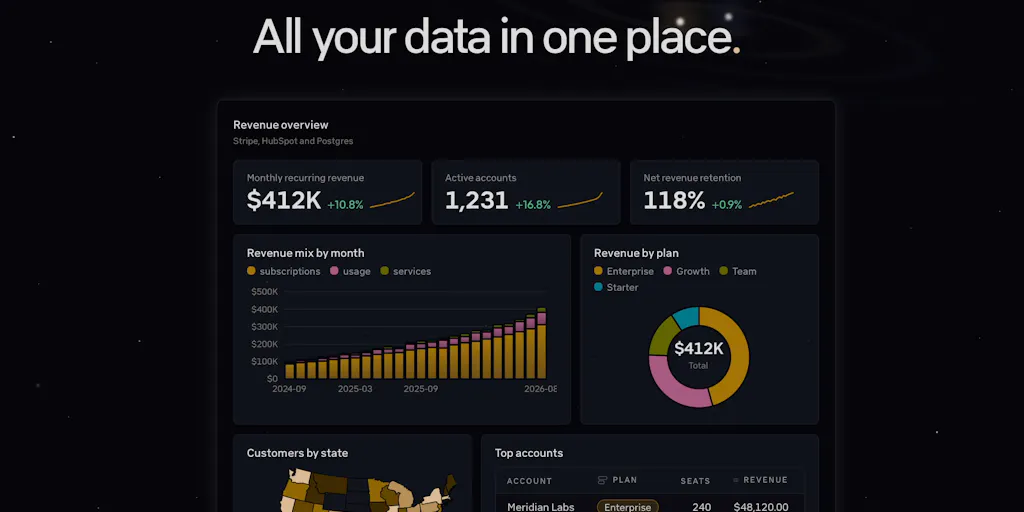
This is why the launch of Supernova on Product Hunt caught my eye. It’s not another scheduling tool or another analytics dashboard. It’s a data layer that sits between your scattered SaaS apps and the AI models you already use — Claude, Codex, whatever your stack happens to be — and it’s trying to solve the problem that’s been nagging at me for years: how do you get AI to see your actual business data, not just the cherry-picked exports you manually feed it?
For creators and social media teams, this matters more than it might first appear. Because if you’re not thinking about your content operation as a data problem, you’re already behind. Let me explain.
The Problem Supernova Actually Solves: Your AI Is Only as Smart as Its Data Access
Here’s the thing about the current AI moment that nobody in the creator economy is talking about enough: the models are brilliant, but they’re also blind. When I ask Claude to analyze my content performance, it can only work with what I paste into the chat — a few screenshots of analytics, maybe a CSV export if I’m feeling ambitious. The model doesn’t have access to my full Stripe transaction history, my complete Mailchimp subscriber list, or the raw engagement data from all four social platforms I manage. And that’s not a limitation of the model. It’s a limitation of the plumbing.
Supernova is trying to fix that plumbing. The team — Luke and Kate Zapart, who previously launched Canvas, a data analytics dashboard product — is positioning this as a “batteries included” alternative to the data warehouse + ETL pipeline stack that enterprises pay six figures for. The pitch is simple: connect your apps, connect Supernova to Claude or Codex, and let the models build dashboards and run analyses on your real data.
The key word there is “real.” When I tested similar tools in the past — and I’ve tested a lot of them, from Metabase to Tableau to the built-in analytics in Buffer and Hootsuite — the gap was always the same. The dashboards looked beautiful, but they were only as good as the data I manually fed them. Supernova’s approach is different: it syncs the complete dataset from each source into a fast data lake, and then lets AI query that lake directly.
Kate Zapart explained it in the comments: if you have invoices in Stripe and customer data in Salesforce, you can sync both and join them in a single query — “to pull real-time billings vs contracted.” For a creator business, the equivalent would be joining your YouTube ad revenue with your Patreon subscriptions and your affiliate sales from your newsletter. That’s the kind of holistic view that’s nearly impossible to get today without either hiring a data engineer or spending hours in spreadsheet hell.
Why TikTok creators should care more than LinkedIn ones
Here’s where I’m going to get opinionated. If you’re a LinkedIn thought-leader posting text updates and getting engagement from your network, you probably don’t need this. Your data is simple: impressions, clicks, maybe some profile views. You can track that in LinkedIn’s native analytics and call it a day. But if you’re a TikTok creator running a multi-platform operation — posting short-form video to TikTok and Instagram Reels, long-form to YouTube, repurposing to Twitter/X and Threads, selling merch through Shopify, running a Patreon, managing sponsorships through a CRM — your data is a nightmare. You have ad performance data from Google Ads, Facebook Ads, Snapchat, and TikTok. You have revenue data from Stripe and PayPal. You have audience data from your email provider. And none of it talks to each other.
Supernova’s example of unifying ad performance across Google, Facebook, Snapchat, and TikTok into a single ad_performance table is exactly the kind of thing a serious creator operation needs. When I’m trying to figure out which platform is actually driving revenue — not just vanity metrics like views and likes — I need to see the whole picture. The team claims this unification is something AI can now do “for most of this for you,” which is a bold claim, but the direction is right.
How It Differs From What’s Already Out There
Let me name the incumbents, because that’s where the comparison gets interesting. If you’re a creator or a small team, your current options for data analysis are probably one of these:
- Native platform analytics — free, but siloed and shallow. Instagram tells you about Instagram. TikTok tells you about TikTok. Nobody tells you about your business.
- Social media management tools like Buffer, Hootsuite, Later, or Metricool — these aggregate your social data across platforms, but they’re focused on scheduling and basic performance metrics, not deep business analysis. They won’t join your Stripe data with your TikTok analytics.
- Business intelligence platforms like Looker, Tableau, or Metabase — powerful, but they require a data warehouse, ETL pipelines, and usually a dedicated analyst to maintain. Way overkill for a creator team of one to five people.
- AI chat interfaces like ChatGPT or Claude — brilliant at analysis, but they can only see what you paste in. No native connections to your data sources.
Supernova sits in a different quadrant. It’s not trying to be another dashboard tool; it’s trying to be the connective tissue between your data sources and the AI models you’re already using. The team’s answer to the question “why does this need to sit in the middle?” — asked by Chris Gibson in the comments — is worth quoting: data governance, rate limits, and performance at scale.
The rate limits point is particularly relevant for creators. When I tried to sync my full YouTube analytics history into a custom AI analysis pipeline last year, I hit YouTube’s API limits within minutes. The data was there, but I couldn’t pull it fast enough. Supernova’s approach — syncing data into their own data lake in the background, then letting Claude query that lake — gets around this problem. The maker’s response in the comments explains it: “Each data source has different limits, so we had to build some machinery to adapt to a given platform’s rate limits. We sync that data into a super fast data lake we built which has no such rate limits, so after you sync to Supernova you can quickly run queries on millions of rows.”
That’s a real technical answer, not marketing fluff. And it’s the kind of thing that matters when you’re trying to analyze a year’s worth of content performance across platforms.
Where the math breaks
Now let me get to the part that should make any operator nervous. The most interesting exchange in the entire Product Hunt comments section — and the one that tells you the most about where this tool is and isn’t ready — is from Jernej Jan Kočica, who asked a devastatingly practical question: when the model has the right rows in front of it, how often does the number come back right?
His example is chilling: he pointed eight models at a live pricing API, and two of them misread a quantity ladder they’d been handed correctly. “Not hallucination, the data was in context, they just read the wrong row. One was out by 4x, the other by about 6 percent, and the 6 percent one is the dangerous one because nobody double checks a number that looks plausible.”
This is the single most important caveat for anyone considering this kind of tool. The maker’s response is honest — they run “adversarial review agents” for important numbers, essentially spawning separate AI agents to double-check the work of the primary model. But Kočica’s counterpoint is sharp: “a reviewer looking at 9.00 against the same price ladder has to read that ladder correctly in order to disagree, and something just misread it once already. Plausible errors survive review for the same reason with people and with models.”
His conclusion, which I share: “for anything that actually matters a person still reads it before it goes out.” The maker agrees — “for something like an actual board deck I would still probably review manually myself.”
My take: this is the right attitude, and it’s the one I’d want any creator or small team to have. If you’re using Supernova (or any AI data tool) to decide which content format to double down on, or which platform is actually driving revenue, you should treat the AI’s output as a strong hypothesis, not a verified fact. The tool can get you 80% of the way there, but that last 20% — the verification, the context-checking, the “does this number actually make sense given what I know about my business” — is still on you.
What Creators and Social Media Teams Can Borrow From This
Even if you never touch Supernova, there are three operational lessons from this launch that you can apply to your content workflow this week.
First, unify your data before you analyze it. The biggest reason my content analysis always felt shallow was that I was looking at platforms in isolation. Supernova’s approach — sync everything into one place, then query across sources — is the right mental model. Even if you’re doing it manually in a spreadsheet, the discipline of pulling your TikTok, Instagram, YouTube, and email data into one place before you draw conclusions will improve your decision-making dramatically.
Second, think of AI as a query layer, not a source of truth. The most mature users in that Product Hunt thread — the ones asking about permission models and adversarial review — understand that AI is a tool for exploring data, not a replacement for human judgment. When I’m using Claude to analyze my content performance, I ask it to find patterns and surface anomalies, but I don’t let it make final decisions about my strategy. The same discipline applies here.
Third, consider the permission model. Manjesh Yadav’s comment about wanting to control what AI can see — “once an AI can query revenue and customer data being able to control exactly what it can see becomes critical” — is exactly right. The maker’s response is that you can set permissions on tables, “Allow all tables except postgres.users” or “Allow only salesforce.opportunities.” For creators, this matters when you’re sharing access with a team. Do you really want your freelance video editor to be able to query your full revenue data? Probably not. The tool lets you scope access, and that’s a feature worth looking for in any tool you adopt.
Where My Judgment Says It Falls Short
I want to be balanced here, because there are real limitations to this product that the launch page doesn’t emphasize enough.
The pricing is not disclosed. The maker mentions “20% off Supernova for 6 months” and claims they’re “already crazy affordable compared to alternatives,” but there’s no actual pricing on the launch page. The previous product, Canvas, had a review noting it’s “not a be all end all solution that you pay tens of thousands of dollars for, but for the price of it, it does solve a lot of the problems.” That suggests a mid-tier price point, but I can’t verify it. If you’re a solo creator with a tight budget, you need to know what “affordable” means before you invest time in connecting your data sources.
The accuracy problem is real, and it’s not fully solved. The adversarial review workflow the maker describes is clever, but as Kočica points out, it’s not a guarantee. If you’re using this for revenue analysis that ends up in a board deck — or worse, in your tax filing — you need to verify every number manually. The tool can save you time, but it can’t save you from the fundamental unreliability of language models.
It’s built for teams, not necessarily solo creators. The features the makers highlight — git version history for dashboards, collaborative data projects, permission models per person — suggest this is designed for small organizations, not individual creators. If you’re a one-person operation, you might find the tool overkill. You might be better served by a simpler setup: exporting your data to a spreadsheet and using Claude or ChatGPT to analyze it in chunks.
The “no ETL needed” claim is optimistic. Connecting to 150+ SaaS apps and databases sounds great, but in practice, you’ll still need to understand how your data is structured in each source. The maker’s response about joining Stripe and Salesforce data assumes you know what fields you’re joining on. For a non-technical creator, this could be a steep learning curve.
What I’d Watch / Test Next
If you’re a creator or social media operator who wants to test this yourself, here’s what I’d do this week:
Try the free tier or the 20% discount. The launch page is offering 20% off for 6 months, which is a reasonable incentive to test the tool. Connect your two most important data sources — probably your primary social platform and your payment processor — and see if the AI can answer the questions you actually care about. For me, that would be “which content format drove the most revenue last quarter?” or “what’s my effective cost per subscriber across platforms?”
Test the accuracy yourself. Before you trust any number the AI produces, run a manual check. Pick a metric you can verify — like your total revenue for last month — and see if the tool gets it right. Then ask a more complex question, like “what was my average engagement rate across platforms in Q2?” and check that against your manual calculations. If the tool gets the simple things right, you can start trusting it with more complex analysis.
Set up the permission model before you invite anyone else. If you’re going to use this with a team, the permission controls are your friend. Decide what your team members can and cannot see before you connect the tool to your sensitive data. The maker mentioned this is now available to everyone — “you can pick which tables Claude can access” — so take advantage of it.
Watch for the docs on adversarial review. The maker mentioned they should “probably publish some docs” on their Orchestrator → Implementer → Reviewer workflow. If they do, that’s worth reading. In my experience, the discipline of running a separate verification pass on any AI-generated analysis is the single most important practice for avoiding embarrassing — or costly — mistakes.
The bottom line: Supernova is trying to solve a real problem that every serious content operator will eventually face — the gap between the data you have and the AI tools that could analyze it. It’s not a magic bullet, and the makers seem to know that. But if you’re tired of manually stitching together analytics from five different platforms, it’s worth a look. Just remember: the AI can find the patterns, but you’re still the one who has to decide what they mean.