How to Use AI to Find Social Media Content Inspiration: From Hot Topic Scanning to Sustainable Production – A Practical Guide

Open the content calendar; today there are three platform slots left to fill—copy isn’t ready, topics aren’t decided, and the trend has already passed. For operators, the hardest part isn’t “writing,” but “what to write.” AI’s value at the topic‑selection stage isn’t to invent ideas for you, but to scan for you—integrating real‑time discussions, emerging topics, and platform‑specific angles into a single workflow, turning inspiration from “waiting for it” into “retrieving it.” This article is aimed at cross‑border e‑commerce and multi‑platform operation teams, focusing on reproducible methods.
Why Finding Topics Is Harder Than Writing Content
The content calendar has empty slots every day, and topic fatigue is the norm, not an exception. For teams managing multiple accounts, the problem multiplies: a theme needs a visual angle on Instagram, a concise opinionated sentence on X, and a professional tone on LinkedIn. Cross‑platform distribution amplifies topic pressure because each platform consumes different creative resources.
Typical signs of creative fatigue: being unable to list ten headlines in a blank document. This isn’t a writing‑skill issue; it’s a supply‑demand mismatch. If you post 1–2 pieces on 3–5 platforms daily, you need over 1,000 topics a year. That number explains why most accounts stop updating after the third month.
Shifting from “a flash of insight” to “process‑driven output” is inevitable. AI’s role changes accordingly: it is no longer a writer for you, but a search and filter tool. Instead of waiting for inspiration, turn topic discovery into a repeatable retrieval process. For a basic multi‑platform distribution framework, see the FlowNib 2026 Shopify Dropshipping Seller Social Distribution Operation Guide. General content‑strategy methodology can also be found in the Buffer Resources content strategy references.
Using AI to Scan Real‑Time Hot Topics: Keyword‑Driven Topic Discovery
Enter a keyword, and the tool scans Reddit, YouTube, news, and Hacker News for hot discussions in real time. The key difference is that it doesn’t give you a static topic list; it surfaces rising conversations directly, along with usable angles.
When judging a topic’s value, “momentum” matters more than absolute popularity. Topics in the growth phase are far more valuable than saturated ones—chasing a topic that’s already peaked yields low marginal returns, whereas entering when a discussion is just heating up makes the content more likely to be algorithmically recommended. A typical momentum data point might look like this: 92 % indicates Reddit discussion is heating up, 78 % shows rising YouTube search interest, and 64 % corresponds to news‑industry topics. These three numbers reflect the same signal: the topic is climbing, not at its peak.
Extracting publishable angles from hot conversations is the core of this workflow. For example, a Reddit discussion titled “How small teams actually use AI” can be distilled into the angle “Three time‑saving AI workflows.” A YouTube video about “Creators saving hours each week with a process” can be turned into “Efficiency tool roundup.” One‑click conversion of angles into posts shortens the gap from discovery to draft. This real‑time scanning differs from regular topic lists in that it is publishable, traceable, and sustainable—each topic has a source and data backing, not just a guess.
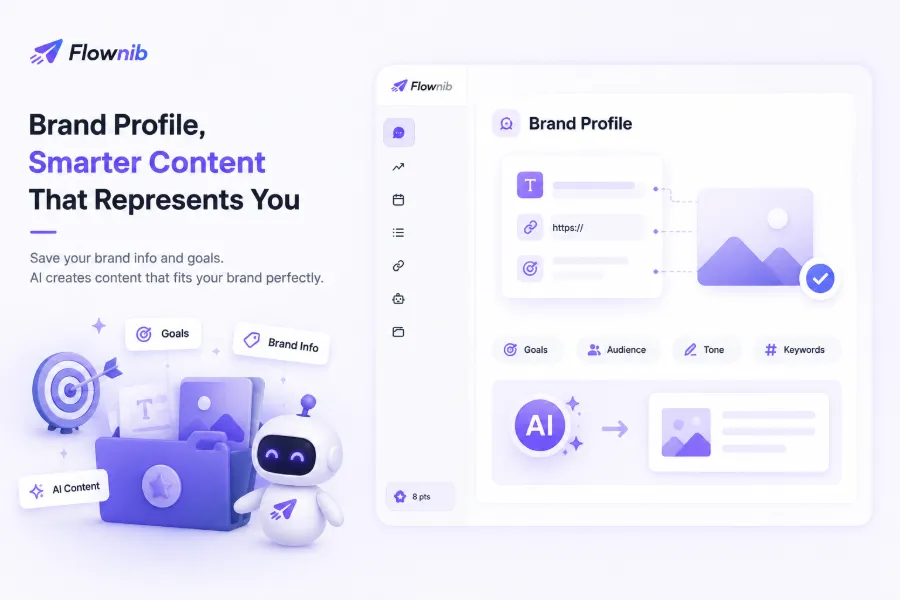
In practice, tools like Flownib provide such a workflow: input a keyword, scan real‑time discussions, extract angles, and generate a post with one click. The whole process turns “finding inspiration” from a random event into a repeatable daily operation. The full‑platform launch plan for a product release can serve as an extended scenario; see Make Your Product Launch Go Viral Everywhere for more.
Rewriting Topics to Fit Each Platform’s Content Style
The same topic looks very different across platforms: Instagram is visual‑first, X has character limits, LinkedIn is professional, Threads is conversational. Copy‑pasting one piece of content to all platforms usually yields poor results—not because the copy is bad, but because the format and tone don’t match.
AI‑driven automatic rewriting solves this adaptation problem: based on platform style, character limits, and audience expectations, it rewrites the same topic into different versions. Multi‑language adaptation further expands reach—a single topic can cover English, Chinese, Japanese, German, French, etc., without duplicate creation. For cross‑border e‑commerce teams, this means a hot topic can simultaneously reach audiences in multiple regions without each market having to plan separately.
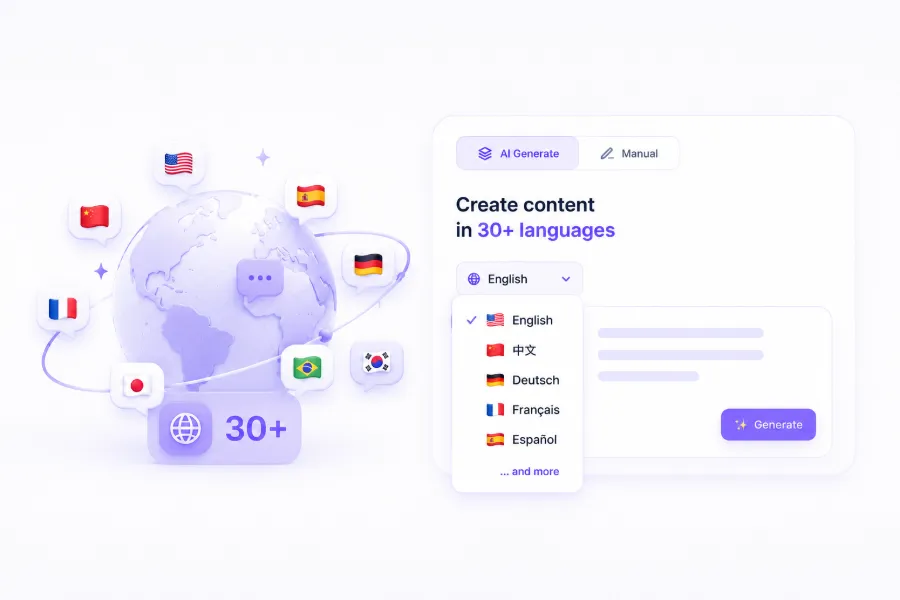
Preview and confirm before publishing to keep brand voice consistent. AI rewriting isn’t about handing over everything; it hands the repetitive work to the tool while leaving judgment to humans. The platform‑specific differences can be understood through the quick overview below:
| Platform | Content Style Preference | Copy Highlights | Most Suitable Topic Angle |
|---|---|---|---|
| Visual‑first, hashtag‑driven | Short copy + hashtags | Product showcases & lifestyle shots | |
| X | Opinionated, character‑limited | Lead with conclusion | Industry short takes & news responses |
| Professional tone | Data & insights supported | Case studies & industry observations | |
| Threads | Conversational, real‑time | Casual questions | Trending interactions & light discussions |
This adaptation logic supports the top 10 platforms, including TikTok, Facebook, Pinterest, YouTube, Bluesky, Google Business. For teams covering multiple language markets, a workflow that publishes content to global multilingual markets can be further referenced. Instagram’s official business account guide provides the latest platform rules and best practices.
Using a Content Calendar and Scheduling to Keep Inspiration Flowing
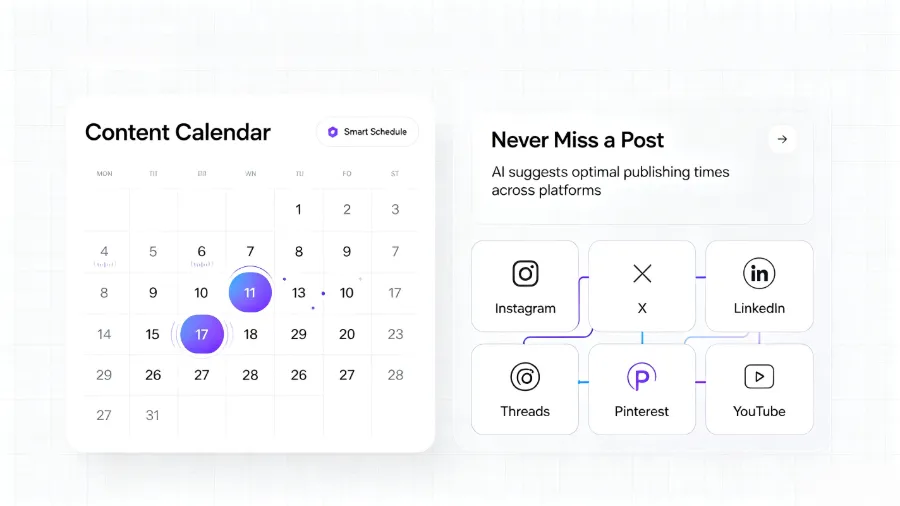
If discovered topics aren’t scheduled, they quickly become stale. Turning “discovered topics” into a plan requires coordinated publishing and calendar management. AI can automatically pick the best posting time, or you can schedule manually—both can coexist. The key is a unified view to manage the publishing rhythm across all platforms.
Publishing records and multi‑account management are another often‑overlooked step: a single dashboard tracking each platform’s performance tells you which topics truly work. Stable distribution relies on 99.99 % API uptime, and account integration takes about 2 minutes on average—so the whole process from onboarding to scheduling doesn’t consume much time.
Extracting the next round of topic directions from data feedback is essential for a virtuous inspiration loop. Which content had high engagement last week? Which platform performed especially well with a certain angle? This data should flow back into the topic‑discovery stage, not stay locked in publishing logs. Flownib’s content calendar and scheduling features handle recording and tracking at this stage, giving data feedback a concrete reference. Instagram’s optimal posting time analysis can inform scheduling decisions, and Veonib’s official product description adds supplemental notes for team collaboration scenarios.
A cautionary failure case: a team followed the same news hotspot for seven consecutive days, publishing almost identical content across platforms. Engagement dropped about 30 % within a month. The issue wasn’t the hotspot itself but the lack of human curation and staggered publishing—using the same angle and timing on all platforms fatigued the audience. Only after introducing manual review and platform‑specific staggered releases did engagement recover. This case shows that AI scanning is just the starting point; differentiated topic handling and pacing control are equally important.
Frequently Asked Questions (FAQ)
Will AI cause many accounts to share the same hot topic, leading to homogenized content?
Yes, if you don’t differentiate. The same hotspot requires different angles on each platform—Instagram visual, X opinionated, LinkedIn professional analysis. After AI generation, add human review to adjust tone and angle, and consider staggered publishing to avoid all platforms posting similar content simultaneously.
What if there’s no clear hot keyword—can AI still provide content ideas?
Yes. Input a broad industry term or brand‑related word; the tool will return rising related discussions. You can also observe which topics generate high engagement on competitor accounts and use those as keywords. The key is to keep the keyword broad enough to allow discovery of unexpected topics.
Do AI‑scanned hot topics need human review before publishing?
Yes. AI provides topic direction and drafts, but it doesn’t guarantee factual accuracy or brand fit. At minimum, check three points: relevance to brand positioning, data accuracy, and tone alignment with brand voice. Review usually takes only a few minutes but prevents most mishaps.
How do I schedule AI‑discovered topics into the content calendar and set them for automatic publishing?
In the tool, choose manual scheduling or let AI recommend the optimal posting time, then drag the item into the calendar. It’s advisable to reserve a fixed weekly time slot for topic processing—scan hotspots, generate content, and schedule the week’s posts in one batch.
How does the topic‑discovery feature integrate into existing multi‑platform publishing workflows?
Place topic discovery at the very front: scan hotspots, extract angles, generate content, then push through your distribution tool to each platform. The whole process can be compressed into a few minutes without changing existing account management or publishing habits—just turn “finding inspiration” from a manual step into a tool‑driven retrieval.
Share Article