The Creator Stack Is Consolidating — and That Changes What You Should Build On
Every few months a tool launch lands in my feed that isn’t for social media operators, yet quietly reshapes how we work. The NOVA CLI v1.0 launch is one of those. On its face it’s a terminal-based coding agent — irrelevant if you’ve never opened a shell. But the pitch underneath it is the same pitch every creator-economy SaaS has been making for two years: stop stitching together five subscriptions and five API keys, and let one plan carry the whole workflow. If you schedule across Instagram, TikTok, YouTube, X, LinkedIn, Facebook, Threads, and Pinterest, you already live inside that consolidation argument. So it’s worth understanding where it’s going, even if you’ll never install the thing.
What NOVA Actually Is, Stripped of the Launch-Day Gloss
Let me be precise, because the Product Hunt page is thin on specifics. NOVA is a command-line coding agent from the team behind Nova, which itself launched in March 2026 as “AI coding that goes beyond suggestions.” The v1.0 release landed September 15th, 2026, and it’s the first public release — so treat everything here as early-stage.
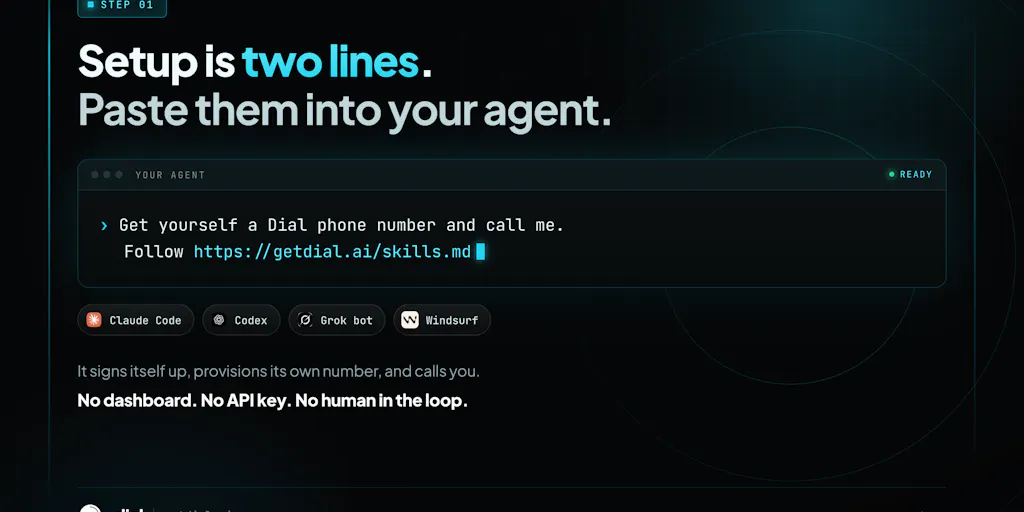
The maker’s own framing is the most useful part: agentic coding in the terminal already exists and works, but using it “usually means signing up for a separate AI account, managing API keys, and being locked to one model provider.” NOVA’s answer is to bundle the models into the plan — the maker claims 160+ models on paid plans, with no separate AI account or keys required — and to have the agent read your project, make the change, run your own tests and build, fix what it broke, and report plainly what it verified.
That last clause is the one I’d underline. Not the model count. The verification reporting. More on why in a moment.
The Real Problem: Credential Sprawl Is Eating Your Week
Here’s where this connects to your actual job. When I scheduled 30 posts across 5 platforms last month, I touched — let me count honestly — a scheduler, a design tool, a video editor, a link shortener with UTM templates, an analytics dashboard, and at least two platform-native inboxes I can’t fully replace. Each one has its own login, its own billing cycle, its own rate limits, and its own definition of “published.” The friction isn’t the work. It’s the coordination overhead between tools that don’t know about each other.
NOVA’s diagnosis is the same diagnosis, just aimed at developers. The maker explicitly names the pain: separate AI accounts, API key management, single-provider lock-in. Swap “AI account” for “scheduler account” and “model provider” for “social platform” and you’ve described the creator stack exactly.
Why the “no API keys” promise matters more than it sounds
If you’ve ever built even a light automation — a Zapier zap that pulls your YouTube comments into a sheet, or a script that pushes your RSS to Threads — you know the tax. OAuth tokens expire. API versions deprecate. Rate limits change without warning. Buffer and Hootsuite absorb some of that for you on the publishing side, but the moment you go one layer deeper, you’re maintaining credentials. A tool that says “the models are built into your plan” is selling maintenance relief, not features. That’s the actual product.
Why TikTok creators should care more than LinkedIn ones
If your distribution is mostly LinkedIn text posts and a weekly newsletter, the consolidation wave is a mild convenience. If your distribution is short-form video across TikTok, Reels, and Shorts — where you’re repurposing one asset into three aspect ratios, three caption lengths, and three posting cadences — you feel credential sprawl acutely. More surfaces, more tokens, more things that break at 11pm. The operators who benefit most from any “one plan, no keys” pitch are the ones publishing to the most endpoints.
What Creators and Social Teams Should Actually Steal From This
You probably aren’t going to install a CLI. But three design decisions in this launch are worth copying into how you run your own stack.
First: bundle the expensive, boring dependency. NOVA’s bet is that developers don’t want to shop for models — they want the models to just be there. Your equivalent: stop letting every tool in your stack have its own AI credit system. If your caption generator, your thumbnail tool, and your repurposing tool each meter separately, you’ve recreated the exact problem NOVA is solving. Pick one AI layer and route everything through it.
Second: verify, then report what you verified. The maker’s response to a commenter — Oleksii Sekundant praising the focus on “running the project’s own tests and being clear about what was checked” — is the sharpest thing on the page. The maker’s reply: “We wanted it to be clear about what it checked, so you know whether a change is ready.” That’s a content-ops principle. When you hand a draft to a VA, a freelancer, or an AI assistant, the deliverable isn’t the draft. It’s the draft plus a statement of what was and wasn’t verified. Did they check the links? The UTM parameters? The platform-specific character limits? “Looks good” is not a verification report.
Third: terminal-first is a philosophy, not a form factor. Mayuresh More called the terminal workflow feeling “like having an AI developer alongside you” — the appeal is proximity to the work, not the black window. Your version of proximity: keep your publishing pipeline as close to your source of truth as possible. If your content lives in Notion and your scheduler lives somewhere else and your analytics live somewhere else, you’ve built a distributed system with no observability. That’s the real lesson.
Where the Math Breaks — and Who This Isn’t For
Now the honest part, because launch pages don’t have one.
The 160+ model claim is unverified and undated. The maker says paid plans include “160+ on paid plans” — I’d want to know which models, at what context limits, with what per-request caps, and how often that list churns. Not disclosed on the page. A model count is a marketing number until you see the routing logic.
“No separate AI account” is a convenience, not a guarantee. Bundled models mean you’re trusting one vendor’s uptime, one vendor’s rate limits, and one vendor’s pricing decisions. When Canva bundles AI features, you accept that trade because the editor is the product. Here, the bundled models are the product’s core value. Concentration risk is real.
The “fixes what it broke” claim needs a test suite you trust. An agent that runs your tests is only as good as your tests. If your project has thin coverage — and most creator-side automations do — then “it verified the change” means very little. This is the same trap as trusting an analytics dashboard that’s missing a platform integration: the report looks clean because the data isn’t there.
Who it’s not for: anyone who doesn’t live in a terminal, anyone whose “automation” is really just a scheduler and a spreadsheet, and anyone who needs a support contract. This is a v1.0 with zero reviews at the time of writing — the page literally says “No reviews yet.” Early-adopter territory.
The comparison I’d actually make
Against GitHub Copilot and Cursor, NOVA’s differentiation is the terminal-native, bring-your-own-project, verification-forward workflow. Against CapCut or Metricool — the tools you actually use — there’s no comparison; different category entirely. My take: the interesting read isn’t “should I use this,” it’s “which of my five subscriptions is the one that should absorb the other four.” NOVA is a bet that the answer is the one closest to the work.
What I’d Watch / Test Next
This week, do three things. One: audit your stack for credential sprawl — list every tool that requires its own login, its own API key, or its own AI credit balance. That list is your consolidation roadmap. Two: add a “verification line” to your publishing checklist. Before anything goes out, someone states what was checked — links, UTMs, aspect ratios, character counts — in one sentence. Steal the maker’s framing directly. Three: if you’re technical enough to have a terminal open anyway, watch the NOVA launch page for the first real reviews before you commit. Zero reviews at v1.0 is not a red flag — it’s just a fact. I’d bet the model-routing details and pricing tiers get clarified within a month, and that’s when it becomes worth a real evaluation.
The broader signal is the one to act on now: every category is consolidating around “one plan, no keys, verified output.” The operators who internalize that — in their tooling and in their workflows — will spend less time maintaining plumbing and more time making things people actually watch.