The 9pm WhatsApp Message Is the Real Social Media Problem Nobody Built For
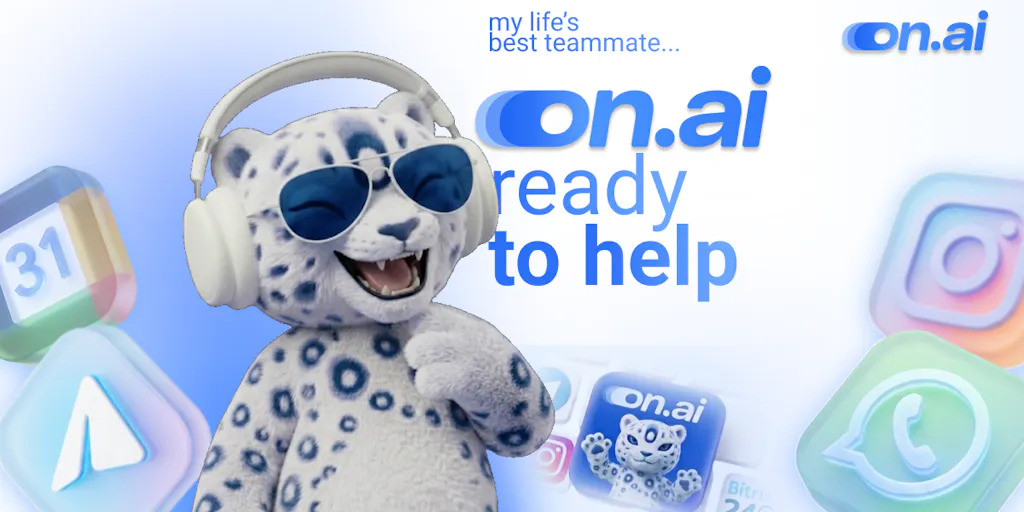
Most social media tooling for small businesses is built around publishing: schedule the post, generate the caption, read the analytics. But for a huge class of local businesses — salons, clinics, studios, private practices — the social account isn’t a broadcast channel. It’s the front door. And the front door is usually unattended after hours. ooon.ai, a new launch from founder Nurbolat Sagenov, is aimed squarely at that gap: an AI agent that answers inbound messages on WhatsApp, Instagram, and Telegram, books the appointment in the same chat, sends reminders, and re-engages clients who went quiet. If you run social for a service business — or you’re a creator watching the “AI agent” wave crash into the inbox — this is worth understanding, because it reframes what “social media management” even covers.
The Problem ooon.ai Actually Solves (And Why It Isn’t a Scheduling Tool)
Sagenov’s launch note is unusually specific about the origin story: he watched beauty salons and clinics in Kazakhstan lose clients because a message would arrive on WhatsApp or Instagram at 9pm, or while the owner was mid-haircut with another client, and nobody replied in time. The client books with whoever replies first — usually a competitor. That’s the whole thesis, and it’s a good one, because it’s not a marketing problem. It’s a response-time problem dressed up as a marketing problem.
The product’s job, per the maker, is to answer those messages for the business, in the client’s own language, and book the appointment right in the same chat. It also sends reminders before the visit and reaches out to clients who went quiet. That’s three distinct jobs bundled into one agent: inbound triage, booking, and reactivation.
Why this is a different category from Buffer or Later
If you’re a social media manager, your mental model of “tools” probably splits into a few buckets: scheduling and publishing (Buffer, Later, Hootsuite), design (Canva), editing (CapCut), analytics (Metricool), and increasingly AI caption/repurposing tools. ooon.ai doesn’t sit in any of those buckets. It sits in the conversation layer — the DMs, the WhatsApp threads, the Telegram chats — which is exactly the layer most social tools treat as an afterthought.
That distinction matters operationally. A scheduler optimizes the outbound side of the funnel. ooon.ai optimizes the inbound side, which for a service business is where the money actually converts. A salon can post the most beautiful reel in the world and still lose the booking because nobody answered the DM for six hours.
The Central Asia angle is not a footnote
Sagenov is explicit that they built it for Central Asia first, “where WhatsApp, Instagram, and Telegram are how people actually talk to a business every day.” That’s a deliberate go-to-market choice, and it tells you something about how the product was designed. In markets where WhatsApp Business and Instagram DMs are the default business channel — much of Latin America, Southeast Asia, the Middle East, parts of Eastern Europe — the “reply fast or lose the client” dynamic is even more brutal than in the US, where phone calls and web forms still absorb some of the load.
A commenter from Georgia, Ninuna Ungiadze, confirmed the pattern is identical there: businesses have social pages “just for posting,” they hire a content maker for a fraction of the money, and “have a chat completely deserted.” Her complaint about the current state of affairs is the most quotable thing on the page: “Everytime i write to them, bot tells me: this is our number call us. If i wanted to call you, i would have.”
That’s the entire opportunity in one sentence. The existing “automation” in these businesses is a deflection bot that pushes people off-platform. ooon.ai’s pitch is the opposite: keep them in the chat and close the booking there.
What Creators and Social Teams Can Steal From This Playbook
Even if you never touch ooon.ai, there are three operational lessons here that apply to almost anyone running social for a business that sells a service or a time slot.
1. Treat response time as a content metric
Most social teams track reach, engagement rate, saves, shares. Almost nobody tracks first-response time on DMs, even though for service businesses it’s the single highest-leverage number in the funnel. If you’re managing accounts for a clinic, a studio, a coach, or a restaurant, go pull your average DM response time this week. I’d bet it’s worse than you think — especially on weekends and evenings, which is exactly when intent is highest.
This is the same logic that made Manychat and Instagram’s own quick-reply/automation features popular for creators. The difference is that most of those tools stop at “here’s a menu, tap an option.” ooon.ai’s claim is that it goes all the way to a confirmed booking.
2. Reminders are a retention channel, not a courtesy
The maker lists three jobs, and the middle one — sending reminders before the visit — is the one social managers systematically ignore because it doesn’t live in the social tool. No-shows are a revenue leak, and they’re a leak that a well-timed WhatsApp message plugs. If you’re running social for a service business and you’re not coordinating with whoever owns the booking calendar, you’re leaving a channel on the table.
3. Reactivation is the cheapest content you’ll ever “write”
The third job — reaching out to clients who went quiet — is essentially a re-engagement campaign run in a DM thread instead of an email list. For creators, the equivalent is DMing your lapsed subscribers or commenters. For a salon, it’s messaging the client who came in three months ago and never rebooked. Either way, the mechanics are the same: segment by last interaction, write one message, send it in the channel where they actually read things.
Where My Judgment Says This Falls Short
Here’s where I have to be honest, because the launch page doesn’t answer the questions I’d want answered before recommending this to a client.
Where the math breaks
Language and dialect coverage is unverified. The maker says the agent answers “in the client’s own language,” which is a strong claim in a region as linguistically diverse as Central Asia. The source doesn’t disclose which languages are supported, how well, or how the agent handles code-switching (Russian/Kazakh mixing, for example). Until that’s documented, I’d treat multilingual support as a claim to test, not a feature to rely on.
Booking integration is the whole ballgame, and it’s not described. “Books the appointment right in the same chat” only works if the agent can actually read and write to the business’s calendar — Google Calendar, a salon-specific POS, a clinic system, whatever. The launch page doesn’t say what it integrates with. If it’s a closed calendar owned by ooon.ai, that’s a lock-in risk. If it’s a shallow integration that just collects a preferred time and forwards it to a human, it’s not really booking. Not disclosed.
Pricing is not disclosed. That matters because the target customer — a salon owner in Kazakhstan or Georgia — is price-sensitive, and the competing “solution” is a $0 human habit of checking the phone between clients. If the pricing isn’t obviously cheaper than the lost bookings it recovers, adoption will stall.
The “AI agent” category is crowded and noisy. Anyone who’s tested AI customer-service agents knows the failure mode: they confidently hallucinate availability, promise things the business can’t deliver, and create a worse experience than a slow human. The maker’s framing is smart — narrow vertical, narrow geography, narrow channel set — but narrow doesn’t automatically mean reliable.
Who this is NOT for
If you’re a solo creator selling digital products, this isn’t your tool — you don’t have appointments to book. If you run social for a brand with a dedicated community manager replying to DMs within minutes, you don’t have the problem either. And if your business runs on phone calls and web forms rather than WhatsApp/Instagram/Telegram DMs, the whole premise doesn’t apply. This is specifically for appointment-based service businesses in chat-first markets.
A commenter raised the right question
Lambert de beru asked whether there’s an app on top of the agent, or whether it “only lives in messaging apps.” That’s the right question, and the source doesn’t answer it. My take: if the owner’s only interface is the same messaging apps the clients use, that’s actually elegant for adoption — no new dashboard to learn — but it makes reporting, analytics, and multi-staff coordination harder. A salon with five stylists needs to know which stylist the booking is for. Whether ooon.ai handles that is not disclosed.
The Broader Shift This Launch Signals
Step back and the pattern is bigger than one product. For the last three years, the creator-economy tooling boom has been about production: make more content, faster, cheaper. AI writers, AI video editors, AI repurposing tools. The next wave — and I’d bet ooon.ai is an early signal of it — is about conversion and retention in the inbox. Because it turns out that for a huge slice of the economy, the social account isn’t a media property. It’s a storefront, and the storefront’s biggest leak is unanswered messages.
That reframes what a “social media manager” does. If you’re only thinking about publishing cadence and hashtags, you’re optimizing the top of a funnel whose bottom is leaking. The operators who win the next few years will be the ones who own the whole path: post → DM → booking → reminder → repeat.
Why TikTok creators should care more than LinkedIn ones
A quick sidebar for the platform-specific crowd. If your audience lives on TikTok or Instagram, the DM/comment-to-booking flow is native and high-intent — people literally comment “how much?” and expect an answer in the thread. If your audience lives on LinkedIn, the equivalent is a lead-gen form or a calendar link, which is a different (and more mature) toolset. So the ooon.ai model maps most cleanly onto visual, chat-first platforms where the audience already expects to transact in the DMs. That’s a useful lens for deciding whether this category of tool is even relevant to your accounts.
What I’d Watch / Test Next
Three concrete things I’d do this week if this category interests you:
Audit your own response time. Pull the last 30 days of DMs on your busiest platform and calculate your median first-response time. If it’s over an hour during business hours, you have the problem ooon.ai is selling against — regardless of whether you buy their tool.
Test one reactivation message manually. Pick 20 lapsed clients or followers, write one short DM, send it, and track the reply rate. That gives you a baseline number before you evaluate any AI agent claiming to do it at scale.
Ask the vendor the three questions the launch page didn’t answer: Which languages and dialects are supported? What does it integrate with for booking? What’s the pricing, and is there a free trial? If those answers are vague, wait. If they’re specific, ooon.ai is worth a pilot with one location before you roll it out.
The honest summary: the problem is real, the wedge (Central Asia, WhatsApp/Instagram/Telegram, appointment businesses) is smart, and the execution questions are still open. Watch it, test the manual version of the workflow first, and only then decide whether the agent earns a seat in your stack.