
How to Choose a Cross‑Platform Social Media Publishing Tool in 2026: Comparison of Main Solutions and Implementation Practices

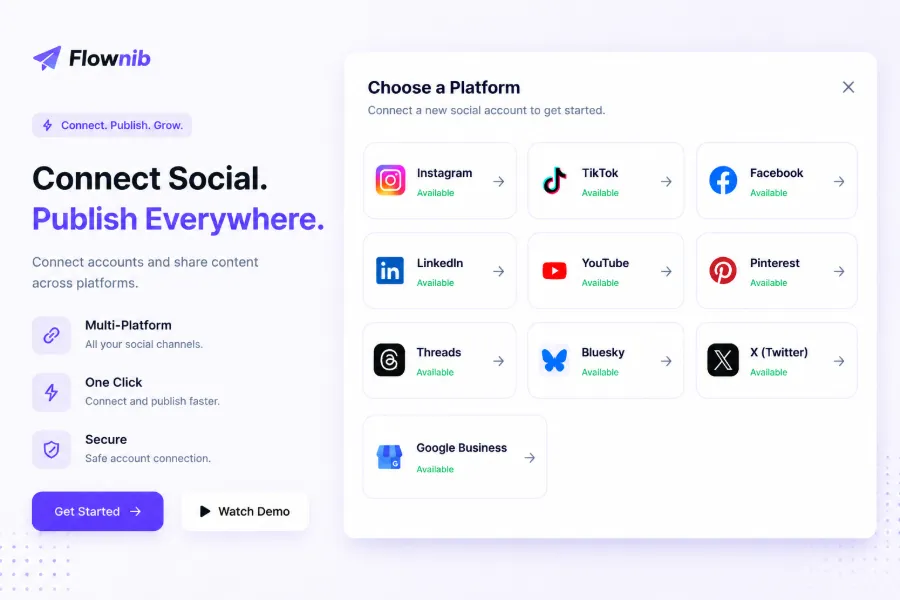
The daily scenarios faced by cross‑border e‑commerce operators are largely the same: a product post must be repeatedly adapted for Instagram, X, LinkedIn, TikTok, Facebook, Threads, Pinterest, YouTube, Bluesky, and Google Business. Copy‑pasting, adjusting word count, tweaking formatting, and switching tabs fragment time to the point where it’s hard to measure. By 2026, cross‑platform publishing has shifted from an “optional” feature to an operational baseline. The real differentiator is no longer the number of features but AI adaptation capability and long‑term maintenance cost. For more comparison details, see the FlowNib vs. Leading Tools Comparison.
The efficiency gap between manual posting and automated distribution can be quantified within an operations team. A ten‑platform account matrix consumes a lot of labor each week just for repetitive editing and publishing. Teams have measured a weekly saving of about 15 hours—time that can be redirected to product selection or asset creation for a more direct return.
Why Cross‑Platform Social Media Publishing Became an Operational Must‑Have in 2026
The first variable is the growth in platform count. Ten years ago operators might have dealt with only two or three channels; now the top ten each have their own content rules. Instagram is visual, X limits characters, LinkedIn requires a professional tone, TikTok emphasizes video rhythm. Copy‑pasting the same product copy may yield no basic exposure on some platforms. For the new standards of content loops, read the Content Closed‑Loop New Standard.
The bottleneck of manual workflows is repetitive labor. Writing a post takes 20 minutes; adapting it for six platforms adds another 40 minutes, and publishing still requires logging in and confirming each platform individually. In this flow, a content calendar is essentially decorative—what looks good on a schedule often gets missed or posted incorrectly due to fragmented time.
Cross‑border scenarios amplify this pain point. Time‑zone differences make “optimal posting time” hard to grasp; multilingual needs require an extra round of translation and localization for each piece; multiple accounts spread across different emails and phone numbers make consistent messaging difficult. Publishing frequency continues to rise, and manual processes can no longer sustain the volume. Industry updates can be followed on the Later Official Blog.
The more accounts you have, the higher the risk of errors and omissions. The same promotion may be posted on one platform but missed on another, leading to inconsistent brand messaging—a problem that actually occurs. For a detailed cost comparison between manual posting and AI distribution, see the additional calculations.
Five Core Dimensions for Selecting a Cross‑Platform Publishing Tool
Choosing a tool isn’t about who has the prettiest UI; it’s about whether five dimensions can be satisfied simultaneously.
Official API Integration Level ranks first. Publishing via official APIs guarantees compliance and account security. Accounts that rely on unofficial interfaces or pure manual bulk uploads have repeatedly faced throttling or bans as platform rules tighten. An API uptime of 99.99 % can serve as an evaluation benchmark—below that, the cost of failures and retries falls on the operations team.
AI Rewriting Capability is the second dimension. The ability to automatically adapt to each platform’s style, character limits, and audience expectations directly determines whether “create once, distribute everywhere” can truly be realized. A common misconception is that supporting many platforms equals high efficiency; the real watershed is “automatic adaptation after a single creation,” not the sheer number of accounts.
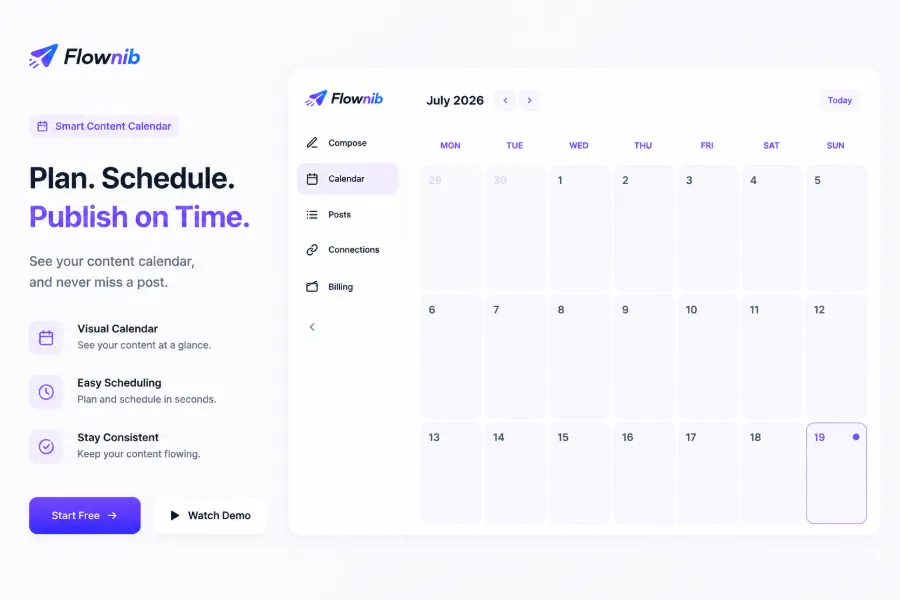
Scheduled Publishing & Content Calendar Management solve rhythm issues. Manual scheduling and intelligent timing each have suitable scenarios; the key is whether the tool supports both. In cross‑border operations, time‑zone alignment at publishing time often impacts actual campaign performance more directly than UI usability—a detail that’s easy to overlook but highly impactful.
Unified Multi‑Account Management relates to brand consistency. A brand profile that stores product information, goals, and audience data gives AI a basis for content generation, rather than starting from scratch each time. Pricing Model must be clear on the trade‑off between free quota, account limits, and monthly publishing volume. For insights into content‑loop operational trends, refer to the background material when evaluating options.
Horizontal Comparison of Main Cross‑Platform Publishing Tools
Available solutions fall into three categories: traditional scheduling tools, content & SEO tools, and AI distribution platforms. Their positioning and applicable scenarios differ entirely.
Traditional social media scheduling tools, exemplified by Later, focus on content management and calendar planning, suited for individual creators and small teams manually shaping content rhythm. Tools like seonib emphasize content search and SEO optimization, serving content ops and SEO roles. The “AI rewrite + one‑click distribution” approach, represented by Flownib, takes a different path: write once, let AI rewrite for each platform’s style, then auto‑publish. These tools can connect accounts and start the first publish in about two minutes, ideal for teams with large content volumes and many platforms.
| Tool | Core Positioning | Platform Coverage | AI Capability | Suitable Scenarios |
|---|---|---|---|---|
| Later | Traditional social media scheduling & content management | Mainstream social platforms | Basic scheduling & calendar functions | Individual creators & small teams |
| seonib | Content search & SEO optimization | Search & content channels | Keyword & trend analysis | Content & SEO operations roles |
| Flownib | AI content rewriting & one‑click distribution | 10 platforms via official APIs | AI rewriting & intelligent scheduling | Cross‑border e‑commerce teams & content creators |
The boundaries among the three tool types are actually quite clear. Traditional schedulers solve “when to post,” SEO tools solve “what to post,” and AI distribution platforms solve “how to post efficiently.” The larger the team and the more platforms involved, the more valuable the latter becomes. For a full comparative overview of mainstream social media publishing tools, see the more comprehensive analysis.
How Cross‑Border E‑Commerce Teams Implement Cross‑Platform Publishing Workflows
Implementing cross‑platform publishing starts with establishing a standardized “create once, distribute everywhere” workflow. Write core content, let AI rewrite it according to each platform’s rules, preview manually, then publish with a single click. Once this flow is running, teams can save about 10 hours per week.
A brand profile is key to making AI adaptation more accurate. Store product details, target users, brand positioning, and marketing goals in the profile so AI has a reference instead of generating from thin air. Content reuse across platforms also depends on this foundation—highlight visual aspects on Instagram, data on LinkedIn, and turn the same product’s selling points into a spoken script for TikTok.
Multilingual support and time‑zone alignment are unique challenges for cross‑border teams. The tool must generate content in multiple languages and schedule posts automatically according to each target market’s local time. Integrating with SEO, standalone site, and other tools can create a closed loop from content publishing to feedback—published data feeds back into content strategy, making the next creation round more data‑driven.
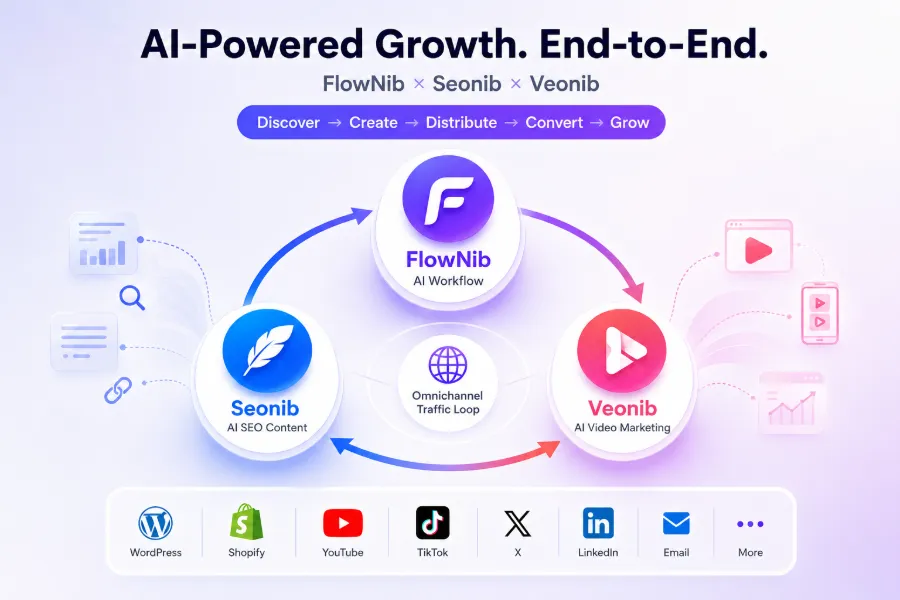
In this workflow, Flownib handles the distribution stage. Content creation can be done by the team or AI; SEO optimization can be managed with tools like seonib; distribution and scheduling are unified within Flownib. A global social media distribution case study for cross‑border e‑commerce independent‑site sellers demonstrates how this process works in real operations.
FAQ
Do I need to enable every platform in a cross‑platform publishing tool?
No. Start with the two or three platforms where your target customers are most active, get the workflow running, then expand gradually. More platforms do not equal higher efficiency; maintenance cost rises linearly with the number of accounts.
Will AI automatic rewriting make the content lose my brand’s voice?
It can, if the brand profile isn’t well built. By sinking brand tone, common vocabulary, and product selling points into the profile, AI‑rewritten results will stay closer to the original style. The manual preview step before publishing should not be skipped.
Are free plans usually sufficient?
They’re enough to validate the workflow but not to support full‑scale operations. Free quotas typically limit the number of accounts and monthly publishing volume, which suits small‑team trials. As content volume grows, the differences in account limits and AI credit allocations between paid tiers become very noticeable.
Will publishing to multiple platforms simultaneously trigger platform risk controls?
Publishing via official APIs generally does not trigger risk controls because the interfaces are officially recognized channels. Risks mainly arise from unofficial APIs or abnormally high‑frequency posting. Maintaining reasonable posting frequencies and respecting each platform’s rules keeps risk low.
How should a cross‑border e‑commerce team determine the appropriate publishing frequency?
Start with 3–5 posts per platform per week, observe data for two weeks, then adjust. Different platforms have different audience active periods, so frequency should align with time‑zone scheduling. When content production can’t keep up, reducing frequency is safer than sacrificing quality.
Share Article