
The Next Two Years: How Multi‑Platform AI Adaptation Will Reshape Cross‑Border Social Competition

Opening the social‑media operations backend, a carefully crafted piece of content must be published simultaneously on Instagram, LinkedIn, X, and TikTok. Each time you switch tabs, you copy the copy, adjust the format, delete emojis, recount characters, and finally paste it. You stare at the screen and check the time—15 minutes have passed, and you’ve only finished adapting for three platforms.
Cross‑border sellers never face a content‑creation problem; they face a distribution‑efficiency problem. Manually rewriting, adjusting, and pasting across multiple platforms, by the time everything is posted the optimal exposure window has already passed by two hours. Teams work late into the night, yet the scale of content remains stuck at a bottleneck—one person can maintain at most three to four platform accounts per day.
That’s the real situation for overseas social operations in 2025.
I’ve seen a team of four people maintaining six platforms, spending almost two workdays each day just on content adaptation. Once an operator spent an extra ten minutes manually tweaking the LinkedIn version and missed Instagram Reels’ prime publishing window; that post’s reach was 40 % lower than usual. This isn’t an extreme case—time waste from manual processes is the direct cause of growth stagnation for most cross‑border teams.
The operational friction caused by differing content formats and tones across platforms far exceeds expectations. Instagram needs strong visuals with short copy, LinkedIn requires a professional tone with paragraph structure, and X must be concise within 280 characters. A product launch post goes through four manual style conversions from concept to full‑platform release, each draining team energy and forfeiting growth opportunities. Industry research shows that manually adapting a piece of content for three platforms takes an average of 15 minutes. If you post five pieces a day, that’s 75 minutes—time that could be better spent on data analysis.
A more hidden loss is psychological. When content adaptation becomes pure manual labor, operators subconsciously reduce posting frequency to manage workload. Scale stalls, testing space shrinks, and you miss more than just one time slot. If you’re interested in the tool choices behind this efficiency gap, check out the Flownib price and feature comprehensive analysis for cost‑comparison data. The HubSpot Marketing Blog also offers industry data on social‑media operational efficiency.
AI Adaptation’s Cross‑Platform Logic: One Idea, Precise Everywhere
The core of AI adaptation isn’t to replace human copywriters, but to solve the repetitive “write one piece of content, generate four versions” problem. The workflow works like this: you write an original copy in the editor, the AI engine automatically analyzes each target platform’s character limits, tone preferences, and audience expectations, then generates the corresponding rewritten versions.
Take Flownib as an example. After you finish an original piece, the system processes it in parallel in the background—splitting the copy into information units, generating a short version with hashtags for Instagram, a paragraph version preserving logical arguments for LinkedIn, and a one‑sentence summary for X. The entire process takes about 15 seconds, roughly 60 times faster than manual operation. According to real‑world usage data, AI adaptation can cut repetitive editing workload by about 80 %.

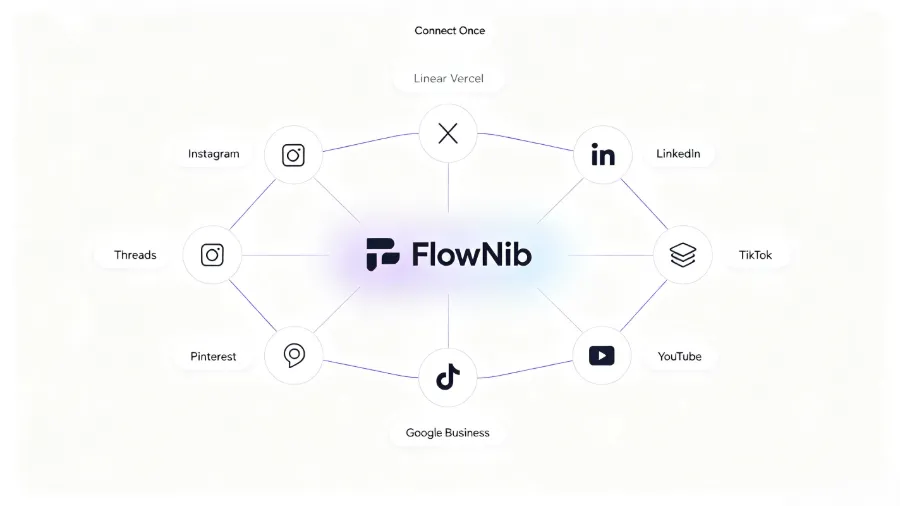
A frequently overlooked detail is that the AI rewriting engine can connect directly to platforms via official APIs, offering stability and reliability far above third‑party plugins. Flownib’s API uptime reaches 99.99 %, meaning almost no interruptions due to interface issues. You don’t need to debug each platform’s publishing logic; the official API already handles character encoding, media formats, and hashtag differences. After a two‑minute account connection and setup, you can start working.
Brand language consistency isn’t sacrificed in this process. The rewriting engine retains your predefined tone lexicon—e.g., using “you” instead of “your,” and appending the brand slogan at the end of every post. Differences only appear in length and structure; the core message and brand identity resonate the same across platforms.
For a deeper dive into how AI rewriting integrates into an overall content strategy, read the extended piece on the 2026 content stack integration, which discusses the synergy between SEO, AI video, and automatic distribution.
Barriers Are Forming: AI Adaptation Becomes the Watershed for Cross‑Border Operations
While some sellers still manually switch windows, others have already used AI adaptation tools to boost their posting frequency to two‑ to three‑times the industry average. This gap isn’t built in a day; it accumulates from posting 2–3 extra pieces of content each day over 240 workdays, resulting in a massive exposure differential.
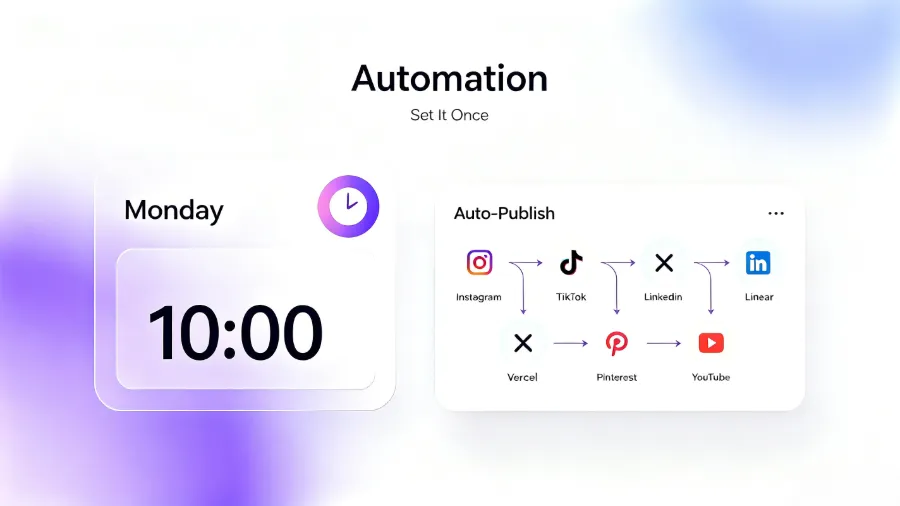
Platform algorithms clearly favor precise publishing. Scheduled posts aligned with a content calendar ensure each piece goes live during the target time zone’s active window. If you manage multiple accounts across different markets, the importance of timing precision doubles. Sellers who automate content scheduling gain a strategic advantage over teams that post at random times.
However, trusting AI doesn’t mean handing everything over to it. In 2025, a DTC brand used 100 % AI‑generated content without any human calibration. The first two months showed impressive data—posting frequency doubled and reach kept rising. By the third month, TikTok and Instagram algorithms flagged the batch as “low‑quality bulk content.” Organic reach plummeted 60 %, dropping a product post that previously earned tens of thousands of weekly impressions to under four thousand. The team spent three months de‑machine‑learning the content, adding human polishing and interactive elements, before gradually regaining weight. A full response strategy can be found in the must‑read for cross‑border independent‑site sellers, which includes detailed post‑mortems.
An easy‑to‑miss trade‑off: AI adaptation isn’t limited to text rewriting; it also includes automatically tracking platform API version updates. For example, early 2025 Instagram Reels changed its playback format, causing many manually posted videos to be throttled due to mismatched dimensions. Automation tools using official APIs adapt within hours of an interface change, preventing interruptions. If you rely on manual processes, you may only notice a drop in data days after an API change.
Homogenization risk is real. My solution is a “human‑machine hybrid” workflow: AI handles 80 % of basic rewriting and scheduling, while operators create 20 % original interactive content and respond to trending headlines. This preserves brand personality while avoiding algorithmic penalties for bulk‑generated content.
Outlook to 2027: What Multi‑Platform AI Adaptation Will Change
Looking ahead to 2027, platform rules are evolving toward more granular format requirements and smarter recommendation mechanisms. The TikTok developer documentation already shows next‑gen APIs demanding far richer content metadata than today—video scene tags, audio fingerprint markers, user intent classifications, etc. AI adaptation will expand from text rewriting to video script storyboard creation, image cropping focus adjustments, and optimized hashtag combinations.
A pain point often ignored by cross‑border sellers is regional privacy‑compliance differences. Under GDPR, tracking links in content must be handled according to European standards; the CCPA‑applicable U.S. market has its own tagging rules. Manual processes make it nearly impossible for operators to adjust each difference individually. AI tools can automatically detect the target publishing region and adjust link structures and data‑tracking tags per local policy—a precision humans can’t easily achieve.
By 2027, spending on AI adaptation tools by cross‑border brands is expected to grow 200 %. This surge is driven by the increase in platform numbers and the rising complexity of content formats. Sellers now need to prepare for: multi‑language AI adaptation (beyond translation to cultural nuance adjustments), real‑time trend response (algorithms increasingly favor content tied to current hot topics), and standardized hybrid human‑machine workflows.
If you’re evaluating tool experience, the Flownib review: a one‑stop AI social distribution tool provides detailed records of actual usage flows and team adaptation times.
FAQ
Q1: Does multi‑platform AI adaptation support minor language markets (e.g., Spanish, Arabic)? How does it handle cultural sensitivity?
Yes. Leading AI rewriting engines already cover over 30 minor languages. For cultural sensitivity, the AI automatically adjusts content based on each market’s common expressions and taboo word lists. For instance, Arabic versions are formatted right‑to‑left, while Spanish versions adopt a more enthusiastic tone. It’s recommended that a local operator perform a quick pre‑check before publishing each language.
Q2: Will AI‑rewritten content cause a brand to lose its unique personality? How to keep the human touch?
It can, if you never intervene with human calibration. Preserve brand personality by pre‑defining a language profile—including tone style, high‑frequency words, industry‑specific terminology, and forbidden phrasing. The rewriting engine operates within that framework. Also, retain at least 30 %–50 % of the original sentence structures in each AI‑generated version so the brand’s distinctive voice permeates all platform outputs.
Q3: Do cross‑border sellers need to build a dedicated technical support team for AI adaptation tools?
No. Current tools support account binding and basic setup in 2–3 minutes. Daily use only requires operators who can write basic copy and review publishing logs. The only notable technical hurdle is when you need to integrate non‑standard platforms or develop custom API extensions, at which point technical support becomes relevant.
Q4: What is the biggest risk for AI adaptation tools over the next two years?
The biggest risk is a shift in platform algorithm attitudes toward AI‑generated content. In 2025, cases emerged where over‑reliance on AI led to demotion. Another risk is API stability—if a platform suddenly tightens access permissions, teams dependent on a single tool could face publishing interruptions. It’s advisable to keep a manual publishing backup process and avoid binding all accounts to a single tool.
Share Article