
Old Articles Are Not a Burden, They’re Your Gold Mine: The Compound System of Content Refresh and Cross‑Platform Repurposing

When I was cleaning up the backend last month, I dug up over three hundred old blog posts I’d written in the past three years. I opened a few at random and found that many of them had clearly involved effort at publication, yet their view counts hovered around two hundred. The content isn’t outdated, the product specs are still accurate, but they’re just lying there quietly, never seen again.
Most content teams equate growth with constantly producing new material, so editors write frantically and operators push relentlessly. Old articles pile up, but few people ever revisit them. There’s a long‑standing saying in content marketing: about 80 % of traffic comes from old content. The figure may not be precise, but it points to an overlooked truth—your truly untapped assets are the articles already sitting in your content library. Refresh those old pieces and let the same content travel across all platforms, and a single article can monetize multiple times. This article explains how to implement that process.
First, Take Inventory: How Many “Sleeping Assets” Do You Actually Have?
Before you start refreshing, figure out what you have. Open Google Search Console, export the past year’s query and page data, and classify old articles along three dimensions: traffic, timeliness, and thematic relevance.
- Traffic – the simplest dimension: which pages still get impressions and which are almost zero.
- Timeliness – depends on content type: product specs, customs policies, and logistics lead times expire, while methodologies, product‑selection ideas, and operational post‑mortems have a much longer shelf life.
- Thematic relevance – ask: does this old piece still align with current business direction?
The classification usually ends up in three tiers. High‑potential, low‑traffic pieces are the most worth refreshing: the search terms still exist but rankings have slipped, or the content is good but lacked internal links or a strong title at the time. The second tier is “archive” – the content is fine but irrelevant to current business; keep it without consuming resources. The third tier is “delete” – completely wrong information, brand‑tone conflict, or quality so low that fixing it isn’t worthwhile. The criteria are subjective; the key is to create a content‑grading list, even if it’s just a spreadsheet row by row, which is far more reliable than trying to remember hundreds of articles.
Refreshing Old Articles: Not Just Tweaking a Few Words, It’s a Full Edit
Refreshing isn’t just fixing a typo or swapping a year. I break it into three levels, each with very different investment and return.
- Light updates – the easiest: refresh data, replace dead links, delete outdated examples, and maybe change the year in the title.
- Medium rewrites – structural changes: reorder subheadings, add new evidence and data, clarify vague statements.
- Heavy reconstructions – most effort: merge two or three overlapping articles into one, reposition keywords, essentially rewrite from scratch.
In cross‑border e‑commerce, a special point for product articles: customs policies, logistics lead times, and price changes become stale quickly, and the whole article’s credibility collapses. Refreshing must prioritize verifying those details.
There’s no universal refresh cadence. My habit is to sort by thematic priority and handle two to three pieces per week rather than a massive sprint. For a fully rewritten old article, the 4‑ to 8‑week window after refresh is the critical period to observe data changes—if traffic doesn’t rebound, the issue likely lies in keyword targeting or external competition, not the content itself.
After refreshing, don’t forget to resubmit the index. In Google Search Console, request a recrawl of the updated URLs to significantly shorten indexing wait time.
Cross‑Platform Repurposing: Turning One Piece of Content into an Entire Content System
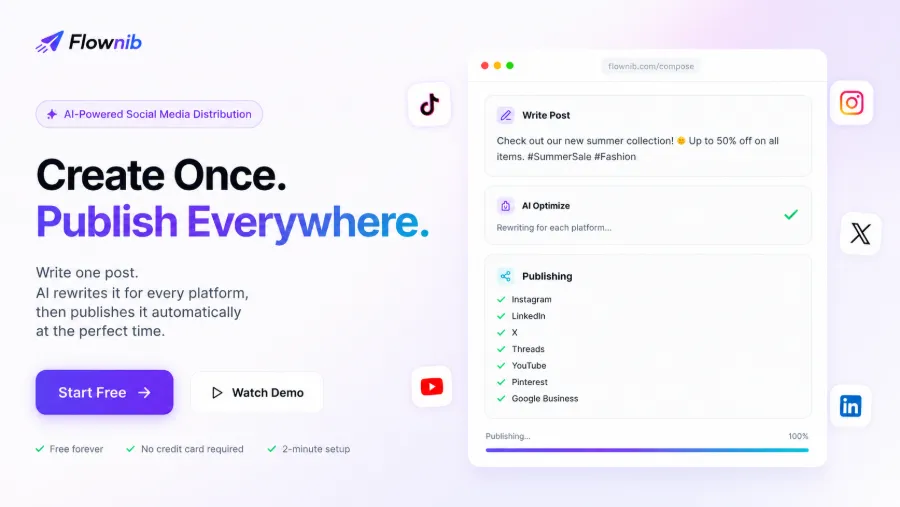
Refreshing solves the “content gets old” problem, but a great article that stays only on a blog still has limited value. The core idea of repurposing is to break the same theme into different formats according to platform attributes: long‑form stays on the blog, image‑text on Instagram, short‑video scripts for TikTok and YouTube Shorts, and concise takeaways for X and LinkedIn.
Cross‑border e‑commerce adds another dimension: multilingual. After translating the same content into target‑market languages, the distribution logic must be adapted again. I wrote a piece on global publishing in multilingual scenarios titled “How One Piece of Content Can Be Published Worldwide”, which breaks down the sequence of translation, localization, and distribution.
Distribution cadence needs control. When re‑posting the same content on different platforms, space them one to two weeks apart to avoid a platform‑wide bomb on a single day. A content calendar is essential—without one you’ll forget which piece has been posted where and how many times. Tolerance for duplicate content varies wildly across platforms; blind copy‑pasting easily triggers throttling. For example, Threads’ tone is completely different from X’s—Threads leans toward casual chatter, while X favors opinionated posts. See the Threads platform style guide for a feel. Full rewrites are time‑consuming; AI rewriting here is not just an efficiency tool but a necessary step to evade platform duplicate‑content detection. For a collaborative view of the content stack, check out the external reference “2026 Cross‑Border E‑Commerce Content Stack Collaboration Ideas”.
Distribution isn’t ad‑hoc sharing; it’s a core part of content lifecycle management. If your team lacks a unified distribution tool, use the decision framework in “How to Choose a Multi‑Platform Social Media Tool” as a guide.
Content Lifecycle Management: From “Publish‑and‑Forget” to “Closed‑Loop Operation”
Doing refresh and distribution in isolation yields limited results. I’ve seen a team refresh 30 old articles in a month, but because they didn’t simultaneously repurpose them across platforms, traffic growth fell far short of expectations. Refreshing and distribution must be coupled—refresh restores competitiveness, distribution reaches new audiences. Doing only one is like training only half the muscles. If data feedback within 4 to 6 weeks doesn’t meet expectations, the team will abandon the effort.
Content lifecycle management turns this into a closed loop: create → distribute → monitor → archive → re‑activate. Old articles enter the refresh pipeline, then get distributed to all platforms; data feedback determines the next step—high performers get further push, average ones are archived awaiting the next re‑activation round. Once this loop runs, the division of labor between content ops and social‑media ops becomes clear: the former handles refresh and quality, the latter handles cadence and platform adaptation. For tools and collaborative ideas on closed‑loop operation, see “Three Independent Tools for Closed‑Loop Content Operations”.
Automation tools add value here by letting a single operator manage multiple platform accounts. Manual copy‑pasting to ten platforms consumes at least one to two hours a day and is error‑prone. Tools like Flownib let you write once, have AI rewrite for each platform’s style, and auto‑publish; direct API connections ensure stability. Teams report saving 10 to 15 hours per week after adopting automated distribution—numbers may vary, but the direction is clear: hand off repetitive work to tools and devote time to the content itself.

Flownib’s monitoring and archiving features also neatly solve the two missing links in the closed loop: the content calendar records every published post, and multi‑account management lets a single dashboard show the status across all platforms. Once the whole system is running, maintaining it takes about three to four hours per week, while the content library continuously generates new traffic. A B2B hardware brand reduced its social‑media operation time by 75 % using a similar approach; see the case study “B2B Hardware Brand Reduces Social‑Media Ops Time by 75 %” for details.
FAQ
How often should I refresh old articles?
There’s no fixed schedule. Process by thematic priority and handle two to three pieces per week rather than a massive sprint. The 4‑ to 8‑week window after refresh is the key period to watch data changes; if traffic doesn’t rebound, the issue may be keyword targeting rather than the content itself.
Will copying the same content to multiple platforms trigger throttling?
Yes. Each platform has a different tolerance for duplicate content, and straight copy‑pasting can trigger throttling. Full rewrites waste efficiency. AI rewriting offers a middle ground—maintaining information consistency while adapting to each platform’s style and character limits.
How do I decide if an old article is worth refreshing?
Look at three dimensions: does it still have search traffic, is the content outdated, and is it relevant to current business? High‑potential, low‑traffic pieces are the most worth refreshing; completely outdated pieces with no repair value should be deleted; irrelevant pieces can be archived.
How should I handle format differences across platforms when repurposing?
First define each platform’s core format—Instagram favors image‑text, X prefers short opinions, LinkedIn values professional long‑form, TikTok needs short video. Break the same theme according to platform attributes instead of squeezing a long article into various lengths. Use a content calendar to track each platform’s publishing history and avoid repeated bombardment.
What time investment is required for content refresh and repurposing?
After the system is up and running, it takes about three to four hours per week. Refreshing a single old article ranges from half an hour to two hours depending on the level; the distribution step, once automated, only needs a few minutes each day to check publishing status. The initial setup of the grading list and distribution workflow takes more time, but it’s a one‑time investment.
Share Article