The AI Search Era: Why Your LinkedIn Content Is More Important Than Your Website
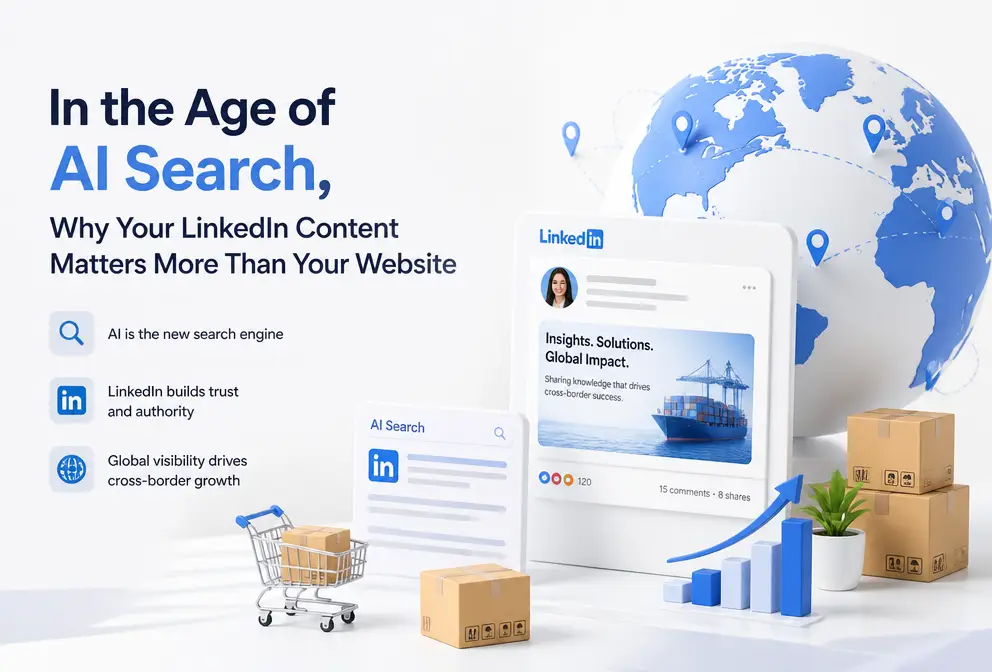
In the third quarter of 2025, a SaaS company’s head of marketing discovered that a competitor’s name mentioned during a procurement review had never appeared in any search engine results—yet ChatGPT, when answering “What is the best project collaboration tool?”, directly quoted a long article the competitor’s CTO had posted on LinkedIn. She checked her brand’s performance in AI search: zero citations. That’s when she realized that for the past two years the team had poured all its effort into website SEO, while AI engines weren’t looking at those pages at all.
This isn’t an isolated case. According to Profound’s tracking data, LinkedIn’s citation ranking in AI search jumped from outside the top 20 to the top 5 within just three months and is now the most frequently cited domain across all LLMs (including ChatGPT and Perplexity). When prospective customers ask AI professional questions, the answers are increasingly sourced from real user posts on LinkedIn rather than from brand websites or press releases. This means that if your team isn’t publishing genuine professional insights on LinkedIn, your brand may be completely absent from AI search results.
Why LinkedIn Suddenly Became the Primary Citation Source for AI Search
Large language models have their own logic for selecting content sources during training and retrieval, which is completely different from traditional search engines. Traditional SEO relies on backlinks, domain authority, and page structure, whereas AI engines place far more weight on “human‑experience credibility.” LinkedIn naturally excels on this dimension.
Profound’s research data is very intuitive: at the start of 2025, LinkedIn’s domain citation ranking for professional queries on ChatGPT was outside the top 20; by mid‑year it had risen to #5, and it also tops Perplexity and other major AI search platforms. This means that regardless of which entry point users use, LinkedIn content is the core source for AI answers.
The deeper reason lies in AI engines’ training preferences. LLMs assign relatively low weight to official brand pages and PR releases because those contents are inherently promotional and lack semantic “objectivity.” In contrast, personal industry insights, project retrospectives, and tool reviews posted on LinkedIn resemble the data distribution of Reddit or Stack Overflow, carrying clear signals of genuine human behavior. The patterns AI engines learn from these posts are more readily judged as “reliable professional content,” so they tend to prioritize them during real‑time retrieval.
Another often‑overlooked factor is that LinkedIn personal updates are far more frequent than corporate pages, and the granularity is finer. A Kubernetes troubleshooting log posted by an engineer has far higher semantic density and uniqueness than a solution page on a corporate site. AI engines are therefore more likely to cite the former when retrieving answers.
What Kind of LinkedIn Content AI Search Is Actually Crawling
Many assume that simply completing a LinkedIn profile and work experience will get AI citations—data shows this assumption is outdated. Profound’s research clearly indicates a structural shift in the types of LinkedIn content AI cites.
| Content Type | Past AI Citation Share | Current AI Citation Share | Change |
|---|---|---|---|
| Profile pages | 33.9% | 14.5% | -19.4 |
| Feed posts | 20.9% | 26.0% | +5.1 |
| Long‑form articles | 6.0% | 8.9% | +2.9 |
The citation share for profile pages dropped from 33.9 % to 14.5 %, while feed post citations rose from 20.9 % to 26 %. This is not a minor fluctuation but a fundamental shift in citation logic. AI engines are now actively seeking dynamic professional viewpoints rather than static résumés.
The rising proportion of feed posts and long articles being cited indicates that engines focus on “citable viewpoints”—judgments about industry trends, retrospectives on testing methods, comparative analyses of technical solutions. These pieces naturally contain opinions and argumentative structures, making them ideal for direct AI citation.
Conversely, brand‑broadcast content holds almost no citation value for AI. Promotional information, product updates, and corporate honors posted on corporate pages overlap semantically with press releases, lack distinctive viewpoints, and therefore AI engines cannot extract “a specific professional’s opinion,” so they are rarely included in answer citation pools.
This explains why many companies, despite having LinkedIn corporate pages and regularly publishing brand content, still fail to surface in AI search. The key is not content quantity but content type and the identity of the content creator.
2026 LinkedIn Strategy: From Brand Broadcasting to Personal Voice
Having understood AI’s citation preferences, the direction for LinkedIn strategy is clear: for the past two years, companies have used corporate pages as the official content outlet, publishing PR‑approved copy; now they need team members to publish authentic industry insights as individuals.
The core of this shift is “identity credibility.” When AI engines evaluate content reliability, they consider the publisher’s professional background, the consistency of their past posts, and their persuasiveness in community interactions. An engineer with five+ years in the field posting a troubleshooting log in everyday language is far more trustworthy than a carefully crafted brand press release. This mirrors how Reddit rewards long‑term contributors in technical sub‑communities with high weight.
In practice, most companies face the obstacle not of willingness to write, but of knowing how to write. Team members are accustomed to “brand language” and may swing to either overly formal official statements or overly casual posts that lose professionalism. An effective approach is to set a minimal publishing standard: each post should contain one concrete observation, one real‑world case, or a clear conclusion. Posts don’t need to be perfectly structured; genuine conversational tone is actually easier for AI to recognize as “human content.”
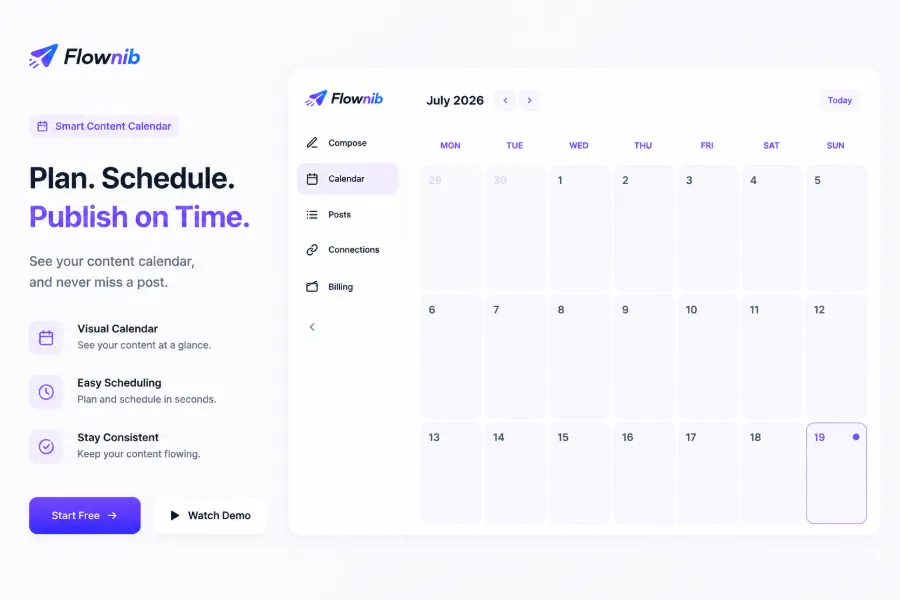
In terms of frequency, Buffer data shows that personal LinkedIn accounts grow connections 25 % faster than corporate pages. This means personal accounts already have higher propagation efficiency. If a team maintains a cadence of 2–3 posts per week, within three months they can accumulate enough content density for AI engines to consistently return their material during retrieval.
Automated Workflows Help You Keep Producing Without Being Forgotten by AI
Once the content strategy is clear, execution becomes the new bottleneck. A five‑person team writing two LinkedIn posts per person per week, plus tasks on other platforms, quickly consumes time in the write‑review‑publish‑analyze loop. This is why many LinkedIn content plans stall silently after the first month—not because the strategy is wrong, but because operational load exceeds team capacity.
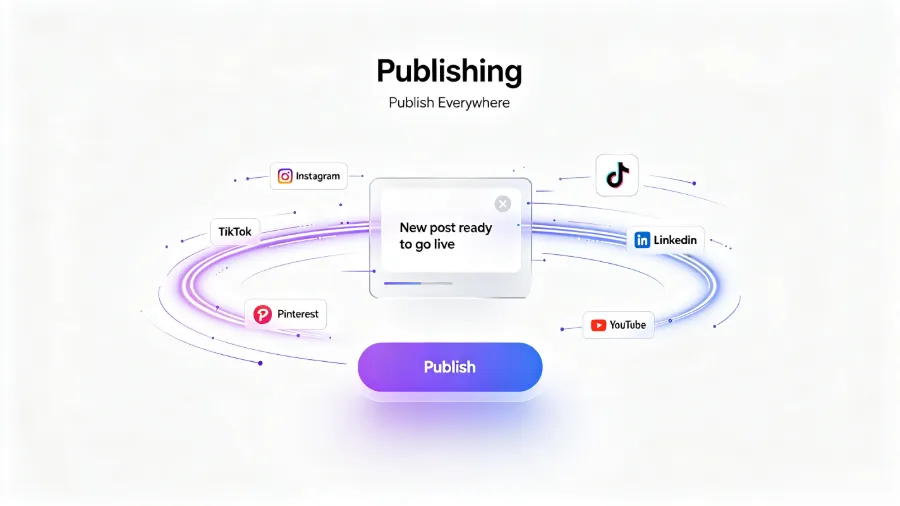
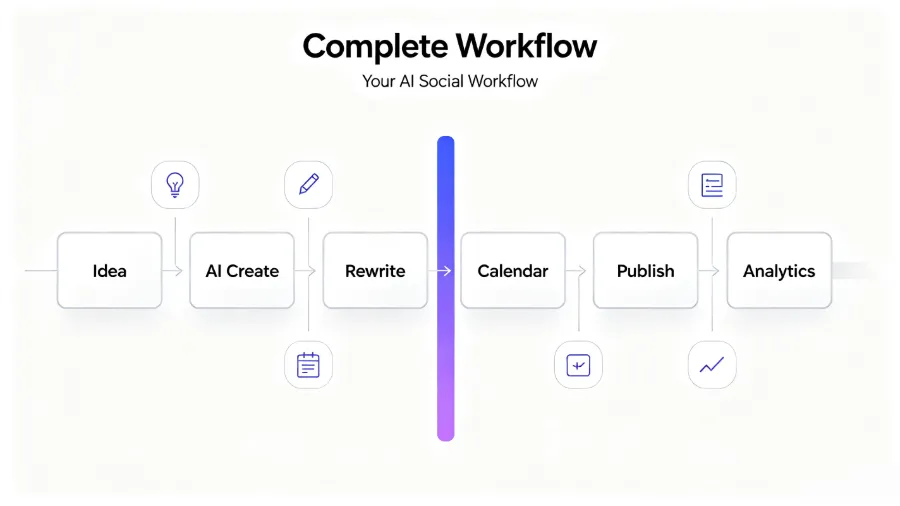
The key to solving this is reducing repetitive work. AI‑assisted tools can handle content rewriting, format adaptation, scheduling, and multi‑platform syncing, freeing the team to focus on polishing insights and organizing cases. Mature workflows already exist: you draft the original text in a single input box, the system automatically rewrites it according to the style and character limits of LinkedIn, X, Threads, Instagram, etc., then a single review and click publish across all platforms.
Flownib turns “write once, publish everywhere” into a practical tool. Its AI rewriting module does more than simple synonym replacement; it adjusts tone and structure based on each platform’s semantic environment—long‑form discussion on LinkedIn, concise viewpoints on X—mirroring the manual per‑platform adjustments of the past, but with vastly higher efficiency.
For teams that need to build a professional content asset on LinkedIn continuously, automating repetitive steps is the most direct efficiency boost. If you’re interested in a concrete workflow design, see the complete workflow for creating once and publishing across all platforms; for a real‑world comparison of time saved, check the time‑cost comparison between manual posting and AI distribution.
Trends From Data: Why There Is Still a Time Window to Act
AI Engine Optimization (AEO) is still in a very early stage. Citation patterns are evolving rapidly, but one thing is clear: AI engines exhibit far higher “loyalty” to content sources than traditional search engines. Once multiple questions in a domain cite the same source, that source is marked by the LLM’s internal retrieval mechanism as a “reliable source for that field,” and future similar queries will preferentially return its answers.
This creates a clear network effect for early movers. Teams that start building personal content assets on LinkedIn now will have their names memorized by AI engines before competitors catch up. Given that LinkedIn is already the top citation source for professional AI retrieval, the value of accumulating content there exceeds that of any other channel.
Of course, this doesn’t mean you should abandon website SEO entirely. The website remains the brand’s foundational infrastructure—product information, documentation, pricing pages—content that cannot be replaced and must stay on the site. But if you want to appear in AI‑generated answers, LinkedIn content production is clearly more efficient.
A frequently overlooked fact: your competitors aren’t stealing your LinkedIn traffic. There’s virtually no direct traffic battle on LinkedIn. What’s happening is that competitors are training AI to remember their names. Every industry insight they publish on LinkedIn adds a memory link pointing to them in the AI engine. When you later need to be cited, those links are already in place.
For a reusable framework on overall workflow design, see the full automation deployment guide for cross‑border independent store sellers. If you’re still evaluating tool cost‑effectiveness, the comprehensive comparison of Flownib features and pricing may save you decision time. Additionally, the Hootsuite official blog offers long‑term thinking on social media strategy for supplemental reading.
Frequently Asked Questions
Will AI search engines continue to cite LinkedIn?
From a technical standpoint, as long as personal LinkedIn posts maintain a high density of genuine industry insights, AI engines have no reason to switch citation sources. All major LLMs currently prioritize community experience over official statements for professional queries, and LinkedIn meets that demand. Whether the trend continues depends on LinkedIn’s own content quality; no signals of decline have been observed yet.
Does my brand page on LinkedIn still have value?
Yes, but its value has changed. Brand pages are best for three purposes: amplifying high‑quality employee posts, publishing official product updates and brand statements, and serving as an authoritative backing for employee content. The old practice of posting three brand soft‑articles per week yields virtually no benefit in AI search contexts. The page should support employee content rather than replace it.
What if the team is reluctant to publicly share industry insights?
This is the most practical obstacle. Solve it from two angles: first, lower the publishing barrier by allowing members to start with “share an industry news article and add a comment” rather than requiring a deep long‑form piece each time. Second, create internal positive feedback by publicly recognizing published posts. You don’t need everyone to participate; a couple of vocal members consistently posting for a quarter can generate enough AI‑citation density for initial recognition.
Share Article