
Brand Guidelines Aren’t Enough: How Cross‑Border E‑Commerce Can Build a Brand Knowledge Base for AI

Cross‑border e‑commerce teams usually already have a brand guide: how the logo should be used, the primary color, the tone the brand should maintain, and even a list of prohibited words. The problem appears on the content production floor. The same product emphasizes durability for the U.S. market, but when it reaches Japan the translation becomes a stiff feature description; a promotion has ended, yet the AI still uses the old discount. Social‑media editors have to keep revising, finally relying on memory to bring the content back on brand.
The brand guide tells how the brand should be expressed; the brand knowledge base lets the AI determine which brand information is needed for the current task, which market it applies to, and when it needs updating. For cross‑border e‑commerce, the knowledge base must at least manage brand positioning, product facts, and market expression separately, then connect them to content generation, review, and publishing records.
In other words, a brand knowledge base is not uploading the brand manual to the AI, but breaking high‑frequency operational judgments into searchable fields with sources, scopes, and update timestamps. Only then can the AI guess less, and reviewers locate product facts, language, and compliance issues faster.
Why a Brand Guide Can’t Directly Solve the AI Brand Consistency Problem
Traditional brand guides mainly answer “what the brand looks like.” They cover visual standards, brand positioning, tone, common phrasing, and prohibited language, but these are often stored as long PDFs, slide decks, or design files. Generative AI can read these files, yet it may not know which rule takes priority in a given task, nor whether a product selling point applies to the target market.
Cross‑border e‑commerce operational information is usually scattered across product catalogs, audience personas, market localization notes, promotion spreadsheets, and team chat logs. Product managers hold the specs, market teams know local sensitivities, sales teams understand what customers truly care about, and legal may separately maintain price and efficacy claim restrictions. The brand guide does not organize this information into a set of evaluable relationships, so the AI fills gaps from incomplete context.
When output is inconsistent, the issue isn’t just tone. Common problems include: incorrect product information, mis‑identified purchase motivations for the target market, Chinese content literally translated sentence‑by‑sentence into English, old promotions re‑promised, or an Instagram caption turned into a LinkedIn‑style paragraph. The brand still “looks like itself,” but the promised content, audience scenario, and platform expression have drifted.
Brand consistency also does not mean using the same sentence in every market. The stable parts should be brand positioning and core promises; the variable parts can be language, cultural context, examples, content length, and platform format. If the knowledge base compresses all markets into a single generic copy, the AI’s “uniformity” will actually create localization errors.
The differences between a traditional brand guide and an AI brand knowledge base can be observed in a single operational table:
| Dimension | Traditional Brand Guide | AI Brand Knowledge Base | Impact on Cross‑Border Operations |
|---|---|---|---|
| Brand Positioning | Describes brand claim and visual direction | Splits positioning, promise, and applicable tasks | Reduces positioning drift |
| Product Facts | Usually in catalogs or attachments | Records specs, selling points, restrictions, and sources | Lowers factual errors |
| Audience Information | Summarizes user traits | Tags by market, scenario, and purchase motivation | Avoids context mismatches |
| Market Differences | Occasionally adds localization notes | Clearly defines country, language, and sensitive expressions | Controls literal translation and overreach |
| Platform Expression | Provides generic tone advice | Binds platform format, length, and content boundaries | Reduces repetitive rewrites |
| Update Mechanism | Resends revised files | Retains version, owner, and change reason | Enables traceability of old outputs |
Thus, the role of a brand knowledge base is not to replace the brand guide, but to turn static standards into searchable, evaluable, maintainable operational information. Without this conversion layer, the AI only reads documents, not the context needed for brand decision‑making.
What a Brand Knowledge Base Should Contain, Not What It Should Pile Up
The foundational layer of the knowledge base should first answer the brand’s identity and product boundaries. Fields may include brand mission, positioning, core audience, product categories, main selling points, competitive differentiators, non‑promisable items, and source pages for product facts. The focus is not on the number of fields, but on enabling the AI to distinguish “what the brand wants to express” from “what the product can actually prove.”
For example, a product selling point should not be just “high quality” or “suitable for everyone.” A more AI‑friendly record format is: selling point name, factual description, applicable product, evidence source, applicable market, and non‑extendable promise. This way, when the AI generates ad copy it can cite verifiable information such as material, size, or usage scenario, rather than fabricating unproven effects.
The market layer needs to record target country or region, language preferences, cultural context, local sensitive expressions, price and promotion restrictions, and content that cannot be reused directly. The U.S. market can emphasize discount depth, while some European markets care more about shipping, returns, and privacy notices; the same “limited‑time offer” may not be directly translatable due to differing promotion periods, currencies, and legal requirements.
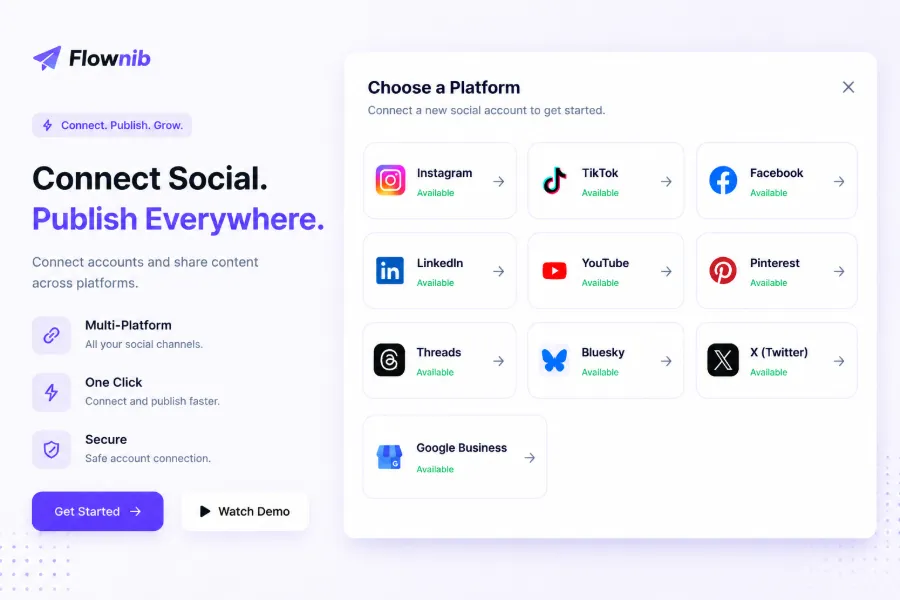
Cross‑border teams must also manage expression differences across at least ten major social platforms. Instagram may rely on image captions and hashtags, LinkedIn suits industry background, X is constrained by character length, and TikTok often needs a more conversational opening. The knowledge base should not store a single generic copy, but should add tags for platform, market, language, content type, and review level.
The content layer can hold brand tone, keywords and prohibited words, product fact citation methods, FAQs, case evidence, and platform boundaries. Brand tone is best expressed with observable behavior descriptions, e.g., “short sentences, avoid exaggerated adjectives, start with usage scenario,” rather than vague “professional, friendly, warm.” The latter helps people but provides weak constraints for models.
The market layer and multilingual content production should be managed within the same structural framework, not by first writing in Chinese and then handing it to translation tools. For guidance on how different markets distribute social content, see the Cross‑Border Social Media Distribution Method, but the actual knowledge fields must be maintained by the team according to product and regulation.
Each knowledge entry should include source, applicable scope, update time, and owner. Which page the product spec came from, who confirmed the promotion info, which countries a prohibited word applies to—these should all be traceable in the record. Without this metadata, the knowledge base quickly becomes a larger old folder, and the AI merely reads erroneous information faster.
The knowledge base should not indiscriminately import all historical material. Prioritize information that influences daily decisions: product facts, market constraints, current promotions, audience scenarios, and high‑frequency FAQs. Three‑year‑old campaign copy, discontinued product descriptions, and unverified sales scripts, if lacking clear expiration markers, will only add retrieval noise after import.
Integrating the Brand Knowledge Base into AI Content Production and Multi‑Platform Publishing Workflow
The complete workflow should start with the content task, not with “feed the brand summary to the AI.” Operators first define theme, product, target market, language, platform, and content type; the AI then pulls the relevant product facts, audience info, market rules, and platform format to generate a draft. Content is then rewritten per market and platform, undergoes human review, and finally records publishing and feedback.
The publishing workflow for a product page description includes six consecutive steps: writing, AI optimization, preview, scheduling, publishing, and logging. These six steps are not six automatic buttons but six points where judgment traces must be left. For example, if a preview reveals an over‑promised claim, you cannot proceed to scheduling just because the AI has already rewritten the copy.
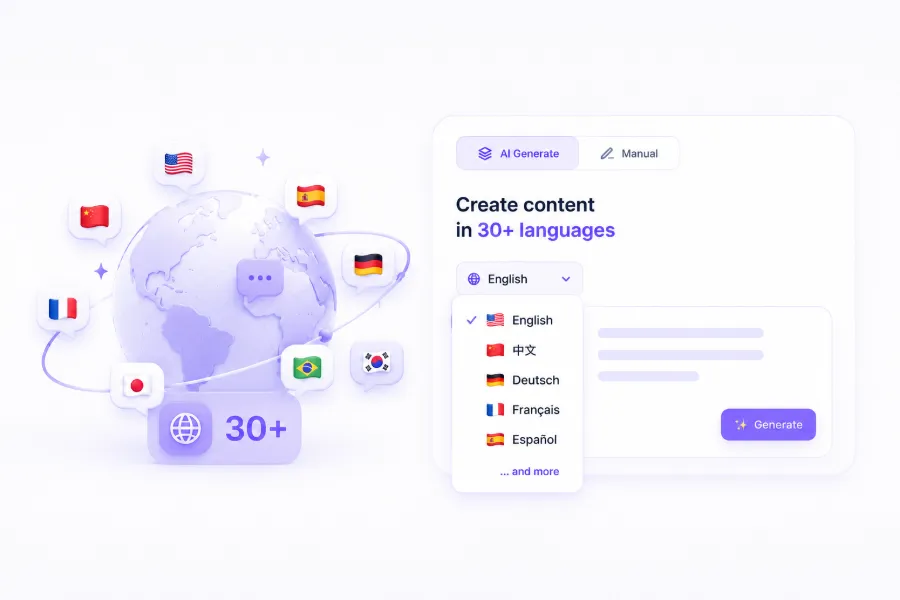
In the multi‑platform publishing stage, Flownib can serve as a process tool example: the same content, after platform adaptation, is published to multiple connected social accounts. It handles copy‑pasting, tab switching, repeated rewrites, and timing management friction, but does not replace factual judgments from the brand knowledge base, nor does it mean AI‑rewritten content can skip human review.
Review nodes should be split by risk, not just a single “editor approved” status:
- Product fact verification
- Market compliance check
- Local language proofing
- Brand tone check
- Final publishing confirmation
Fact verification must confirm specs, inventory, price, and promotion periods; compliance checks look at discounts, health or efficacy claims against local limits; local language proofing checks not only grammar but also whether the expression aligns with target‑market usage habits. Brand tone checks should come after fact and compliance checks, otherwise editors may spend time polishing content that cannot be published.
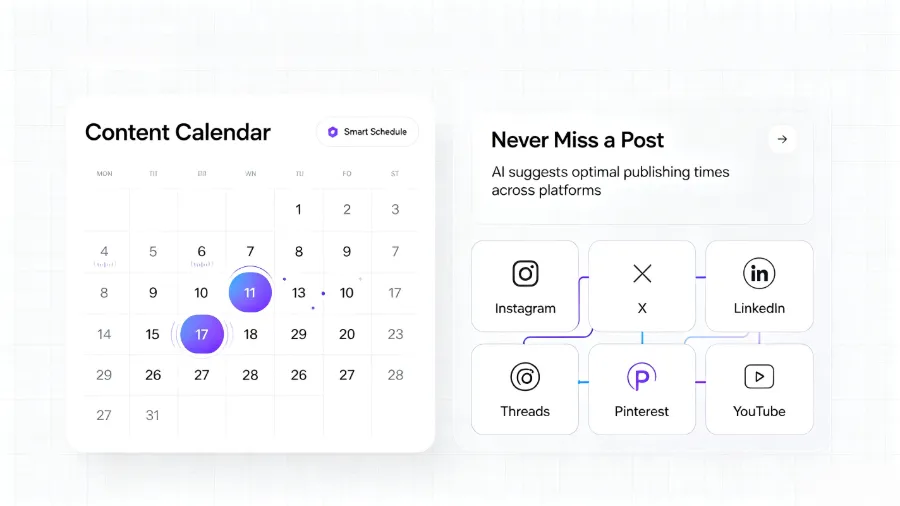
Content calendars and publishing logs should retain the original version, AI‑rewritten version, human modifications, target account, publish time, and final status. This lets the team know whether an error stemmed from a knowledge field, model rewrite, or publishing configuration. For discussions on SEO, AI content, and automated distribution, see the Cross‑Border Content Stack Analysis, but actual execution still requires separating publishing from review.
Platform adaptation itself also needs order. First lock product facts and market rules, then generate platform versions, and finally check titles, character limits, image ratios, links, and tags. For how a single piece of content can be adapted to ten platforms, see the Ten‑Platform Adaptation Process. If the order is reversed, the team may spend a lot of time polishing for Instagram and TikTok only to discover the promotion date has expired.
Using Maintenance Mechanisms to Verify That the Brand Knowledge Base Is Truly Usable
After the knowledge base goes live, change does not stop. Product specs, inventory, and promotions change; market regulations evolve; platform rules shift; brand strategy and language expression also change. Update priority should first address fields that affect product facts and compliance, then tone, keywords, and historical cases. Otherwise the team spends time on “brand feeling not uniform” while missing expired discount information.
Stability metrics for publishing tools and governance metrics for the knowledge base should be observed separately. An official API’s 99.99 % uptime only shows that the connection and publishing infrastructure are mostly available; it does not guarantee that prices, product facts, or localized expressions in the published content are correct. Teams can use a social‑media management platform reference as a tool‑stability observation point, but publishing success rate should not replace content audit.
Tool choice also cannot replace knowledge governance. Scheduling tools differ in how they handle account connections, permissions, time zones, and retry failures; teams can learn these differences via a social‑media scheduling tool comparison. Yet, regardless of the tool, market‑tag errors will still push wrong content to the wrong audience.
A cross‑border team once discovered a problem on the second day after a quarterly promotion switch. Old product data still carried a “site‑wide 50 % discount” tag, and the U.S. market tag was mistakenly applied to a Canadian content task. The AI generated English promotional copy using the old fields and synchronized it within hours to Instagram, LinkedIn, X, and TikTok. The team only noticed after customer service flagged the issue, then paused scheduling, withdrew the published content, and re‑reviewed each platform. The time saved by batch operations turned into a concentrated rework effort.
These failures are usually not sudden model breakdowns but the result of a knowledge base lacking version control, scope, or owner. The smoother the automated publishing, the faster errors spread, so versioning, market tags, and rollback records must be designed alongside publishing capabilities. Simply recording “published” is insufficient; you must also log which version of product data was used and which reviewer approved the final text.
Sampling audits can be done weekly or per batch, checking fact accuracy, brand tone consistency, human edit volume, cross‑market rework count, and publishing latency. If fact accuracy improves but human edit volume does not drop, it suggests knowledge fields may cover product data but not platform and context. If publishing latency shortens yet more retractions appear, automation speed is outpacing review capacity.
Starting with One Market and One Content Type to Build a Minimum Viable Knowledge Base
A minimum viable knowledge base does not need to cover every country, platform, and historical material from the start. The team can pick a target market, a core product category, and a high‑frequency content type—e.g., short promotional posts for the UK market—and observe which fields the real task calls for. If a field is frequently manually supplemented within two weeks, it is not a “temporary note” but should become a formal operational entry in the knowledge base.
A test loop can be written as: task input → knowledge call → content generation → human review → publishing record → feedback write‑back. Each step records missing information and reasons for changes. Reviewers classify edits such as “tone too literal,” “promotion date wrong,” “missing local shipping note,” and the knowledge base gradually acquires executable boundaries instead of staying at abstract brand description.
Price, discount, health or efficacy claims, and local compliance language should not be auto‑published by default. Such content can be drafted by AI but must receive human approval; when product facts change frequently, reviewers should also confirm the update timestamp. Regular, low‑risk brand‑tone content is suitable for reduced checks.
Small‑scale publishing tests also reveal tool friction. Product data shows the free tier supports up to three social accounts and six posts, which can serve as a proof‑of‑concept for scheduling, review, and logging volume, but should not be taken as proof of knowledge‑base validity. Teams can also refer to a small‑scale distribution tool analysis, but the test focus should be on edit logs and write‑back mechanisms rather than raw publish counts.
After several real‑task cycles, teams typically find that the missing pieces are not more historical files but a few judgment‑changing fields: applicable market, fact source, expiration date, review level, and change reason. These should enable the AI to guess less, let reviewers spot problems faster, and allow timely updates after market changes. When this is achieved, the brand knowledge base becomes operational decision‑making infrastructure, not an extra layer of documentation burden.
FAQ
What’s the difference between a brand guide and a brand knowledge base?
A brand guide defines brand positioning, visual standards, and expression style. A brand knowledge base links these elements with product facts, market rules, platform boundaries, and update timestamps. The former is typically revised quarterly or per project; the latter may need updates within hours after a promotion, spec, or regulation change.
What information should a cross‑border e‑commerce brand knowledge base prioritize?
Prioritize product facts, core selling points, non‑promisable items, target market, language preferences, promotion limits, and high‑frequency FAQs. Start with one market and one content type, record two weeks of manual edits, then decide whether to expand fields.
How does a brand knowledge base help AI reduce cross‑language and cross‑market errors?
It tells the AI, via market tags, language rules, sensitive expressions, and scope, which information can be reused and which must be rewritten. Reviewers can sample‑batch check fact accuracy and cross‑market rework counts, not just translation fluency.
After using a brand knowledge base, which content still needs human review?
Price, discount, inventory, health or efficacy claims, local compliance language, and new product facts should still be human‑approved. High‑risk fields require re‑verification before publishing; low‑risk, regular brand‑tone content can have reduced human involvement.
How often should a brand knowledge base be updated?
Product specs, promotions, and inventory should be updated immediately when they change; market regulations and platform rules at least monthly. The team should also conduct weekly sampling audits of published content and retain version numbers, update timestamps, and change reasons for rollback when errors occur.
Share Article