
Start in August, Stay Calm in Q4: 90‑Day Content Calendar Practice Before the Peak Season
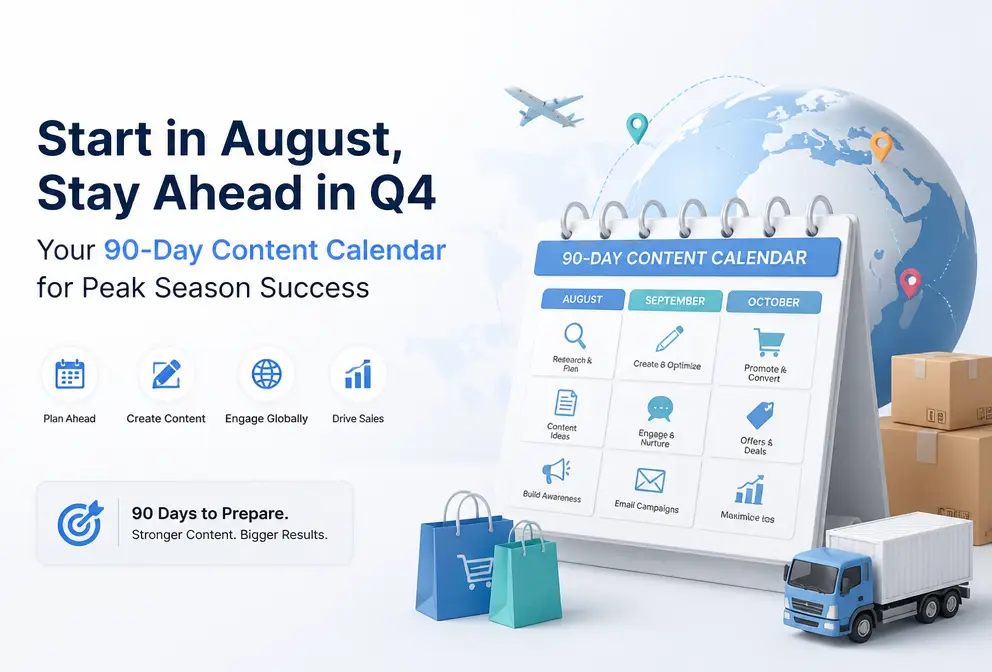
Mid‑August, many cross‑border e‑commerce brand ops teams are still watching conversion data from the summer clearance, but a quick glance at the calendar shows that there are only about 90 days left until the first pre‑launch announcements for Double 11 and Black Friday. This window looks ample, but once you put it into production, testing, and iteration cycles, there’s a fixed task every week.
This article won’t waste time saying “content is important” – that’s obvious. Instead, it breaks down how to reverse‑engineer the daily content assets from now until the Q4 big‑sale period: inventory in August, bulk production in September, early scheduling in October, ensuring that on the day the promotion starts the content arsenal is full, not a last‑minute scramble. The core logic of the 90‑day reverse schedule is: reserve 6–8 weeks for production before the promotion, plus 4–6 weeks for testing and optimization, which together cover a full content fermentation cycle.
Why August: The 90‑Day Reverse‑Engineering Content Timeline
Big sales like Double 11 and Black Friday never start on the day of the event. Take Black Friday as an example: brands usually begin teaser campaigns 3–4 weeks in advance, intensify promotion around Thanksgiving, and have a post‑event content wave after the sale ends. From teaser to post‑event, the cycle needs at least 6–8 weeks of content support. If you squeeze production, review, scheduling, and data monitoring into this window, teams that only start in October will find that the promotion begins just two or three days after the first content goes live, leaving no time to adjust strategy based on data feedback.
The essential difference between starting in August and starting in October isn’t the workload; it’s the testing window. Laying out content two months early gives you 4–6 weeks to observe which topics generate organic traffic and which platforms have low engagement, allowing you to shift resources toward verified directions before the promotion. Teams that start production in October can only rely on luck, because there’s no accumulated data yet and the promotion is already underway.
Another often‑overlooked factor is traffic cost. Q4 is the most competitive ad‑bidding period for all e‑commerce platforms; CPM and CPC generally rise. Early‑stage content assets become the key to lowering acquisition cost—organic traffic brings exposure for free and builds trust before the promotion. Completing content reserves early is equivalent to stockpiling low‑cost exposure before traffic prices surge.
Phase 1 (August): Audit Content Assets, Build a 90‑Day Theme Library
The core task for August is to inventory existing assets and set up the framework; there’s no rush to produce. Ops teams should pull out the best-performing posts from the past three months, rank them by engagement rate, conversion leads, and comment feedback. These become the reusable material pool for Q4. Many teams skip this step and start writing new content, only to discover during the promotion that they lack the proven, discussion‑driving topics.
After the material pool is built, break out a 90‑day content theme framework along three dimensions: product line, user pain points, and promotion milestones. A practical reference: the theme library should cover at least 60–70 publishable pieces to support the intensive promotion cycles of Double 11 and Black Friday. Sixty items sounds like a lot, but spread over 90 days it averages less than one per day; considering that publishing frequency doubles in the two weeks before the promotion, this number is actually just the baseline.
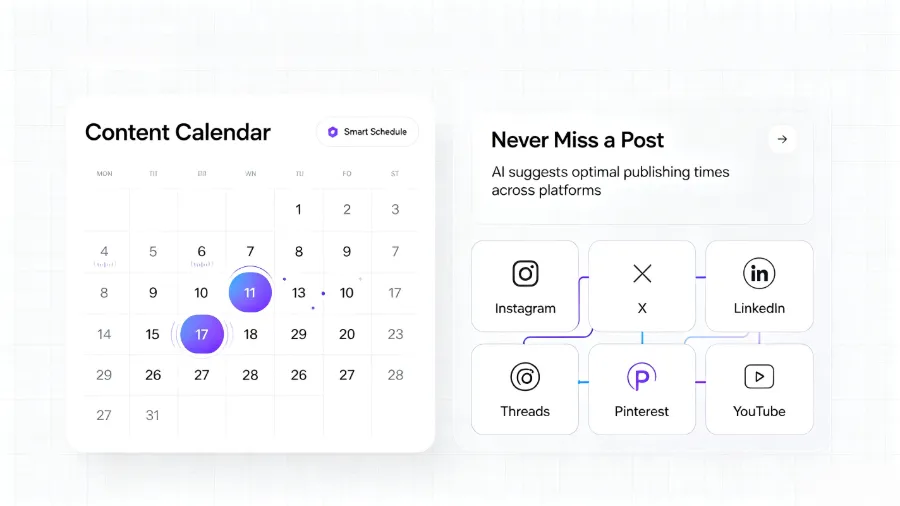
The theme framework table must define each platform’s role: Instagram for “grass‑planting” (visuals and scenarios); LinkedIn for trust (case studies and data); X (formerly Twitter) for topics (industry views and real‑time interaction). The same topic is presented completely differently across platforms; if this isn’t clarified, bulk production in September will fall into a mess of mismatched platform tones.
Finally, mark holiday nodes—Halloween, Thanksgiving, Black Friday, Double 11—on the calendar and work backward to determine the latest production dates. For example, if Black Friday teaser content is scheduled for November 10, the production deadline should be set for the end of October, leaving buffer for review and scheduling. A weekly actionable checklist might look like: three days for asset audit, two days for theme framework, one day for holiday node marking, one day for confirming platform roles. The scheduling strategy for the marketing content calendar can refer to HubSpot’s case study to calibrate rhythm and avoid overly idealistic timelines.
Phase 2 (September): Bulk Produce Content, One Creation, Multi‑Platform Rewrites
September is the golden period for concentrated production; the promotion is two months away, giving ample time for testing and tweaking. The core method for bulk production is to start with a core copy and then adapt it to each platform’s character limits and style differences. Instagram emphasizes scenes and emotions, X focuses on viewpoints and short sentences, LinkedIn stresses logic and data. The same event is expressed completely differently across platforms.
Two common pitfalls in bulk production are inconsistent tone and mismatched platform tone. Inconsistent tone usually stems from multiple writers each doing their own thing, causing brand voice drift; tone mismatch occurs when a formal LinkedIn style is copied directly to X, sounding out of place. A workable workflow: first write a ~500‑word core long‑form piece to lock in brand voice and key messages, then rewrite per platform. The rewritten versions cover 8–10 platforms, compressing daily publishing workload from 2 hours to under 20 minutes—provided the distribution step isn’t manual copy‑paste.
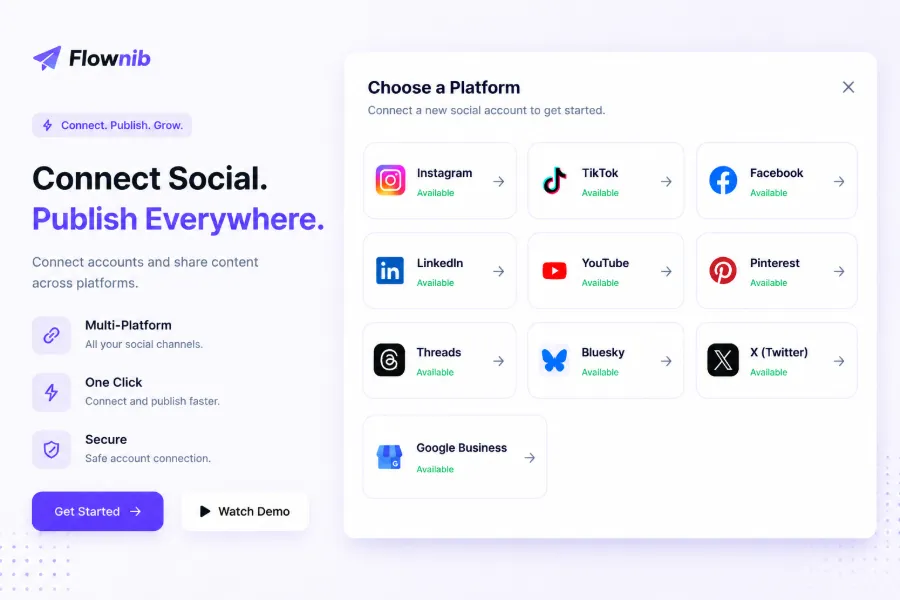
Manual copy‑paste is not only slow but error‑prone: forgetting hashtags, attaching the wrong link, omitting platform‑specific formatting. Tools like Flownib handle multi‑platform synchronous publishing; the AI rewrites copy according to each platform’s specs and pushes it to all connected accounts with one click. For a full guide on “create once, publish everywhere,” see this process description. If the team wants to boost efficiency further, try the workflow that generates an entire week’s posts from a single piece of content, scaling a single item’s output to a weekly volume.
September’s clear goal: finish producing all 60–70 items in the theme library and complete the first round of platform rewrites. October is reserved for testing and adjustments, not for massive production.
Phase 3 (October): Scheduling, Testing, and Pre‑Sprint Tweaks
October’s focus shifts from production to scheduling and testing. Optimal posting times can’t be guessed; they must be based on historical data. Review the past few months’ backend data—different platforms have very different user active periods. Instagram’s evening peak and LinkedIn’s weekday midday are worlds apart. Aim to have at least 80 % of content scheduled by mid‑October; the final two weeks should only involve substitution tweaks, not new bulk production.
After scheduling, leave a 2–3‑week observation window. Use this time for two tasks: remove underperforming topics and boost high‑performing content. Specifically, set a fixed weekly review time, compare engagement and click‑through rates of similar content, and pull low‑performers off the calendar, replacing them with validated directions. Data review at this stage is more critical than production, because only a few weeks remain for final adjustments before the promotion. Platform‑specific optimal posting time analysis can reference this time‑of‑day research report based on 9.6 million posts.
The rhythm in the final week before the promotion typically follows three steps: teaser, countdown, and content warm‑up. Teasers start 5–7 days early, countdowns intensify 48 hours before the event, and warm‑up content interleaves between them. If a sudden price change occurs, adjust quickly: edit the price in the core copy, then sync the updated copy across all platforms. With a calendar‑managed distribution tool like Flownib, you simply replace the content for the relevant date in the calendar—no need to edit each platform individually.
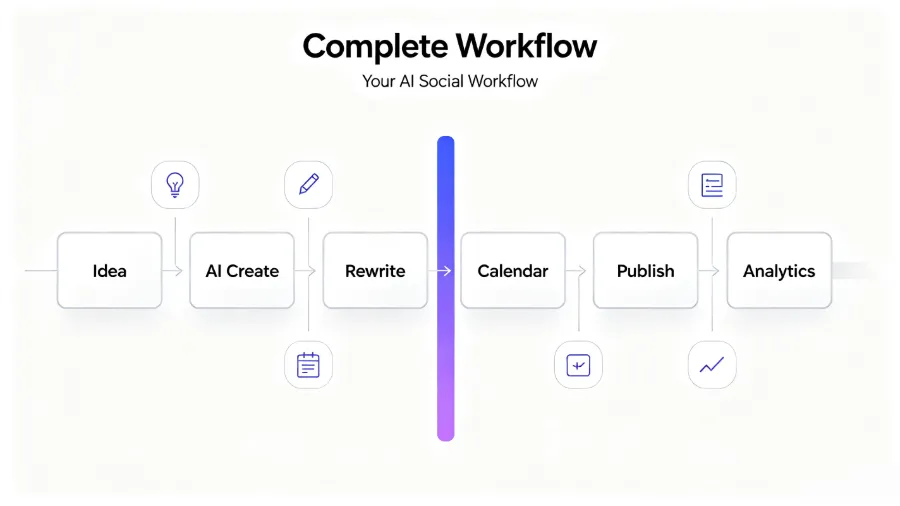
Another often‑ignored point: the true value of promotion content isn’t in the few teaser days, but in the early‑stage assets that continue to generate low‑cost exposure after traffic costs rise. After Black Friday, content that was posted two months earlier and has accumulated engagement and rankings will still drive traffic in organic search results. The efficiency gain of one‑click cross‑platform publishing isn’t just about saving copy‑paste time; it frees up time for topic testing and data review—exactly what the 90‑day reverse schedule aims to solve.
FAQ
How far in advance should the content calendar be prepared?
At least 90 days ahead, i.e., three months before the promotion. This covers a 6–8‑week production period and a 4–6‑week testing period, giving enough time for data accumulation and direction adjustments. Starting only 30–45 days in advance allows production and basic scheduling but leaves no window for testing iteration.
Should the content publishing frequency increase before the promotion?
You can modestly increase it in the two weeks before the promotion, but don’t double it suddenly. The recommended teaser cadence is to raise the usual 3–4 posts per week to one post per day, keeping the rhythm stable rather than flooding with quantity. A sudden spike can disrupt account weight and lower quality, which in turn reduces engagement.
How can a single piece of content be adapted for different platforms without losing its essence?
Start with a core long‑form piece to lock in brand voice and key messages, then rewrite per platform. Instagram focuses on scenes and emotion, X on viewpoints and short sentences, LinkedIn on logic and data. Preserve core information and brand tone; only adjust expression style and length, never alter the substantive content just to fit a platform.
Will ad‑hoc content added during the promotion disrupt the original plan?
Yes, so ad‑hoc additions should stay within 10 % of the total schedule. Sudden additions usually stem from price changes, inventory updates, or competitor moves; they have high priority but should return to the original plan promptly after publishing. Reserve 2–3 empty slots in the calendar for such ad‑hoc content to avoid displacing already scheduled regular posts.
Share Article