
Why AI‑Generated Content Often Looks Generic and How Cross‑Border Brands Can Reclaim Their Voice

Cross‑border e‑commerce teams frequently encounter this scenario: a promotional copy is rewritten into English, Chinese, and Japanese in under two minutes, then scheduled for Instagram, X, LinkedIn, and other channels. The publishing speed certainly improves, but the copy for each market reads like the same template, only the language and product name have been swapped. Consumers understand it, yet they don’t feel the content is relevant to them.
AI can quickly handle language adaptation, but it cannot conjure brand expression out of thin air. If the input lacks real product details, audience context, purchase barriers, and brand judgments, the generated result will usually stay safe, correct, and fluent, ending up with sentences like “enhance experience” or “meet needs” that anyone can use.
A brand discovered this issue during a promotional schedule. The team fed the same summer discount information into an automatic rewriting workflow, which produced multiple platform posts in about two minutes; that evening, when they checked the data, click‑through rates across all markets showed no noticeable improvement, and comments repeatedly asked “who is this for?” and “what’s the difference from the regular version?”. Only after the team added usage restrictions, size issues, and actual customer quotes did they realize the original process saved editing time but pushed judgment work to after publishing.
Why AI Content Tends to Be Generic Rather Than Specific
Large language models do not actively strive for vagueness when writing. They predict the most likely words given the context and tend to choose low‑risk, broadly applicable expressions. When brand material is scarce, phrases like “enhance experience,” “meet needs,” or “start a new life” become the model’s default answers, whereas “suitable for daily commuting but not for prolonged sun exposure” is less likely.
This illustrates the difference between “information is correct” and “content is useful.” Copy can accurately state the product name, discount percentage, and delivery scope, and be grammatically sound, yet consumers still don’t know why they should buy now, why they should choose this brand instead of the ten others that appear in search results. When conversion and click‑through rates drop, the problem isn’t necessarily the model’s language ability; the content may simply never have entered the consumer’s decision‑making process.
Cross‑border teams usually have three gaps in their inputs. Product data may be limited to “lightweight, durable, travel‑friendly,” the target market may be labeled only “global users,” and customer pain points are scattered across support chats, return notes, and comment sections without being organized into reusable information. At this point, whether the content is posted on Instagram, X, or LinkedIn, the model can only rely on generic marketing formulas.
A brand often has to handle at least ten social platforms or channels, each with its own character limits, first‑screen displays, link handling, image ratios, and interaction habits. The more channels, the more pronounced the amplification effect of copying the same phrasing. Platform format conversion solves “can we publish?” but not “does this sentence sound like the brand and fit the market?”
Another common misperception: many teams, to make content “look less AI‑generated,” deliberately add slang, exclamation points, or typos. This only changes surface texture and does not increase informational value. The real antidotes to genericness are concrete facts, audience conflicts, or judgments that a product is unsuitable in a specific scenario.
Establish Brand Context First, Then Let AI Generate Specific Expressions
What a brand should give AI is not a polished corporate overview but a reusable brand dossier. The material should cover at least three categories: product facts, audience problems, and expression boundaries. Missing product facts turn content into slogans; missing audience problems mean the copy never addresses purchase resistance; missing expression boundaries cause the brand tone to drift across markets.
Product facts should include material, dimensions, compatibility, usage limits, inventory, price, delivery, and after‑sales boundaries. Audience problems can be sourced from customer reviews, support logs, user‑generated content, and return reasons. Expression boundaries must spell out prohibited brand language, unguaranteed claims, permissible humor levels, and which markets cannot directly adopt existing metaphors. Teams can organize these fields using a structure like Cross‑Market Brand Content Dossier.
Brand tone should also be broken down into executable rules, not just “professional, friendly, warm.” For example: average sentence length, use of first person, placement of evidence (intro vs. conclusion), maximum intensity of promotional language, allowance of rhetorical questions. Rules don’t need to be complex, but they must enable two editors reviewing the same copy to make similar judgments.
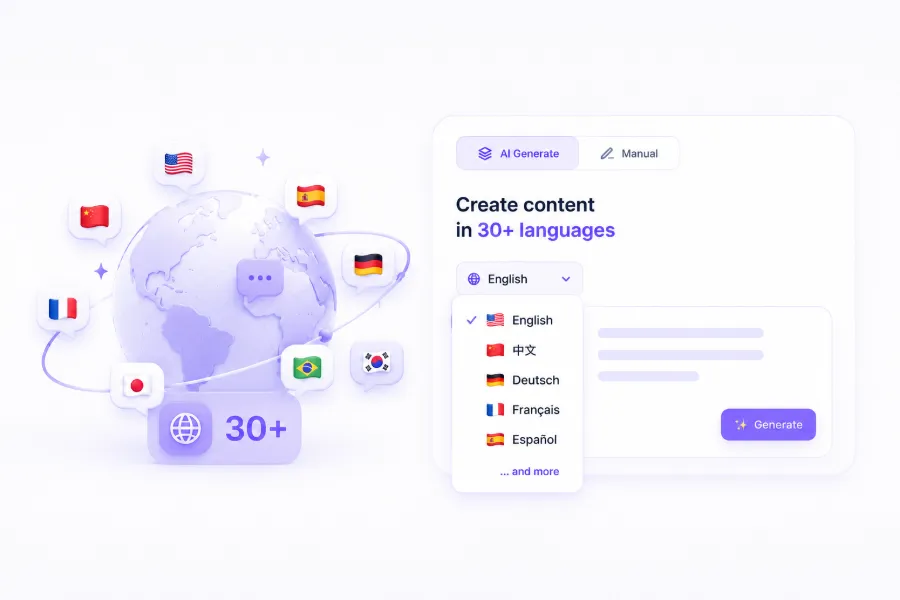
The same product should not have a single copy for English, Chinese, Japanese, German, and French markets. It can share the fact layer but needs separate context layers: the English market may focus on comparison and efficiency, the Chinese market often asks about after‑sales and cost of use, the Japanese market may care more about detailed explanations and phrasing nuance. Localization isn’t a word‑by‑word conversion of a Chinese sentence; it’s preserving facts while reorganizing reasons that the audience can understand.
Platform development specifications also cannot replace brand context. APIs may dictate image formats, permission scopes, and publishing fields, but they won’t tell the team why customers in a particular market don’t trust a “limited‑time offer.” When automating posts to platforms like Instagram, operators still need to consult the Platform Development Guidelines and separate technical compliance from content judgment.
Replace Vague Prompts with “Facts, Audience, and Scenario”
“Write a promotional post for a new product” gives the model almost nothing to judge. A more actionable task description should provide product facts, target audience, usage scenario, purchase barriers, evidence, and call‑to‑action. These six pieces of information don’t have to be a full essay each time, but they must go beyond a generic “lively tone, highlight selling points” directive.
For example, the original prompt can be reshaped into this structure: the new product is a foldable travel water bottle, 500 ml capacity, empty weight 210 g; target audience are frequent low‑cost‑airline travelers with limited luggage space; scenario is after airport security and in hotel rooms; barrier is fear of leaks and cleaning hassle; evidence is 37 customer reviews in the past 60 days mentioning “no leakage when placed in side pocket”; call‑to‑action is to guide users to view dimensions and cleaning instructions. This is still not a full copy, but it tells the model what to base its judgment on.
When generating, don’t accept the first version outright. First ask the model to propose three content angles, such as “luggage space conflict,” “leak concerns,” “cleaning time,” then pick the one that most closely matches real customer decisions. This step appears to add work, but it prevents the team from endlessly polishing a smooth but empty paragraph. Cross‑border brand case studies also show that content angles and market contexts must be adjusted together, not just language swapped.
Cross‑platform rewriting cannot be a simple character‑count compression. Instagram can showcase usage visuals first; TikTok needs a quick hook or conflict at the start; Pinterest suits searchable descriptions; Google Business requires clearer location, service, or in‑store info. Core product facts should stay consistent, but the opening, rhythm, information density, and interaction style should be adapted to each platform’s native expression.
Review can be broken into four layers: verify facts first, then check market context, assess brand voice, and finally confirm platform format. This reduces rework caused by “looks fine but can’t be published.” For instance, the model might expand “water‑repellent” to “completely waterproof,” or translate Chinese “easy travel” into an over‑promising English claim.
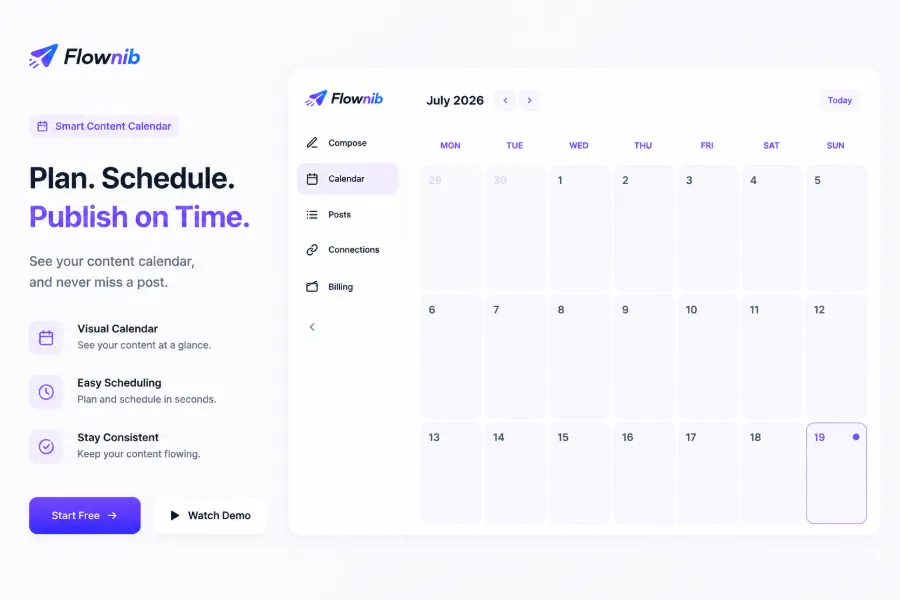
In multi‑platform operations, Flownib can serve as a workflow node between content rewriting, preview, scheduling, and publishing records. It reduces copy‑pasting, tab‑switching, and hunting for version history, but it cannot decide which customer pain points are credible nor replace pre‑publish fact checks. The tool delivers confirmed content to the right channels; brand judgment remains in the process.
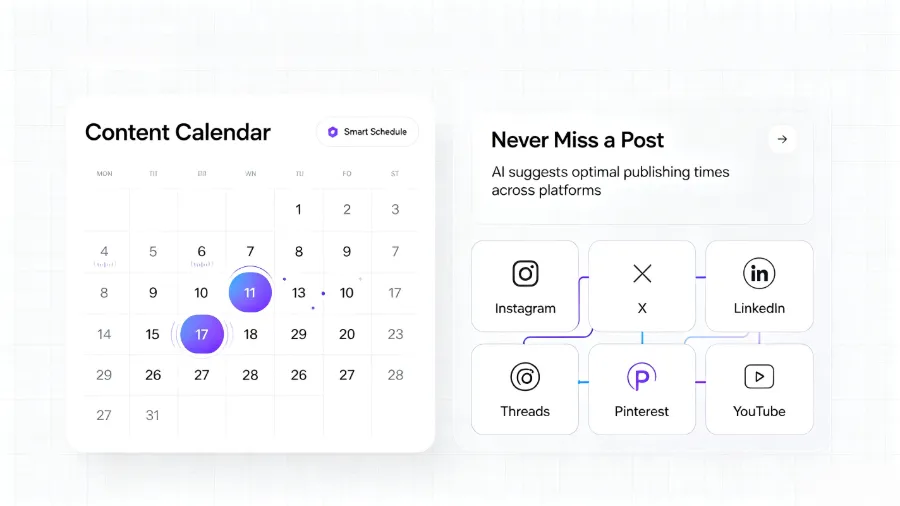
After scheduling, operators should keep each platform’s preview and publishing record. If a market later adjusts price, delivery promise, or promotion deadline, the team needs to know which versions are already live and which are still waiting in the content calendar. Automation cuts steps but also spreads errors faster; without records, batch publishing often requires manual platform‑by‑platform clean‑up.
Use a Review Loop to Determine Whether Content Has Really Lost Its Template Feel
Pre‑publish checks should go beyond spelling and formatting. Teams can standardize verification of the following items:
- Presence of concrete product facts, not just abstract selling points;
- Alignment with a clear audience and usage scenario;
- Explanation of purchase barriers without turning speculation into promises;
- Conformance to local market context, brand prohibited terms, and platform requirements.
Post‑publish assessment should not focus solely on the number of posts. Conduct a weekly review and compare at least three signal categories: user interaction (comments, shares, saves); on‑site behavior (click‑through, dwell time, landing‑page visits); and final outcomes (conversion rates, add‑to‑cart, refunds) across markets. The type of questions in comments is especially useful because low interaction doesn’t always mean ineffective content; it may simply indicate that users still lack a specific piece of information.
A counter‑intuitive situation is when save rates rise but click‑through rates fall, which doesn’t necessarily signal copy failure. For travel gear or home goods that require comparison, users may save first and return to the landing page days later. Conversely, a short‑term click‑through spike might be driven by curiosity about a discount term, with no change in landing‑page conversion. Relying on a single metric can mistake short‑term noise for brand‑expression improvement.
Low‑performing content also needs investigation into assets, timing, audience targeting, landing page, and platform distribution mechanisms. In A/B testing, if you change images, headlines, posting times, and discount conditions simultaneously, you can’t tell which factor drove the result. Differences among social‑media scheduling tools can be found in a Social Media Scheduling Tools Comparison for process‑level reference, but metric interpretation should still be anchored to the brand’s own historical data.
Automation’s limits become evident here. Bulk publishing via official APIs reduces platform switching and copy‑pasting, but region‑sensitive topics, price changes, inventory anomalies, and legal statements are unsuitable for unattended confirmation. When selecting an omnichannel workflow, teams can first compare the Omnichannel Social Media Tool Selection Guide, then decide which steps to automate and which must retain a manual pause.
Collect the best‑performing expressions, customer quotes, and failure cases each week, and update the brand dossier and prompts. The easier content is to be batch‑adapted, the more essential it is to retain irreplaceable original evidence: how customers describe problems, situations where the product can’t be used, and why consumers in a specific region reject a particular promotional phrasing. Otherwise, the smoother the automation, the more likely brand differentiation will be flattened.
Some failed tests never produce a neat report. One team found that a market’s copy used the same “start a new life” line for two consecutive weeks, interaction engagement dropped, yet they kept blaming the posting time—until support logs revealed customers repeatedly asking about product limitations, prompting a data refresh. Continuously accumulating brand evidence is more important than chasing a one‑off perfect copy.
FAQ
Why do AI‑generated cross‑border e‑commerce copies always use similar marketing expressions?
Because the input lacks concrete facts, audience problems, and expression boundaries, the model defaults to low‑risk, common marketing phrasing. Even if the language is fluent, teams still need to verify that the copy explains purchase reasons and review weekly click‑throughs, comment issues, and conversion performance.
How can we provide brand material to AI to reduce content homogeneity?
Supply at least product facts, audience problems, and prohibited brand expressions. Enrich the material with support logs, customer reviews, return reasons, and real usage limits, and update weekly based on new feedback rather than maintaining a single static brand overview.
Should multilingual content be directly translated or rewritten for each market?
Retain product facts, then reorganize expression for each market. Purchase barriers and informational preferences differ across English, Chinese, Japanese, etc., so direct translation only handles language conversion, not contextual adaptation.
What parts of AI‑generated social media content require human review?
Humans must verify product facts, price, inventory, delivery, after‑sales promises, and sensitive market context. Platform format can be checked via workflow, but any claim like “completely waterproof” or “permanent effect” that isn’t verified should be individually confirmed before publishing.
How can we tell if a piece of content is truly more specific rather than just rephrased?
Check whether it contains verifiable product details, a clear usage scenario, and genuine audience conflict. After publishing, monitor interaction, on‑site behavior, and final conversion across three signal categories; don’t assume a more colloquial tone or a short‑term click‑through spike means the content has shed its template feel.
Share Article


