
Best Times to Post on Instagram in 2026: Data Analysis from 9.6 Million Posts
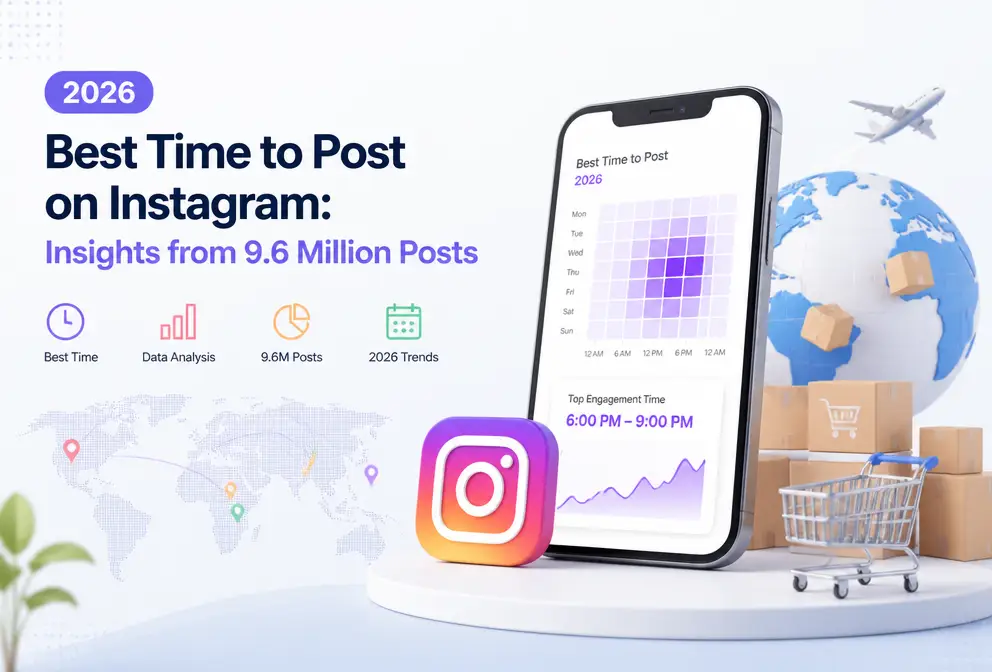
Posting a carefully crafted piece of content on Instagram, refreshing it several times in the background, and seeing almost no change in engagement numbers—that feeling is familiar to anyone who has managed a brand account. Timing doesn’t determine everything, but it directly influences the amount of interaction a post receives in its first few minutes, which is exactly the key signal Instagram’s algorithm uses to decide whether to push the content to a larger audience. Buffer’s analysis of 9.6 million Instagram posts shows that the performance gap between specific time slots is far more than a few percentage points—differences in engagement rates between peak and off‑peak periods can change a post’s fate.
Data from 2026 reveals three clear high‑engagement windows during the week: Thursday 9 am, Wednesday 12 pm, and Wednesday 6 pm. These three slots consistently stand out in a sample of 200,000 accounts across the platform, while Friday and Saturday are engagement troughs—no matter when you post, results are suboptimal.
The Instagram algorithm’s sensitivity to early engagement makes timing a lever you can actively control. Content quality is the foundation, but the same post posted at 3 pm versus 7 pm can receive initial exposure that differs by several‑fold.
2026 Instagram Best Posting Times: Data Overview
After analyzing 9.6 million posts from 200,000 Instagram accounts, a clear pattern emerges: Wednesday is the overall best day, Thursday follows closely, and Tuesday ranks third. These three weekdays outperform other days in almost every time slot, though there are some counter‑intuitive details.
The three most standout specific time slots are:
| Rank | Time Slot | Characteristic |
|---|---|---|
| 1 | Thursday 9 am | The only morning slot that beats evening slots |
| 2 | Wednesday 12 pm | Mid‑day break peak, engagement concentrates |
| 3 | Wednesday 6 pm | Post‑work browsing peak, broad reach |
The value of this data lies in its basis on large‑scale, real‑world performance rather than small‑sample speculation. The reason timing can create dramatic engagement differences is rooted in Instagram’s recommendation mechanism: the engagement rate a post earns within its first hour determines whether it reaches the Explore page or appears near the top of followers’ feeds.
Learn how FlowNib automatically rewrites and distributes content
The weak performance of Friday and Saturday is not accidental. High‑engagement periods on weekdays cluster around commuting, lunch, and evening relaxation, whereas weekend users spread their browsing more diffusely—morning may be spent scrolling in bed, afternoons out and about, evenings watching videos instead of scrolling feeds. This dispersion means no single time slot generates enough interaction density to trigger the algorithm’s positive feedback loop.
Detailed Daily Posting Strategies
Once the overall pattern is understood, each day should be examined individually. User behavior varies markedly by day, so a one‑size‑fits‑all schedule inevitably wastes some content.
Wednesday is undeniably the golden day of the week. Both the 12 pm and 6 pm windows have high engagement rates. The reason is simple: Wednesday isn’t as overloaded with backlog work as Monday, nor is it already drifting toward the weekend like Friday; users’ attention and time are relatively stable.
Thursday is a special case—it’s the only day where a morning slot (7 am–9 am) outperforms the evening 6 pm–11 pm period. Data shows Thursday mornings have far higher user activity than other weekdays’ mornings, likely because many people use Thursday mornings to handle personal tasks.
Tuesday and Monday are similar; the 6 pm–11 pm window is the safest posting period. Monday’s engagement is slightly lower than Tuesday’s, but still better than weekends overall.
Friday and Saturday have markedly lower engagement across almost all time slots. Attention starts to drift on Friday afternoons, and Saturday’s interaction density remains low all day. Friday afternoons begin to recover, but normal weekday levels aren’t reached until Monday.
If your audience is concentrated in a specific time zone, the table below helps you quickly locate the best window for each day:
| Day | Best Time | Second‑Best Time | Least Effective Time |
|---|---|---|---|
| Monday | 6 pm | 12 pm | Before 7 am |
| Tuesday | 6 pm | 12 pm | 3 pm–5 pm |
| Wednesday | 12 pm, 6 pm | 9 am | 3 pm |
| Thursday | 9 am | 6 pm | 3 pm |
| Friday | 6 pm | 12 pm | Whole morning |
| Saturday | 8 pm | — | All time slots |
| Sunday | 6 pm | 12 pm | Before 7 am |
When choosing a posting time, reference the approach of social‑media management platform Loomly (https://www.loomly.com)—it lets users fine‑tune schedules based on each platform’s specific data rather than applying a global template. This method aligns better with real‑world operational needs.
How Content Type Affects Timing: Reels, Carousels, and Stories
Not all content types follow the same timing rules. Different formats have distinct consumption contexts and user expectations, so timing must be adjusted accordingly.
Reels have a noticeably different optimal posting window compared to static posts. Data shows Reels perform best in early morning (7 am–9 am) and mid‑day (11 am–1 pm) periods, matching users’ habit of watching short‑form video during those times. Unlike static posts that rely on concentrated evening publishing, Reels consumption is more fragmented—users may watch Reels while queuing, commuting, or at lunch, and they tend to like and comment more readily.
Carousel posts have optimal times close to static posts, with a subtle difference: because carousel content requires users to swipe actively, the participation barrier is slightly higher, making it better suited for periods when users have ample time to browse—typically evening 6 pm–9 pm. At that time, users have usually finished work and are willing to spend more time interacting with content.
Stories’ optimal times depend heavily on users’ daily routines. Stories are highly time‑sensitive, disappearing after 24 hours, so they should be posted when users are most active. Evening 6 pm–9 pm remains a golden window for Stories, and the 12 pm–1 pm slot is an often‑underestimated opportunity.
Timing differences across industries also matter. Retail accounts see higher morning engagement because many users browse product information on their way to work. Finance accounts see higher midday engagement, as users tend to handle financial content during lunch breaks. Media accounts have a more balanced performance, given their content naturally spans various consumption contexts.
If Reels are your primary strategy, test morning and mid‑day slots to see which content type gains more recommendation volume. Learn two ways AI can automate social‑media operations to automatically test different content types across multiple slots without manual posting.
Using Tools to Auto‑Select the Best Time
I used to set each post’s time manually, relying on my own “experience slots” to schedule a week’s worth of content. That method lasted two months, consumed a lot of time managing three platforms, and the timing decisions were based on intuition rather than data.
Later, I switched to a tool that automatically selects posting times, dramatically simplifying the workflow. Connecting accounts, setting preferences, and importing content takes about two minutes to run the whole process. The tool recommends the optimal time for each post based on the historical activity patterns of the target audience, eliminating the need to dig through Instagram Insights.
Flownib’s AI scheduling feature is built around this logic. After connecting your accounts, the system analyzes each platform’s audience interaction time distribution and automatically schedules content for the highest‑activity periods. The decision process is transparent—you can preview the recommended times and estimated engagement potential, and adjust manually if needed.
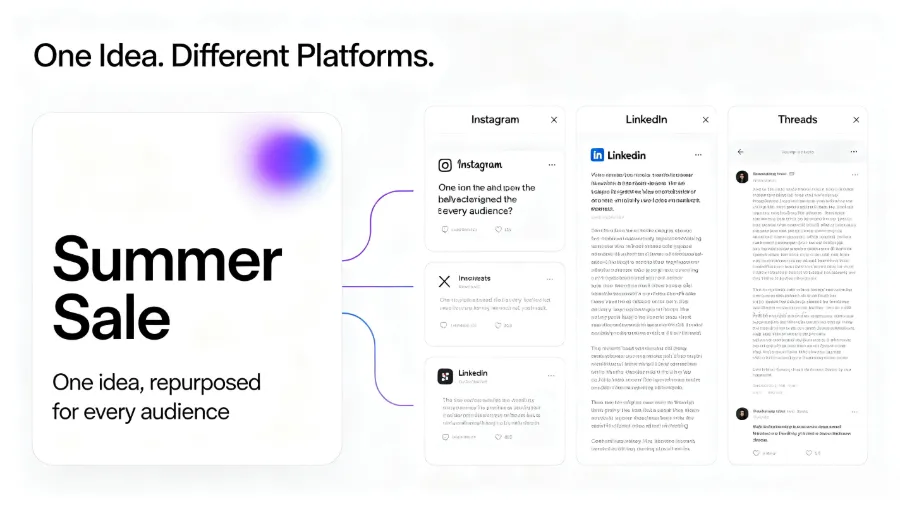
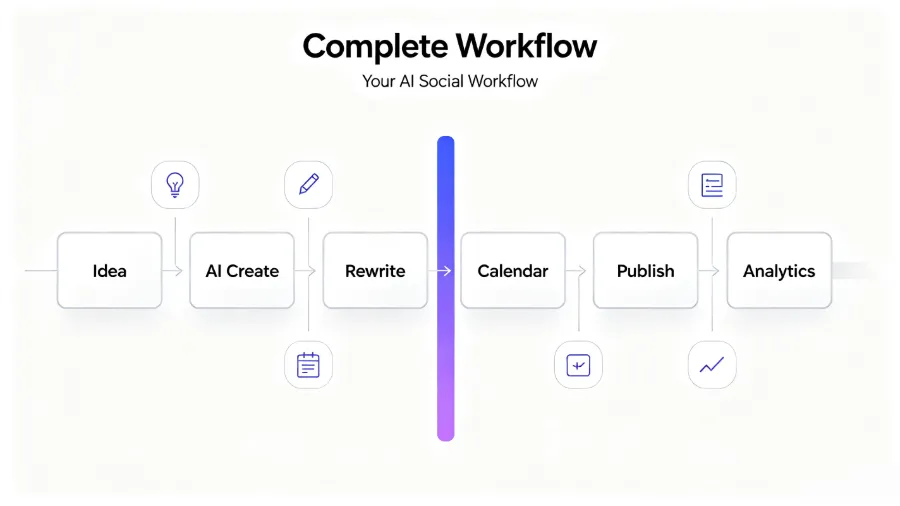
From a workflow perspective, automated timing is just one piece. After drafting, AI rewrites the content to fit each platform’s style, then moves to a preview stage to confirm layout and formatting. Once approved, the system queues the post for the recommended time and automatically tracks engagement after publishing. This eliminates the cumbersome “copy‑paste into each platform and set a timer” routine.
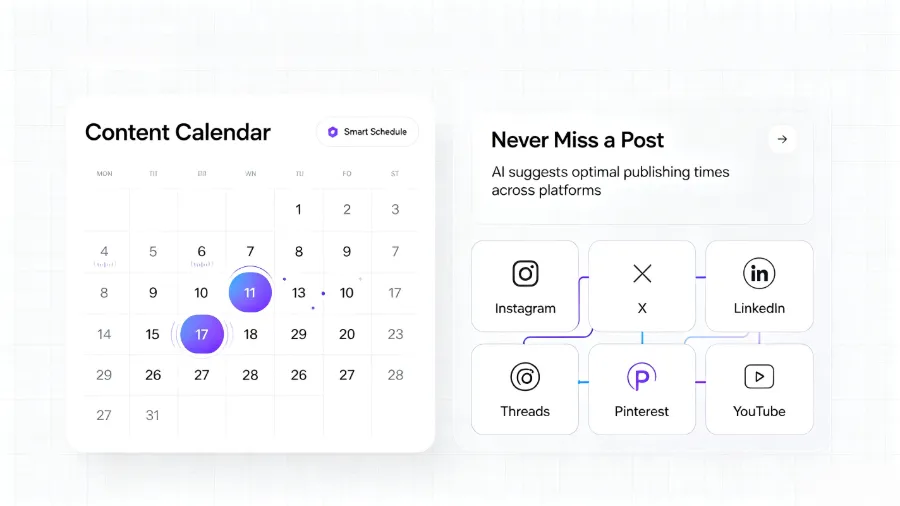
A visual content calendar is also invaluable for managing schedules. Using Flownib’s calendar view, I can see the entire week’s posting plan at a glance, including which platform each post belongs to and its scheduled time. It’s easy to compare time distributions across platforms or spot days with too many posts—everything is intuitive on the calendar interface.
However, even when a tool suggests a time, manual checks are still necessary. While managing a cross‑border e‑commerce account, I found that a globally recommended slot performed poorly in a specific local market because the target audience’s daily routine differed from the tool’s baseline data. This shows that “best time” in the data is a starting point, not a final answer; over‑reliance on industry averages can cause you to miss unique windows for your own audience.
FlowNib pricing and feature analysis compares different plans; choosing the right one can reduce scheduling friction when managing multiple accounts.
Frequently Asked Questions
Q: What is the primary data source for the 2026 Instagram best‑posting‑time analysis?
The main source is Buffer’s State of Social Engagement 2026 report, which covers 9.6 million Instagram posts from over 200,000 accounts between January 2024 and December 2025, analyzing engagement rate as the core metric.
Q: Why are Friday and Saturday the worst days for posting?
User attention starts to drift on Friday afternoons, and Saturday browsing behavior is even more fragmented. No single time slot generates enough interaction density to trigger the algorithm’s positive feedback loop. Data shows almost every slot on Friday and Saturday underperforms weekdays.
Q: Is the optimal posting time for Reels the same as for other posts?
No. Reels perform best in early morning (7 am–9 am) and mid‑day (11 am–1 pm) periods, aligning with users’ habit of watching short‑form video then. Static posts and carousel content are more stable in the evening 6 pm–11 pm window.
Q: How can I find when my followers are most active?
Check the Audience Activity report in Instagram Insights, or use a third‑party scheduling tool’s automated analysis feature. Start with industry‑wide time slots as a baseline, then run A/B tests to compare performance across different times, gradually narrowing down to the window that works best for your specific audience.
Share Article