
Practical Guide to Social Media Growth in 2026: Consistent Output and Deep Interaction

From the end of 2025 to early 2026, many creators noticed a paradox: posting frequency was increasing, but engagement was dropping. When you check the dashboard, the data curve isn’t rising as expected; it’s flattening. Where’s the problem?
The answer may be simpler than you think. After analyzing nearly 2 million posts, Buffer found that long‑term growth isn’t driven by a single viral hit but by two fully controllable factors: the rhythm of consistent output and the willingness to reply to comments. These don’t require algorithmic favor or luck—just an executable daily routine.
Consistent Output Is the Foundation of Growth
First, a set of data. Buffer tracked the publishing behavior of over 100 k users for 26 weeks and discovered that creators who posted for 20 weeks or more generated about 450 % more engagement per post than sporadic publishers. Even creators who posted for 5–19 weeks saw roughly 340 % higher engagement than those who posted for four weeks or less.
What does this mean? Algorithms clearly favor stable publishing behavior. Instagram, TikTok, and LinkedIn’s recommendation logic all share a common trait: low‑frequency accounts receive gradually reduced exposure weight. It’s not that your content is bad; the algorithm simply lacks enough samples to assess its quality. If your posting intervals become too long, your account’s “credit score” drops.
In practice, you don’t need to post every day. Establishing a sustainable rhythm is far more important than chasing a perfect frequency. Set at least one “non‑negotiable” day each week—no matter how busy or low‑energy you feel, you must publish something that that day. Also, build a lightweight content asset library where you stash ideas, screenshots, and scattered thoughts to avoid the anxiety of a blank editor during low‑energy weeks.
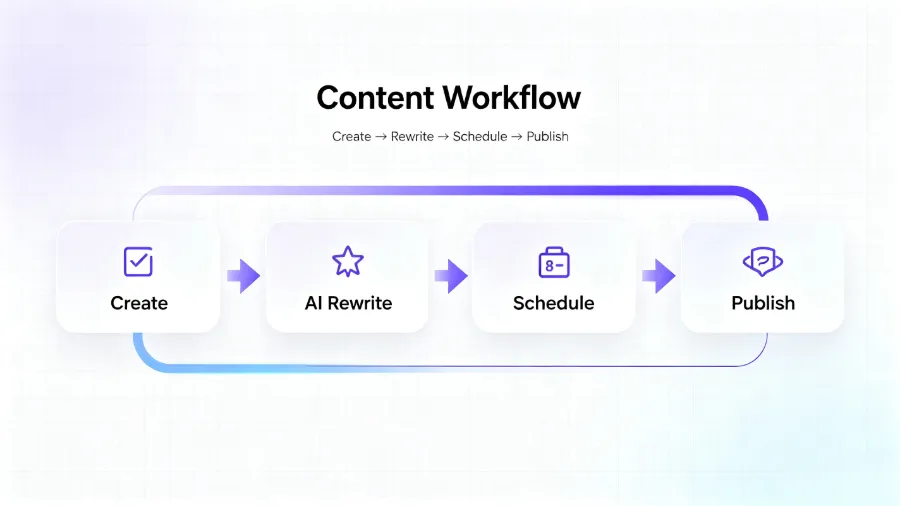
During low‑energy weeks, use scheduling tools to cover your publishing tasks and save a lot of effort. For example, with Flownib, you only need to create content when you’re in a good state; the system distributes it across platforms, eliminating the need to manually edit and post each piece. Skipping a week occasionally won’t destroy the momentum you’ve built over months—the algorithm doesn’t reset all weights after a seven‑day absence. The key is “consistent rhythm,” not “uninterrupted records.”
For more details on consistency strategies, see the analysis on Content Closed Loop as the New Standard, which discusses how to build a complete workflow from creation to publishing.
Replying to Comments Is the Most Undervalued Growth Strategy
Here’s a common pitfall many creators have fallen into: In 2024, some tried to boost exposure by posting three pieces of content daily but almost never replied to comments. The initial exposure rose for the first two weeks, then plummeted in the third week. The algorithm gave traffic, but without enough comment feedback to signal quality, the content’s lifespan was dramatically shortened.
Buffer’s analysis of nearly 2 million posts provides clearer evidence: reply‑to‑comment boosts engagement rates by—42 % on Threads, ~30 % on LinkedIn, ~21 % on Instagram, ~9 % on Facebook, ~8 % on X, and ~5 % on Bluesky. On Threads, the lift from replying to comments is comparable to over an entire publishing strategy.
The mechanism is simple. Replies generate more comments, and the algorithm interprets a higher comment volume as a stronger quality signal, keeping the post alive longer in feeds. This creates a positive feedback loop, and the only trigger is spending a few minutes responding to those who have already commented.
Practical tip: at the end of each post, pose a question—even something as simple as “What do you think?” or “Have you experienced this?” Allocate a fixed 15‑minute window each day for replies, prioritizing deeper comments—those longer than three sentences—because they indicate the reader actually engaged with your content. Avoid the misconception that “more posts beat more replies.” Data shows that on most platforms, replying to existing comments yields higher interaction efficiency than publishing a new post.
This growth iteration logic can be understood alongside the analysis of the 2026 AI Social Media Automation Trends, which discusses the balance between interaction quality and automation.
Practical Advice on Posting Frequency, Timing, and Content Formats
Based on Buffer’s consistency research, 2–4 posts per week is the most stable return‑on‑investment range. Fewer than two posts doesn’t give the algorithm enough impressions to accumulate; more than four posts yields diminishing marginal returns and may degrade quality due to creative pressure.
There’s no universal answer for optimal timing. LinkedIn sees higher activity during weekday lunchtimes (11 am–1 pm), while Instagram’s peak is in the evening (7 pm–10 pm). These are general user‑behavior patterns, but each audience differs. Conduct A/B tests to find your own peak windows—publish the same content type at different times for two consecutive weeks and observe the distribution of engagement metrics.
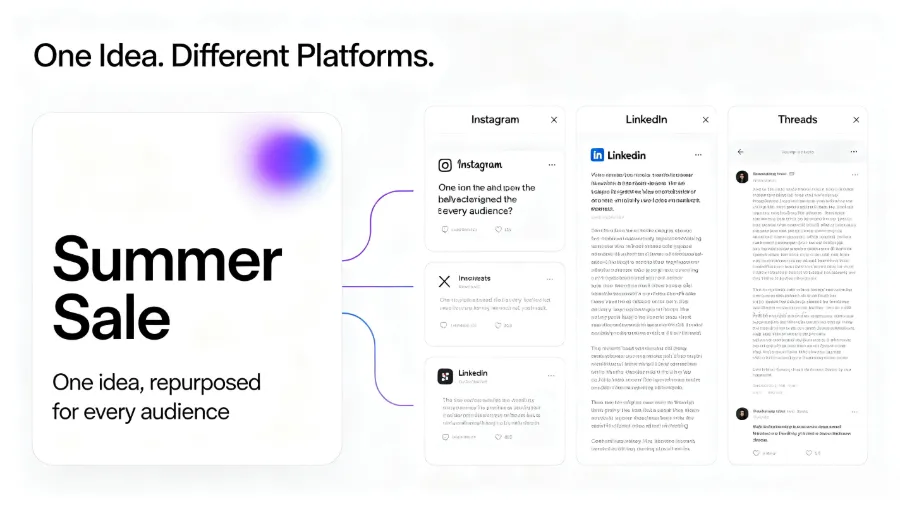
In terms of content format priority, short videos remain the algorithmic favorite across platforms. Instagram Reels, YouTube Shorts, and TikTok’s initial exposure mechanisms all tilt toward short video. Carousel posts and image‑text posts are losing reach efficiency, but they generate higher‑quality interactions (e.g., saves and shares), making them ideal for knowledge‑based content.
Platform‑specific adaptation is essential. The same idea might be a carousel with a long caption on LinkedIn, but a short video with a brief interactive question on Instagram. Flownib can handle cross‑platform format conversion, sparing you the repetitive work of rewriting content for each platform. For step‑by‑step instructions, refer to the tutorial “How to Use Flownib to Adapt to 10 Major Platforms.”
For external references, the YouTube Official Blog offers plenty of public information on short‑video algorithm adjustments, useful for tracking platform preference shifts.
Platform Selection: Find Your Main Battlefield
Content type determines which platform you should prioritize. Visually driven accounts should focus on Instagram and TikTok; professional content and industry insights perform best on LinkedIn; short text and rapid discussions fit Threads and X; tutorials and long‑form videos thrive on YouTube, where search traffic longevity is highest.
For new creators, the most effective strategy is to start with 1–2 platforms. In this stage, building deep connections with your audience—regularly replying to comments, understanding their needs, and adjusting content direction—is far more valuable than trying to be everywhere. Data shows that creators who focus on a single platform have higher retention and interaction rates after six months than those juggling five or more platforms. The latter often suffer from diluted effort and declining content quality across each platform.
Note that algorithmic preferences differ across platforms more than many realize. A short video on Instagram Reels can receive ten times the initial exposure of a regular post, while the same content on LinkedIn might only reach a single‑digit audience. Understanding these differences isn’t about chasing every platform’s algorithmic bonus; it’s about deciding where to concentrate your core effort.
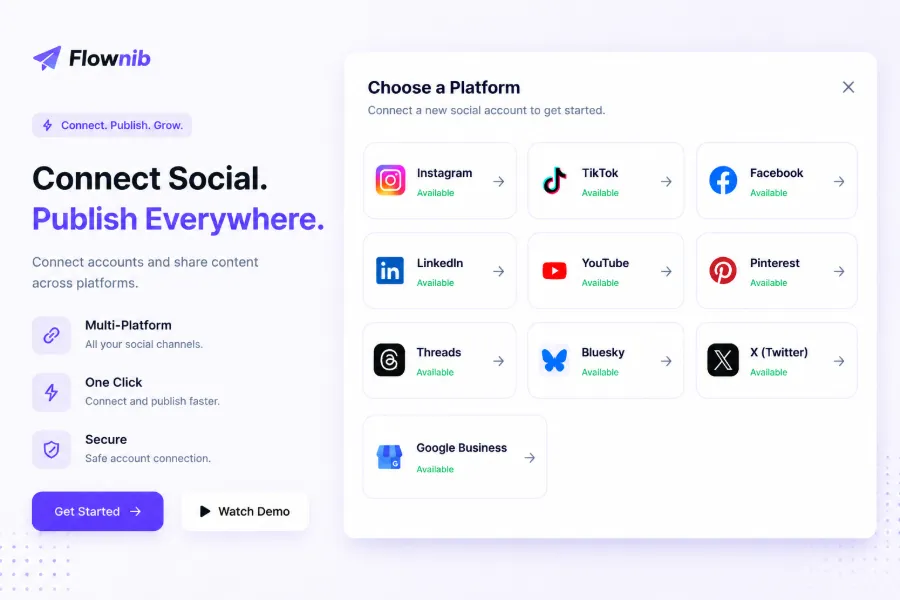
When discussing Instagram and Threads algorithm mechanisms, the Meta Developer Platform provides official data‑access documentation that helps you understand how account behavior influences recommendation systems. Threads, a relatively new platform, leans more toward a text‑community vibe, making it suitable for lightweight opinion sharing.
For a comprehensive platform‑strategy framework, see the full‑funnel closed‑loop case study “Full‑Funnel Closed‑Loop Case Study,” which maps the entire path from content distribution to user reach.
FAQ
Do I have to post every day to get the most traffic?
No. Buffer’s data shows that a stable 2–4 posts per week yields far more cumulative engagement over a six‑month window than daily posting with frequent gaps. The algorithm’s scoring window is typically 7–14 days, so a consistent rhythm is more beneficial than high‑frequency but unstable posting.
Is it really worth spending time replying to every comment?
Yes, but prioritize. Replying to all comments is ideal, but if time is limited, focus on deep comments longer than three sentences. These tend to spark secondary discussions that trigger the algorithm’s positive loop.
Is there a universal best posting time?
No. Platform‑provided time slots (e.g., LinkedIn midday, Instagram evening) are coarse guidelines. Your optimal window must be discovered through testing—publish the same content at different times for two weeks and observe where engagement peaks.
Which platform should a beginner start with?
Choose based on your content type. Visually rich content works best on Instagram or TikTok; professional analysis and industry insights belong on LinkedIn; short text and opinion discussions fit Threads. Start with 1–2 platforms, then expand once you have a stable routine.
Should I prioritize video or image‑text formats?
Prioritize short video. All major platforms currently favor short video for initial exposure. However, image‑text posts still hold irreplaceable value for deep interaction in knowledge‑based content. Use short video for reach and image‑text for depth.
Share Article