
From “What’s Trending” to “What the Brand Should Say”: Cross‑border E‑commerce Hot Content Evaluation Process

Cross‑border e‑commerce teams usually check hot topics every day: a Reddit discussion suddenly heats up, YouTube sees a flood of related videos, news platforms start covering it, and keyword tools show a nice curve. But what really slows down publishing is often not the inability to find a hot topic, but the inability to decide: how does this topic relate to the brand? Which market is it suitable for? What exactly should the brand say?
A hot topic only indicates that a subject is gaining attention; it does not directly indicate that the brand should participate. The brand must filter the trend through the target market, consumer problems, product evidence, and platform context, and finally form a explainable, auditable brand claim that can be carried by each platform separately.
Some teams treat a “trend match score of 92%” as a publishing signal, resulting in posts that get interaction but no clicks or add‑to‑cart actions. The truly valuable intersection usually occurs between trend popularity, audience conversation, and the problems the product can solve, not next to the most popular keyword.
First Separate “Trend” from “Brand Opportunity”
Hot topics, audience conversations, and brand content opportunities are not the same thing.
A hot topic describes where attention flows. It may come from a highly up‑voted Reddit thread, a surge in YouTube searches, concentrated news coverage, or simply a keyword being widely shared in a short period. Audience conversation is closer to what consumers are asking, complaining about, or comparing. Brand content opportunity takes another step: does the brand have the authority to respond, does it have product evidence, and can it prompt the target consumer to take the next step?
That’s why a trend with a 92% match score should still not automatically become a promotional post. The number can help the team prioritize, but it cannot answer “why should the brand talk about this?” The match score may only reflect keyword, source, and topic similarity, without reflecting price range, delivery scope, inventory, regulations, or cultural context.
When filtering, the team can start with four basic questions:
- Does the trend appear in the brand’s target market, not just the global English internet?
- Are the consumer scenarios discussed related to the product category?
- Can the product’s selling points answer the specific questions in the audience conversation?
- Can the brand’s tone naturally enter the discussion without sounding like a sudden ad insertion?
For example, “summer storage” may be a usage scenario for a home‑goods brand, a travel‑prep scenario for a luggage brand, and a high‑temperature, sun‑exposure, convenience scenario for a skincare brand. The keyword is the same, but the content opportunities differ. Teams that only look at the titles in trend tools often miss the underlying consumer intent.
Automated workflows can also leave gaps here. After connecting social accounts to the workflow, the judgment between discovery, generation, and publishing may still lack a responsible person. Similar issues are discussed in the Social Media Gaps in Automated Workflows. Tools can reduce page switching, but they cannot replace market judgment.
In terms of content direction, cross‑border teams usually face three choices. Leveraging the trend retains the public topic but connects it to a brand‑familiar consumption scenario; responding to user questions directly addresses recurring doubts in comments or discussions; hard‑selling the trend merely copies popular phrasing, tags, or emotions without any product link. The first two can be valid; the third may get short‑term exposure but is hard to justify in relation to the brand’s business.
YouTube’s creator ecosystem, video titles, and comment sections often create a context different from news reports. When judging video trends, teams should also check the YouTube Official Creator Information rather than relying solely on a heat map. More sources do not equal stronger market representativeness: four channels discussing the same thing only shows the topic is widespread, not that every target market cares.
Use the Four Cross‑border E‑commerce Questions to Filter What to Say
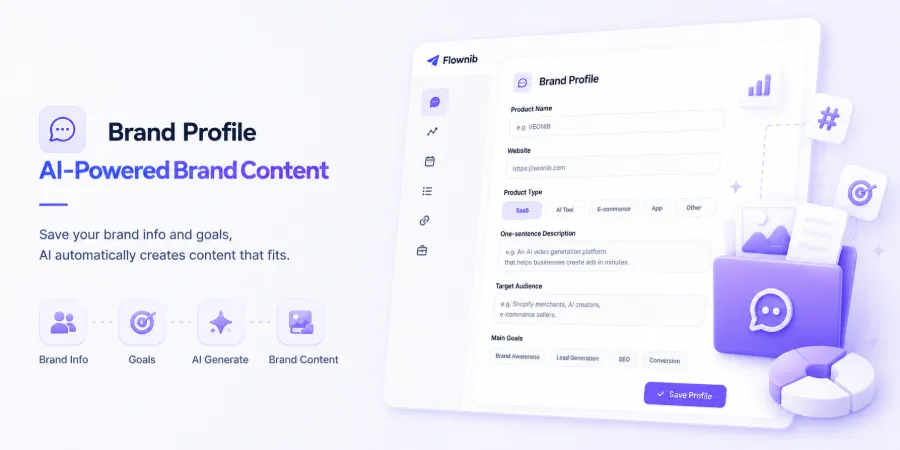
If a cross‑border e‑commerce brand archive only says “for global consumers,” it offers almost no help when filtering hot topics. The global market is not a single audience; regional languages, holiday cycles, payment habits, logistics promises, and platform discussion styles all change the meaning of a sentence. Teams need to break the target market into verifiable scopes before checking if a trend is truly relevant.
First question: Which target market is it related to? Back‑to‑school discussions among U.S. users, eco‑packaging concerns among German users, and pre‑holiday delivery‑speed comparisons among Southeast Asian consumers should not all be lumped under a single “international audience” tag. Trends may appear on Reddit, YouTube, news sites, and Hacker News, but source count does not equal market representativeness. A topic hot in English tech communities may have nothing to do with a regional e‑commerce site’s buyer base.
Second question: What exact need are local consumers expressing? Consumer intent may be seeking an explanation or just joining a meme. “Are there cheap alternatives?” versus “Which brand is more reliable?” correspond to completely different content tasks. The former needs price, specs, or alternatives; the latter needs reviews, after‑sales service, and product evidence. If the brand’s positioning cannot answer the question, higher popularity only exposes the brand’s emptiness.
Third question: Does the product have evidence for its selling points? The things a product can solve must be backed by specs, demos, user feedback, inventory, and regional restrictions. A trend that talks about “efficiency” does not give every product permission to claim it improves efficiency. Cross‑border teams must also check local regulations, delivery ranges, currencies, and promotional conditions—especially promotional info that cannot be automatically reused across markets.
Fourth question: Do cultural context and brand safety allow participation? Satire, controversial events, political topics, and region‑specific metaphors may lose their meaning after translation. The same sentence on X may be read as a comment, while on LinkedIn it looks like a corporate statement; a joke common in U.S. comment sections could be seen as disrespectful in another market. Brand‑safety reviews should not only check for sensitive words but also consider who is speaking, to whom, and under what event background.
A team once copied a hot expression within six hours of a trend emerging and posted it simultaneously to multiple regional accounts. Interaction rates rose on day one, and operators kept refreshing the backend, thinking the content judgment succeeded; by day three, order sources showed almost no new conversions. Comment sections began asking how the product related to the topic, and some users pointed out that the post used promotional conditions not applicable to the local market. The team later deleted parts of the content, but screenshots had already been shared, and the cost of subsequent explanations far exceeded the initial review cost.
This failure was not simply due to publishing too fast. The team skipped product‑evidence and cultural‑context checks and did not confirm whether the consumer question in the discussion had purchase intent. Automated sync publishing took minutes, yet it amplified an unreviewed judgment across multiple markets.
The filtering results can be compressed into three handling methods:
- Keep: The trend, target market, consumer question, and product evidence all align; the content can enter the calendar.
- Rewrite: The trend is relevant, but the original phrasing, promotional conditions, or regional context are unsuitable; a different angle, market, or platform is needed.
- Discard: Only popularity exists, with no brand stance, or there are clear cultural or brand‑safety risks; do not force participation for the sake of exposure.
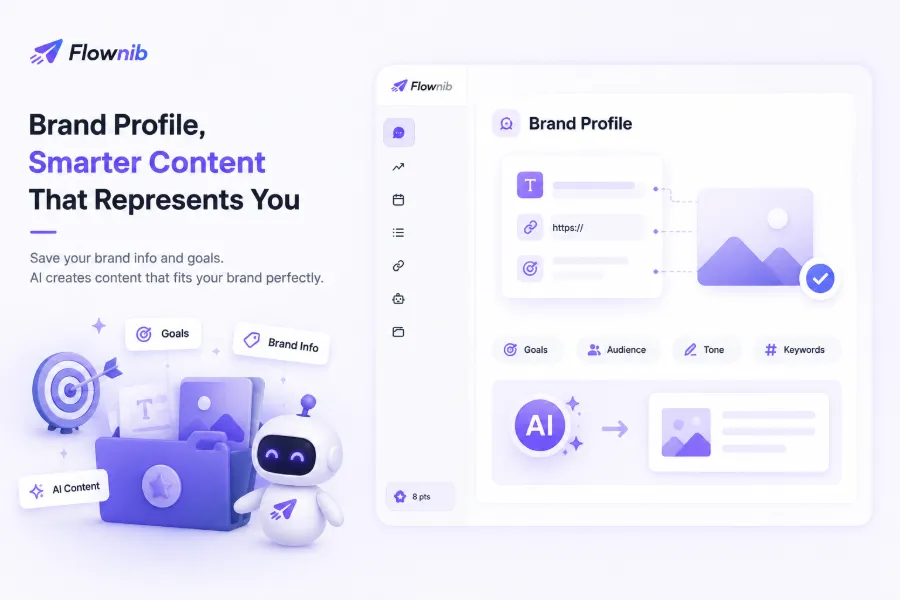
Brand documentation’s purpose is not to let AI automatically speak for the brand, but to provide boundaries for judgment: what the product is, who it’s sold to, where it’s sold, what cannot be promised, and the usual brand tone. This documentation approach can be combined with the Cross‑border Seller Content Distribution Evaluation in the same operational checklist: distribution efficiency and content suitability are separate issues, and faster distribution should not replace the latter.
Turn One Judgment into an Expression That Works on Multiple Platforms
After trend filtering, the team must write a clear brand claim. It should answer three things: what the brand observed, what problem it will solve for whom, and what action the audience should take. If these three points are unclear, the subsequent work will only rewrite vague content into ten vague versions.
For example, if a brand notices that consumers repeatedly ask “how to reduce packaging waste in small‑batch cross‑border shipments,” the claim could be: “For sellers shipping small batches, show a method to cut packaging waste and guide them to the applicable specifications.” This includes audience, problem, product link, and action, without relying on “trending” to justify the content.
Flownib can serve as a distribution step in such workflows: the team drafts, AI rewrites different versions, humans check facts and regional limits, then connect accounts and schedule publishing. It supports processing one piece of content for up to ten platforms, but “covering ten platforms” only describes the publishing scope; it does not mean every platform should use the same copy.
Cross‑platform consistency does not equal verbatim sameness. Instagram needs clearer visuals and usage scenarios; X is better for a quick judgment or question; LinkedIn often requires additional business context; TikTok may rely on demo rhythm. YouTube, Facebook, Threads, Pinterest, Bluesky, and Google Business each have distinct content carriers; copy‑pasting only preserves surface uniformity and cannot retain the audience’s real focus.
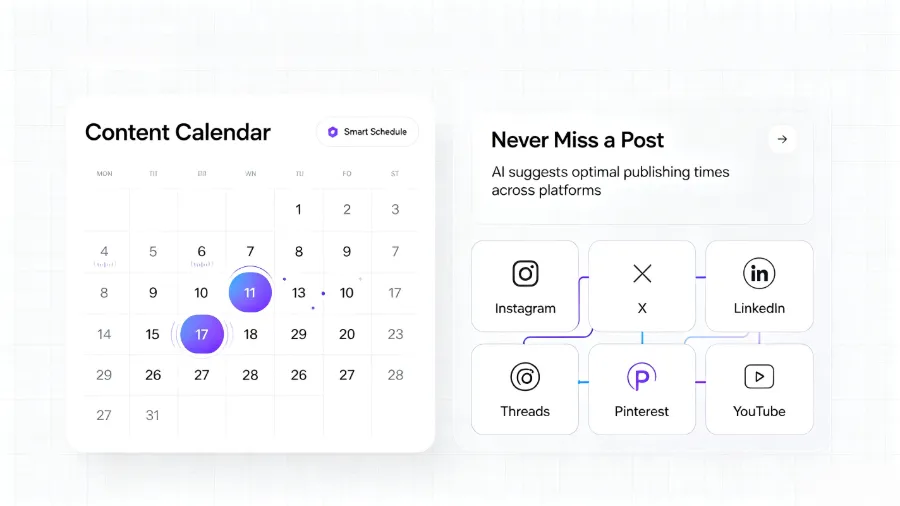
In practice, a safe sequence is: write a complete factual master draft, let AI rewrite for each platform, have humans review, then place into the content calendar and schedule. Review should not only check language fluency but also reconfirm price, inventory, delivery region, discount period, product specs, and disclaimer. AI may compress “available in some regions” into “globally available,” or add promises not present in the original to fit platform tone.
| Platform Type | Core Content Focus | Adjustments Needed in Rewrite | Review Risks |
|---|---|---|---|
| Instagram, Pinterest | Visual scenes, before‑after use, product details | Reduce background explanation, emphasize visuals and saved value | Images may not match actual specs |
| X, Threads, Bluesky | Opinions, questions, real‑time discussion | Shorten intro, keep a respondable hook | Misquoting or overly aggressive tone |
| LinkedIn, Google Business | Brand background, service info, regional updates | Add facts, locations, business context | Turning promotional copy into formal commitment |
| TikTok, YouTube, Facebook | Demos, tutorials, user queries | Adjust video pacing, titles, interaction prompts | Demo conditions, price, or inventory may be outdated |
Teams can record each platform’s version in the content calendar rather than just a single “published” status. This way, retrospectives can pinpoint whether the issue lies in the claim itself or in a specific platform’s headline, visual focus, or timing. Differences among multi‑platform AI scheduling tools can be seen in the Multi‑Platform AI Scheduling Tools Comparison, but tool comparisons cannot replace content review.
After Publishing, Verify Whether the Brand’s Statement Holds Up
Post‑publication records should at least include platform, market, content angle, publish time, interaction feedback, and conversion clues. Exposure only shows the content was seen; interaction rate shows someone reacted; click‑through rate shows someone was willing to leave the platform; add‑to‑cart and conversion rates approach commercial results; comment feedback may reveal product misunderstandings or regional context issues early.
Operations teams often treat the most‑liked post as a successful trend judgment, overlooking that it may be merely more controversial. Conversely, a low‑interaction post that generates customer service inquiries and add‑to‑cart actions may be closer to real commercial value. Cross‑border accounts must split data by market; a high‑exposure English market can easily mask low clicks or negative comments in another region.
From account connection to publishing, setup may take about two minutes, which helps start the workflow but does not mean the content can be correctly judged in two minutes. Automation reduces copy‑pasting, tab switching, and repeated scheduling, but it cannot replace fact‑checking, market judgment, or answering specific comment questions.
If performance is poor after publishing, the team should troubleshoot in order:
- Was the trend selection wrong? Did the discussion truly come from the target consumer?
- Is the brand claim too generic? Is product evidence insufficient?
- Did platform rewriting alter the original meaning, or do visuals/titles mismatch?
- Did publish time, regional timezone, or inventory status cause additional impact?
In one retrospective, the same claim performed well on Instagram but generated many doubts on X. Initially, the team suspected a wrong trend selection, but publishing records revealed that the X version, shortened for brevity, omitted applicable conditions, leading users to interpret a regional product promise as global. The issue was not the trend itself but the loss of constraints during rewriting.
For publishing records, content calendars, and metric breakdowns, see the Social Media Content Operations Resources. These resources help teams build recording habits but cannot directly tell a brand which market should follow which trend.
Automation also has an often‑underestimated side effect: it makes errors look neater. In manual publishing, one person may catch a price typo at the last step; in bulk publishing, the same mistake can appear across multiple accounts and time zones simultaneously. Teams therefore need to retain preview, pause, and rollback steps, especially during controversial events, price changes, or unstable inventory periods—unattended synchronized publishing is not advisable.
A repeatable closed loop should stay simple: discover trend → filter relevance → form claim → rewrite per platform → publish → review → adjust next topic. The process does not aim to use every hot topic, but to record each discard, rewrite, and keep, making it easier to judge which content truly approaches consumer problems.
The final two steps must not be omitted. Brands need to place exposure, interaction, clicks, add‑to‑cart, conversion, and comment feedback on the same timeline, and also record which market, platform, and expression were used. This way, when a similar trend appears in the next round, the team relies on accumulated judgment rather than being pushed again by the hype curve.
FAQ
How should cross‑border e‑commerce brands decide whether a hot topic is worth pursuing?
First check if the hot topic simultaneously meets the target market, consumer intent, product evidence, and brand‑safety criteria. Then decide to keep, rewrite, or discard. After publishing, observe at least 24–72 hours and record clicks, add‑to‑cart, and comment feedback separately from exposure.
Does hot‑topic content need to cover all target markets?
No. Only when the trend and local consumer questions are relevant should it be covered. Teams can start with one or two markets where evidence is strongest, test for about a week, then decide whether to expand to other regions.
When the same content is posted on different platforms, which parts must be rewritten?
Title, length, tone, visual focus, and interaction method should be adjusted per platform, but product facts, price conditions, and regional limits must not be altered. Each platform version should be checked, especially to ensure short copy does not drop applicable scope.
How to differentiate real commercial value from short‑term interaction?
Separate exposure, interaction, clicks, add‑to‑cart, sales, and customer‑service inquiries. Do not rely solely on likes. Typically, combine data from 48 hours to 7 days after publishing to confirm whether interaction continues toward in‑site behavior or order signals.
If a hot topic is not directly related to the brand’s product, can the brand still ride the trend?
Yes, but only if the brand can offer an observation related to the audience’s problem rather than merely copying the hot phrasing. If the brand cannot provide product evidence, professional response, or clear consumer help, discarding is usually cheaper than the subsequent explanation cost.
Share Article