
Full‑traffic Closed‑loop Case Study for Independent Shoe Sites: Seonib + Veonib + FlowNib Triple‑tool Collaboration Review

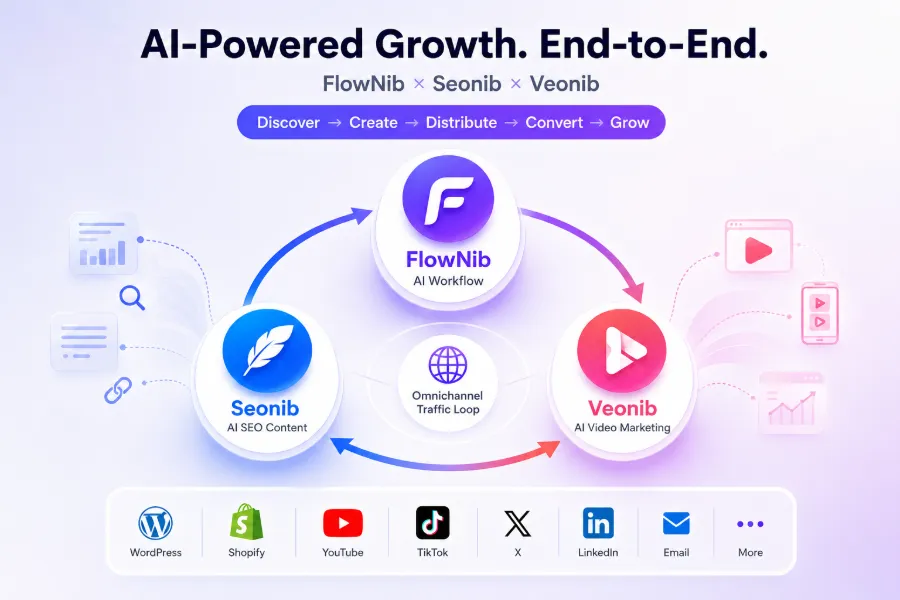
Facing the constant demand for search traffic, the pressure of producing video content, and the need to publish on multiple social platforms one by one, the daily routine of a shoe‑site operator is constantly switching between tools. The Seonib, Veonib, and FlowNib combo turns SEO content, AI video, and social‑media distribution into an automated pipeline, allowing solo entrepreneurs to achieve full‑channel coverage with almost zero manpower. This article reviews the construction process and results of this closed loop using real cases and inquiry‑conversion data.
How Seonib Captures Search Traffic for Independent Shoe Sites
Traditional organic traffic acquisition for shoe sites relies on manually writing product reviews, size guides, and styling recommendation articles. A DTC casual‑shoe independent‑site team initially spent 10 hours per week writing three blog posts; after three months, search traffic showed virtually no change. The problem lay in two areas: insufficient keyword coverage depth and a lack of enough content volume to meet Google’s indexing thresholds.
Seonib serves as the content engine here. Operators input core product information—shoe name, material, use case—and let Seonib generate blog posts in bulk. Each article targets a long‑tail keyword, such as “summer breathable men’s casual shoe review” or “wide‑foot women’s flat shoe recommendation.” Coupled with structured‑data markup embedded on product pages, search traffic grew by 120 % in three months, and monthly organic inquiries rose from 8 to 25.

During this process, the interaction between Seonib and Veonib was crucial. AI‑generated videos were automatically embedded into the corresponding blog posts instead of being posted separately on video platforms. Google Search Console showed that pages containing videos ranked 3–5 positions higher on average than pure‑text pages. Keyword difficulty analysis indicated that video content gave pages higher authority for competitive queries like “comfortable women’s shoes.”
Initially only Seonib and Veonib were used together; social distribution relied entirely on manual effort. Operators spent an hour each day copying blog links to Instagram and X, and inquiries grew from 8 to 15 over two months, but the growth curve began to flatten. Content and videos existed, but the reach was too narrow; potential search users saw the articles but weren’t guided to social platforms for secondary interaction.
Veonib Turns Video Production into Fuel for Search Traffic
Video content dramatically increased dwell time on SEO blogs, far exceeding the team’s expectations. Embedding videos such as seasonal shoe comparisons and material breakdowns boosted average page dwell time by 40 % and reduced bounce rate by 22 %. These metrics directly improved core web vitals and positively impacted search rankings.
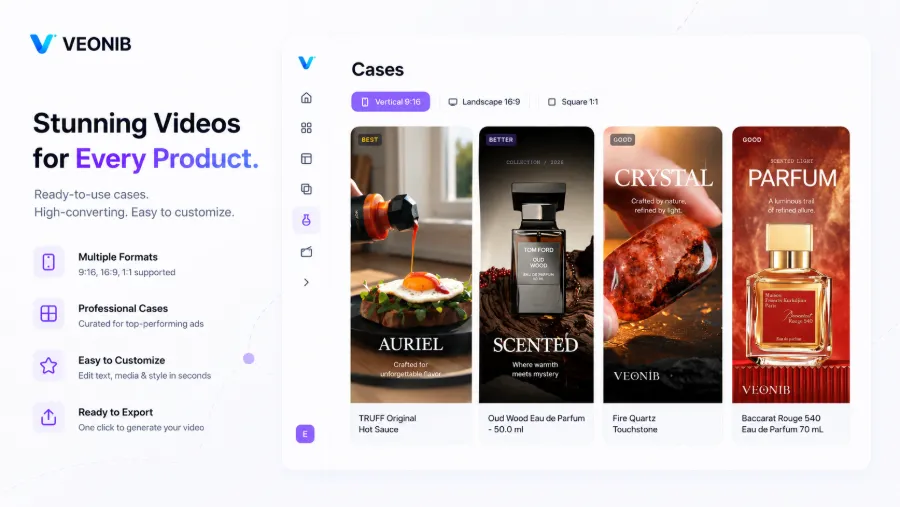
Veonib’s video‑production workflow works as follows: input a product SKU, and the AI generates an unboxing or product‑display video containing demo footage, subtitles, and background music. A pair of sneakers normally requires about three hours for a traditional shoot—finding a location, setting up lighting, post‑production. Veonib compresses this to under five minutes. The team now produces 20 videos per month, accumulating over 5,000 views on average.
YouTube is one distribution outlet, but the team found that videos embedded on‑site have a greater impact than off‑site. Embedded videos are directly linked to the product page’s purchase button, yielding an ~18 % higher conversion rate than pure‑image articles. The blog becomes a showcase window for videos rather than just a text dump.
For more details on Veonib’s capabilities, see the Veonib website for technical documentation and API information.
FlowNib Automates the Social‑Media Distribution Closed Loop
Social distribution is the most underestimated part of the loop. Early on, the team manually posted blog links to Instagram and X, discovering huge performance gaps— the “Spring New Canvas Shoe Guide” received 200 clicks on X but only 40 on Instagram. The cause wasn’t the content but platform‑specific user habits: X users accept outbound links, while Instagram users prefer native images and short captions.
That’s when Flownib entered the workflow. This AI social‑distribution platform’s core logic rewrites a piece of content automatically and then allocates it to the appropriate platform. The AI transforms the article summary into an Instagram carousel, an X tweet, a LinkedIn long‑form card, and even a Pinterest pin title.
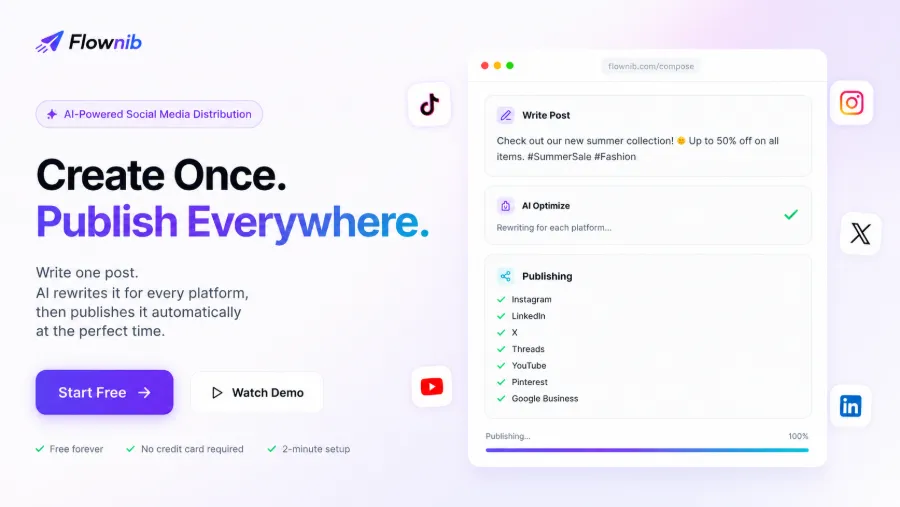
For the exact AI‑rewriting mechanism, see the Complete workflow of one creation across all platforms, which breaks down how the AI preserves brand tone during each rewrite. The team ran a comparative test: the same content was posted to X and LinkedIn using Flownib’s AI rewrite versus manual copy‑paste. Two weeks later, the AI‑rewritten version generated roughly 280 % more total interactions across both platforms. A key reason is the differing character limits and structural norms—Instagram’s tag density, X’s topical style, LinkedIn’s professional tone—micro‑adjustments that are hard to do manually for each platform.
Flownib’s scheduling and calendar features solved a more basic pain point: posting frequency. Its visual content calendar marks each platform’s publishing times, raising weekly social posts to 25 and pushing monthly total impressions past 500 k.

In practice, Flownib differs noticeably from traditional schedulers like Buffer. Buffer excels at one‑way publishing but lacks AI‑powered per‑platform rewrites. The team’s prior experience was that after publishing with Buffer, each post still needed manual format adjustments; otherwise, the same text would be truncated on Instagram and appear fragmented on LinkedIn. The comparison analysis of Flownib and other social‑scheduling tools notes that AI rewriting not only fixes formatting but also tailors copy tone to each platform—e.g., a “limited‑time discount” phrase needs to be concise and urgent on X, but wrapped in a brand story on LinkedIn. Interested readers can also check Buffer’s feature list at the Buffer website for a side‑by‑side comparison.
After adopting Flownib, social‑channel inquiry contribution rose gradually to an average of 30 % per month. The team also observed that AI‑rewritten social posts determined conversion quality more than the underlying content itself. Plain copy‑pasted blog excerpts typically achieved a click‑through rate (CTR) of ~0.8 %; AI‑rewritten versions boosted CTR to 1.5–2.5 % depending on the platform. With Flownib’s distribution, the three channels (search, video, social) began a positive feedback loop—blogs earned more backlinks from social referrals, Veonib videos increased dwell time when embedded, and social accounts stayed active thanks to continuous posting.
Closed‑loop Data Review: Conversion from Traffic to Inquiries
After six months of the three‑tool collaboration, the funnel changes were striking. The team tracked four key metrics monthly:
| Metric | Single‑tool Phase | Dual‑tool Phase | Triple‑tool Closed Loop |
|---|---|---|---|
| Monthly organic inquiries | 10 | 25 | 80 |
| Share of organic traffic | 35 % | 45 % | 70 % |
| Monthly ad spend | Baseline | –25 % | –40 % |
| Cost per inquiry | Baseline | –30 % | –60 % |
Organic traffic share rose from 35 % to 70 %, dramatically reducing reliance on paid ads. Monthly ad spend saved 40 %, allowing the budget to be redirected to product iteration and inventory turnover. The 60 % drop in cost per inquiry wasn’t due to cheaper traffic but because the closed loop’s repeated touchpoints boosted conversion efficiency—users saw the blog in search, the same brand content on social, and the video on YouTube, building trust that translated directly into inquiry rates.
For solo entrepreneurs, the checklist boils down to three steps: let Seonib cover enough long‑tail keywords, let Veonib generate a video for each product and embed it, and let Flownib distribute the blog and video across all social channels. No team, no outsourcing, no constant dashboard monitoring required.
For broader industry trends, see the 2026 Cross‑border Content Stack Practice Guide, which discusses the collaborative model of SEO, AI video, and automated distribution in cross‑border e‑commerce.
FAQ
How do Seonib, Veonib, and FlowNib work together?
Seonib drives search traffic, Veonib produces video content, and FlowNib handles social‑media distribution. Together they form a one‑stop AI cross‑border marketing automation workflow suitable for solo founders, cross‑border e‑commerce, and independent developers, automating the entire process from content creation and video marketing to social‑media operations.
What technical skill level is required to get started?
No programming needed. Seonib and Veonib generate content from product inputs; Flownib account linking takes about two minutes. The main hurdle is keyword strategy—researching search term libraries—but Google Search Console and keyword‑difficulty tools can assist.
How can I verify that the closed loop is functioning?
Monitor three metrics: (1) blog impressions and click‑through rate in Google Search Console continuously rising; (2) average dwell time on pages with embedded videos exceeding 90 seconds; (3) social‑channel inquiry contribution surpassing 25 % of total inquiries. Simultaneous improvement indicates the loop is operating.
What irreplaceable advantages does the three‑tool suite have over using a single tool?
Using only Seonib yields search traffic but lacks social reach; only Veonib produces videos but has no distribution channel; only Flownib lacks a content source. Combined, search traffic builds initial trust, videos increase dwell interest, and social distribution provides repeated touchpoints, resulting in conversion efficiency far higher than any single tool. Data show that monthly inquiries after three‑tool collaboration are eight times those of a single‑tool setup.
Share Article