
What Should Brands Publish in 2026? Start with Trend Topics

Cross‑border e‑commerce brands often schedule their entire year of social‑media content around new products, discounts, and holiday promotions. The first few weeks may go smoothly, but by the second month the team is bouncing between US, UK, Japan, and Southeast Asian accounts, repeatedly selecting topics, tweaking language, changing tone, and confirming posting times for each platform. The content calendar looks packed, yet the brand has not truly entered the conversations consumers are having.
Trend content in 2026 should not be treated as a set of hot keywords that can be copied verbatim. A more practical approach is: first discover trends from multiple discussion sources, then assess whether they relate to the target market and product scenarios, then distill a brand viewpoint, and finally rewrite, review, and recap for each platform. Trends get the brand into the conversation; regular content explains the product and builds trust.
First Determine Whether a Trend Is Worth a Brand’s Follow‑Up
Brand teams usually don’t rely on a single hot‑search list. A more robust trend‑discovery process covers four types of discussion sources: Reddit, YouTube, news platforms, and Hacker News. The signals differ: Reddit is closer to user experiences and complaints, YouTube shows a steady rise in tutorials and reviews, news platforms reflect industry events, and Hacker News often surfaces tech product or startup discussions early.
However, high popularity does not equal high relevance. A topic that spikes quickly may be a celebrity incident, platform controversy, or regional news; if a cross‑border brand jumps on it the same day, by the time the content is approved the conversation may have moved on. Conversely, topics whose search interest rises slowly and comments keep growing, though lacking viral exposure, are better suited for a week‑ or month‑long series.
Brand teams can evaluate a trend from four angles:
- Audience relevance: Is the target customer discussing it, or only marketers think it’s hot?
- Purchase scenario: Can the topic be linked to a specific moment of selection, use, after‑sales, or product comparison?
- Brand credibility: Does the brand have product evidence, customer cases, or expertise to contribute to the discussion?
- Content timeliness: How long will the topic stay relevant after posting, and does the review need to be completed within hours?
Cross‑border markets make the judgment even more complex. The same “summer outdoor storage” trend might refer to camping and beaches in Australia, balcony space in Germany, and small‑apartment organization in Japan. Translating into different languages does not mean the content is localized; the team must also verify seasonality, regulations, pricing, shipping commitments, and how local consumers perceive promotional language.
If a trend does not connect to the brand’s existing products, user problems, or purchase decisions, the team should not force a post just for a single exposure. The brand can record the search interest and discussion heat while waiting for a more concrete product scenario. Instagram’s business resources are also suitable for checking platform content formats and account operation requirements, not merely as a publishing entry point.
In practice, trend tools only shorten the “topic‑finding” phase; they cannot decide for the brand “what to say.” The team must still examine the original discussions to confirm whether users are asking questions, complaining, comparing, or simply sharing news. When scheduling across multiple markets, refer to the 2026 social‑media scheduling tool comparison but first check account permissions, review processes, and historical‑record capabilities, not just the number of supported platforms.
Turning Trends into Brand‑Ready Content Angles
From trend to post, at least four steps are required: trend fact, user question, brand stance, and specific content format. Skipping the first step leads to misinformation; skipping the second results in mere news retelling; skipping the third lets the brand voice be drowned out by the hot topic; skipping the fourth leaves the team knowing what to say but unsure whether to publish an image, a video, or a discussion post today.
For example, the trend fact is “more consumers are paying attention to repairable and replaceable parts.” The user question might be “If I buy a higher‑priced product, can I reduce waste and maintenance costs over the long term?” The brand stance could be “When purchasing, you shouldn’t look only at the launch price; you also need to consider parts availability, repair cycles, and lifespan.” The specific content format could be a product teardown, maintenance workflow, customer case study, or inviting users to share repair experiences with old products.
A core trend can be broken down into at least four content angles: educational, comparative, case‑study, and interactive. Educational content explains new concepts or usage methods; comparative content helps consumers evaluate different options; case‑study content showcases real user scenarios; interactive content gathers market feedback through polls, questions, or comments. These four formats can stem from the same brand narrative, but you should not republish the same copy with a few different headlines.
The brand dossier’s role here is to reduce the number of times the team has to reconfirm product information, target audience, and brand objectives each time they rewrite. It cannot replace editorial judgment, nor can it guarantee that every trend fits the brand. Operators must still verify each product selling point with evidence, avoiding automatically generated content that fabricates materials, features, certifications, or delivery promises.
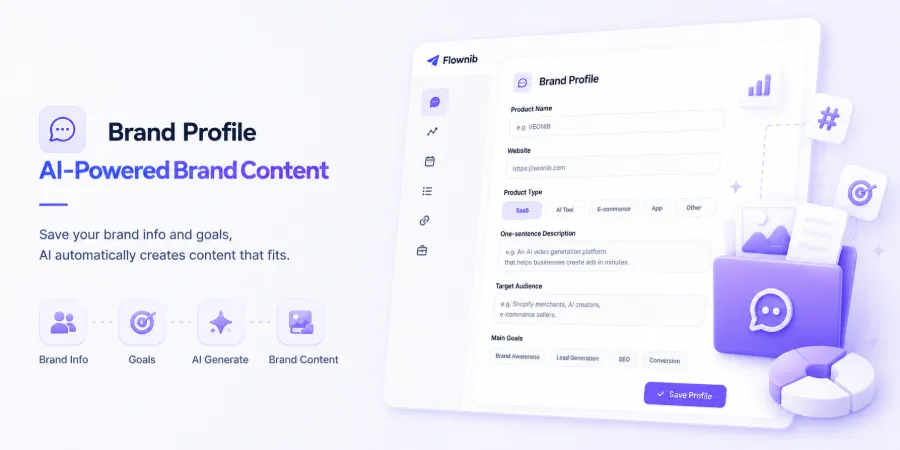
A more actionable approach is to create a brief angle record for each trend. The record should clearly state the original fact, target market, user question, brand‑validated judgment, and which evidence will be used for educational, comparative, case‑study, and interactive content. The value lies not in generating many posts at once, but in allowing different team members to reuse content later without re‑debating the same product information.
Cross‑platform content also needs to retain an “unchangeable core message.” For example, if the brand wants to convey “In high‑temperature environments, product durability impacts total cost more than short‑term discounts,” that sentence can be rewritten as a review tip, carousel title, short‑video narration, or community question, but it should not be turned into a completely different conclusion on each platform. When a creator splits a single piece of content across channels, the workload involves not only writing but also confirming that each version still serves the original judgment; the related multi‑platform creation case study can help the team understand this splitting method.
Adapting the Same Trend to Different Social Platforms
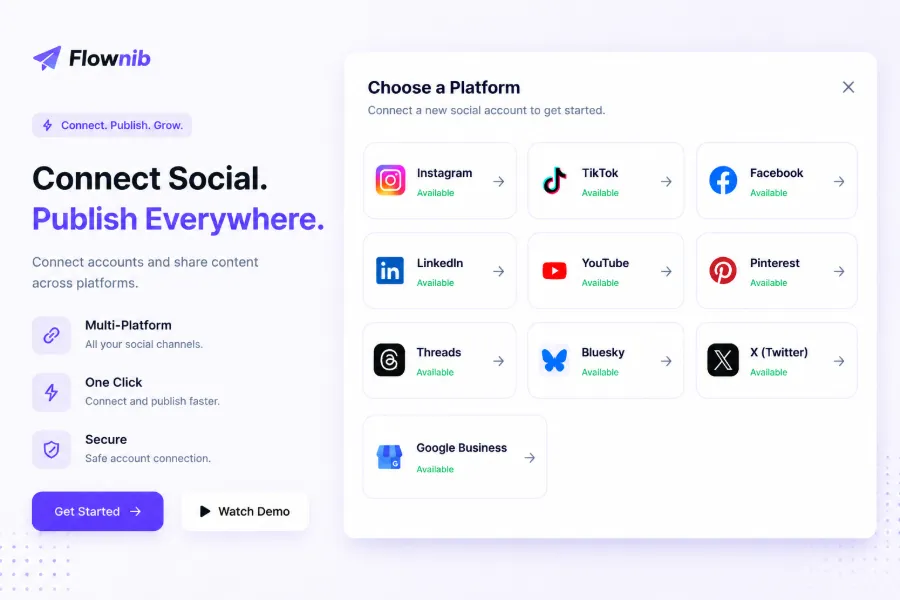
When the same trend reaches Instagram, X, LinkedIn, Threads, TikTok, Facebook, Pinterest, YouTube, Bluesky, and Google Business, the expression style will differ. X is better for quick responses and opinion clashes; Instagram often requires visual sequencing and a reason to save; TikTok relies on the first few seconds of the scene; LinkedIn emphasizes industry judgment; Pinterest needs users to clearly know which search and collection contexts the content fits.
The team can adapt a theme to ten platforms, but that does not mean publishing ten identical copy versions. A stable process is to first lock in the fact and brand stance, then adjust the opening, length, tone, visual explanation, and call‑to‑action for each platform. Short text should quickly state the conflict or judgment; carousel images should break the information into page logic; short videos need a storyboard and narration; professional platforms should add background and constraints.
For example, the same “rising cross‑border return costs” trend could become “3 steps to check size before ordering” on Instagram, a discussion on X about why consumers care more about return transparency, a supply‑chain and customer‑service analysis on LinkedIn, and a TikTok demo of how a wrong order leads to extra shipping. The fact is the same, the user tasks differ, and the brand viewpoint has a chance to be understood by diverse audiences.
Multilingual markets also present an issue that is hard to spot in the first draft: terminology may be translated accurately, but the tone may not match local brands. The English “limited offer” can sound overly salesy when translated literally; some markets prefer explicit limitation statements, while others care more about describing the usage scenario first. Price units, taxes, inventory, delivery zones, and return policies must be verified separately and cannot rely on automatic translation to carry them over.
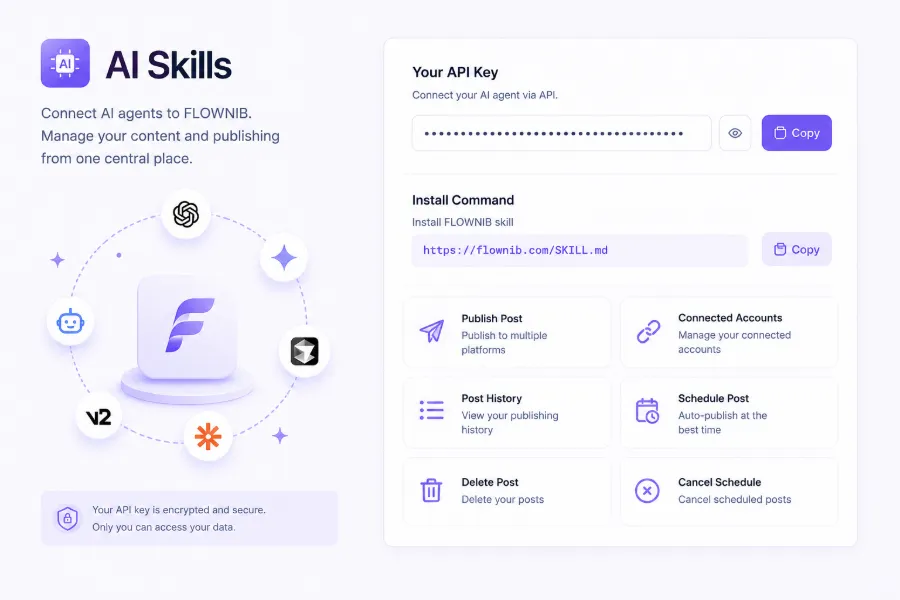
When rewriting for platforms and publishing across multiple accounts after a single creation, a publishing workflow like Flownib reduces copy‑pasting, tab‑switching, and individual scheduling, but platform‑level previews still need human checking. Especially when official APIs, character limits, video ratios, and link parameters differ, automated distribution can only follow preset rules and cannot determine whether a promotional condition applies to a Canadian or Singaporean account.
X’s business resources can be used to verify account and advertising operational requirements. The team can also separate the timing of manual publishing and automated distribution, referring to the differences between manual publishing and AI distribution, but should not only count the minutes spent generating the first draft copy. The most underestimated cost of cross‑platform distribution is the subsequent account synchronization, version tracking, link checking, and fixing failed posts.
An often‑overlooked counter‑intuitive result is that the value of a trend post does not have to appear in same‑day conversions. It can also test whether German and American users react differently to the same brand viewpoint, helping the team decide whether the next round of content should emphasize durability, price, convenience, or after‑sales service. If only daily sales are considered, the brand may prematurely abandon a direction that could generate high‑quality comments and future topics.
Scheduling records must also be traceable to the platform version. The team can periodically check Instagram scheduled posts to confirm that images, links, and copy still match current inventory. Trends change quickly; pre‑scheduled posts may not always be published as planned, especially when news facts change, platform discussions reverse, or promotional conditions have ended.
Creating a Trend Checklist Before the Next Round of Topic Planning
Before each weekly or each round of content planning, brands should re‑examine trend sources and discussion directions rather than relying on a one‑off hot keyword. Trend‑discovery tools can provide entry points, but the content team must still determine what users are discussing, which markets are truly relevant, and whether the brand has enough factual basis to participate.
Before publishing, five checks can be completed:
- Is the trend relevant to the target market?
- Can it be linked to a real product scenario?
- Is there a clear brand viewpoint?
- Has platform adaptation been completed?
- Has fact‑checking and content compliance review been completed?
The final execution order does not need to be complex: first select a trend, then write a core viewpoint, and finally create different versions for each platform while recording results. Trend content gets the brand into the conversation; regular product content explains features, addresses concerns, and builds trust. When both run in parallel, social media will not lose the brand’s direction while chasing trends.
FAQ
Which Trend Topics Are Most Suitable for Cross‑Border E‑Commerce Brands in 2026?
The most suitable starting points are trends directly related to user purchase scenarios, such as product durability, delivery experience, eco‑friendly materials, safety, and changing consumption habits. The team can first monitor the four discussion sources and then, over 3–7 days, confirm whether the topic persists, rather than publishing immediately after a single‑day spike.
How Often Should Brands Check Trend Topics?
It is recommended to check regular trends weekly and to review rapidly changing industry events daily. Real‑time response content may need hour‑level review, while evergreen content can be placed in a monthly calendar, with comments, saves, shares, and click metrics examined seven days after publishing.
Should Brands Still Publish When a Hot Trend Has Weak Ties to Their Product?
Usually, brands should not publish directly unless they can provide a clear industry assessment or real user scenario. The team can record the topic and wait for a product, customer issue, or market shift to create a connection; if after two weeks there is still no credible link, abandoning it is typically less costly than forcing a follow‑up.
Can the Same Trend Be Directly Copied to All Social Platforms?
No. A trend can span ten platforms, but each platform should adjust the opening, length, visuals, tone, and call‑to‑action while retaining the same core message; before publishing, character limits, links, regions, and sensitive phrasing must also be checked.
How to Determine Whether Trend Content Generates Real Business Value?
At a minimum, you should look at interaction quality, saves or shares, click paths, and conversion rates, broken down by market and platform. Observing the first seven days after publishing usually reveals initial results, but some educational content may take up to thirty days to show value through search, follow‑up visits, or subsequent inquiries.
Share Article