
5 Ways to Find High‑Engagement Content Topics Without Repeated Search

When a cross‑border e‑commerce team prepares next week’s content, the common situation isn’t a lack of ideas but endless searching, copying, and comparing across Reddit, YouTube, news, and social platforms. Some paste popular headlines into spreadsheets; others open Google Trends to watch curves. By the time everyone agrees on a topic, the discussion that was heating up has already cooled, and the content misses its publishing window.
High‑interest topics don’t necessarily require longer research. A more stable approach is to feed real‑time discussions, audience questions, competitor content, and existing publishing data into the same observation workflow, then validate with a small sample of platform data. This yields not an isolated hot keyword but a content direction that has an audience, a scenario, and can be further broken down.
Method 1: Extract Topics from Real‑Time Growing Discussions
Content teams can start by monitoring growing discussions around product, target market, or audience keywords instead of chasing already saturated hot words. A keyword ranking high in search results doesn’t guarantee it’s still suitable for the brand; conversely, a niche topic that’s just starting to generate repeated questions may be closer to the user’s next need.
In practice, at least four source types should be covered: long‑form Reddit threads, YouTube titles and comments, news industry events, and Hacker News tech/entrepreneurship topics. Each source expresses problems differently, but if the same theme appears in two or three sources simultaneously, a reliable signal of interest and discussion heat emerges.
Google Trends’ interest curve is good for relative changes, not for proving commercial value alone. A sudden spike may be news‑driven; persistent follow‑up questions on Reddit more likely indicate users are experiencing a real problem. Teams should separate “high discussion heat” from “brand suitability” and not rewrite a topic into brand content just because it has many comments.
Each candidate topic needs only four notes:
- Who the audience is, which market they’re from, the primary platform, and the effective lifespan.
When recording, keep the original question and user wording, e.g., “Why do European customers refuse to bear return shipping fees,” instead of immediately turning it into “Cross‑border Logistics Optimization Guide.” The former preserves the problem context; the latter abstracts it for the user and can lead to generic articles later.
Method 2: Use Platform Differences to Judge Whether a Topic Can Span Channels
The same topic often takes different forms on different platforms. Instagram may show a product comparison image, X (Twitter) a very short question, LinkedIn a professional experience share, and Threads a heated comment debate. TikTok and YouTube lean toward video titles and viewing motivations; Facebook discussions are often community‑centric and purchase‑concern‑focused; Pinterest emphasizes visual search.
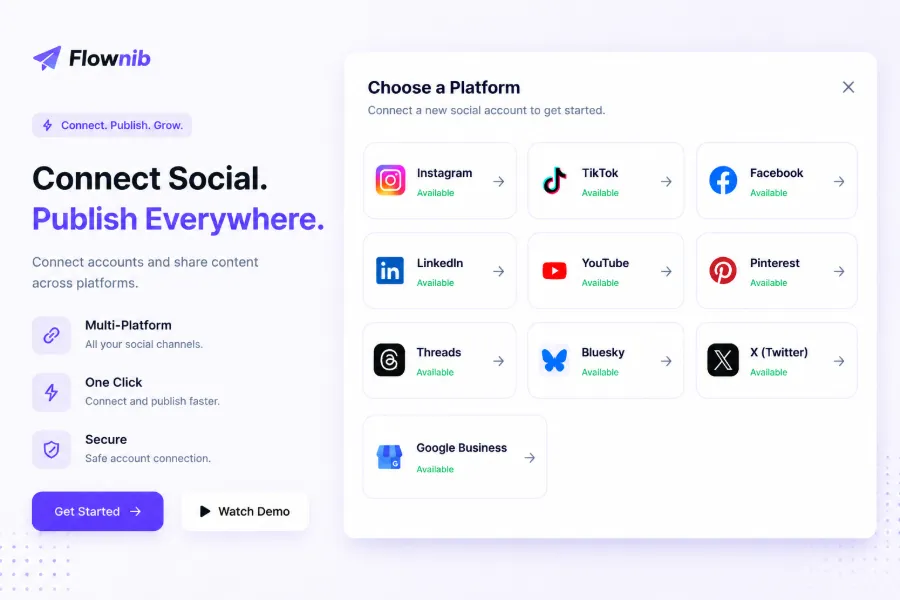
Platform checks can cover ten channels: Instagram, X, LinkedIn, Threads, TikTok, Facebook, Pinterest, YouTube, Bluesky, and Google Business, but the first round doesn’t need to open all of them. Start with the 2–3 platforms most aligned with the audience and see if the same question can naturally be expressed in different ways, rather than forcing versions just to achieve “all‑platform” publishing.
On Threads, the team can directly observe the Threads discussion to see whether a topic is driven by the original question or by resharing and emotional debate. The two have different lifespans: the former suits explanatory content, the latter may only need a short‑term response.
To judge cross‑channel viability, break a topic into three layers: core theme, platform expression, and audience intent. The core theme answers “what does the user actually want to solve”; platform expression answers “how does this problem usually appear on the current channel”; audience intent answers “is the user researching, comparing, buying, or seeking usage experience”.
| Platform Type | Typical Form | Common Audience Intent | Suitable Content Angle | Cross‑Platform Rewrite Difficulty |
|---|---|---|---|---|
| Discussion Community | Long questions, experience posts | Diagnose problems, seek advice | Scenario breakdown & testing | Medium |
| Short‑text Platform | Brief questions, opinion disputes | Get judgments, join discussion | Conclusion first & follow‑up | Low |
| Video Platform | Titles, comments, narration | Learn operations, compare solutions | Demo, case studies & comparison | High |
| Visual Platform | Images, short videos, collections | Get inspiration, evaluate purchase | Visual steps & usage scenarios | High |
Cross‑border e‑commerce must also check language, region, platform habits, and content format. A US user cares about delivery promises; a German user may first ask about return policies. Translating English content directly into German does not automatically remove purchase barriers. For how accounts, content, and publishing should connect, see the Cross‑Border Content Operations Method, but topic viability still must return to specific market audience questions.
Method 3: Find Angles from Competitor Content and Unaddressed Audience Problems
Competitor content isn’t there for the team to copy high‑engagement headlines; it helps discover which questions have already been answered repeatedly and where explanations are still missing. First list the topics competitors have covered, then check whether any lack regional, language, price, logistics, or specific usage scenario coverage.
A “content gap” isn’t the same as no competition. Often competitor pieces exist but don’t answer the step where users get stuck. For example, many articles explain “how to choose an overseas warehouse,” yet comment sections keep asking whether small‑batch sellers can afford storage fees; headlines compare logistics speed but omit different countries’ return routes. Repeated follow‑up questions in comments, Q&A sections, and user feedback are usually more suitable for generating the next title than headline likes.
The team can complete a preliminary filter in two minutes: keep a few highly relevant candidates, then dive deeper. Filter by repeated questions, commercial relevance, brand answerability, and timing window. This isn’t to decide immediate publishing but to avoid spending an hour on a hot that’s unrelated to product and audience.
A cross‑border e‑commerce team once spotted a competitor’s headline with massive interaction on Tuesday morning, then spent nearly six hours across platforms copying the headline, comparing comments, and compiling keywords. By Wednesday afternoon the article was finally finished, but the original discussion had already been overtaken by new industry news, and first‑day clicks fell short of expectations. The post‑mortem showed that copying the headline generated similar clicks but didn’t add price, regional differences, or logistics constraints, so the brand contributed no new informational value.
This work also reveals an uncomfortable trade‑off: chasing speed can sacrifice fact‑checking and brand relevance, while striving for completeness can miss the discussion window. If content discovery, rewriting, and publishing rely on multiple manual hand‑offs, the publishing record can easily break. Discussions about Automated Content Workflows can help teams re‑examine this hand‑off rather than blaming topic‑selection ability alone.
When SEO, AI content, and automated distribution are combined, you can’t just count tools. Teams also need to designate who verifies facts, who handles regional versions, who preserves original comments, and how to track differences caused by rewrites after publishing. The Cross‑Border Content Collaboration Framework can serve as a reference for process design but should not replace actual user feedback.
Method 4: Turn Product, Customer, and Market Changes into Verifiable Topics
Customers most often ask about product specifications, usage scenarios, after‑sales concerns, and purchase barriers—questions that are easier to turn into content than abstract industry buzzwords. Operators can look for repeated expressions in support tickets, sales chats, return reasons, and inquiry emails, then decide whether to write a tutorial, comparison, case study, or a short piece.
During a multi‑platform rewrite and publishing record cleanup, the team used Flownib to handle version flow of the same topic across different accounts, reducing back‑and‑forth checks between spreadsheets, social‑platform backends, and scheduling tools. Market differences still require human confirmation: the tool can log publishing locations but cannot judge whether a country’s after‑sales promise is accurate.
Regional market shifts can also generate more specific topics. Holidays, language, consumption habits, delivery cycles, and payment methods can become topic boundaries. For example, “Black Friday promotion” is too broad; “How French consumers evaluate cross‑border return conditions during promotions” has a clear audience and problem scope.
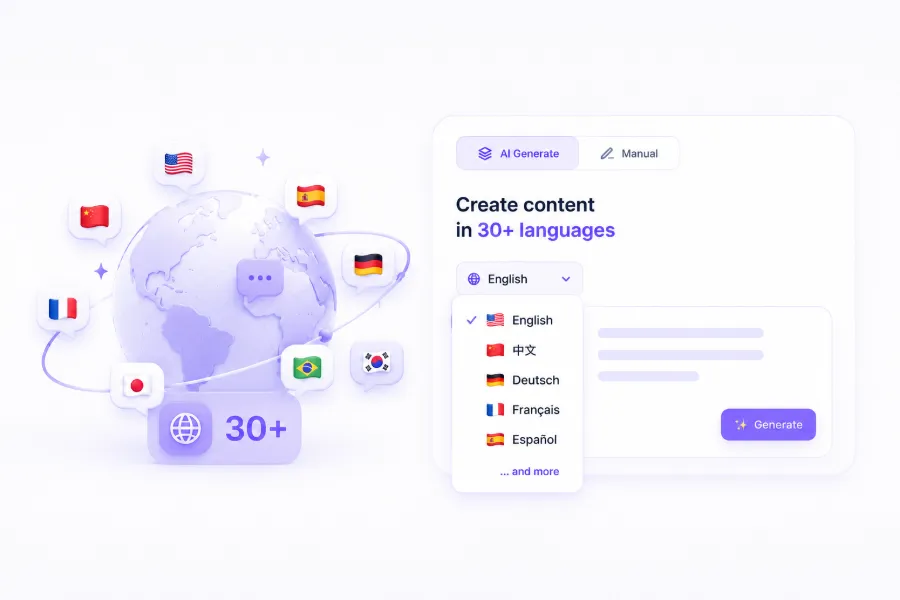
Multilingual content should at least be checked in five major languages: English, Chinese, Japanese, German, and French. The core facts stay the same, but examples, phrasing, price units, logistics notes, and platform expressions may need adjustment. Whether a topic can be reused across markets isn’t just about smooth translation; it also depends on whether the purchase barriers faced by users in different regions are similar.
Teams can first write the topic as a concrete customer question, then decide the content format. For instance, start with “Why do Japanese customers repeatedly ask about battery specifications?” before choosing a specification guide, pre‑purchase checklist, or after‑sales case study, rather than first deciding “write a popular product article.” This order reduces the chance that the content format drives the topic selection.
After cross‑market publishing, teams still need to monitor comment content across language versions, not just engagement metrics. The Global Creator Field Test Records on publishing experiences can serve as supplemental material for checking multi‑market friction.
Method 5: Infer the Next Batch of Topics from Small‑Scale Publishing Data
The value of publishing data lies not in picking a single “viral” piece but in telling the team where the next question should start. Publishing records and content calendars should consistently log topic, market, platform, format, engagement signals, comment questions, and downstream conversion actions. Without these fields, teams often rely on vague impressions like “the last topic performed well.”
Separate high‑engagement content with weak commercial relevance from modest‑engagement content that yields high‑quality questions. The former may be good for expanding brand reach; the latter likely suits product explanations, case studies, or purchase‑assist content. Comment quantity alone doesn’t indicate search intent; specific problems, comparison criteria, and regional info appearing in comments are closer to the next content clue.
Before deciding whether to expand a topic, collect at least six published pieces. With too few samples, audience, timing, and format can get mixed, and a random recommendation spike may be misinterpreted as topic value. If several pieces revolve around the same customer question and generate follow‑up queries, consider breaking them into follow‑ups, case studies, comparisons, tutorials, and updates, forming a stable Content Repurposing workflow.
A weekly lightweight review can start from the content calendar: retain effective angles, delete irrelevant ones, add audience questions, and schedule the next test round. After scheduled publishing, the team should also check actual publishing time, version differences, and comment changes; the Scheduled Content Editing Steps can serve as a supplemental reference for maintaining this process.
A common counter‑intuitive result is that increasing publishing frequency doesn’t necessarily help teams find topics faster. If each week the team mechanically repurposes the same viewpoint into more formats, the publishing record grows but usable signals shrink. The review should shorten the time from “discovering a problem” to “validating an angle,” not merely increase publishing volume.
FAQ
What kind of content topics count as high‑interest topics?
A high‑interest topic combines discussion heat, audience relevance, commercial relevance, and sustainable expandability. Teams should first look for repeated questions across 2–3 sources, then verify with about six pieces of historical content whether it can be further broken into tutorials, case studies, or comparisons, rather than relying on a single like spike.
Why can’t cross‑border e‑commerce rely only on one platform’s hot content?
Because audiences, languages, formats, and market demands differ across platforms. A topic may gain search traffic as a tutorial on YouTube but only suit a quick response on X. Teams should first validate with 2–3 relevant channels before deciding whether to broaden distribution.
How to validate a new topic without a large historical dataset?
Start with a small set of discussion sources and a few channels, collect repeated questions, then publish a small‑scale content batch. After about a week, combine comment quality, clicks, and subsequent inquiries—rather than total interaction—to decide whether to invest further.
After spotting a hot topic, how quickly should the content be published?
Time‑sensitive news topics should be verified and drafted within a few hours; longer‑term issues can be refined over several days. Speed cannot replace fact‑checking, especially for price, logistics, regulations, or regional policies; information sources and brand relevance should still be confirmed before publishing.
How to avoid constantly shifting direction just to chase trends?
Teams should return to the core audience problems, product usage scenarios, and a fixed publishing record, maintaining a stable selection criterion. Keep only topics each week that explain a customer problem, have commercial relevance, and can be further expanded; other high‑interaction hotspots can be temporarily ignored.
Share Article


