How Pet Supplies Sellers Can Quietly Build a Loyal User Base with Automated Social Media
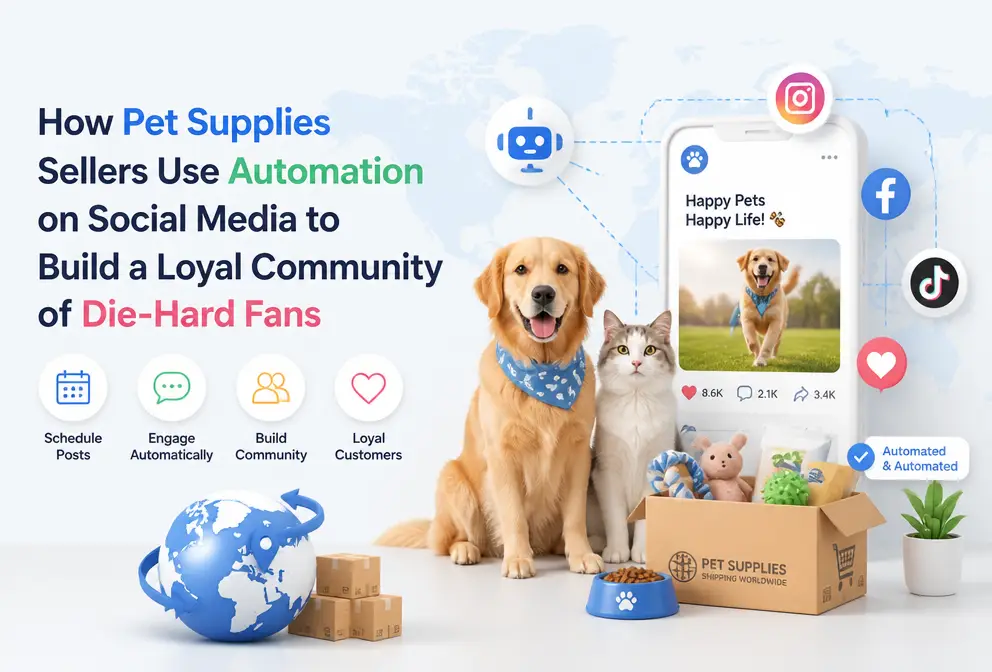
It’s 1 a.m., and you’re still copying and pasting the same cat‑toy unboxing copy between Instagram and TikTok, tweaking tags and word counts, only to discover that Facebook needs a completely different cover image. This isn’t operation; it’s an assembly line. After a year and a half in pet supplies, the thing that drives me crazy isn’t product selection or shipping delays—it’s the daily, assembly‑line‑like manual distribution of the same content across four or five platforms, then checking the data the next day and seeing no movement at all.
The cross‑border pet category has a blunt threshold: without enough content, trust never builds. Buyers are half a world away; they can’t touch cat litter or smell freeze‑dried food, so they rely on your daily videos and user‑generated content to accumulate trust. At least 14 pieces of cross‑platform content per week are needed to keep the follower‑growth curve steady—this figure is a hard‑earned truth after months of trial and error. If you only copy‑paste manually, you’ll spend three hours in front of the computer each day and won’t see any shift in follower numbers for two weeks.
The Daily “Hit” of Pet Social‑Media Operations
Anyone who has worked on pet social media knows the sheer volume of material generated every day—new cat‑toy unboxings, owners showing their cats’ belly‑flops, taste‑test reactions to new freeze‑dried flavors—each angle can be cut into its own video. The problem is that each platform’s rules and tone are completely different: Instagram Stories need vertical video + hashtags, Facebook posts need community interaction, TikTok demands a visual punch in the first three seconds, and Pinterest requires “long‑tail” searchable buying‑guide pins.
The first pitfall I fell into was three days before Prime Day last year. The team prepared a batch of Black‑Friday assets two weeks in advance, only to discover on launch day that the Facebook format was completely wrong. The horizontal pet‑food user‑generated video was forced into Facebook’s vertical format, resulting in awkward cuts and a 50 % drop in views. We spent the night manually re‑uploading; three operators worked until 4 a.m., yet we still lost nearly 40 % of core traffic. That lesson taught me that the issue wasn’t content quality—it was a distribution workflow that crippled it.
I also tried traditional SMMS tools, such as the Loomly social‑media management platform. It can queue everything in one dashboard, but its AI rewriting ability is very limited; the same copy sent to different platforms is basically copied verbatim, without handling word‑count differences or platform tone. I dropped it after a quarter.
Later I compared the time investment of manual posting versus automation. If you update five platforms daily with three pieces of content each, manual handling averages 4 minutes per piece plus a review, meaning repetitive work alone consumes almost half a full‑time operator’s day. In contrast, spending a little time researching Manual Posting vs. AI Automation: How Much Time Can You Actually Save? reveals that a well‑designed automated distribution workflow can shrink that time to under half an hour. This isn’t laziness; it’s freeing human resources from repetitive tasks to do truly valuable work—filming, interacting, sourcing products.
AI Bulk “Rewriting” Is the Real Weapon for Cross‑Platform Grass‑Seeding
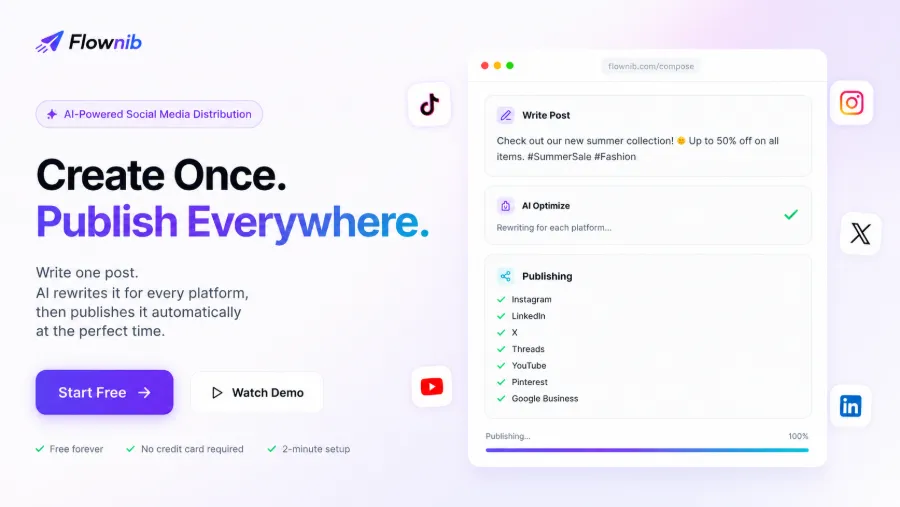
Once I wrote a cat‑food unboxing post that basically said, “My cat went crazy over the new batch of chicken freeze‑dried.” I manually turned it into an Instagram Story version, a Pinterest pin version, a Facebook community version, an X (Twitter) short‑comment version, a YouTube community post version, and even a Google Business store‑update version—six versions total. By the time I finished, it was 2:30 a.m., and the next morning I was dizzy to find that I’d missed tags on two platforms.
That’s why more and pet sellers are turning to AI distribution tools like Flownib. You write a single original copy, and the AI splits it into six platform‑specific versions in 15 seconds. Each version not only adjusts word count but also automatically matches the platform’s tone, hashtags, and even posting structure. For example, the same pet‑bed recommendation becomes a “backend data answer” on YouTube community posts, a buying‑guide‑style pin description on Pinterest, and highlights a “cozy plush cat in the blanket” moment on Instagram.
AI rewriting isn’t “de‑humanizing”; it’s the opposite—it eats the repetitive work so you have time to write truly human, long‑tail content. Think brand personality, fan interaction, spontaneous campaign ideas—things a mechanical copy‑paste can’t produce.
From “Breaks” to “Consistent”: The Practical Value of Smart Scheduling + Content Calendars
Pet audiences have a highly concentrated online schedule, a trait rarely discussed. After two months of data analysis, I found that most pet owners are online during weekday lunch breaks (12:00–14:00) and weekend mornings (8:00–10:00). Posting at 3 a.m. essentially feeds empty data to search engines.
I tried posting a short unboxing video at 12:15 p.m. and a science post at 20:30 p.m. every day for two weeks; in the third week the follower‑growth curve finally started to rise. The hardest part of continuous publishing isn’t writing content—it’s sticking to a schedule. If you only start planning the next day’s content after you finish work, you’ll start slacking after three days and stop altogether after five.
A content calendar solves “decision fatigue”—populate the calendar a week in advance with all pet assets, labeling each piece’s platform, publish time, and tag plan. Spend half an hour on the weekend arranging the next week’s rhythm; from Monday to Friday you only need to click “confirm” in the backend, then do the work.
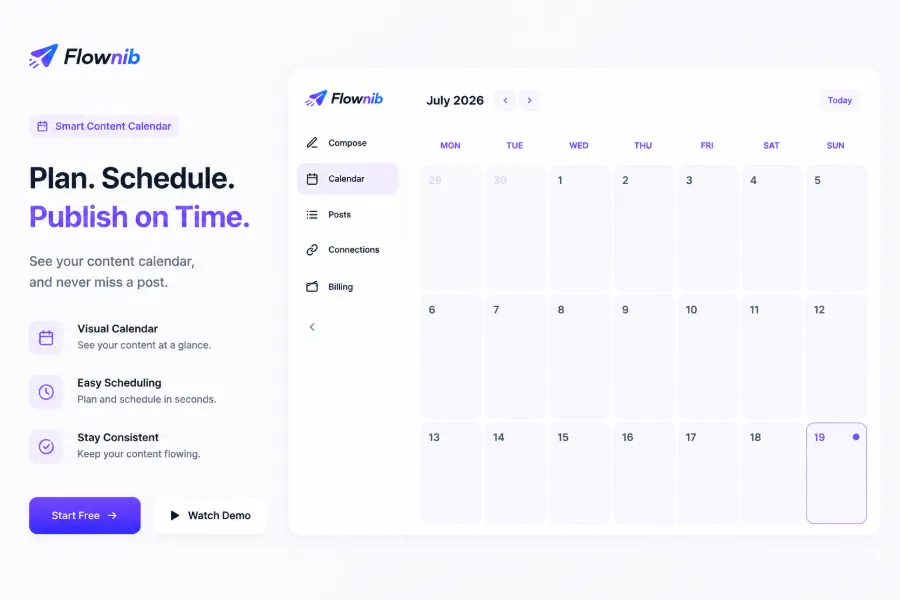
The calendar above is the actual interface I use—each piece of content is anchored to a specific timestamp, and the platform is clearly marked. So even if a sudden negative review needs handling, or you need to quickly film a cat doing parkour, the already‑scheduled content for that day remains unaffected.
Once you reach this point, you can try the Create Once, Publish Everywhere workflow, expanding a single original copy to every platform. Below is a table I compiled from six months of pet‑category publishing data, showing optimal time slots:
| Platform | Best Posting Time for Pet Category | Content Type | Adaptation Highlights |
|---|---|---|---|
| 12:00–13:00 (midday) | Unboxing short video | Visual‑first | |
| 20:00–22:00 (evening) | Educational + user‑generated | Community stickiness | |
| 08:00–10:00 (morning) | Buying‑guide pin | Long‑tail traffic | |
| TikTok | 19:00–21:00 (evening) | Fun interaction | New‑user coverage |
Automated Workflow for “Pre‑Holiday Prep” of Big Promotions & New Product Launches
Promotion periods are the most painful and bug‑prone phases for pet social‑media ops. After the Facebook format disaster on Prime Day, I hit an even subtler trap this year—two weeks before Black Friday I prepared a content matrix for cat health supplements, but because each platform has different character limits, the same sentence broke at different points on Instagram and Facebook, causing all six CTA buttons to point to the wrong destinations.
Learning from that, I built a pre‑holiday automated workflow: prepare all holiday assets (hero images, product highlights, discount info) 14 days in advance, use AI to bulk‑rewrite each platform’s version, then dump everything into the calendar at once. Even if one platform throws an error, the others stay on schedule—I’ve seen Pinterest occasionally time‑out, but Instagram, Facebook, and TikTok content were already queued and needed no manual intervention.
During Black Friday 2024, using this workflow boosted publishing efficiency by roughly 70 % compared to manual handling. Even more surprisingly, I came across a case study on a stand‑alone shoe e‑commerce full‑funnel closed‑loop: Seonib + Veonib + FlowNib three‑tool integration test. Although the industry differs, the concept applies perfectly—fully automated distribution plus closed‑loop data tracking lets you see exactly how many orders each platform generated and which time slots converted best. I also read an external piece on Cross‑Border AI Full‑Traffic Closed‑Loop: FlowNib, Seonib, Veonib Collaborative Architecture and Use Cases, which confirms the API stability of this architecture at 99.99 %—so you don’t have to worry about crashes during Black‑Friday traffic peaks.
Pet categories have a unique trait: they’re not high‑ticket, high‑decision‑cost items, but their repeat‑purchase frequency and emotional attachment far exceed those of generic consumables. Posting a “cat’s favorite freeze‑dried snack” video on three platforms daily may not instantly gain followers, but after twenty days of continuous content, the next time a fan buys cat food they’ll go straight to you. That trust is built by volume, not by a single viral post.
Automation saves the two extra hours of repetitive work each day, turning “quiet output” into your routine. Building a fan base ultimately boils down to two words: consistency and never stopping.
Frequently Asked Questions
Q1: Do pet sellers really need to post on so many platforms every day? Can we post less?
If your budget and manpower are limited, start with two platforms—Instagram + Facebook or TikTok + Pinterest—and post 8–10 pieces a week. After three months, evaluate which platform performs best and expand. Objectively, pet content naturally fits multi‑platform distribution; the same video can generate 3–4× more long‑tail traffic on different platforms, so limiting yourself will miss many reach opportunities.
Q2: Will AI‑rewritten copy lose the “human touch” of my pet brand?
I was worried about this too. In practice, AI rewriting is more about “structured rewriting”: adjusting sentence length, moving key information, fitting word limits—it doesn’t invent new personas or alter your tone out of thin air. Your genuine personality comes from the original copy you write, the videos you shoot, and real fan interactions; AI simply spreads that content losslessly to more platforms.
Q3: If I publish to all platforms at once and one platform errors, will everything go down?
No. Automated tools usually submit each platform’s queue independently, so a timeout on Instagram won’t affect Facebook or TikTok. Most tools also retry failed posts 2–3 times automatically; only after repeated failure will it be marked “unpublished,” and you can manually address that single item.
Q4: I’m a solo operator—will a free plan be enough?
Yes, for a start. Free plans typically cover three social accounts and six posts, which is perfect for a solo operator to test a month’s rhythm and validate content timing. If a platform’s metrics start to rise, you can upgrade accordingly—no need to jump to a paid tier immediately.
Q5: How should I schedule my content calendar so pet assets don’t look repetitive?
The core idea is to rotate by “content type,” not by “product.” For example: Monday—unboxing video; Wednesday—user‑generated showcase; Friday—educational tip; weekend—interactive post (e.g., “What snack does your cat hate the most?”). The same cat, the same freeze‑dried treat can be filmed from different angles to produce varied feels. Distribute these pieces across different days in the calendar, and it will feel fresh daily.
Share Article