
5 Pitfalls to Avoid When Expanding into the US and European Markets on Social Media

Translating a Chinese product post into English, adding product images, and blasting it to Instagram, LinkedIn, X, and TikTok with one click—many cross‑border sellers think this is the whole “social media overseas” strategy. The result? After a week the post has only a handful of likes, and the comment section still has people asking “What exactly are you selling?” Even worse, a Thanksgiving promotion post sparked controversy because a hand gesture in the image was offensive, and the team had to delete the post overnight and issue an apology.
Cultural differences, holiday dates, and platform tone—stepping into any one of these dimensions can nullify months of brand building. This article compiles the five most common social‑media distribution mistakes, each a real pitfall that has been stepped into.
Pitfall 1: Ignoring cultural taboos, a single post destroys brand goodwill
The West is not a single market; it’s a collection of dozens of cultural circles. American users care about race and gender issues, the British love sarcasm and self‑deprecation, Germans value privacy and direct expression, and the French are picky about brand tone and artistic sense—these differences cannot be handled by translation software alone.
A 2023 survey showed that 72 % of Western consumers say culturally inappropriate ads directly reduce their purchase intent. This is not a “might have a slight impact” level; nearly three‑quarters of users will shut the door on you because of one post.
A real case: a Chinese DTC brand posted a “Turkey Dinner” themed post on Thanksgiving 2022, using a left‑hand gesture to hand over food in the image. In parts of the Middle East and Europe, the left hand is considered unclean, so the post sparked controversy in target markets. The brand ultimately had to delete the content and issue a public apology. What started as “riding the holiday hype” turned into a PR crisis.
Avoiding this pitfall is simple: conduct a cultural review before every post. Check at least three aspects—visual symbols in the image (gestures, colors, attire), wording in the copy (avoid slang and metaphors), and holiday context (confirm whether the holiday has any sensitive connotations in your target country). If you’re just starting in the Western market, follow the FlowNib step‑by‑step tutorial: “Create Once, Adapt to 10 Platforms” (https://flownib.com/blogs/flownib-10-social-media-adapter-tutorial), which covers everything from content creation to pre‑publish review.
Pitfall 2: Ignoring holiday dates, missing traffic peaks and making a joke of yourself
Retail sales from Thanksgiving to New Year account for more than 20 % of the annual total in the US. What does that mean? If you have no dedicated holiday content strategy between November and December, you’re voluntarily giving up one‑fifth of your yearly sales potential.
The trap in holiday marketing isn’t “whether to do it,” but “when to do it.” Many sellers wait until the week before Thanksgiving to start preparing content, only to find that material review, translation, and scheduling are impossible to finish in time. The correct timeline is to start 2–4 weeks early: Black Friday and Thanksgiving content should be finalized by the end of October, and Christmas content should be completed by mid‑November at the latest.
Another easily overlooked issue: holiday date differences across countries. The UK’s bank holidays differ completely from US federal holidays; the French don’t celebrate Thanksgiving, but Easter has its own unique customs in both Germany and France. Using a single set of content for the entire Western market will almost certainly cause a joke in at least one country.
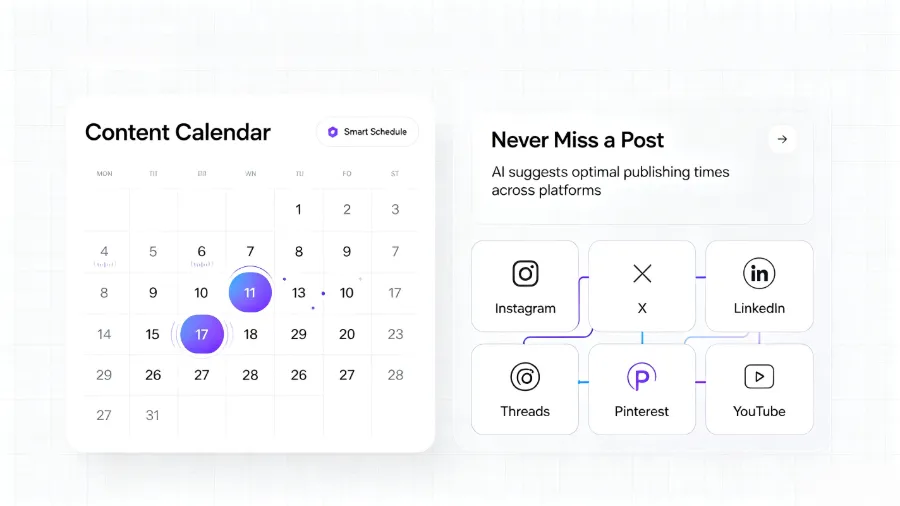
Use a content calendar to plan holiday schedules in advance, marking each country’s holiday dates, content delivery milestones, and review windows. This at least prevents the awkward situation of “realizing on Thanksgiving day that you need a graphic.”
Pitfall 3: One‑size‑fits‑all content, completely wrong platform tone
This is the most common mistake made by cross‑border sellers. A single English product post copied verbatim to LinkedIn, Instagram, X, and TikTok yields poor results on all four platforms. The issue isn’t the content itself, but that each platform’s user expectations are completely different.
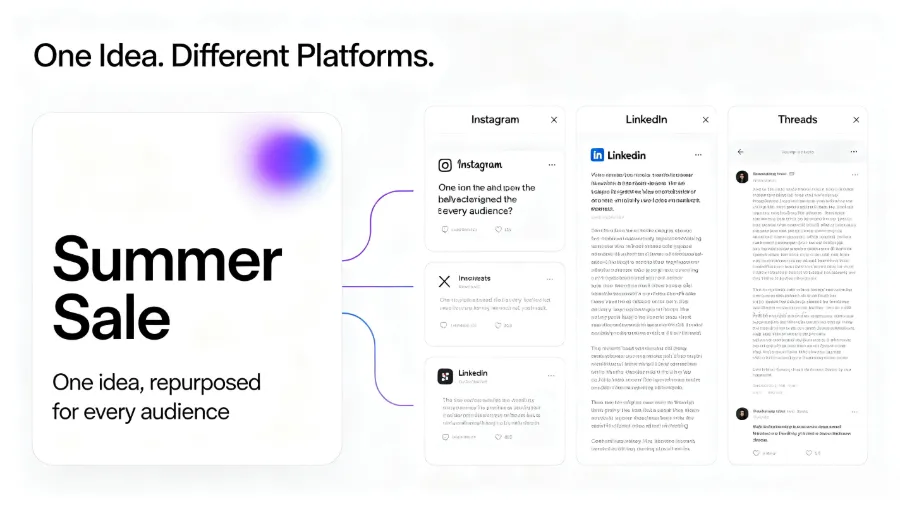
Here’s how the same theme should be written for each platform:
| Platform | Content Style | Character Limit | Best Posting Time (ET) |
|---|---|---|---|
| Professional, data‑driven, long‑form share | 3000 characters | Tuesday‑Thursday 8‑10 AM | |
| Visual‑first, storytelling, light copy | 2200 characters (ideally ≤80) | Monday‑Friday 11 AM‑2 PM | |
| X | Short, fast, trend‑driven, opinionated | 280 characters | Weekdays 9 AM‑3 PM |
| TikTok | Entertaining, native feel, strong rhythm | ≤150 characters | Tuesday‑Thursday 2‑5 PM |
Long‑form posts over 3000 characters on LinkedIn get 40 % higher engagement than short posts, but a TikTok caption longer than 150 characters will simply be ignored. This isn’t a “good vs. bad content” issue; it’s “content suited for the platform” versus “content not suited for the platform.”
Manually rewriting for each platform is time‑consuming, which is why many teams now use AI tools—such as Flownib (https://flownib.com)—that automatically adapt a single piece of content to each platform’s style and character limits, eliminating the copy‑and‑paste step. If you’re still doing it manually, check out the comparison of the 10 best AI social‑media management tools (https://flownib.com/p/insights/10-best-ai-social-media-management-tools-in-2026-compared-ranked/index) to see what’s available.
Pitfall 4: Not understanding algorithm rules, content never reaches target users
Even if the copy is right and the platform is right, nobody sees it—most likely because the algorithm blocked it.
Instagram now prioritizes Reels, which account for over 60 % of recommended traffic. Posting only static images on Instagram will naturally receive far less exposure than Reels. LinkedIn’s News Feed algorithm favors original long‑form posts and early engagement; repurposed content or pure external links get almost no organic reach. TikTok’s For You Page is entirely driven by completion rate and re‑watch rate; if you don’t hook viewers in the first three seconds, the post is dead.
Hashtag strategies also differ. Instagram performs best with 5–10 hashtags, X needs only 1–2, and using hashtags on LinkedIn can actually reduce recommendations. Many sellers copy Instagram’s hashtag strategy to LinkedIn, resulting in the algorithm flagging the content as spam.
Timing matters too. LinkedIn’s official marketing solutions note that 8‑10 AM on weekdays is the golden window for B2B content, while Instagram sees the highest interaction during lunch (11 AM‑2 PM). Posting at 3 AM ET won’t earn you traffic just because you “posted.”
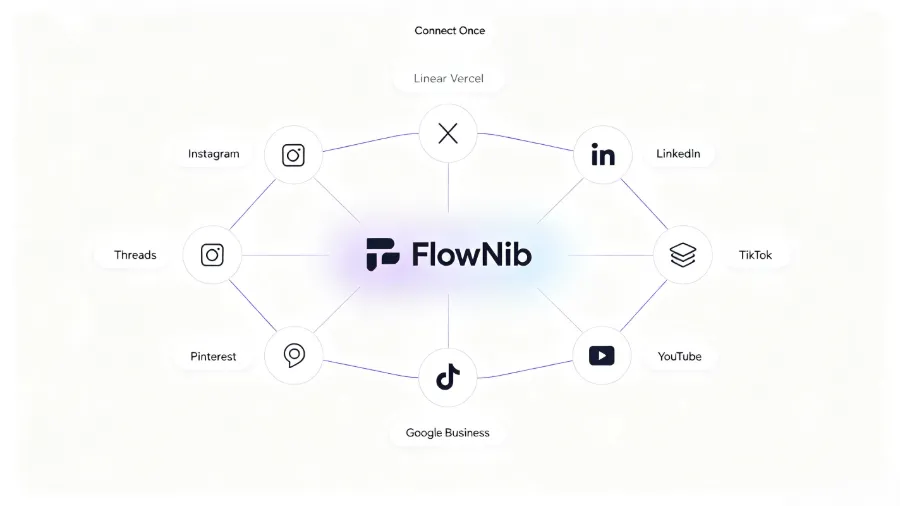
The complexity of multi‑platform management lies here. Each platform has its own rules, hashtag strategy, and posting schedule—human memory can’t keep up. Tools like Flownib consolidate scheduling and account management for all platforms into a single interface, so you no longer have to hop between ten back‑ends daily. If you want to learn how to execute a full‑platform coverage for a product launch, see the article “Product Launch Day Social Media Full‑Platform Coverage Strategy” (https://flownib.com/p/local/en/product-launch-day-social-media-blitz/index).
Pitfall 5: Publishing and then disappearing, interaction and crises go out of control
Many sellers’ social‑media workflow ends at “post successful.” After publishing, they ignore comments, don’t handle direct messages, and leave negative feedback unattended. In the Western market, this is a fatal mistake.
78 % of consumers say a brand’s quick response on social media boosts their loyalty. Conversely, a negative comment left unaddressed for 48 hours can turn into a small‑scale PR crisis. Western users expect a response within 24 hours, ideally within 12 hours. Anything beyond that makes users feel “the brand doesn’t care about me.”
Comment management isn’t just replying “thanks for your feedback.” Negative comments need categorization: product‑experience issues should be guided to customer service, malicious attacks can be ignored or deleted, but reasonable criticism must be publicly addressed. A common mistake is deleting all negative comments—in the West, this often triggers a larger trust crisis, as users think the brand is “covering up.”
User‑generated content (UGC) is also part of post‑publish management. Western users love seeing brands repost their real‑world experiences; this is more persuasive than any ad. If you don’t even reply to comments, you won’t discover or leverage UGC.
Publishing is not the end. Social‑media operation is a loop of “publish‑monitor‑respond‑adjust.” Skipping the last three steps after the first makes all the effort spent on content creation and localization essentially wasted. HubSpot’s marketing blog reports that companies that respond quickly to customer issues on social media see a 15 %+ higher customer retention rate.
FAQ
Q1: How many languages should social‑media content be translated into for the Western market?
At least three: American English, British English, and the local language of the target market (e.g., German, French, Spanish). American and British English differ noticeably in spelling, vocabulary, and tone, so don’t use a single English version for all English‑speaking countries. If budget permits, create separate content for French and German markets rather than simply translating from English.
Q2: Can the same product content be used across different Western countries?
Not recommended. Even if the product itself doesn’t change, user focus varies by country. US users prioritize price‑performance and convenience, German users care about technical specs and durability, and French users value design and brand story. The same content will perform very differently across markets.
Q3: What social‑media behavior do Western users hate the most from brands?
Over‑marketing and “robotic” replies. Western users have a much lower tolerance for hard‑sell tactics than Asian markets. They prefer brands that “talk like a human”—with opinions, attitudes, and occasional self‑deprecation. Accounts that only post promotional messages and product links are quickly blocked or unfollowed.
Q4: My small team has limited resources—how can we manage multiple Western social‑media platforms simultaneously?
Prioritize 2–3 platforms that are most relevant to your product instead of trying to cover everything. B2B products focus on LinkedIn and X; consumer goods prioritize Instagram and TikTok. Use a content calendar to plan schedules, produce content in bulk, then adapt it per platform to reduce fragmented publishing.
Q5: How soon after posting should we reply to comments to be considered timely?
The Western standard is within 24 hours, ideally within 12 hours. Negative comments need an even faster response—initial acknowledgment within 4–6 hours, indicating the brand has seen the issue and is handling it. Waiting more than 48 hours to reply will noticeably lower user satisfaction.
Share Article