
When Using AI for Content in Cross‑border E‑commerce, Don’t Skip Brand Context

Cross‑border e‑commerce teams often give the same product to generative AI and ask it to write social posts in Chinese, English, and Japanese separately. The result is usually not grammatical errors but Chinese posts emphasizing functionality, English posts highlighting discounts, and Japanese posts adopting a completely different brand tone. The content looks publishable, but it doesn’t sound like it comes from the same brand.
What AI content production usually lacks isn’t more prompts, but a layer of brand context that can continuously constrain the output. It needs to tell the model the brand positioning, product facts, target audience, market restrictions, and non‑negotiable commitments before deciding how the content should adapt to language and platform.
Brand context is not “maintain brand tone” in a single sentence; it’s a set of maintainable facts and rules. It puts product selling points, audience priorities, market taboos, promotional conditions, and platform expression styles into the same production workflow, reducing the need for repeated rework of multilingual content before publishing.
Why AI‑Generated Content Can Lose Brand Fidelity
General AI can already handle language translation, platform rewriting, and content expansion. It can turn a product description into an Instagram caption, add background for LinkedIn’s style, or break a long article into a TikTok script. These actions mainly deal with language and format; they don’t mean the model understands brand positioning, product boundaries, or audience priorities.
Distortion in cross‑border e‑commerce usually occurs within sentences that seem fine. A Chinese market may emphasize “lightweight and easy to store,” but when the model translates to English it might turn “suitable for small apartments” into a vague “enhances quality of life.” Discount information that should only appear on a promotional page gets placed in the first sentence of every social post. Instagram uses a casual tone, while LinkedIn suddenly becomes a formal corporate announcement. Each piece looks okay in isolation, but together they create contradictory brand impressions.
There’s a often‑confused distinction: content correctness ≠ brand correctness. The former focuses on product parameters, grammar, translation, and link accuracy; the latter also judges whether the message aligns with brand positioning, delivers the right selling points to the right audience, and avoids unauthorized promises in specific markets.
The same brand may need to cover ten social platforms. The more platforms, the harder it is to keep the original prompt consistent, because each platform has its own character limits, content rhythm, media specs, and interaction habits. If a team only pastes a description each time it generates content, the review work doesn’t disappear—it just moves from the writing stage to pre‑publish.

Many teams later centralize social accounts, content status, and review steps. Related cross‑platform social media management approaches reduce window switching, but they still cannot decide what should or shouldn’t be said. The distribution layer solves execution order; the brand context provides the judgment basis. For how different tools can be stitched together in a cross‑border workflow, see this cross‑border content tech stack collaboration guide.
Even more troublesome, the value of brand context isn’t just about tone consistency. It also needs to tell AI which product facts, market promises, and expression styles must not be altered. For example, a delivery time of “estimated 5‑8 business days” should not automatically become “delivered within a few days” just because a market prefers a faster promise.
What Reusable Information Should a Brand‑Context Layer Contain
A brand archive that actually participates in production must at least capture brand positioning, product catalog, audience personas, market goals, and immutable facts. Product facts shouldn’t be limited to “high quality” or “suitable for young people”; they should also record dimensions, material, applicable scenarios, certification scope, inventory status, and which features are unverified.
It’s best to split the context into at least five categories and assign a responsible owner for each: brand positioning, product facts, target audience, market rules, and content goals. The brand owner can maintain mission and tone, the product team handles the catalog, regional operations manage language localization and cultural taboos, legal/compliance handles market compliance, and the marketing team updates seasonal objectives.
Not all information belongs in the same permanent layer. Brand mission, core selling points, prohibited words, and product boundaries are usually stable; holiday events, price, inventory, delivery promises, discount periods, and platform trends are dynamic. If dynamic information lacks an effective date and owner, the model will easily keep referencing last quarter’s content.
Rules in different countries cannot be solved by “natural translation” alone. The brand archive should record locally preferred language forms, cultural taboos, currency expressions, delivery promises, return policies, and compliance limits. For example, one market may allow “limited‑time offer,” but that doesn’t mean another market can use the same intensity of scarcity language; a selling point translated from English to German may change sentence length and promise strength.
Scattered material in old copy, chat logs, spreadsheets, and team members’ memories does not count as reusable context. AI needs structured fields, rules, and versions, not guesses from dozens of historical dialogues. Brand context should be maintained like a product catalog or audience persona, not written once and dropped into an unread document.
| Comparison Dimension | General Prompt | Brand‑Context Layer |
|---|---|---|
| Input Information | Ad‑hoc requirements | Structured brand & market data |
| Output Consistency | Relies on operator memory | Constrained by stable rules |
| Market Adaptation | Mainly translation & rewriting | Combines language, culture, and compliance rules |
| Maintenance Method | Edit whole prompt | Update fields with owners |
The multilingual content generation interface shown in the picture solves the entry point for fetching data and generating content; it cannot replace the data‑update mechanism itself. If prices have changed but the archive is still old, a more convenient interface actually speeds up the spread of errors.
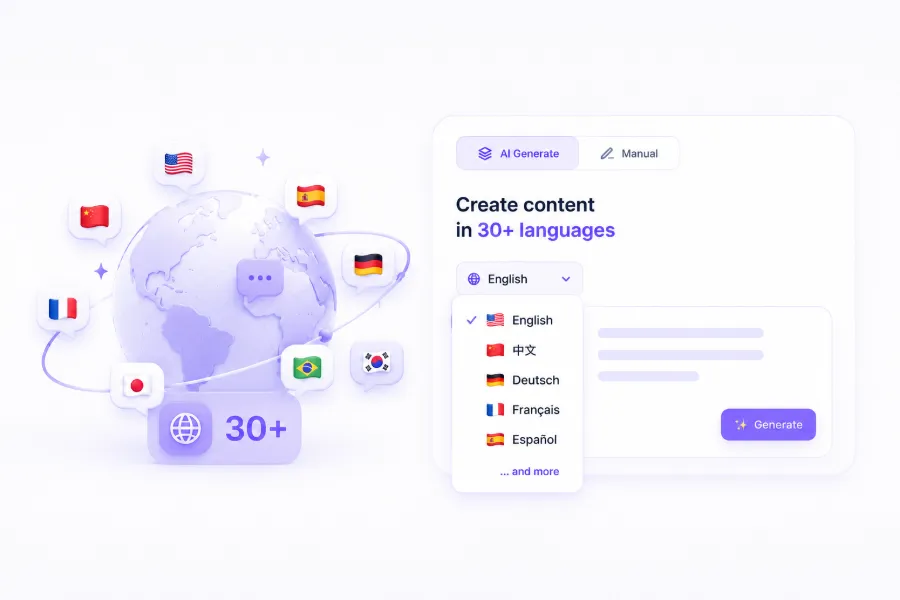
Integrating Brand Context into Cross‑border Content Production
The actual workflow can start with collecting brand material, not opening a chat window. The product team first submits product facts and available assets, the regional team adds market constraints, the marketing staff fills in content goals, and then a core version for internal review is generated. This core version should first ensure factual accuracy before moving to market and platform rewrites.
Cross‑border teams usually follow this order:
- Gather brand material, confirm product facts, audience, and current market rules; generate a fact‑accurate core piece; rewrite per country, language, and platform; after human review, publish and record version, account, and timestamp.
Flownib is more like a tool case in the publishing and distribution flow: it can rewrite AI content for different platforms and publish after linking multiple social accounts. Its page shows support for Instagram, X, LinkedIn, TikTok, Pinterest, etc., ten social platforms, with an average setup time of about 2 minutes. These numbers illustrate that the distribution layer can reduce copy‑pasting and tab switching, but they do not mean the brand context itself is complete.
For example, when launching a summer clothing line, the core content can lock in material, suitable temperature, inventory region, and official promotion period. For Instagram, the system adjusts the opening, image caption, and interaction sentence; for X, it compresses information while keeping the link; for LinkedIn, it may focus on supply‑chain materials or design background. The format can differ per platform, but “who it’s for,” “what the product can do,” and “promotion end date” must not be rewritten into a different set of facts.
One‑click multi‑platform distribution and scheduled publishing reduce operational friction, and a content calendar lets the team see which pieces are approved and which are still being edited. They’re especially useful for product launches and seasonal items, but not all channels should be set to identical automatic publishing rules. For how the distribution layer affects content operations, see AI‑driven content distribution analysis and social media management practice resources.
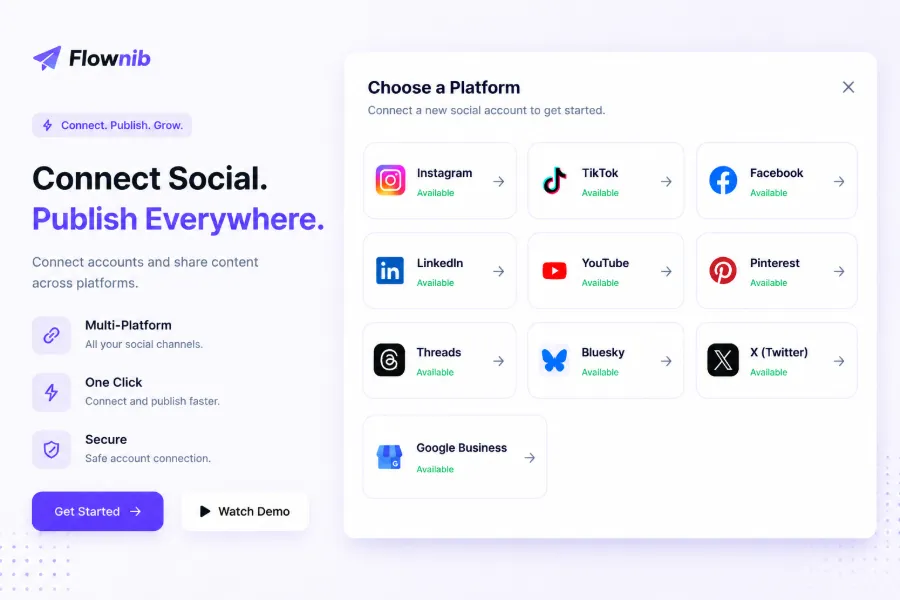
Official API connections can centralize publishing records and reduce the burden of logging into multiple platforms, but a successful status from the platform does not equal identical exposure. Instagram’s visual focus, TikTok’s first‑second video hook, LinkedIn’s professional context, and Pinterest’s search‑style titles still need separate reviews. Multi‑platform distribution solves “where to publish” and “when to publish,” but it does not automatically solve “what the brand should say.”
Brand Context Still Needs Governance, Review, and Updates
After AI speeds up generation, the risk shifts to context maintenance. Expired prices, invalid promises, wrong audience assumptions, and unapproved brand statements can be propagated to multiple markets in one go. In the past, a single mistaken post might affect only one account; now the same erroneous fact can travel through the content calendar into ten channels.
Some teams updated only the original copy before an event launch, without syncing the brand archive and market rules. In the first week after launch, several channels kept publishing old discounts, and some markets showed inapplicable delivery promises. When customers asked about the promotion, support had to explain each post individually; operations repeatedly deleted, reposted, and checked schedules, eventually realizing the problem wasn’t a model glitch but the model faithfully using outdated data.
That failure made the team separate “generation complete” from “ready to publish.” Product facts, market language, promotion periods, platform formats, sensitive expressions, and final links all need human review before publishing. High‑risk content should not skip approval just because it’s automated; automation saves execution time, not responsibility verification.
Content calendars and publishing logs should record the context version used at generation, the modifier, reviewer, and final published content. When an error occurs, the team can determine whether it stemmed from an outdated product archive, unsynchronized market rules, AI rewriting overreach, or a missed review. Publishing logs also help teams compare against Instagram scheduled content view to confirm whether old versions remain in the platform schedule.
Brand context should be updated at every major product, price, or market‑strategy change. Initially, set a 24‑hour manual review window for high‑risk content; as error types and review load stabilize, gradually shorten it. This process can be slow, especially during promotional peaks, but sending unverified dynamic fields to bulk publishing usually pushes cleanup costs even higher later.
A Minimal Checklist to Verify Brand Context Effectiveness
The effectiveness of brand context can’t be judged by how many pieces of content were generated in a month. A higher volume may just mean the model is repeating old mistakes faster. More useful metrics include manual edit rate, rework count, error‑publish count, and approval time, plus whether manual edits address grammar or correct selling points, promises, and market expressions.
Before publishing, follow a fixed minimal verification order: product facts accurate, target market clear, brand tone consistent, platform rewrite natural, call‑to‑action still valid. The order isn’t to add a table but to prevent reviewers from being drawn first to sentence fluency and only later discovering an expired price.
The first audit should cover at least three dimension combinations: one core market, one secondary market, and one main social platform. Teams can compare two rounds of content for the same product to see whether core selling points stay consistent, local rules are obeyed, and platform adaptation feels natural, rather than demanding three pieces be word‑for‑word identical.
“Consistency” does not mean every platform uses the same sentence structure. Multilingual content must retain shared facts and brand judgments while allowing local language, cultural context, and platform format to vary. If the English version changes the product promise for naturalness, or a TikTok version adds an unapproved efficacy claim to attract attention, the localization has already crossed the brand boundary.
Finally, teams should first structure brand knowledge, then scale up content production and distribution. Only when data has fields, rules have owners, changes have versions, and publishing has records can shifts in manual edit rate and rework count be meaningfully explained. Brand context is not a side note next to the generator; it’s an operational asset linking product, market, content, and approval.
The judgment criteria are simple: the same core information should stay factually consistent across markets and be appropriately adapted across platforms; errors should be traceable to a specific version; major changes should be intercepted before publishing. Once this level is reached, expanding content volume won’t just amplify rework and errors.
FAQ
What is brand context in AI content creation?
Brand context is a continuously maintained set of brand positioning, product facts, target audience, market rules, and content goals. It tells AI which information can be rewritten and which delivery, price, and efficacy promises must stay unchanged. In practice, it should be tied to publishing records and updated after every major change.
How does brand context differ from a detailed prompt?
Brand context is field‑based operational data that can be versioned and owned; a detailed prompt is usually a one‑off task input. The former can record owners, versions, and effective dates; the latter often changes with the operator. Teams can compare two rounds of content to see differences in rework count and manual edit types to validate the impact.
What information should a cross‑border e‑commerce brand context contain?
At minimum it should include brand positioning, product catalog, audience personas, market goals, and immutable facts, plus language preferences, cultural taboos, currency expressions, delivery promises, and compliance limits. Price, inventory, and promotion periods are dynamic fields that should be reconfirmed before publishing.
Should multilingual content use the same brand context?
Stable brand facts should be shared, but not all markets should use exactly the same expression rules. Core selling points and product boundaries can be unified; language localization, cultural restrictions, delivery promises, and platform formats need market‑specific maintenance. Each release should include at least one core market and one secondary market in its pre‑publish check.
How to determine if AI‑generated content truly aligns with the brand?
Don’t look only at grammar and volume; also monitor factual errors, manual edit rate, rework count, error‑publish count, and approval time. Conduct two consecutive audits across different languages, platforms, and product categories. If core information stays consistent and market rules aren’t repeatedly broken, the brand context is functioning as intended.
Share Article


