2026 Influencer Marketing Platform Selection Guide: How to Use Tools to Drive Measurable ROI
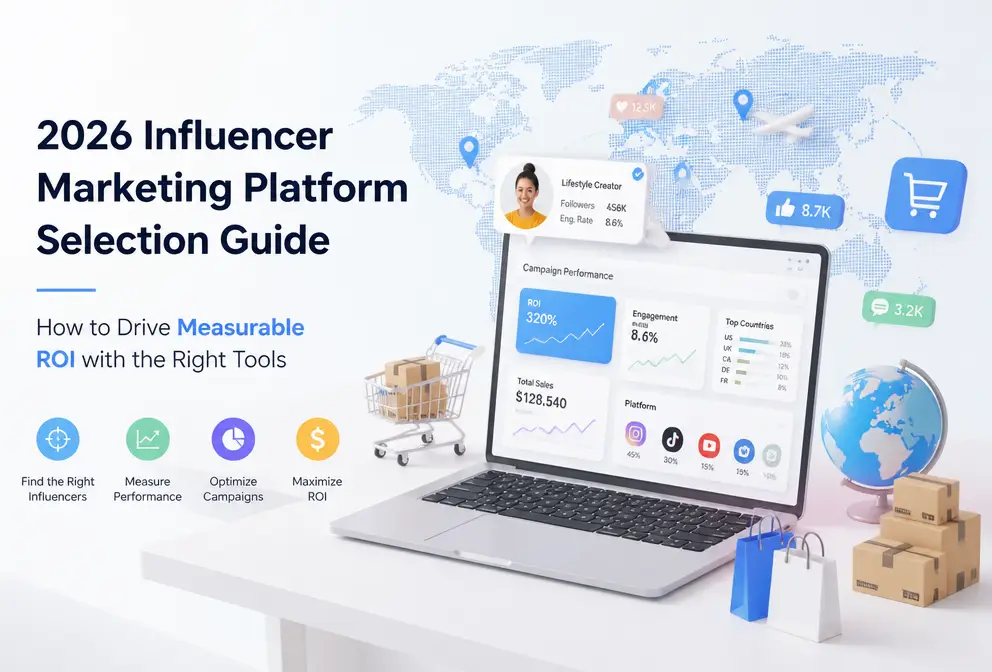
When your team is under budget scrutiny from leadership in a $33 billion market, yet still managing dozens of creator relationships with spreadsheets, that sense of mismatch should feel familiar. You run campaigns, produce content, and get likes, but leadership asks, “How much sales did this generate?” The gap between “We ran an influencer campaign” and “This is the actual revenue it delivered” is exactly where most projects stall. The problem isn’t that influencer marketing itself has failed; it’s that you lack a closed‑loop tool system that can prove ROI.
What Is an Influencer Marketing Platform? What Real Pain Points Does It Solve?
An influencer marketing platform is essentially software that frees you from scattered spreadsheets, email threads, and manual screenshots. It consolidates creator discovery, campaign execution, contract payment, and data analysis into a single dashboard, so you no longer have to hop between five tabs to see the full picture.
Different types of platforms solve different problems. If you only run occasional product‑gift campaigns, a transaction marketplace is enough—quickly match creators, ship samples, receive content. But if you need to maintain long‑term relationships with dozens of creators and manage multiple campaign rounds, an influencer CRM is a better fit. Affiliate commission platforms focus on sales tracking and pay‑per‑sale, while fully managed services suit brands that want to outsource both strategy and execution.
| Platform Type | Best‑Fit Scenarios | Typical Use Cases |
|---|---|---|
| Transaction Marketplace | Quick one‑off collaborations | Gift campaigns, sample swaps |
| CRM Management Software | Ongoing multi‑campaign management | Multi‑round creator relationship maintenance |
| Affiliate Platform | Commission‑driven | Sales tracking, revenue sharing settlement |
| Fully Managed Service | End‑to‑end management | Enterprise‑level large campaign execution |
The influencer marketing market reached $33 billion in 2025, but a painful reality lies behind that number: most teams use only 20 % of a platform’s features while paying for 100 % of them. A longer feature list doesn’t guarantee better campaign performance; it can increase selection cost and onboarding burden.
How to Evaluate Influencer Marketing Platforms? Ask Yourself Five Questions First
Before scheduling any demo, conduct an internal resource audit. Don’t let sales pitches steer you—clarifying your real needs is the key to picking the right tool.
1. Team manpower. Do you have dedicated influencer ops staff? If only one person is juggling creator relationships part‑time, a feature‑heavy complex platform will only slow you down. You need a tool with high automation and low learning curve.
2. Campaign frequency. How many campaigns do you run per year? If it’s no more than two or three per month, a transaction marketplace may be more practical than a CRM. If you have new creators every week, you need a system that can manage long‑term relationships.
3. Measurement needs. What data does leadership actually want? If they only care about reach and engagement, basic reports suffice. If they ask, “How many conversions and sales did each creator generate?” you need full‑funnel attribution.
4. Tech stack integration. Can the platform connect with your existing e‑commerce backend, CRM, or ad systems? Data silos are one of the biggest obstacles to proving ROI. If you already have social‑media automation workflows, refer to the AI Social Media Automation Trends 2026 for industry integration directions.
5. Creator payment processing. Does the platform handle contracts, tax forms, and payouts? This is especially critical if you frequently work with cross‑border creators—manual international payment compliance can stall the whole campaign cadence.
Bring answers to these five questions into demos, and your inquiries will be more targeted than most teams’. For example: “How does the platform detect fake followers?”, “Average time from search to contract signing?”, “Can I export raw data for custom reporting?”, “Is onboarding training extra‑charged?”. These operational details reveal suitability better than a feature list. For a deeper methodology on team resource audits, see the Hootsuite Blog Social Media Management Guide.
2026 Top Ten Influencer Marketing Platforms Comparative Overview
We evaluated ten mainstream platforms on discovery, campaign management, measurement depth, and integration options. Below are brief analyses of several representative platforms.
Later is a full‑funnel influencer marketing platform that uses AI‑driven creator matching, predicting collaboration outcomes from historical campaign data instead of manually browsing social profiles. Its unified reporting can directly link creator content to e‑commerce sales data, which is crucial for proving ROI. If you’re interested in AI for creator matching, the Later Blog Influencer Marketing Content offers many case studies.
Hootsuite has deep expertise in social‑media management; its influencer marketing features focus on campaign execution and content scheduling integration. If your team already uses Hootsuite for daily social publishing, adding influencer tools within the same ecosystem reduces learning overhead.
Other platforms such as Upfluence, Aspire, Grin, and CreatorIQ each have their own strengths—some excel at discovery database coverage, others at contract and payment workflow granularity, and some focus on deep e‑commerce store integration. A common observation is a noticeable gap between platform feature distribution and actual usage. Many teams are attracted by a standout demo feature, only to use the basic modules after purchase.
Real case from Q4 2024: A mid‑size e‑commerce team chose a feature‑stacked platform, lured by its “all‑in‑one” positioning. After launch, they realized the two‑person influencer ops team lacked the capacity to configure advanced automation workflows and custom reporting modules. The campaign was delayed by three weeks, the budget overspent by 40 %, and they eventually switched back to a lighter tool. This lesson underscores that more features do not equal a better fit.
How Can Influencer Marketing Platforms Help You Prove ROI?
Moving from “showing campaign data” to “connecting revenue” is the true value transformation of influencer platforms. Traditional campaign reports linger on vanity metrics—impressions, engagement rates, follower growth—while leadership wants to see direct sales, new customers, and acquisition cost.
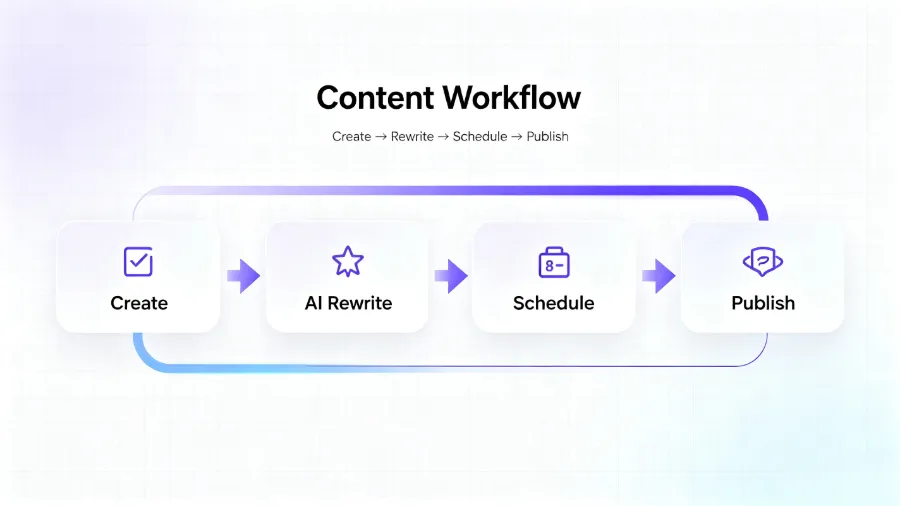
Full‑funnel attribution is the key. Good platforms tie creator referral links or discount codes to the e‑commerce backend, tracking the complete path from impression to click to purchase. You no longer guess a creator’s sales contribution; you see exact conversion numbers.
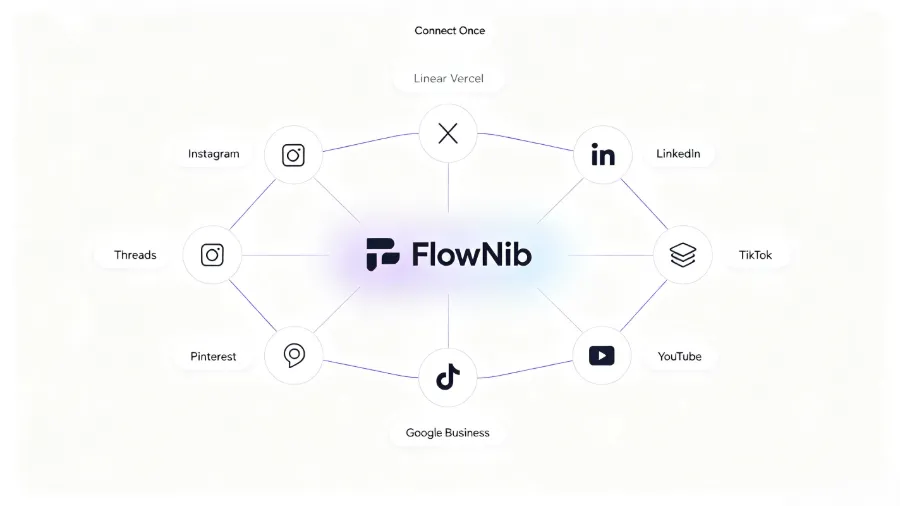
However, a often‑overlooked bottleneck is not data tracking but the efficiency of multi‑platform content distribution after creation. When a creator produces content, you must publish it across Instagram, TikTok, YouTube Shorts, etc., while maintaining consistent timing. Manual copy‑pasting slows launch speed and can miss optimal publishing windows. When teams need to sync creator content across multiple social channels, manual effort directly drags the campaign pace. AI distribution tools like Flownib solve this friction by enabling a single creation, automatic rewriting, and auto‑publishing across platforms.
AI predictive capabilities also reshape ROI proof. Platforms can simulate expected performance of different creator combos using historical data, delivering estimated engagement and conversion ranges before budget commitment. This turns budget requests from gut‑feel numbers into data‑driven recommendations. For a complete full‑funnel attribution case study, see the Full‑Funnel Closed‑Loop Example: Independent Shoe Brand Three‑Tool Collaboration, which breaks down the entire chain from content creation to sales attribution.
How to Choose the Right Platform for Your Team?
For teams that need to manage multi‑platform publishing cadence, Flownib’s AI rewriting and one‑click distribution can dramatically cut manual work. Selecting a platform isn’t just about a single tool’s features; it’s about whether the overall workflow is smooth.
Small teams (1–2 people): Choose a transaction marketplace or lightweight CRM. Your goal is to quickly test whether influencer marketing fits your brand without committing to a full‑feature platform. Transaction marketplaces offer ready‑made creator pools and pay‑as‑you‑go pricing, ideal for low‑budget pilots. If you need simultaneous publishing across multiple social channels, refer to the Low‑Cost Global Social Media AI Distribution System for Startup Brands for resource‑efficient multi‑platform coverage.
Mid‑size teams (3–10 people): Opt for influencer CRM software. You have dedicated staff managing creator relationships and need more detailed campaign management, contract handling, and reporting. Prioritize automation—auto‑signing, auto‑payments, auto‑report generation—to free the team from repetitive tasks.
Large teams or high‑frequency campaigns: Choose fully managed services or enterprise‑grade platforms. Your campaigns are large and frequent, requiring end‑to‑end management, strategic support, dedicated account managers, and custom integrations. Enterprise platforms typically support complex permission structures and cross‑department collaboration.
Another often‑overlooked factor is the real experience during the trial period. Many platforms offer free trials, but a 14‑day window is usually insufficient for a complete campaign cycle. You need to complete a full loop—from creator discovery to content publishing to data collection—to judge suitability. If you haven’t finished the loop by the trial’s end, request an extension—most vendors will agree.
Frequently Asked Questions (FAQ)
What’s the difference between an influencer marketing platform and a regular social‑media management tool?
Social‑media management tools focus on content scheduling and publishing, while influencer platforms manage the full creator lifecycle—from discovery and contracts to content review, payment, and performance tracking. They can complement each other but address different operational stages.
What type of platform should a small team choose?
Start with a transaction marketplace or lightweight CRM. Marketplace platforms charge per collaboration, avoiding long‑term subscriptions, and suit low‑budget, low‑frequency teams. Upgrade to a more feature‑rich CRM as campaign scale grows.
How do platforms detect fake followers?
Mainstream platforms analyze growth patterns, engagement‑to‑follower ratios, and content quality to assign a fraud‑risk score before you reach out to a creator, helping you avoid wasting budget on counterfeit accounts.
Can an influencer marketing platform directly connect to my e‑commerce store?
Most mid‑to‑high‑end platforms support native integrations with Shopify, WooCommerce, and other major e‑commerce solutions. This enables end‑to‑end tracking from creator links to order conversion—a critical ROI capability. Integration depth varies, so confirm the required data‑return method during selection.
Are free‑trial platforms worth trying?
Yes, but set clear goals. Run a complete campaign flow—creator discovery, content publishing, data retrieval—during the trial to assess fit. If the trial period is insufficient, proactively ask sales for an extension; they usually accommodate reasonable requests.
Share Article