AI Agent Is Taking Over Content Distribution: Are You Ready?
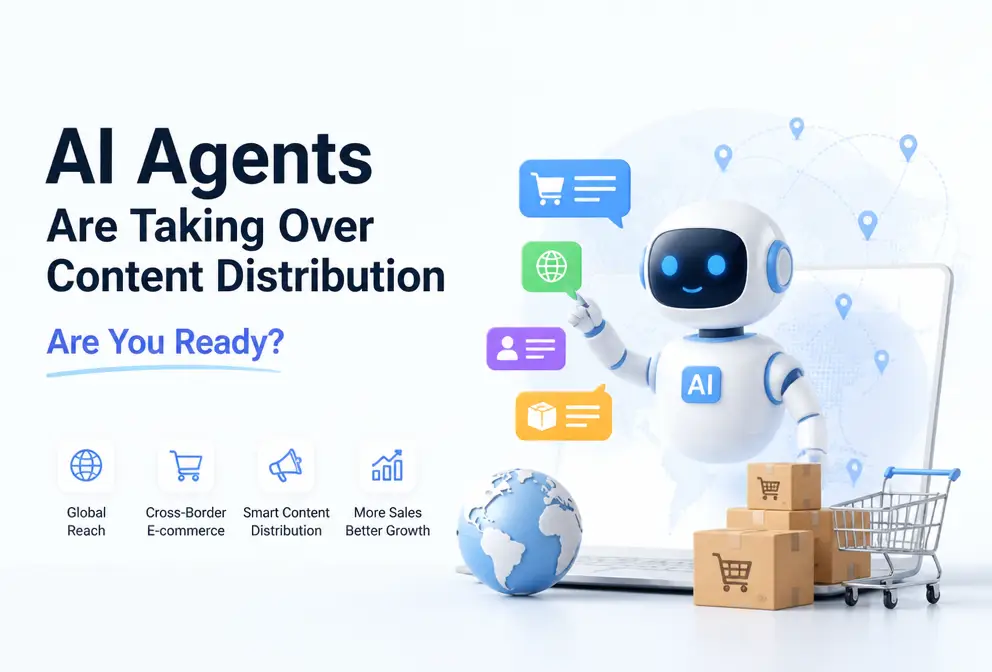
You open your computer, Claude has just helped you write a product copy, and Cursor has automatically generated the image code. But you realize that the real time sink isn’t writing; it’s manually copying that content to Instagram, LinkedIn, X, Threads, and then adjusting formatting and character counts one by one. This “write‑then‑publish” gap is exactly the blank that AI Agents are filling—and most people haven’t realized that automating content distribution is the real breakthrough for efficiency bottlenecks.
An operator spends on average 40 % of their day on copy‑pasting. This isn’t an exaggeration—when you have to maintain five social platforms at once, each piece of content must be manually adapted to character limits, image sizes, and hashtags. By the end of the day, the time actually spent “thinking about content” is pitifully small. Creation tools have evolved through several generations, but the distribution stage is still stuck in a decade‑old workflow.
Why “Writing” Isn’t the Bottleneck, “Publishing” Is
A typical day for a cross‑border e‑commerce operator looks like this: in the morning, use Claude to generate five product copies; at noon, use Cursor to batch‑process images; then start manually copying and pasting to Instagram, LinkedIn, X, Threads. Every time you switch platforms you have to re‑format—Instagram needs a short caption with tags, LinkedIn requires a professional tone with links, X must be trimmed to 280 characters, and Threads needs a more casual conversational tone. The morning ends up fragmented into dozens of tabs.
I call this gap the “content distribution gap”—the disconnection between creation and publishing. AI writing tools have lowered the barrier to creation dramatically, but distribution still relies on manual work. An operator’s daily time spent on formatting adjustments and tab switching adds up to enough time to write three in‑depth articles. A more hidden problem is that the more manual steps you take, the higher the error rate—copying the wrong version, forgetting to change hashtags, posting to the wrong account. These low‑level mistakes are almost inevitable on busy publishing days.
How AI Agents Reshape the Distribution Process
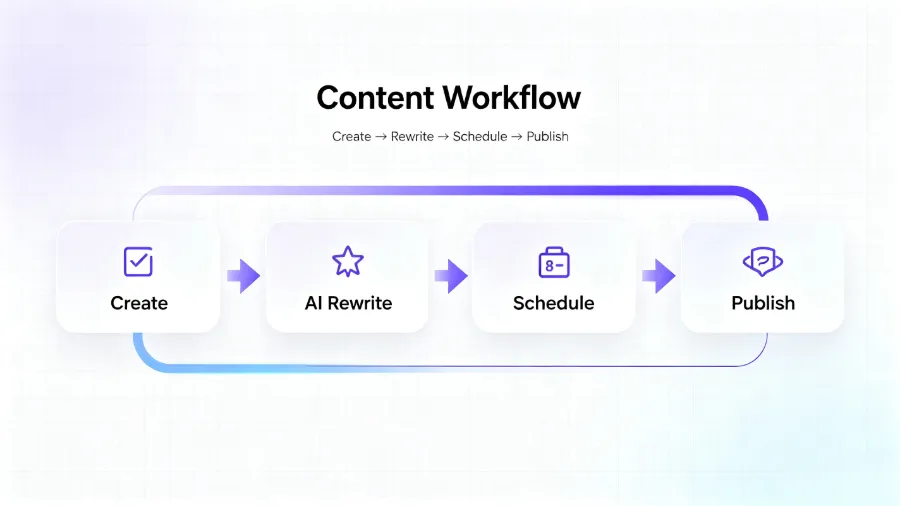
The core capability of AI Agents in the distribution stage isn’t simply “scheduled sending”; it’s automatic rewriting, intelligent scheduling, and one‑click publishing. After a product promotion copy is written, the AI automatically analyzes each platform’s characteristics—Instagram needs a visually driven short caption with tags, LinkedIn requires a professional tone with industry insights, X needs a concise sentence with a link, and Threads calls for a more relaxed conversational tone. The whole process requires no human intervention.
The difference between the traditional manual workflow and the AI‑Agent‑driven workflow is clear in this comparison:
| Stage | Manual Process Time | AI Agent Process Time | Error‑Rate Change |
|---|---|---|---|
| Content rewriting | 5–10 min per platform | Automatic | ↓ 90 % |
| Scheduling & publishing | 3–5 min per platform | One‑click | ↓ 100 % |
| Multi‑account management | 10 min per day | Unified dashboard | ↓ 80 % |
This workflow paradigm shift can be summed up as “create once, publish everywhere.” You only need to write one piece of content; the rewriting, adaptation, scheduling, and publishing are all handed over to the AI Agent. Setting up the whole flow takes about two minutes—connect accounts, select platforms, confirm publishing preferences, and you’re on the automated track.
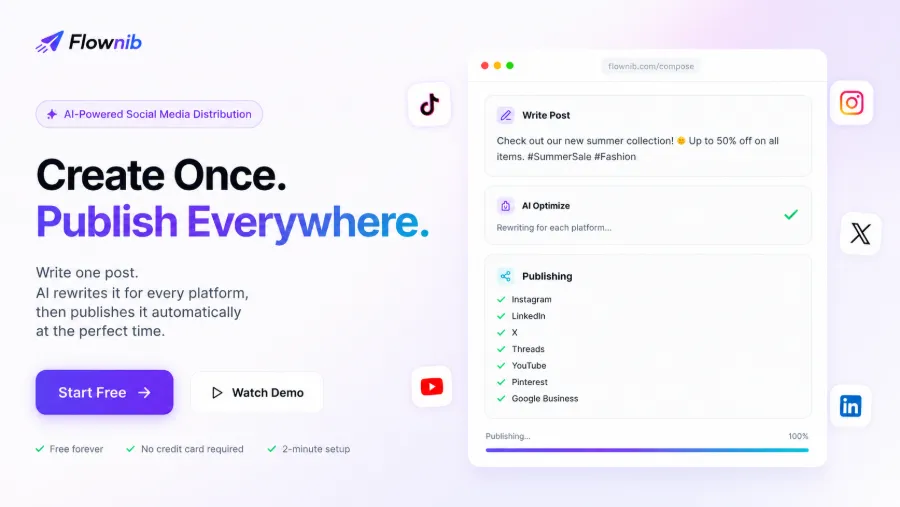
When describing a one‑click distribution scenario, Flownib offers a typical approach: you write a piece of content, the system automatically generates adapted versions for each platform, you preview and confirm, then click once to publish to all connected accounts. No need to log in to each platform or repeatedly adjust formats.
Real‑World Scenario for Cross‑Border E‑Commerce Operators: A Closed Loop from Creation to Publication
A typical workday for a cross‑border seller looks like this: at 9 am, AI writes five product copies; at 10 am you start manually posting to TikTok, Facebook, Instagram, LinkedIn, and Google Business. Each piece of content must be individually adjusted—TikTok needs a short caption with trending tags, Facebook favors story‑style long posts, Instagram is visual‑first, and LinkedIn must stay professional. By the time everything is posted, it’s already 2 pm. If you have to reply to customer messages in between, you might be pushed to 3 pm.
The hidden cost of this manual process goes far beyond time. Inconsistent publishing times cause missed peak‑traffic windows—posting on LinkedIn at 2 pm misses its active user window of 8 am–10 am. Formatting errors lead to content being throttled—an AI‑generated copy containing a link gets flagged as spam on Instagram because of link‑format rules. These issues are almost unavoidable with manual operations because you can’t remember every platform’s rule.
If you’re comparing tools on the market, see this AI Social Media Management Tools Comparison Ranking for differences. After an AI Agent takes over the entire distribution process, the workflow becomes: automatic rewriting → intelligent scheduling → synchronized publishing → data tracking. You only need to spend 15 minutes in the morning confirming content; everything else is automated.
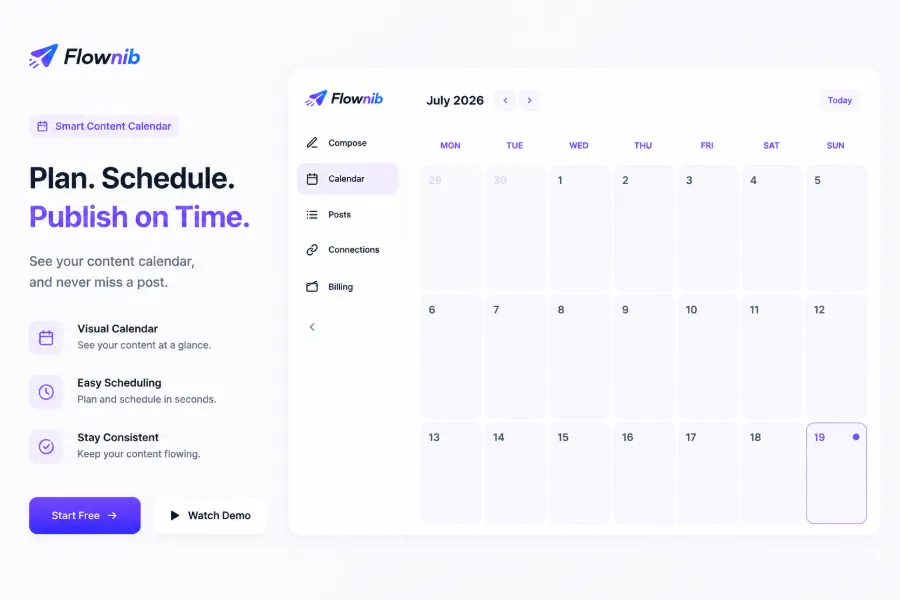
The content calendar feature is especially valuable for team collaboration. Previously, each team member maintained a separate posting list, leading to duplicate or missed posts. With a unified calendar view, it’s crystal clear who is responsible for what content, when it’s scheduled, and on which platforms. For detailed steps, refer to the tutorial How to Use FlowNib for One‑Click Creation and Adaptation Across 10 Platforms, which breaks down the process from content input to full‑platform publishing.
On the professional platform side, Flownib integrates the official LinkedIn Marketing Solutions API (https://business.linkedin.com/), meaning posts to LinkedIn go through the proper channel and are not limited or demoted by third‑party plugins.
Hidden Pitfalls of Automated Distribution and Mitigation Strategies
Relying entirely on AI for automated distribution isn’t risk‑free. In 2024 a cross‑border team fell into this trap: they fully trusted AI for rewriting and publishing without any human review. The AI rewrote a promotional copy into a format that violated LinkedIn community guidelines—excessive exclamation marks, a direct purchase link, and lacking context. The account was temporarily limited for three days, exactly during the Black Friday promotion window, resulting in roughly a 40 % loss of expected traffic.
Brand‑tone deviation from AI rewriting is also common. AI tends to use more generic phrasing; if your brand has a specific voice—humorous, sharp, academic—the AI may flatten it. You need to explicitly set brand‑tone parameters in the rewriting rules and keep an initial human review stage.
API dependency risk is another overlooked issue. Platform APIs change on average 1–2 times per quarter. Instagram altered its content‑publishing API throttling strategy in 2024, causing some automation tools to experience delays during peak times. TikTok’s API is also continuously evolving; older endpoint versions get deprecated, rendering dependent tools inoperable. Keep an eye on the TikTok Developer Platform changelog to anticipate changes.
The importance of a preview step cannot be overstated. AI‑generated content must be manually reviewed before publishing. I’ve seen many cases—AI turns “50 % off” into “50 % of,” or “new collection” into “new connection.” These errors are caught during preview, yet many skip this step and publish directly. Implementing a “AI generation + human review” double‑check is not optional; it’s mandatory.
Permission and security issues in multi‑account management also need attention. When you connect ten platform accounts to a single tool, a leaked API token for one account can jeopardize all linked accounts. Use separate API tokens per platform and rotate them regularly. Flownib adopts the fine‑grained permission control scheme described in FlowNib vs Competitors: AI Agent Skill Advantages, managing each account’s token independently to avoid a single point of failure.
FAQ
Will content distributed by an AI Agent be flagged as spam by platforms?
Yes, if the content itself is low‑quality or posted too frequently. The AI Agent is just a distribution tool; content quality depends on your input. Keep each piece original and avoid posting the same copy across multiple platforms. The human review step after AI rewriting significantly reduces the risk of being flagged as spam.
If a platform’s API changes suddenly, will scheduled content be lost?
It depends on the tool’s fault‑tolerance mechanisms. Most tools pause publishing and notify the user when an API change occurs; scheduled content isn’t lost, though the publishing time may be delayed. Choose a tool that supports offline queues so content isn’t lost even if the API is temporarily unavailable; it will be automatically resent once the API is restored.
For a small team with only one operator, is an automated distribution tool worth it?
Absolutely, and small teams often benefit the most. One person managing five platforms manually wastes at least two hours a day. Automation frees those two hours for strategy and user engagement. Free tiers usually cover small‑scale needs, making the cost of trial very low.
Will AI‑rewritten content lose the brand’s original style?
It can, if rewriting rules are not set correctly. Most tools let you customize brand‑tone parameters—humor level, formality, emoji frequency, etc. Start with human review, then gradually tweak the parameters until AI output matches your brand voice. This process typically takes 2–3 weeks.
Can a free tier cover daily publishing needs?
For individual creators or small teams, free tiers are usually sufficient. For example, Flownib’s free plan includes three social accounts and six posts, suitable for light operation of 1–2 posts per day. If you need to publish more than five posts daily across multiple platforms, upgrading to a paid plan becomes more cost‑effective.
Share Article