What is a Content Closed Loop? Why Everyone Is Talking About Connecting Production, Processing, and Distribution in 2026
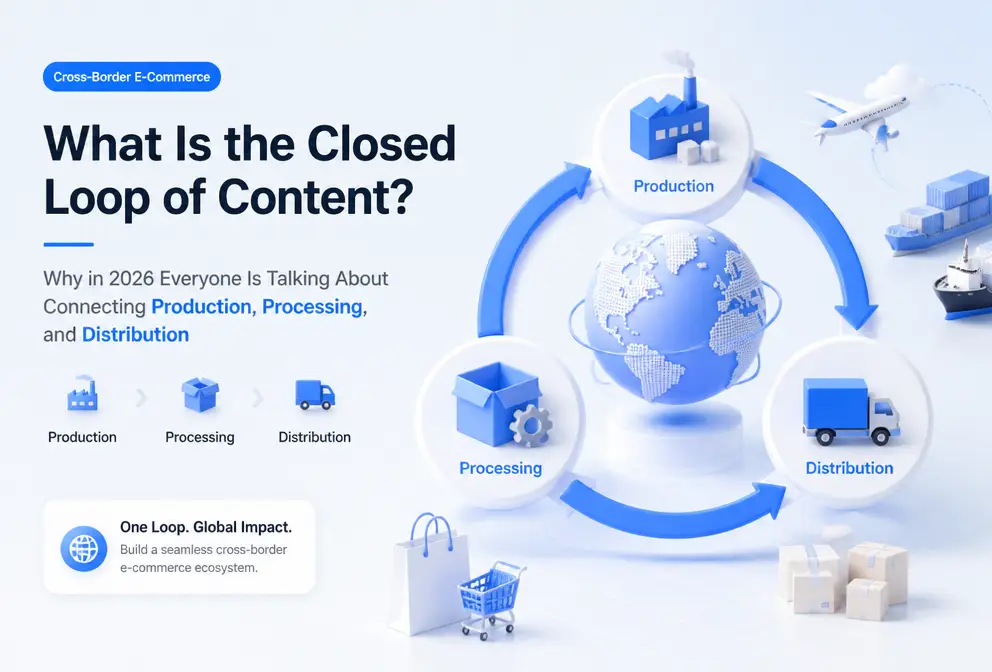
Open the backend, three pieces of content are already written, images assigned, and schedules set, but the operations team still manually copies and pastes them to five platforms, adjusts formatting, tweaks word counts, and changes topic tags—this scenario is still common in 2026. A true content closed loop is not “having content that goes out,” but a seamless integration of the three stages: production, processing, and distribution. Miss one link, and the chain breaks.
The core logic of a content closed loop is actually very simple: a piece of information goes from creation to reaching the user, undergoing three actions—creation, adaptation, and publishing. If these three actions are independent, operations become a conveyor‑belt mover. In 2026, the average brand manages 6–8 social platforms, from Instagram to LinkedIn, from X to YouTube, each with different user habits and content formats. If the three stages are not connected, the time a team spends “moving content” each day exceeds the time spent “thinking about content.”
Definition of a Content Closed Loop: Why All Three Stages Are Indispensable
The content closed loop is not a new concept, but it has been revisited in 2026 for a very direct reason—there are too many platforms, content volume has exploded, and user attention is more fragmented than ever. In the past, a brand managed two or three platforms; after producing content, they simply copied and pasted it, and the problem was minor. Now Threads has emerged, Pinterest is re‑energized in e‑commerce, and Google Business content weight is rising, so the number of channels a team must cover has doubled.
The three stages of a content closed loop are: Production (content creation), Processing (adapting to different platforms), and Distribution (scheduled publishing to each channel). All three must be connected; otherwise you only have “content” but not a “closed loop.”
What are the common breakpoints in traditional operations workflows? Production ends with publishing without considering platform differences; processing relies on manual work—changing an Instagram post for LinkedIn takes ten minutes of cutting and trimming; distribution relies on switching tabs, logging into five accounts, and posting five times. These breakpoints are not about capability but about process design.
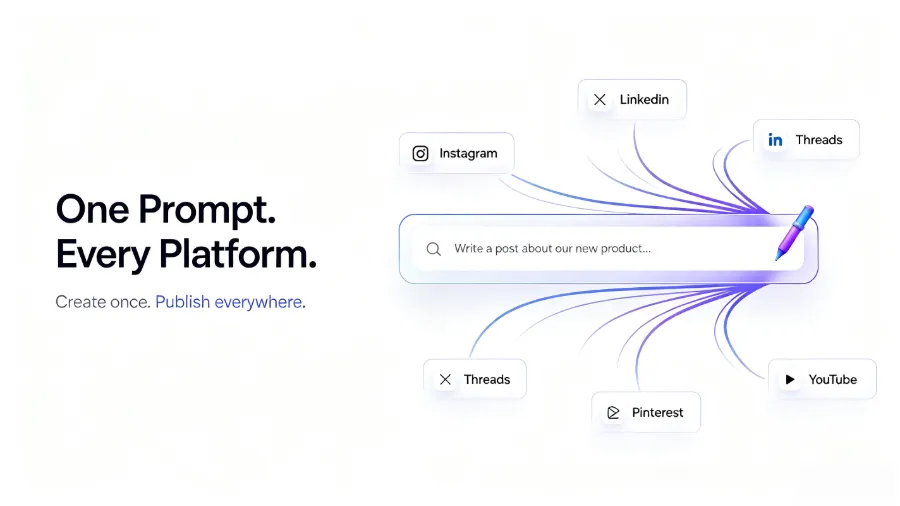
In 2026, the average brand manages 6–8 social platforms, and every piece of content must go through production, processing, and distribution. Missing any stage breaks the chain, and the content is merely “sent out” instead of “well distributed.”
Production Stage: Where Content Comes From and How Quality Is Ensured
The ways content is produced have changed dramatically in recent years. Original writing remains mainstream, but AI‑assisted generation has become routine. Secondary creation of user‑generated content (UGC) is also increasingly common—a user’s positive review, screenshot, and brand copy become a solid social post.
An operations team typically needs to produce 20–30 pieces of content for different platforms each week. At this scale, the pain points in production are obvious: output speed can’t keep up with platform demand, content becomes overly homogeneous, and maintaining a consistent brand voice is hard. The same topic posted on Instagram today and on LinkedIn tomorrow often reads as if two different people wrote it.
Improving production efficiency is not about sheer volume but about building reusable content templates and processes. For example, around a product selling point, draft five angles in advance, then fine‑tune each for a specific platform. The handoff between production and processing is also crucial—once the content is written, that’s not the end point but the starting point. The finished content should flow smoothly into the processing pipeline rather than sit idle in a document waiting to be rediscovered.
AI batch‑generate a week of social media content workflow demonstrates how process design can boost production efficiency without relying on overtime.
Processing Stage: Adaptation Is Not Copy‑Paste, It Is Secondary Creation
The processing stage is the most underestimated part of the content closed loop. Many teams think that once the content is written, they just copy‑paste it to each platform and change the topic tags. But a caption that works well on Instagram may get zero views on LinkedIn.
The reason is simple: each platform’s user expectations differ. Instagram users favor short, visual content; LinkedIn users expect in‑depth industry insights; X users like sharp, concise viewpoints; YouTube audiences need longer setups and hooks. Character limits are superficial; the deeper issue is audience expectations and format differences.
An Instagram post typically requires 3–5 edits to adapt for LinkedIn and X. That’s not the hardest part—Reels, Carousel, Shorts, Pins each have distinct production requirements. Common processing mistakes include: direct copy‑paste, only changing topic tags, ignoring platform specifics (e.g., posting an Instagram‑style short caption on LinkedIn).
The core of processing is: the same information point is expressed differently across platforms, but the brand voice stays consistent. Achieving this balance manually is difficult, especially when a team handles dozens of pieces daily. Hootsuite’s blog on best practices for cross‑platform content adaptation emphasizes a principle: first define the core message, then reorganize the expression for each platform’s audience habits, rather than repeatedly editing a single post.
The handoff from processing to distribution is equally important—once adapted, the content should automatically enter the publishing queue, not require another manual confirmation.
Distribution Stage: Scheduling, Syncing, Tracking—The Last Mile Determines Closed‑Loop Success
The distribution stage has three tasks: scheduled publishing (choosing the optimal time), synchronized publishing (one‑click multi‑platform), and performance tracking (data feedback). If any of these fails, the prior production and processing work is wasted.
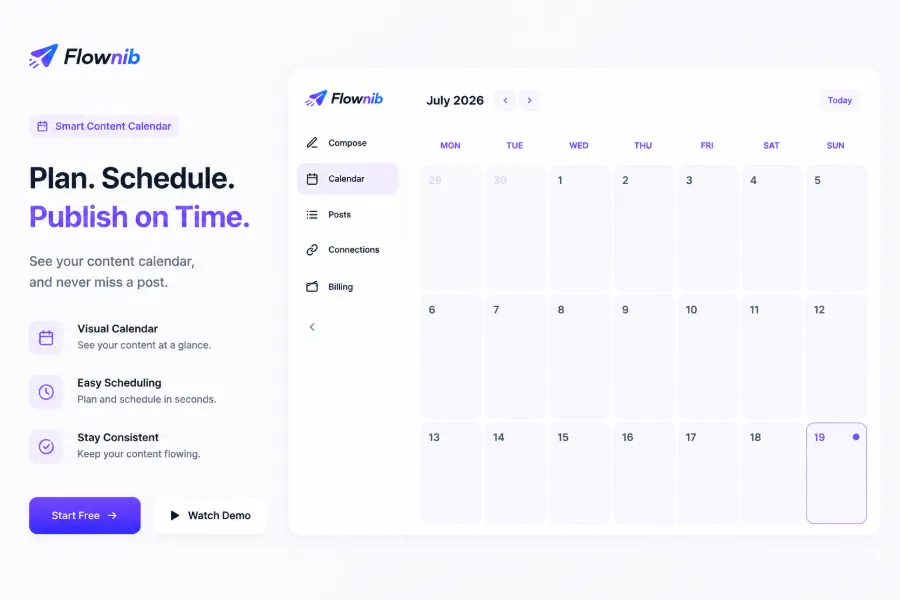
Manual publishing problems are concrete: timing mismatches—posted on Instagram but forgotten on LinkedIn; missed publishing—content is ready but no one remembers to hit send at the right moment; lack of tracking—content is out, but performance data is scattered across different backends, making unified view impossible. These issues are not laziness; they stem from a process that doesn’t support efficient distribution.
How does distribution feed back into production? Data feedback guides the next round of content direction. For example, if a LinkedIn post gets high engagement, it indicates the topic suits deep discussion, so the next production cycle can lean that way. If feedback never reaches the production side, the loop is broken.
When discussing distribution bottlenecks, Flownib solves the sync‑publishing problem—writing content and publishing it to all platforms without switching tabs. With 99.99% API availability and a 2‑minute setup, the technical barrier for distribution is low; the real challenge is whether teams are willing to change old habits.
Marketing team social media workflow upgrade guide offers more concrete ideas for boosting distribution efficiency, emphasizing data flow rather than manual content moving.
Common Pitfalls of Content Closed Loops and New 2026 Challenges
In 2025, a mid‑size e‑commerce team built a content closed‑loop system, but two months later LinkedIn and Instagram engagement dropped by 30%. The problem lay in processing—they sent the same product copy to all platforms; LinkedIn users found it shallow, Instagram users thought it too ad‑heavy. This case shows that a closed loop is not “just having tools”; every stage must be treated seriously.
Cross‑border AI full‑traffic closed loop: Flownib, Seonib, Veonib collaborative architecture and use cases discusses a more complete architecture, but a perfect architecture is useless without proper execution.
From 2025 to 2026, major social platform API update frequency increased by 40%. This means distribution tools must be continuously maintained; a one‑time setup is not enough. New 2026 challenges also include: AI‑generated content overload leading to user fatigue, rising complexity of multi‑account management, and increasingly frequent platform rule changes.
Three common pitfalls of content closed loops: over‑emphasizing production while neglecting distribution (lots of content but no eyes), ignoring processing (inconsistent content quality), and lacking data feedback loops (no insight into what works). Overcoming these challenges isn’t about stacking more tools; it’s about designing a process that lets content flow naturally among the three stages, rather than relying on people to push it.
How pet product sellers build a loyal audience through automated social media shows a concrete industry practice: they win not by producing more content, but by maintaining a stable publishing rhythm and precise platform adaptation.
Another often‑overlooked value of a content closed loop is reducing decision fatigue for operators. They no longer have to decide what, how, and when to post each time; the process makes those decisions for them. In 2026, the bottleneck is not production—AI already solves speed issues—but distribution data feedback. Effectively tracking and feeding back after publishing is what most teams fail at.
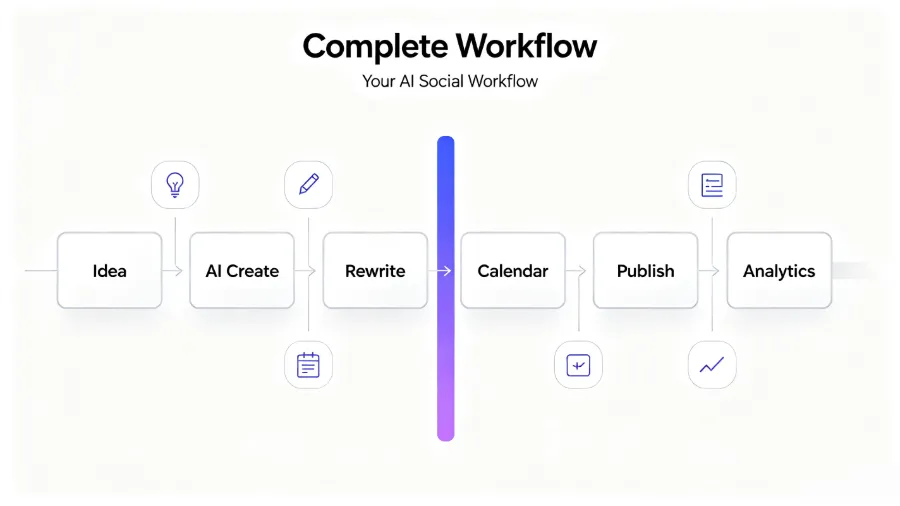
A closed loop is not a one‑off build; it’s a continuously iterating process. Platforms change, users change, and content strategy must evolve accordingly. Tools like Flownib can solve distribution efficiency, but the real success of a closed loop still depends on whether the team treats the three stages as a single, integrated operation.
FAQ
What is the difference between a content closed loop and a content strategy?
A content strategy answers “what content to create and why.” A content closed loop answers “how content moves from production to user reach.” Strategy sets direction; the closed loop determines execution efficiency. Without a closed loop, content never gets out; without strategy, a closed loop produces irrelevant content.
Do small teams also need a content closed loop?
Yes, but they don’t need an all‑encompassing one. The core for a small team is to get the minimal production‑processing‑distribution chain working, even if it only covers two or three platforms. The goal is to keep content flowing, not to get stuck at any stage. A three‑person team that spends two hours daily on manual publishing will see a high ROI from building a closed loop.
Must the processing stage use AI? Can manual adaptation work?
Manual adaptation is feasible but depends on volume. Up to 10 pieces per week can be handled manually; beyond 30 pieces, the time cost becomes prohibitive. AI’s role isn’t to replace human judgment but to automate repetitive formatting adjustments, freeing people to focus on strategy and creativity.
What is the biggest challenge for content closed loops in 2026?
It’s not a technical problem but a process inertia. Many teams are accustomed to “write → copy → paste → publish,” and changing that habit is harder than installing a tool. Another challenge is data feedback—most teams publish and then ignore the results, missing the “publish → track → optimize” cycle.
How do you measure the effectiveness of a content closed loop?
The core metric is “content reach efficiency”: average time from production completion to publishing across all platforms, platform‑specific publishing success rates, and trends in engagement rates. If, after building a closed loop, publishing time drops by more than 50% while engagement stays steady or improves, the loop is working.
Share Article