
Content Fatigue Is Not Mystical: Platform Engagement Curve + Optimal Scheduling, and Why “Plan + Forget” Beats Real‑Time Posting
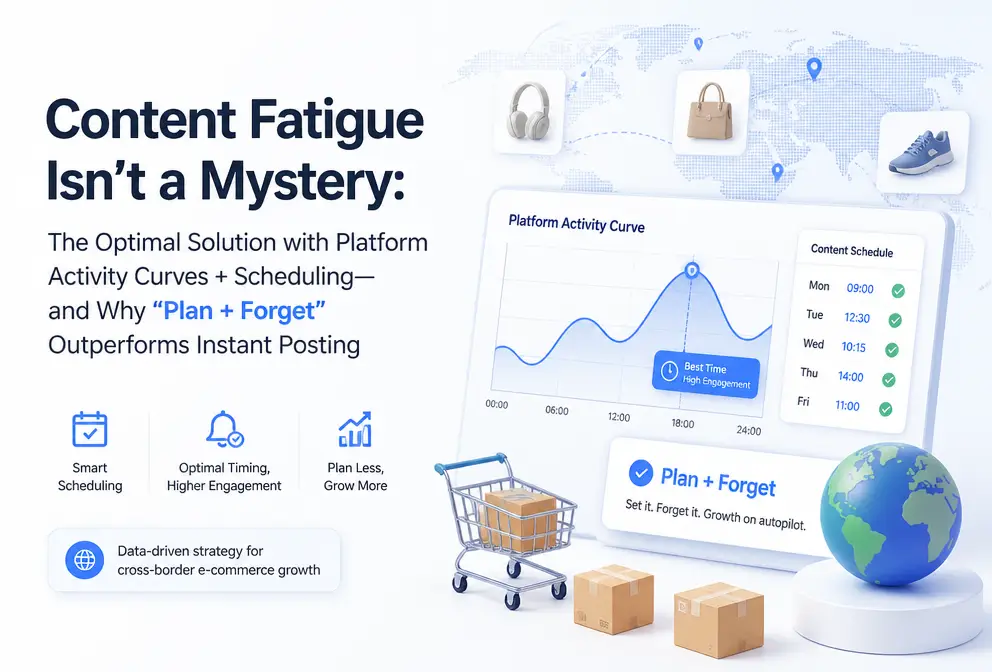
On Monday morning, you open the dashboard and see five platforms and dozens of accounts waiting for you. While scrolling through posts tagged “best posting time,” you manually copy‑paste the same copy to each platform; after adjusting character counts, half an hour has passed. The most natural reaction is to click “Publish now” and finish the task.
Behind this action is a vicious cycle: fearing to miss peak times, you post whenever you can; because the posts are haphazard, the data is poor, which makes you more anxious, and the next day you keep checking more “best time” articles.
Content fatigue isn’t mystical; it stems from two misunderstood things: how to read the platform’s engagement curve, and why “plan, schedule, then forget” outperforms “post whenever inspiration strikes” for long‑term data.
Engagement Curve: An Over‑estimated “Mystic” and the Part That’s Actually Useful
The engagement curve’s essence isn’t “posting at this time guarantees a hit,” but rather a probability distribution reference. It simply tells you that the probability of your target audience being online is higher during a certain time window.
The problem is that this curve can be severely distorted across platforms and audience demographics. For example, on LinkedIn, weekdays 8:00–10:00 am and 12:00–1:00 pm have been repeatedly validated as active windows for B2B content, but the same slots may be completely ineffective for consumer‑facing accounts—if your followers are people who browse after work, posting then may actually sink.
Both platform officials and third‑party researchers have published studies on active periods; Buffer’s social media scheduling research collection is fairly comprehensive and can serve as a starting point. The truly useful approach is to reverse‑engineer your own account’s historical data: open each platform’s native analytics (Insights / Analytics), export the posting times and interaction metrics for the past 30–60 days, and identify the windows when your own followers are truly active.
A common pitfall: activity ≠ conversion rate. High interaction at a certain time does not mean clicks, conversions, or follower growth are also high. Interaction is “saw it and clicked casually”; conversion is “saw it and decided to act.” The underlying user states are completely different. When reading the curve, first clarify which outcome you care about.
Turning “Best Time” Into a Scheduling Chart: A Crash‑Proof Publishing Rhythm
A single post’s “best time” is only a starting point; the real stability comes from the publishing rhythm. Consistent frequency is more important than fixed moments—accounts that publish at a steady rate for four consecutive weeks (3–5 posts per week) have a much lower per‑post interaction variance than those that “post when they remember.” Frequency stability itself trains the platform algorithm to trust the account.
Different account stages suit different scheduling models; there’s no one‑size‑fits‑all timetable:
| Model | Suitable Stage | Publishing Frequency | Core Goal | Main Risk |
|---|---|---|---|---|
| New‑Account Baseline | Early stage, data‑building | 3 posts per week | Build publishing habit, accumulate data | Too low frequency, algorithm can’t recognize |
| Growth Sprint | Established base, need volume | 5–7 posts per week | Rapidly test content directions | Content quality may lag |
| Stable Maintenance | Mature account | 3–4 posts per week | Maintain presence, fine‑tune | Can become mechanical |
The core purpose of a content calendar is to set the week’s publishing schedule in advance, avoiding daily ad‑hoc decisions. Scheduling doesn’t mean abandoning trends; it gives you a solid baseline—when a trend appears you can insert a post, but the baseline won’t collapse because a single day’s performance dips.
For practical scheduling rhythm, Later’s blog on publishing practices offers cross‑platform case studies. When choosing a scheduling tool, see the 2026 “Top 10 Social Media Scheduling Tools Deep Comparison Review” for multi‑platform support, timing precision, and ease of viewing schedule records.
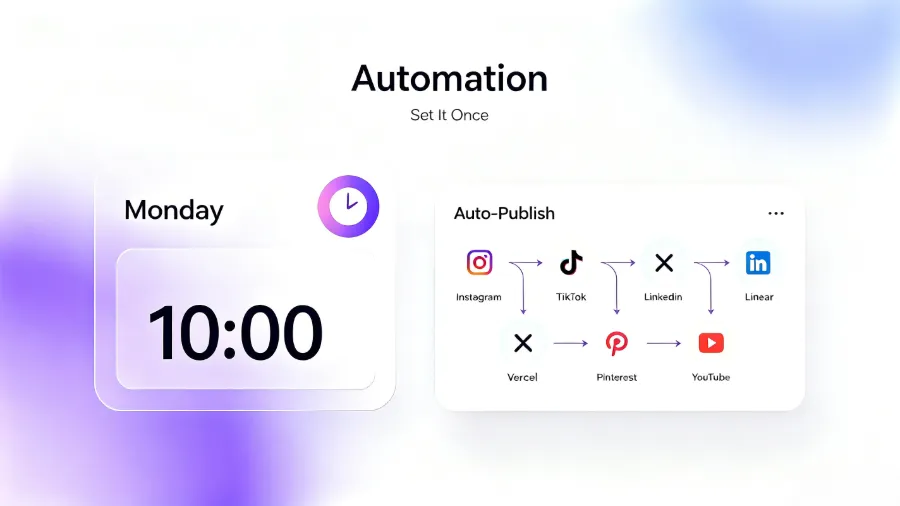
“Plan + Forget”: Why Pre‑Scheduling Beats Real‑Time Posting for Long‑Term Results
The advantage of “set‑and‑forget” isn’t just time saving; it safeguards the lower bound of content quality. Scheduling compresses the decision of “whether to post and when” from dozens of daily repetitions into a weekly one, dramatically reducing decision fatigue and preserving quality.
Real‑time posting has two hidden costs. First, ad‑hoc content leads to quality volatility—without a schedule, you post whatever is on your mind at the moment, not necessarily what’s worth posting. Second, mood swings driven by per‑post metrics cause erratic actions—good data prompts more of the same, bad data triggers a shift, and the process becomes chaotic.
Platform algorithms give implicit weight to accounts that “update consistently.” Real‑time posting struggles to maintain that rhythm. Content consistency itself is a signal that the algorithm interprets as “this account is active and worth recommending.”
One operator posted in real time for two months, checking “best posting time” articles daily and chasing trends, only to see interaction drop and content quality become uneven, leading to burnout. After switching to batch scheduling + fixed frequency, the data stabilized only by the fourth week—scheduling benefits are delayed, with an initial “invisible‑effect” window.
When publishing is compressed into a weekly batch process, the operator’s time spent deciding what to post can drop by 60%–70%. Where that time goes determines how much content quality can improve—compare manual publishing versus AI‑assisted distribution in the “Manual Publishing vs FlowNib AI Distribution: How Much Time Overseas Teams Really Save” article for a detailed breakdown.
Build a “Forget‑Able” Publishing Pipeline: From Draft to All Platforms with One Click
Fragmentation from switching between multiple platforms is another source of content fatigue. Spending 40% of your time copying and pasting across 6–8 SaaS tools is wasteful; the “Eliminate Social Media Tool Silos” transformation plan explains why “centralizing to one entry point” is more efficient than “operating each platform separately.”
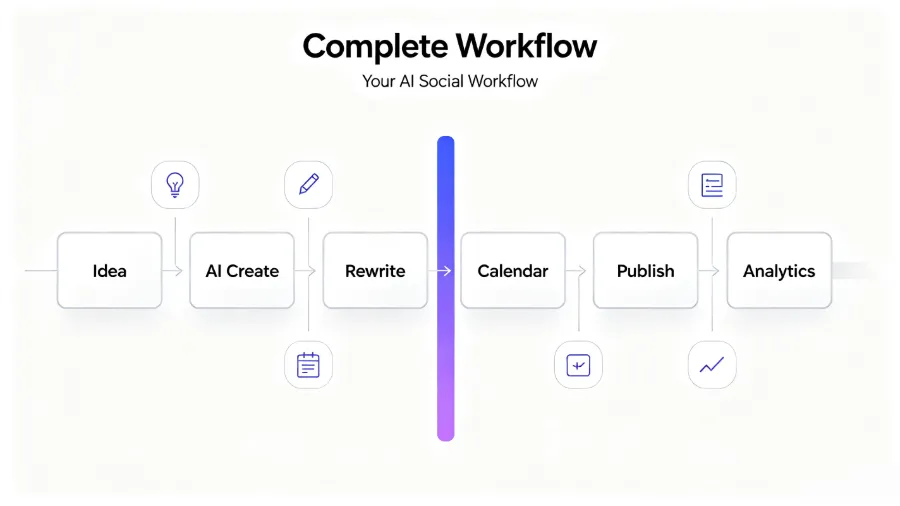
The pipeline’s core compresses “creation → rewrite → schedule → publish → record” into a single chain. After creation, the rewrite and distribution steps benefit most from tools—not because you’re lazy, but because manually rewriting for five platforms makes it hard to ensure quality and consistency.
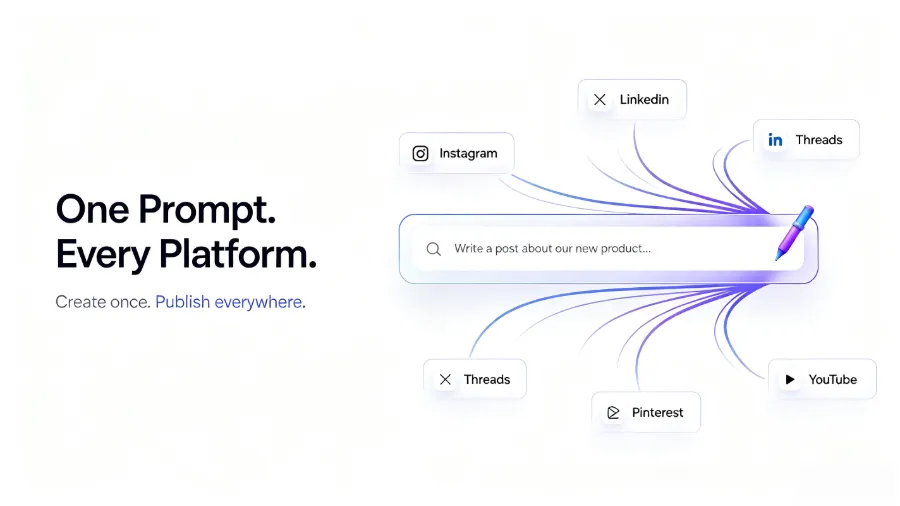
One creation, AI rewrite, scheduled distribution—this workflow can shrink a single piece’s publishing time from 15–20 minutes (manual copy‑paste + per‑platform tweaking) to 2–5 minutes. The saved time isn’t for posting more, but for writing the next piece better.
Recording is equally important. Publishing history is the foundational data for reviewing the engagement curve—without records you can’t know which content performed well at which time, nor iterate your schedule. Using tools like Flownib for rewrite and distribution automatically retains each piece’s publishing record, so you can compare performance across time windows directly from the calendar. For viewing schedule records, see the “How to View Scheduled Instagram Posts” guide.
A creator who used this workflow for a year, covering ten platforms per piece, doubled revenue—his review habit was to spend ten minutes each week looking at publishing records and adjusting the next week’s schedule, rather than staring at daily post metrics. This “record → review → adjust” loop is more reliable than any “best‑time table.” Flownib’s calendar visualizes publishing history, making the loop truly work.
FAQ
How often do the platform engagement curves update? Do they become outdated?
Engagement curves drift with seasons, algorithm changes, and user habit shifts—usually noticeable every quarter to half‑year. Pull your own data monthly for comparison; don’t rely on a single static timetable.
My followers are in different time zones; how do I determine my best posting time?
Don’t look at “where most people are.” Check your audience analysis in each platform’s backend, find the time‑zone distribution, and use the dominant zone as a baseline, adjusting for their daily routines. If followers are spread out, choose a “wide window” that covers multiple zones, such as overlapping evening hours on weekdays.
Is “Plan + Forget” suitable for trend‑driven accounts? Will it miss sudden spikes?
Yes, but leave room for insertions. Let the schedule occupy 70%–80% of the publishing volume; reserve the remaining 20%–30% for trends. When a trend hits, insert a post without disturbing the baseline; when there’s no trend, the schedule keeps you consistently publishing. The real issue isn’t missing trends but disrupting the baseline to chase them.
Do scheduling tools differ from native platform scheduling in effectiveness?
Both can publish on time, but native scheduling handles only one platform, whereas a scheduling tool can queue multiple platforms at once. Scheduling tools usually provide publishing records and review features; native records are scattered across dashboards and hard to compare.
Does content fatigue mean I’m posting too much? Should I lower frequency?
Not necessarily. Fatigue often stems from the decision burden of “what to post each day,” not the sheer number of posts. First, fix your frequency and pre‑schedule a week’s worth of content. If fatigue drops and data stabilizes, the issue was the process, not the volume. If fatigue persists after a stable frequency, then consider reducing frequency.
Share Article